
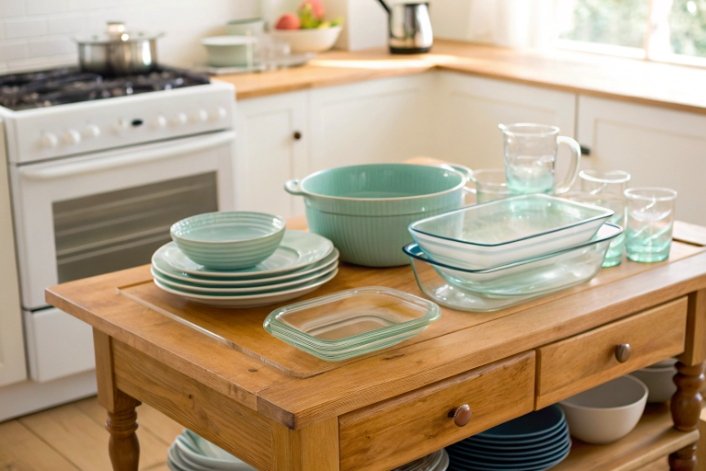
Glass tableware looks simple on the shelf, but the wrong material or shape can crack in the oven, chip in the sink, or waste cabinet space.
For home cooking, choose tempered or borosilicate glass for everyday use, match shapes to your favorite dishes, check clear “microwave/oven/dishwasher safe” labels, and ask suppliers for real thermal-shock and annealing data.
When I plan a glass range, I always work backwards from the kitchen: what people cook, how they reheat, how they wash, and how much storage they have. Once those basics are clear, the choice between borosilicate, tempered, and other glass becomes much easier.
Which is better for daily cooking—borosilicate or tempered glass?
Many people ask this as if one material must win. In practice, both borosilicate and tempered glass for kitchenware 1 work well in a busy kitchen when you use each in the right way.
Borosilicate handles temperature swings better, while tempered glass gives stronger impact resistance and a safer break pattern. For daily cooking, the “better” choice depends on how you cook and how you treat your dishes.
How each glass behaves in real home use
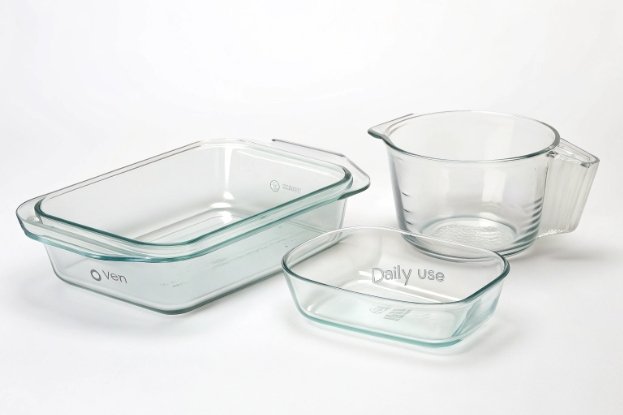
For home cooking, I think of borosilicate as the “thermal shock champion” and tempered glass as the “tough everyday workhorse”.
Borosilicate glass
- Lower thermal expansion, so it tolerates hot and cold changes better
- Very good for oven-to-table baking, boiling water, and frequent microwave use
- Often a bit lighter for the same volume
- Still breakable if dropped hard or abused, but less likely to crack from uneven heating
Tempered soda-lime glass
- Starts as standard soda-lime glass, then gets a special heat treatment
- Strong surface compression gives good impact resistance and better chip resistance
- If it fails, it crumbles into small, blunt pieces instead of sharp knives
- Thermal shock resistance is better than normal glass but lower than borosilicate, so you still must avoid extreme jumps like freezer → hot oven
Here is a simple comparison you can show to customers:
| Feature / Need | Borosilicate glass | Tempered glass |
|---|---|---|
| Thermal shock (hot–cold changes) | Excellent | Good, but avoid extremes |
| Impact resistance | Good | Very good |
| Failure mode | Cracks or larger pieces | Small, blunt fragments |
| Best use | Oven dishes, measuring jugs, bakeware | Everyday plates, bowls, mixing, serving |
| Typical labels | “Oven, microwave, dishwasher safe” | “Tempered”, “heat-resistant”, “dishwasher” |
For bakeware and oven-to-table casseroles, borosilicate is often the safest bet, especially if you know people will pour hot liquids or move dishes between temperature zones. For everyday plates and bowls, high-quality tempered or vitrified glass gives a great balance of thin profile, chip resistance, and cost.
Whatever material you choose, the same rule applies: design good geometry, avoid extreme thermal shock with glass bakeware 2, and give clear care instructions on the packaging.
What sizes and shapes work best for oven-to-table serving?
A perfect material can still be annoying if the dish is too deep to serve from, or too wide for your oven and cabinets. Shape and size decide how often people actually reach for a piece.
For home cooking, it is best to combine a few core sizes—small, medium, and large—with practical shapes: shallow casseroles for gratins, deeper dishes for lasagna and stews, and straight-sided bowls for salads and serving.
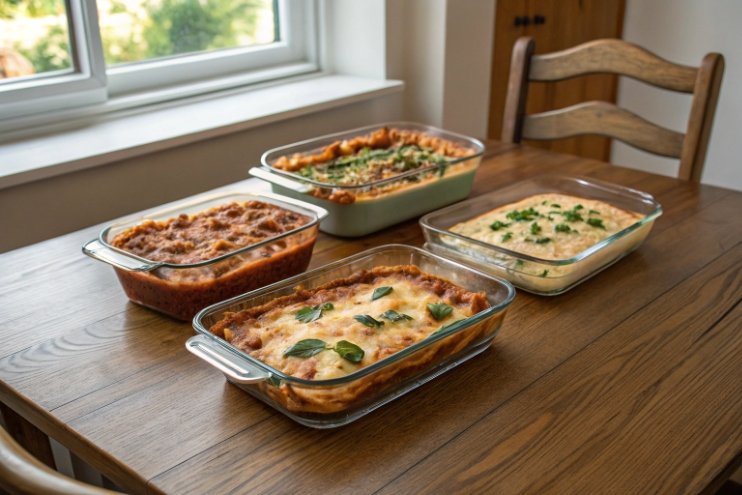
Build a simple “oven-to-table” set around real recipes
I like to plan the set around typical dishes:
- 1–2 person bakes (small casseroles, desserts)
- Family lasagna or roast vegetables
- Salads and side dishes
- Everyday baking and reheating
You do not need many sizes, but they should cover these jobs well.
Common useful sizes
- Small: 0.6–1.0 L (about 600–1000 ml)
- Ideal for side dishes, single servings, small gratins
- Medium: 1.4–2.0 L
- Good for small families, pasta bakes, roast vegetables
- Large: 2.5–3.5 L
- For lasagna, big casseroles, or party dishes
Shapes that actually work in the kitchen
- Rectangular dishes: efficient for lasagna, brownies, roasted vegetables, and fit well in most ovens
- Oval dishes: softer look for oven-to-table, nice for roasts and gratins
- Round dishes: good for pies, cobblers, and reheating
- Straight-sided bowls: easy to mix in, serve from, and stack in cabinets
Make sure you check your own oven’s internal width and the depth of your cabinets before committing to large sizes. A 40 cm dish that looks great in photos may not fit your shelf.
Here is a helpful mapping:
| Use case | Recommended volume | Shape suggestion | Design tips |
|---|---|---|---|
| 1–2 person bakes | 0.6–1.0 L | Small rectangle / oval | Integrated handles, modest depth |
| Family lasagna / gratin | 2.0–3.0 L | Deeper rectangle | Straight walls, enough height for layers |
| Roasted vegetables / sheet bakes | 1.5–2.5 L | Low rectangle | Wide surface, shallow for browning |
| Salad / pasta serving | 1.5–3.0 L | Wide bowl or low oval | Slight rim to catch dressing |
| Dessert / fruit crumble | 1.0–1.5 L | Round or square | Pretty enough for table, easy to scoop |
For plates and bowls, a slight rim is very practical. It keeps sauces from running off and helps portion control. Straight-sided bowls stack neatly and fit better in dishwashers, with less risk of rims hitting each other and chipping.
If you like lightweight everyday pieces, vitrified or laminated glass plates can be a good option. They offer triple-layer strength with very thin walls, so they feel light in the hand yet stay chip-resistant and compact in stacks.
Can I use glass dishes in microwave, dishwasher, and freezer safely?
Many people assume that any glass is safe everywhere. In reality, you need to match the glass type and design with each appliance and follow a few simple rules.
You can use many borosilicate and tempered glass dishes in microwave, dishwasher, and freezer if they are clearly labeled for each use, you avoid extreme temperature jumps, and you respect limits on lids and metallic trims.
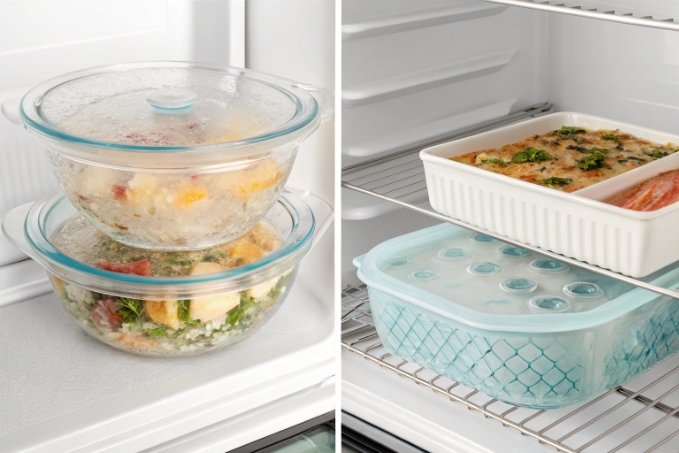
Understand where glass is strong—and where it needs help
Microwave
- Use only dishes labeled “microwave-safe” glassware 3
- Avoid metallic decorations, gold rims, and mirror coatings
- Leave lids vented or slightly open so steam can escape
- Do not microwave an empty dish; always have food or liquid inside
Dishwasher
- Most modern tempered and borosilicate glass is dishwasher-safe
- Place heavier pieces on the bottom rack with enough space between them
- Avoid letting glass rub against metal items during the wash cycle
- Printed or decorated items may fade if the decoration is not dishwasher-rated
Freezer
- Only use containers marked “freezer-safe” for glass storage 4
- Leave headspace for expansion if freezing liquids
- Avoid moving directly from freezer to hot oven or very hot water
- Use flat bases and lids that can handle low temperatures without cracking
A clear chart helps reduce confusion:
| Appliance | What to check | Typical safe practice |
|---|---|---|
| Microwave | “Microwave-safe” label, no metal trims | Reheat food with vented lid, avoid empty heating |
| Dishwasher | “Dishwasher-safe” label | Use racks with space, avoid heavy contact with metal |
| Freezer | “Freezer-safe” label, strong base | Cool food first, leave headspace, avoid rapid oven jump |
Even the best glass can break from thermal shock. So it is wise to:
- Let frozen dishes thaw in the fridge or at room temperature before going into the oven
- Place hot dishes on a dry cloth or wooden board, not a cold wet surface
- Avoid pouring ice-cold liquid into very hot glass, or boiling liquid into cold glass
If you care about low-toxicity, you may want to favor undecorated, clear or lightly tinted glass for the main cooking and heating pieces. Some heavy printed or opal coatings in older or low-quality products have shown lead or cadmium release under acidic conditions, so it is safer to keep high-heat and high-contact items simple and clean.
What quality checks (annealing, thermal-shock rating) should I ask suppliers for?
From the outside, two dishes can look the same but behave very differently in a hot oven or under cold water. The difference often comes from invisible quality steps like good annealing and real thermal shock testing.
When you talk with suppliers, you should ask for proper annealing control, thermal shock test data, and food-contact safety reports, so your glass tableware works safely in daily cooking and passes export audits.
Turn technical checks into simple supplier questions
If you buy under your own brand, these questions help a lot:
- Annealing quality
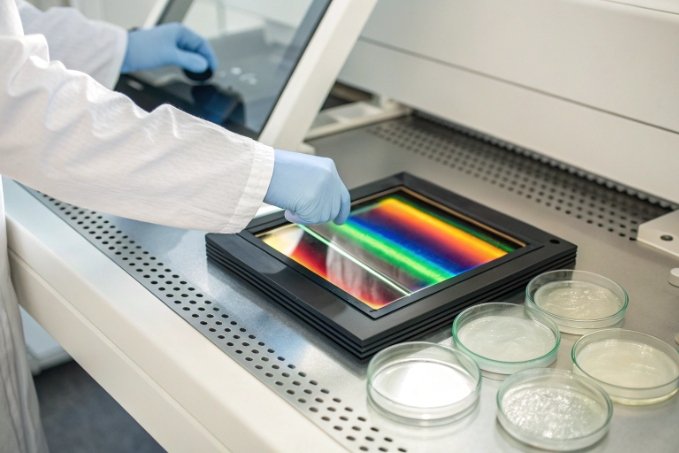
Ask how the supplier controls annealing in the lehr. Good annealing reduces internal stress and lowers the risk of spontaneous cracking later.
Useful points:
- Do they use a polariscopic strain viewer for glass stress inspection 5 to check stress patterns on sample pieces?
- Do they have documented annealing curves for each product type?
- Can they share any data on residual stress levels or pass/fail criteria?
- Thermal shock rating
Thermal shock tests bounce dishes between hot and cold baths and look for breakage. For kitchenware, you want a clear number, based on real thermal shock resistance testing for glass cookware 6.
You can ask:
- What ΔT (temperature difference) did the product pass? For example, “passed 120°C thermal shock without failure”.
- What test method do they use (internal method or based on common glass standards)?
- Is the rating the same for all items in the line, or different for plates, bowls, and deep dishes?
- Impact and chip resistance
For everyday plates and bowls, impact tests matter:
- Ask if they run edge impact tests or similar trials.
- Ask about breakage and complaint rates of similar products in past orders.
- Food-contact and heavy metal testing
Even though soda-lime and borosilicate glass are generally safe, you should still check:
- Do they have lead/cadmium release tests on decorated glass tableware 7?
- Are glazes, enamels, and prints food-contact approved and suitable for dishwashers?
Here is a simple checklist table you can adapt:
| Quality aspect | What to request from supplier | Why it matters |
|---|---|---|
| Annealing | Stress inspection method and annealing curve summary | Reduces random cracking and warping |
| Thermal shock | Tested ΔT and method description | Confirms oven / temperature change tolerance |
| Impact / chip resistance | Summary of impact tests or in-house standards | Predicts real kitchen durability |
| Food-contact safety | Lead/cadmium and migration test reports | Ensures safe use with acidic and hot foods |
| Appliance suitability | Written statement for oven, microwave, dishwasher use | Aligns marketing claims with real performance |
When a supplier answers these questions clearly, you gain more than just data. You gain confidence that the tableware will survive daily cooking, international shipping, and customer expectations, not just a quick showroom demo.
Conclusion
Good glass tableware for home cooking starts with the right material and shape, and finishes with honest safety labels and solid test data, so people can cook, reheat, and serve every day without surprises.
Footnotes
-
Explains key differences between borosilicate and tempered glass and how to choose them for kitchenware. Return ↩
-
University extension guidance on preventing thermal shock and safe everyday use of glass bakeware at home. Return ↩
-
Consumer guide on identifying microwave-safe glassware and using it safely in everyday microwaves. Return ↩
-
Food preservation advice on selecting glass containers that can safely withstand home freezer conditions. Return ↩
-
Technical overview of using polariscopes to inspect glass stress patterns and verify proper annealing. Return ↩
-
Testing lab explanation of thermal shock resistance testing methods for glass cookware and bakeware products. Return ↩
-
FDA summary of lead risks in food contact items, including decorated glass and ceramic tableware. Return ↩






