

Weak bottles leak, smell “off,” and waste expensive oils. Poor liners can swell. Bad droppers can drip everywhere. That is frustration that customers remember.
Choose quality amber EO bottles by checking true amber glass, consistent wall thickness, clean rims, and the right DIN-18/GPI finish. Then pair an oil-resistant closure and liner, and confirm dosing with the correct insert or dropper.
What “quality” really means for essential oils
A quality amber essential oil bottle is not only a nice-looking container. The bottle is a small chemical storage system. Essential oils contain terpenes and other components that can act like solvents. Glass is usually inert, so the biggest failures often come from the closure system, not the glass itself. A bottle can look perfect and still leak if the neck finish and cap do not match, or if the liner material swells and loses compression.
Start with true amber, not painted “amber”
My baseline is true amber glass that is integrally colored. Coated or surface-painted colors can scratch, chip, or create uneven light protection. True amber also keeps the brand look consistent across production lots. When the bottle sits in daylight on a shelf, amber glass and UV protection 1 helps reduce light exposure and slows oxidation.
Inspect build quality like a buyer, not like a designer
A fast quality check is simple: uniform wall thickness, smooth rim, and minimal bubbles. The rim matters because the seal happens there. The wall thickness matters because thin spots create stress points and breakage risk. Bubbles and waves can be cosmetic, but heavy defects can also hint at loose process control.
Confirm the interface: neck finish + closure + insert
Most leak issues come from mismatched thread specs or poor liners. The safest habit is to treat the neck finish and closure as one set. A DIN-18 bottle needs a DIN-18 closure. A GPI 18-415 bottle needs an 18-415 closure. Mixing “close enough” parts invites cross-threading and slow leaks.
If you’re buying “euro” style bottles, it helps to understand the DIN-18 neck finish standard (DIN 168/GL18) 2. If you’re buying U.S. continuous-thread finishes, a quick refresher on the GPI thread finish numbers (e.g., 18-415) 3 prevents expensive mix-and-match errors.
| Quality checkpoint | What to look for | Why it matters for EO |
|---|---|---|
| Amber authenticity | Integrally colored amber | Stable UV protection, no chipping color layer |
| Wall thickness | Uniform, no thin bands | Better break resistance and consistent sealing feel |
| Rim finish | Smooth, flat, no sharp chips | Clean sealing surface prevents weeps |
| Thread accuracy | Correct DIN-18 / 18-415 | Prevents cross-threading and loose caps |
| Liner choice | Polycone, PTFE, F217 | Resists terpene attack and maintains seal |
| Packaging hygiene | Dust-free packing, traceability | Fewer returns, better compliance story |
A good bottle choice also supports your brand promise. When a customer opens the cap and smells only the oil, not plastic, the product feels premium.
The next step is the technical core: glass type and thickness, because that decides durability and long storage stability.
Which glass type and wall thickness resist EO solvents?
Essential oils can be aggressive on many materials. A buyer can worry that the oil will “eat” the bottle. The real risk usually sits in caps, inserts, and bulbs, but glass selection still matters.
Both pharma/cosmetic-grade soda-lime (often USP Type III) and borosilicate work well for EO storage because they are inert. Borosilicate handles thermal shock better. Uniform wall thickness and a clean rim matter more than chasing extreme thickness.

Glass type: what changes in real use
Soda-lime glass is common for essential oil bottles. It is inert enough for most EO use and it is cost-effective at scale. Borosilicate glass is also inert, and it offers better thermal shock resistance. That matters if bottles face rapid temperature changes during filling, washing, or shipping in harsh seasons. For most retail EO bottles, the formula does not “need” borosilicate, but some brands still choose it for durability confidence and premium messaging.
If you want the formal framing for soda-lime “Type III,” see the USP ⟨660⟩ glass containers briefing 4. For borosilicate positioning, manufacturers commonly cite borosilicate glass thermal shock resistance 5 as a key durability advantage.
Wall thickness: uniform beats “thick”
A thick bottle feels premium, but thickness alone does not guarantee strength. Uniform wall thickness is the real signal. Thin bands, uneven shoulders, and heavy seams can become fracture points. A quality amber bottle should feel consistent in heft. The base should be stable. The shoulder should not show strong waves. The neck should be centered and clean.
What to test if you want fewer surprises
A practical approach is to request samples from two factories and run simple checks:
- Drop and vibration tests in a shipping carton.
- Hot-to-cool handling checks if the supply chain sees temperature swings.
- Thread engagement feel checks to catch off-center necks.
| Option | Strengths | Trade-offs | Best fit |
|---|---|---|---|
| Soda-lime (USP Type III style) | Proven, cost-efficient, widely available | Less thermal-shock tolerance | Most EO retail lines |
| Borosilicate | Better thermal shock resistance | Higher cost, fewer sources | Premium lines, rough logistics |
| “Extra thick” walls | Better impact tolerance in hand | Higher weight and freight cost | Gift sets, refill programs |
In my experience, brands win when they specify the interface and the inspection rules, not when they only ask for “thicker glass.” A stable rim and accurate neck finish protect the seal more than extra grams of glass.
Once the glass is set, dosing becomes the next customer experience. That is where inserts and droppers decide if the bottle feels controlled or messy.
Orifice reducer or dropper: which controls dosing better?
A customer can love the oil but hate the bottle. Fast pours, uneven drops, and drips create waste. That hurts repeat orders.
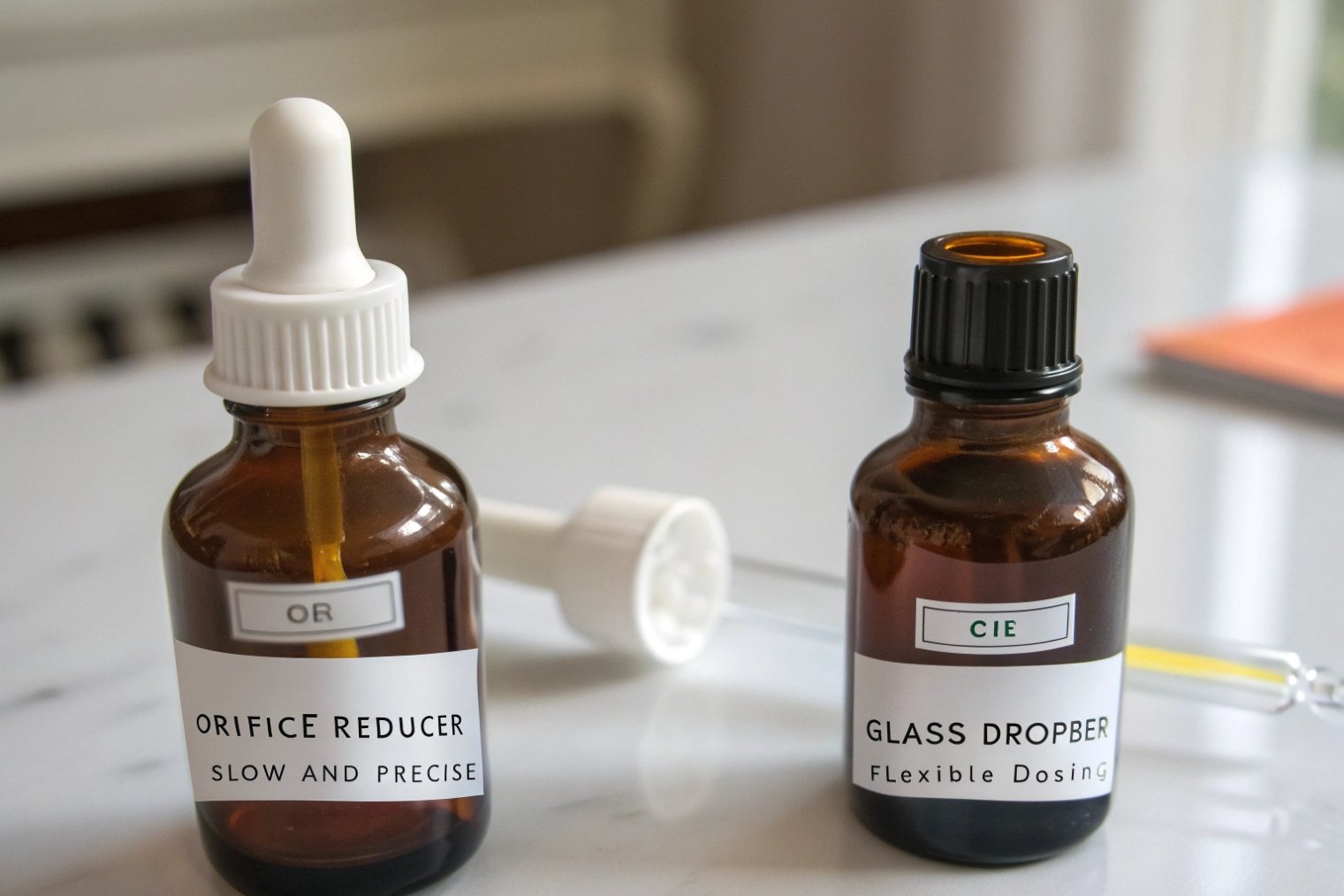
Orifice reducers usually control dosing better for “drop-by-drop” use because they standardize flow and reduce accidental pours. Droppers help precision mixing and targeting, but drop size varies more with user technique, bulb quality, and pipette fit.
Orifice reducers: consistent and travel-friendly
Orifice reducers (often called euro droppers) sit in the neck and restrict flow. For daily aromatherapy use, this is the simplest path to consistent dosing. The user can invert the bottle and count drops. The reducer also lowers spill risk when the cap is removed. Many brands pair DIN-18 amber bottles with a reducer because it feels standard and safe.
Material matters. LDPE is common and works for many oils. For aggressive citrus oils or high-terpene blends, PTFE can be a safer choice if the budget allows. Aperture size matters too. A thicker oil needs a larger opening. A thin oil can use a smaller opening to avoid fast drops. A typical practical range is about 0.6–1.0 mm, but viscosity and temperature change real behavior.
Droppers: better for blending, but more variables
Droppers shine when users need to add oil into a blend bottle, roller, or diffuser cup with aim. A glass pipette looks premium and avoids plastic contact in the liquid path. Still, droppers add variables: bulb material, collar fit, and the seal at the cap. Natural rubber bulbs can absorb aroma and degrade. Silicone bulbs perform better for long-term storage.
A simple decision table for brands
| Use case | Better choice | Why | Watch-outs |
|---|---|---|---|
| Daily drops to palm/diffuser | Orifice reducer | Standardizes drops and reduces spills | Match material to aggressive oils |
| Precise blending into small vials | Dropper | Aiming is easier, looks premium | Bulb and liner compatibility |
| Travel kits | Orifice reducer | Less mess if cap opens | Ensure insert stays seated |
| Child safety priority | Reducer + CR cap | Limits flow and adds safety | Confirm full system fit |
My rule is simple: if the product promise is “countable drops,” use a reducer. If the promise is “mix like a formulator,” use a dropper, and test the bulb and seal for long-term stability.
Now the hardest part: the closure and liner. That is where terpene attack and leaks usually start.
Which closures and liners prevent leaks and terpene attack?
A bottle can pass a quick leak test and still fail after months. Terpenes can swell weak liners. Caps can loosen after shipping vibration. That is where returns come from.
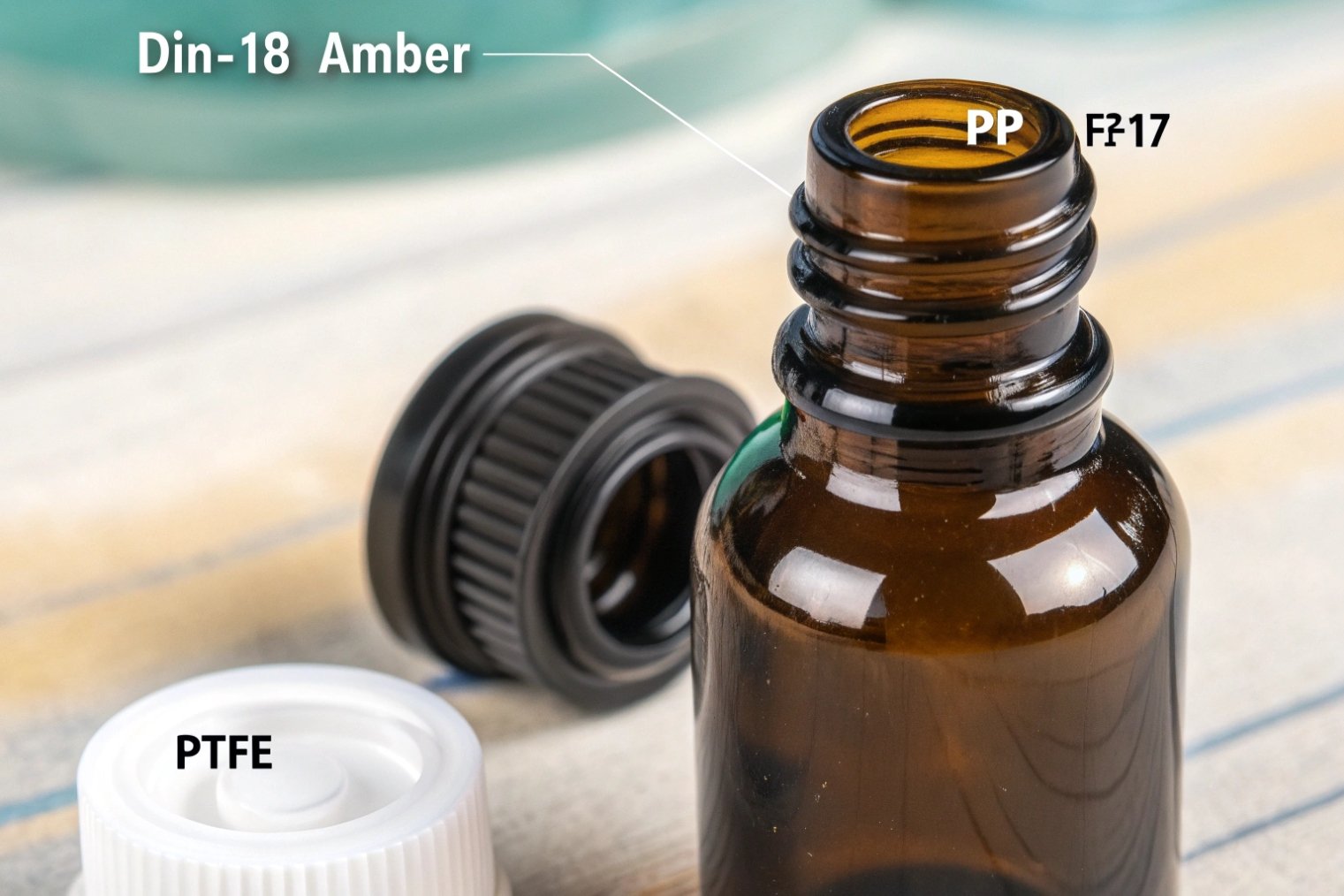
Use closures that maintain steady gasket compression and liners that resist oils. Phenolic screw caps with polycone (PE) or PTFE/F217-style liners are common solutions. Avoid unlined metal caps and avoid natural rubber parts in contact with oil.
Closure types that work in the real world
Phenolic caps are popular in essential oil packaging because they feel solid and they hold torque well. The key is the sealing geometry inside the cap. A polycone liner (often PE) creates a strong seal by wedging into the neck opening. That helps with leak resistance during travel and altitude changes. For more aggressive oils, PTFE-facing liners or oil-resistant foam liners see better long-term performance.
If you want a clear overview of liner options, materials, and trade-offs, use this guide to cap liner types and functions 6.
Unlined metal caps are risky because the oil can contact metal and the seal can be inconsistent. Even when the oil does not touch the metal directly, thin liners can deform and lose seal. Many leaks are slow “weeps” that only show after the bottle sits sideways for a day.
Liner selection is chemical selection
Liners face the oil vapor and sometimes the oil itself. That is why liner compatibility is more important than cap color. PTFE is a strong choice for chemical resistance. F217-style foam liners often balance cost and performance. Polycone seals are excellent for many EO applications. The best choice depends on the oil type, shipping conditions, and expected shelf life.
Torque, compression, and long-term sealing
A cap seals because compression stays stable. If the liner takes a compression set too fast, the seal relaxes. If the user overtightens, threads can strip or liners can deform. A brand can reduce this risk by specifying a torque range and confirming it during packing.
| Component | Strong choice | Why it works | Avoid because |
|---|---|---|---|
| Cap body | Phenolic screw cap | Stable torque and feel | Soft plastics that distort |
| Seal style | Polycone | Strong mechanical seal | Flat liners with weak compression |
| Liner material | PTFE / F217-style | Better oil resistance | Natural rubber, unknown foams |
| Dropper bulb | Silicone | Better long-term stability | Natural rubber odor absorption |
When the closure system is right, the bottle becomes boring in the best way. It stops causing problems. That is exactly what a quality package should do.
Safety and compliance come next. Many brands want child-resistant and tamper-evident features without changing the neck standard.
Do child-resistant, tamper-evident options fit DIN-18 threads?
Safety features can feel like a maze. Caps look similar online, but the threads do not always match. A mismatch creates leaks, cross-threading, or inserts that pop out.
Yes, child-resistant (CR) and tamper-evident (TE) closures can be made to fit DIN-18 threads, but only when the cap is specified as DIN-18 and tested with your exact bottle and insert. CR/TE designs add height and mechanics, so sample testing is essential.
DIN-18 vs “close enough”
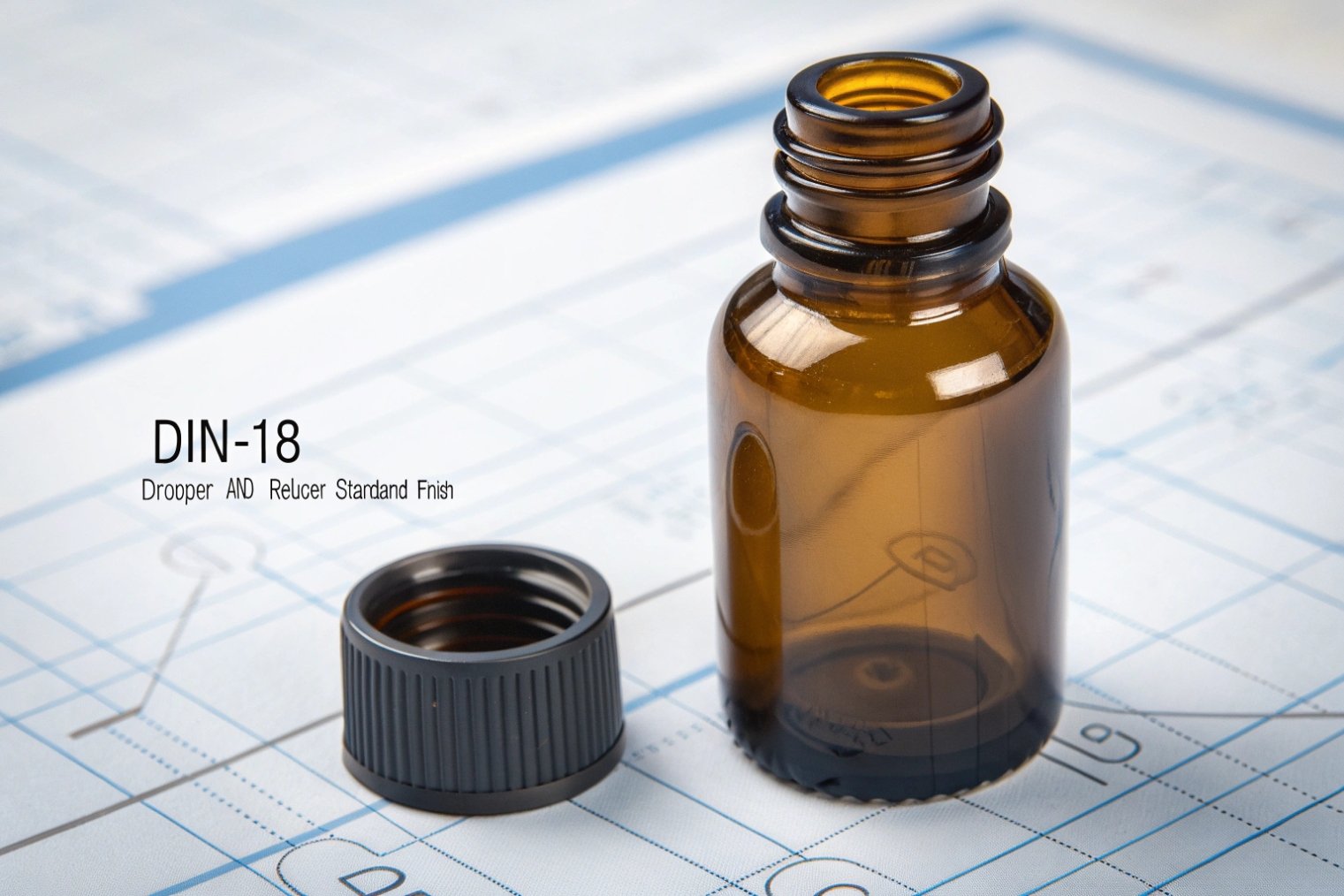
DIN-18 is a common thread family used on many essential oil bottles with euro droppers. It is not the same as 18-415. Both can be “18 mm,” but the thread profile and engagement can differ. That is why a quality supplier will not sell a cap as “18 mm fits all.” The cap should be labeled for the exact finish: DIN-18 or 18-415.
How CR and TE features change fit
A tamper-evident band (tear band) needs correct skirt length and correct bead engagement. If it is wrong, the band breaks early or never breaks cleanly. A child-resistant mechanism often uses push-down-and-turn parts. That can change the torque feel and the sealing load. Some CR caps work best with specific liners because the user applies different force during opening and closing.
If your product category triggers CR expectations, it’s smart to align early with the Poison Prevention Packaging Act (PPPA) 7 concept of “special packaging,” and then buy caps that are explicitly specified for your finish.
A practical compatibility checklist
My simple process for brands is:
1) Lock the bottle finish (DIN-18 or 18-415) and get drawings if possible.
2) Choose the insert (orifice reducer or dropper) and confirm it seats well.
3) Select CR, TE, or CR+TE caps that are explicitly rated for that finish.
4) Run sideways leak tests, vibration tests, and repeated open-close cycles.
| Feature goal | Closure type | Fit risk | Best practice |
|---|---|---|---|
| Tamper evidence only | TE band cap | Medium | Confirm band engages bottle bead cleanly |
| Child resistance only | CR push-down-and-turn | Medium–High | Verify sealing torque and user force |
| Both CR + TE | CR+TE combo cap | High | Test with your insert and packing line torque |
| Regulatory confidence | Certified CR design | Medium | Keep documentation and lot traceability |
Safety features can work with DIN-18 threads, but the fit is never a guess. A quality program treats the cap, liner, and insert as one tested system.
Conclusion
A quality amber EO bottle needs true amber glass, consistent walls, and a proven sealing system. Choose the right insert, liner, and DIN-18 closure, then test for leaks and compatibility.
Footnotes
-
Explains how amber glass filters UV light to protect light-sensitive oils. ↩ ↩
-
Overview of DIN18/GL18 usage for dropper bottles and why thread matching matters. ↩ ↩
-
Quick reference for what GPI finish numbers like 18-415 describe on closures and necks. ↩ ↩
-
USP briefing describing Type III glass tests and how glass containers are evaluated. ↩ ↩
-
Manufacturer explanation of borosilicate properties, emphasizing resistance to thermal shock. ↩ ↩
-
Compares common liner types (polycone, foam/F-217, PTFE) and what they’re best used for. ↩ ↩
-
Official CPSC guidance explaining “special packaging” and child-resistant intent under PPPA. ↩ ↩






