
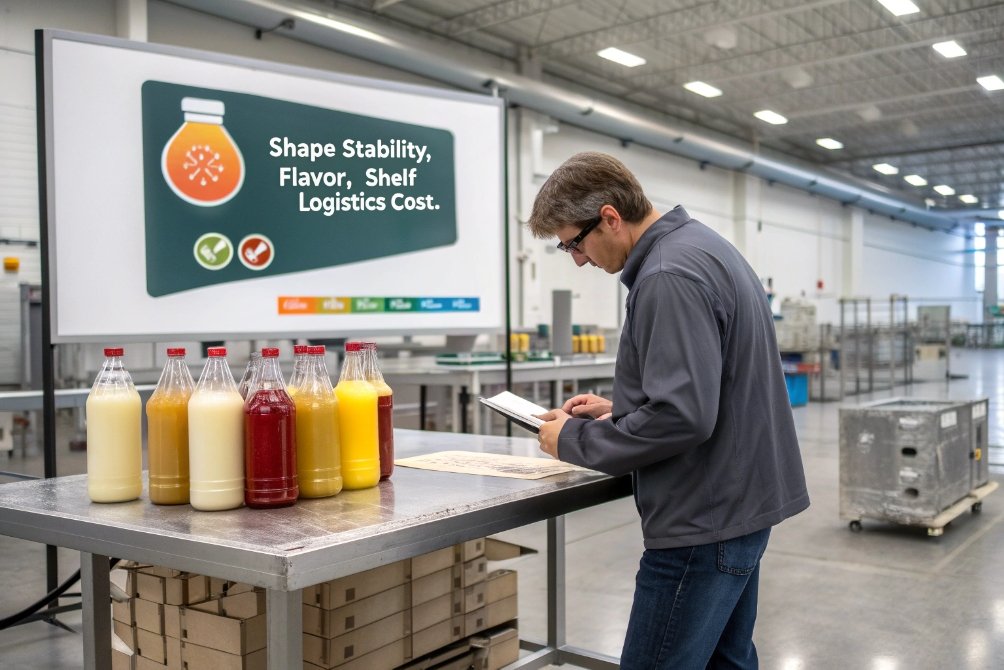
Many brands feel stuck between glass and plastic. The wrong choice can mean deformed bottles, flavor loss, or poor shelf life, and the packaging cost is only one part of the real problem.
Glass bottles and jars tolerate high heat, offer strong oxygen and aroma barriers, and recycle well, while plastic bottles focus on light weight, impact resistance, and low logistics cost. Each format has a very different fit for hot-fill, retort, pasteurization, and long-term product stability.
Many customers ask the same question: “Should I put this product in glass or plastic?” To answer that clearly, I like to break the problem into four parts: heat process, barrier, recyclability and safety, and closures. When we look at these four blocks one by one, the best format usually becomes obvious.
Which formats suit hot-fill, retort, or pasteurization best?
Hot-fill, retort, and pasteurization (time–temperature treatment) 1 all put stress on packaging. If the container softens, warps, or cracks, the whole batch is at risk and the line may stop.
For high-temperature processes, glass bottles and jars offer the widest safety window, while only specific heat-rated plastics can handle hot-fill and most cannot handle full retort. Jars with wide mouths work especially well for viscous or solid foods under these heat processes.
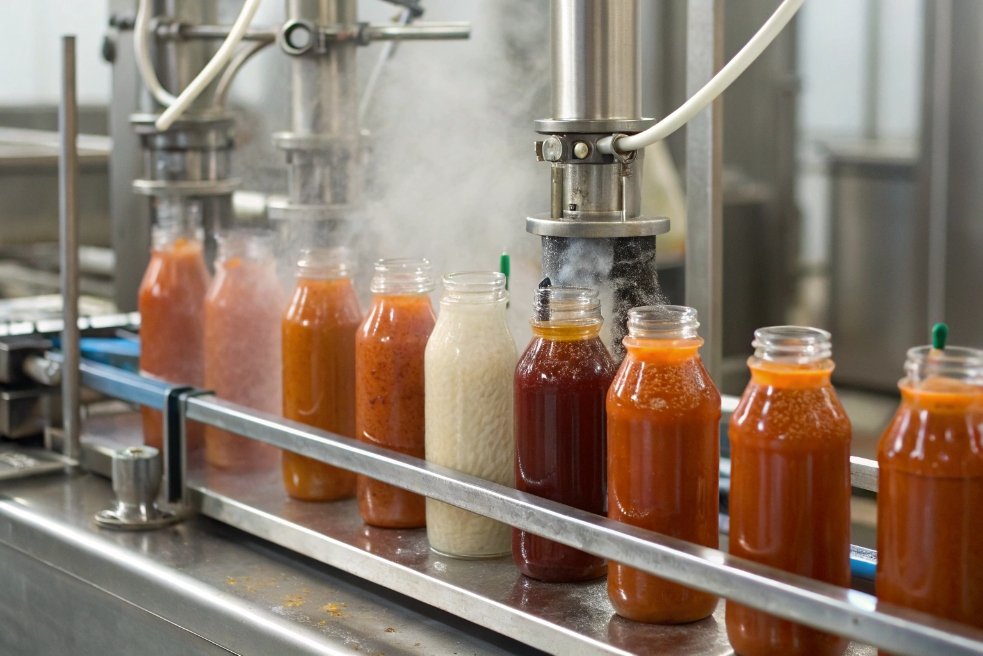
Hot-fill, retort, pasteurization: where each format fits
When we talk about heat processes, it is not only the peak temperature. The time, pressure, product pH, and headspace also matter. For shelf-stable acidic products, the acidified foods regulation (21 CFR 114) 2 is a common reference point for process and container expectations. Glass is naturally strong in this area because it is inorganic, rigid, and stable at high temperatures. Standard soda-lime glass bottles handle typical hot-fill ranges and tunnel pasteurization without shape change. Properly designed jars also work in retort if the closure and vacuum are correct and thermal shock is controlled.
Plastics are very different. Each resin has its own temperature limit. Many HDPE or standard PET bottles start to deform well below boiling point. There are special heat-set PET bottles for hot-fill juices or teas, but even those usually stay below full retort temperatures. The bottle design needs vacuum panels or flexible panels so it can absorb the internal vacuum after cooling. Most thin-wall plastic bottles for water or soft drinks are not suitable for hot-fill at all.
The mouth design also plays a big role. Wide-mouth glass jars are ideal for sauces, baby food, jams, and ready meals. They allow rapid filling, good venting of air, and stable double- or single-rolled closures that pull a strong vacuum during cooling. Narrow-neck glass bottles shine with liquids like juices, beer, or functional drinks, where controlled pouring matters more. Plastic bottles work well for cold-filled or short-shelf-life products, and for some hot-fill drinks when the right resin and geometry are used.
For retorted, low-acid shelf-stable foods, the low-acid canned foods requirements (21 CFR 113) 3 are often part of the compliance backdrop that drives retort validation and container/closure selection.
For very high heat and strict pharma or lab standards, borosilicate glass 4 goes even further. It handles autoclave cycles and strong temperature swings with lower risk of cracking and minimal interaction with sensitive contents. In regulated environments where sterility and chemical stability are critical, this type of glass often becomes the default, unless weight and breakage risk must be reduced at all costs.
Here is a simple comparison:
| Process | Glass Bottles | Glass Jars | Plastic Bottles |
|---|---|---|---|
| Hot-fill | Very suitable | Very suitable | Only special heat-set PET / some PP |
| Tunnel pasteur. | Very suitable | Very suitable | Limited, design- and resin-dependent |
| Retort (121°C+) | Suitable with design | Very suitable with right lid | Mostly not suitable, few special cases |
| Thermal shock | Good, better in jars | Good, thick walls help | Thin walls deform or collapse |
So for real high-temperature processes, glass bottles and jars remain the most forgiving and predictable choice, while plastic needs careful engineering and often stricter limits on process temperature and time.
How do oxygen and aroma barrier properties compare between glass and plastic?
If the product loses aroma, oxidizes, or goes flat, customers notice fast. Barrier performance is the silent driver behind shelf life, flavor, and color.
Glass has a near-perfect barrier to oxygen, CO₂, and moisture, while plastic barriers depend strongly on resin type, wall thickness, and any coatings or liners. When teams quantify these differences, they often start with oxygen transmission rate (OTR) 5 data and real shelf-life testing. For aroma and carbonation, glass and properly designed PET are usually the top candidates.
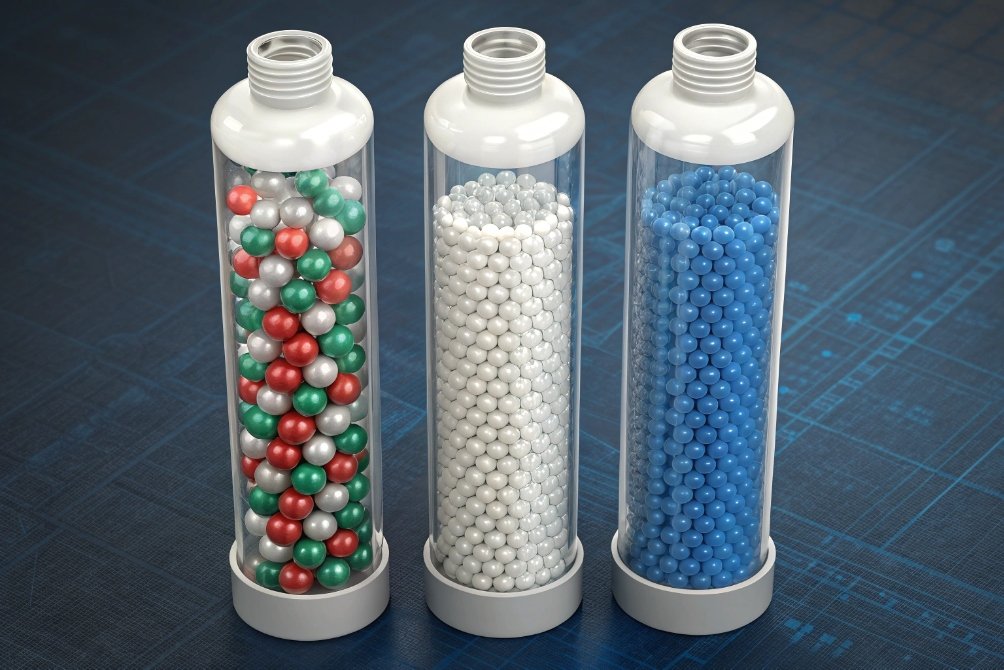
Oxygen, CO₂, aroma, and UV: what each material really does
Glass is non-porous and chemically inert. It does not allow measurable oxygen or CO₂ to pass through the wall, and it does not absorb aroma compounds from the product. This is why wine, spirits, premium sauces, and perfumes often sit in glass. The bottle or jar behaves like a neutral shell. It protects but it does not participate in the flavor story.
Most plastics tell a different story. PET can give a reasonable barrier to oxygen and CO₂, especially with multi-layer structures or oxygen scavenger additives, but it is never truly “zero.” Over long shelf lives, oxygen ingress can still fade flavors, dull colors, or reduce vitamin content. HDPE and LDPE are more permeable to gases and aromas. They are useful for many household and short-life products, but they are less ideal when the product must stay stable for many months.
Light protection also matters. Clear glass lets UV and visible light reach the product. Amber and green glass block a significant part of the UV spectrum and help protect light-sensitive contents such as beer, certain oils, and some nutraceuticals. Transparent plastics usually need extra additives or labels and sleeves to reach similar light protection. Without them, the product may oxidize faster under display lighting.
Aroma behavior is another key point. Plastic walls can absorb and release odor molecules. This can give a “plastic note” or allow flavor crossover if bottles are reused or stored near strong smells. Glass does not absorb these molecules, so it keeps the product closer to its original profile.
A short overview:
| Property | Glass (clear) | Glass (amber/green) | PET | HDPE / others |
|---|---|---|---|---|
| Oxygen barrier | Excellent | Excellent | Moderate to good (with aids) | Low to moderate |
| CO₂ barrier | Excellent | Excellent | Good, bottle-design dependent | Poor for carbonation |
| Aroma interaction | None, non-porous | None | Can absorb and release aromas | More aroma absorption |
| UV protection | Weak | Strong | Weak without additives | Weak without additives |
For highly sensitive beverages, rich sauces, essential oils, perfumes, and pharma products, this barrier picture often pushes the final decision toward glass, or toward advanced multi-layer PET if weight and breakage risk must be reduced.
What are the recyclability and safety differences between glass and plastic containers?
Many buyers now ask not only “Will this bottle work?” but also “What happens after the consumer throws it away?” Packaging must not only protect the product but also fit sustainability targets and safety rules.
Glass is infinitely recyclable without major quality loss and stays chemically inert in contact with the product, while plastics follow a more complex path. Recycling depends on resin type, color, local systems, and end markets, and there are more concerns about chemical migration and microplastics.
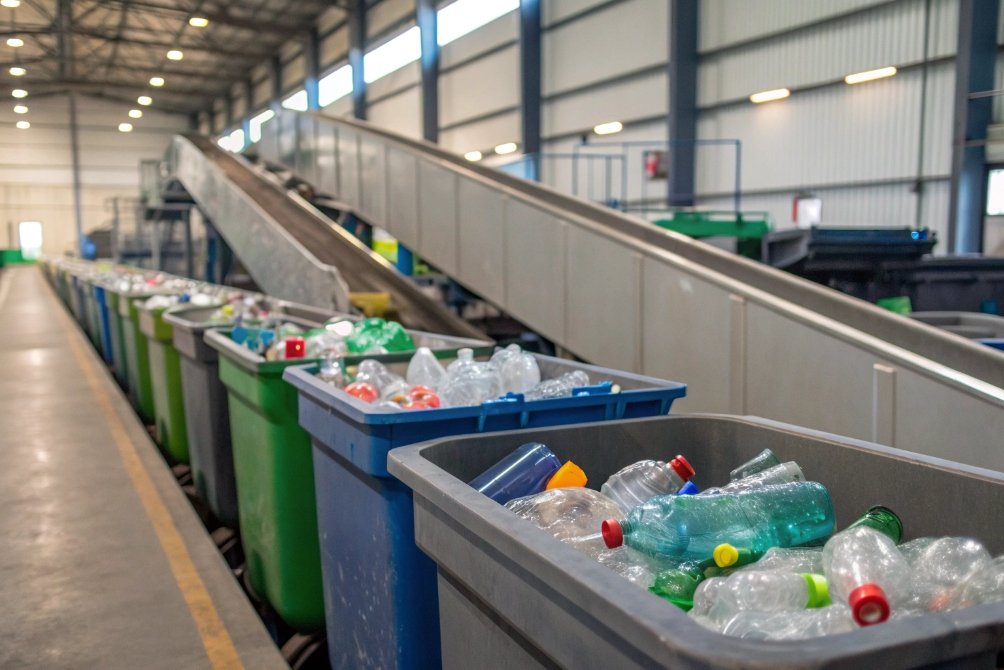
From leaching and microplastics to closed-loop recycling
Glass is made from sand, limestone, soda ash, and other mineral raw materials. Once it forms a stable glass network, it becomes very resistant to chemical interaction. It does not leach additives into food or drinks under normal use. It does not create microplastics. In landfills, it is inert; in oceans, it behaves more like a stone than a polymer. From a product-safety angle, this gives brand owners peace of mind, especially for baby food, premium beverages, pharma, and nutraceuticals.
Recycling is also straightforward in theory. Waste glass (cullet) can go back into the furnace and become new bottles and jars again and again with little loss in quality. If you need an industry-focused primer on collection and remelt loops, the Glass Packaging Institute’s glass recycling overview 6 is a helpful reference. Higher cullet content also reduces energy use and CO₂ emissions in production, because melting cullet needs less energy than melting pure raw material. The main limits are collection systems and color sorting, not the material itself.
Plastics tell a more complicated story. Different resins (PET, HDPE, PP, PVC, etc.) must be sorted and processed separately. Clear PET bottles often have good recycling streams in developed markets, but many other formats do not. Colored plastics, multi-layer structures, and complex closures reduce recyclability and often push the material into down-cycling (for example into fibers) or landfill and incineration. If you want to design bottles, labels, and closures that survive sorting and reprocessing, the APR Design® Guide for Plastics Recyclability 7 is a practical checklist.
Safety is another key topic. Some plastics may allow small molecules or additives to migrate into the product over time, especially under heat, high-fat contents, or long storage. Regulations and tests control this, but the topic stays sensitive for end consumers. Microplastic issues also worry many people as bottles and caps can fragment during long-term environmental exposure.
A simple comparison:
| Aspect | Glass Containers | Plastic Bottles |
|---|---|---|
| Chemical inertness | Very high, no leaching in normal use | Resin- and additive-dependent |
| Microplastics | None | Possible formation and release over time |
| Recyclability | Infinite in theory, quality stable | Limited cycles, often down-cycled |
| Recycled content use | High possible in new bottles/jars | Varies by resin and local regulations |
| Environmental risk | Heavy but inert | Light but persistent if not recovered |
So when a brand wants strong sustainability claims and a safe image, glass gives a very clear story: “chemically neutral and infinitely recyclable.” Plastic can also support circular goals, but it needs more careful design and depends much more on local recycling infrastructure.
Which closures and liners pair best with each container type?
Even the best bottle fails if the closure is wrong. Leaks, oxygen ingress, or paneling almost always trace back to the cap, liner, or fit between neck and closure.
Glass bottles and jars work best with rigid, well-toleranced neck finishes and closures that build and hold vacuum, while plastic bottles often use lighter, more flexible closures that match the squeeze behavior and wall movement of the container.
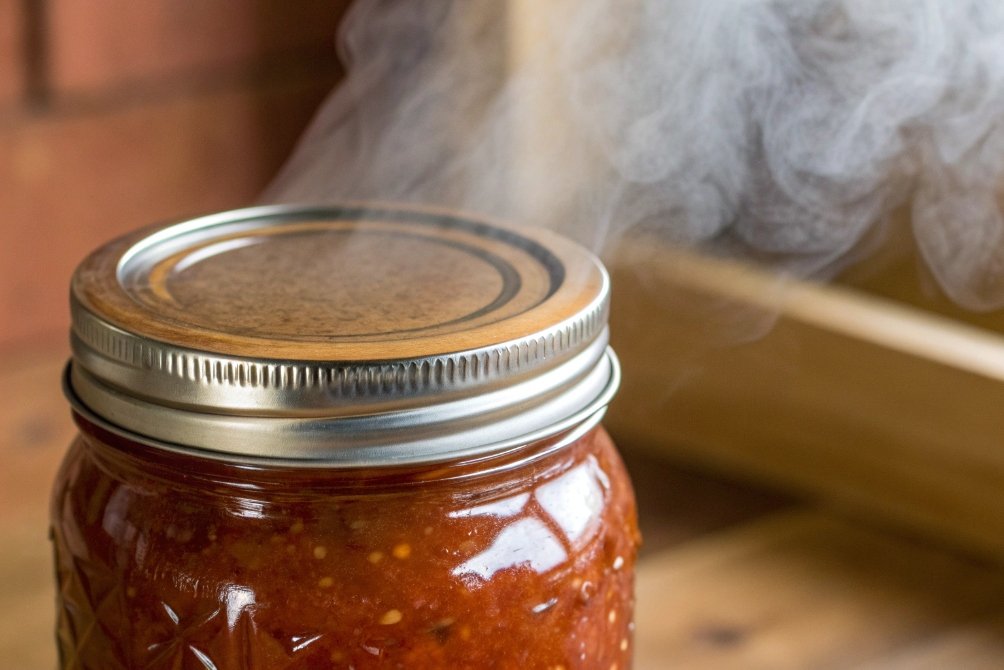
Matching neck finish, closure, and liner to glass and plastic
Glass jars usually have wide-mouth finishes with continuous threads or lug finishes. They pair with metal or composite lids that use plastisol or similar liners. During hot-fill or retort, steam pushes air out. When the product cools, the lid is pulled down, and the liner forms a tight vacuum seal. This combination gives strong tamper evidence, long shelf life, and a solid “pop” sound when opened.
Glass bottles use many different finishes, from crown finishes for beer to cork and capsule for wine, to screw caps with various liners for spirits, oils, and sauces. Because glass is rigid, the seal relies mainly on precise geometry and the compressibility of the liner. Common liner materials include PE foam, PVC-free compounds, and specialty barrier liners when aroma and oxygen control matter.
Plastic bottles behave differently. The neck finish can deform slightly under load and during hot-fill cooling. The wall may panel in as vacuum forms. So designers often use plastic caps with flexible sealing features that can move with the bottle. Many caps include plug seals, wedge seals, or multiple sealing surfaces. For squeezable bottles (for example condiments, honey, or personal care), flip-top caps, sports caps, and pumps help provide controlled dispensing. These integrated functions are much easier to realize with plastic than with glass.
Liner choice also depends on product and process:
- For aggressive chemicals or essential oils, a stronger barrier liner or induction seal often protects both product and closure.
- For carbonated drinks, crown caps and specific screw caps with gas-tight liners are standard on glass, while PET bottles use preforms and caps designed for internal pressure.
- For pharma and lab use, borosilicate glass containers often pair with specialized closures, rubber stoppers, or crimp caps that can handle sterilization and keep a sterile barrier.
Here is a quick overview:
| Container type | Typical closures | Typical liners / seals | Notes |
|---|---|---|---|
| Glass jars (food) | Metal lug, CT lids | Plastisol, PVC-free compounds | Designed for vacuum and retort |
| Glass bottles (beverage) | Crown cap, cork, ROPP screw cap | Barrier liners, natural cork | For still or carbonated products |
| Glass bottles (cosmetic) | Screw cap, pump, dropper | PE foam, induction seal | Focus on precision and premium look |
| Plastic bottles (food) | Plastic screw or flip-top | Compression seal, plug, induction | Can support hot-fill in some designs |
| Plastic bottles (beverage) | Plastic screw cap, sports cap | Specialty gas-tight liners | Coordinate with preform and thread |
When closures, liners, and containers are designed together from the start, leaks, off-flavors, and customer complaints drop sharply. Glass rewards precise, rigid sealing systems. Plastic rewards flexible, integrated dispensing systems that work with the shape and behavior of the bottle.
Conclusion
Glass bottles and jars give superior heat resistance, barrier, and recyclability, while plastic bottles win on weight, impact resistance, and functional caps. The right choice follows your product, process, and brand priorities, not a simple “glass vs plastic” label.
Footnotes
-
Pasteurization: Clear overview of heat treatment and why time/temperature targets matter. ↩ ↩
-
21 CFR Part 114: FDA/eCFR rules for acidified foods and common thermal processing controls. ↩ ↩
-
21 CFR Part 113: Baseline FDA/eCFR requirements that often underpin retort process validation. ↩ ↩
-
Borosilicate glass: Quick reference on composition and why it handles thermal stress better. ↩ ↩
-
Oxygen transmission rate (OTR): Explains the core metric used to compare packaging oxygen barrier performance. ↩ ↩
-
Glass recycling overview: Practical primer on cullet, collection, and closed-loop recycling basics. ↩ ↩
-
APR Design® Guide: Design guidance to improve plastic packaging sortability and recyclability outcomes. ↩ ↩






