
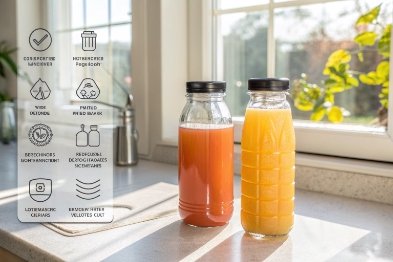
A juice can be perfect on day one, then lose aroma, fade in color, or taste “flat” after a few weeks. Many brands blame the recipe, but the package often decides the real shelf result.
Glass protects aroma and nutrients better because it is inert and has near-zero oxygen transmission through the wall. Plastic wins on shipping cost and break resistance. The right choice depends on process (hot-fill or cold), route length, and whether the brand sells “premium purity” or “everyday convenience.”
Below is how I judge the choice in real projects: protection first (aroma and vitamins), then process fit (heat), then logistics (cost and damage), then brand strategy (premium and sustainability).
Is aroma and vitamin retention better in glass due to lower OTR?
Juice aroma is fragile. Vitamin C is even more fragile. Oxygen is the main enemy for both.
Yes, in most cases. Glass has essentially zero oxygen transmission rate (OTR) 1 through the container wall, so it slows oxidation-driven aroma loss and vitamin C decline. With plastic, OTR varies by resin and thickness, so shelf performance depends more on bottle design and storage temperature.
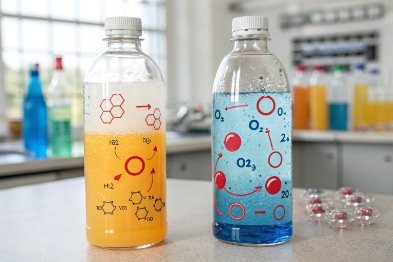
Why OTR matters for juice
Oxygen exposure drives:
- vitamin C loss (ascorbic acid oxidation)
- browning and color shift
- muted citrus and “fresh fruit” top notes
- off-notes that feel “stale” or “cooked”
Glass removes one major oxygen pathway: diffusion through the wall. Plastic bottles can allow slow oxygen ingress over time. Many premium juice brands choose glass because it makes stability easier, especially when shelf life is more than a few weeks.
The cap still decides a lot
Even with glass, oxygen can enter through:
- poor torque control
- wrong liner material
- finish imperfections
- headspace oxygen not controlled during filling
So the right statement is: glass gives the best container barrier, but the system still needs good filling and closure control.
Practical comparison
| Topic | Glass | Plastic (PET/HDPE typical) | What you should test |
|---|---|---|---|
| Oxygen through wall | near-zero | varies by resin/thickness | OTR + shelf sensory |
| Aroma scalping 2 | none | possible in some plastics | aroma panel at 30/60/90 days |
| Vitamin C stability | often better | depends on OTR and storage | vitamin C over time + light exposure |
| Odor carryover (reuse) | very low | can be higher | reuse wash test if refillable |
If the juice is cold-pressed, citrus-heavy, or marketed on “fresh aroma,” glass usually gives more predictable results.
Do hot-fill and pasteurization favor glass over PET?
Heat steps are where packaging fails fast. A bottle that deforms or changes seal geometry can create leaks and oxidation.
Yes, glass generally fits hot-fill and many pasteurization steps more easily because it does not soften or warp. PET can work, but usually needs heat-set PET bottle designs 3, thicker walls, or different processing methods to avoid deformation and vacuum panel issues.
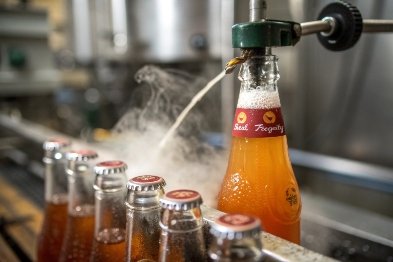
Why glass is simpler for heat
Glass stays dimensionally stable in hot-fill ranges. That protects:
- neck finish geometry (seal stays consistent)
- label alignment and appearance
- bottle shape and shelf presentation
PET can handle hot-fill when it is designed for it, but it often requires:
- heat-set PET bottles
- vacuum panels
- stronger preforms and heavier bottles
- tighter process control
Those features add cost and can change the look. For premium juice, some brands do not want vacuum panels because they reduce the clean, “pure” aesthetic.
Thermal shock is the glass watch-out
Glass can crack if temperature changes too fast (hot liquid into a very cold bottle, or fast cooling sprays). This is a process control issue:
- pre-warm bottles if needed
- control cooling rate
- avoid sudden cold rinses
So glass is heat-tolerant, but it still needs thermal-shock discipline.
Heat-fit summary table
| Process | Glass | PET | Common decision |
|---|---|---|---|
| Hot-fill | strong fit | possible with heat-set | glass is often simpler |
| Tunnel pasteurization 4 | strong fit | possible with careful design | depends on bottle design |
| Cold-fill / high-pressure processing (HPP) 5 | strong fit | strong fit | choose based on marketing + logistics |
If the process includes hot-fill and the brand wants stable shape without panels, glass is often the straightforward solution.
How do weight and breakage affect logistics costs?
A bottle does not only travel once. It travels through plant handling, warehousing, retail stocking, and sometimes e-commerce. That is where glass pays a tax.
Glass increases freight and handling cost because it is heavier, and it adds breakage risk that often requires stronger cartons, partitions, and more careful handling. Plastic is lighter and impact-resistant, so it usually wins on total landed cost, especially for long routes and home delivery.
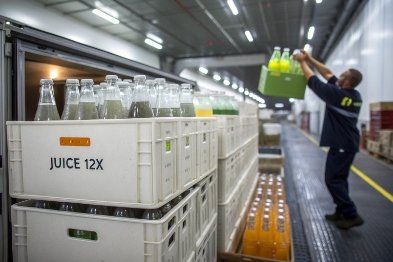
Where the cost shows up
Glass adds cost in:
- higher case weight and fewer units per truck weight limit
- higher labor strain and slower handling
- stronger corrugate and dividers to prevent glass-to-glass hits
- higher claims and cleanup costs when breakage happens
Plastic usually reduces:
- shipping cost per unit
- damage rate
- packaging material spend for protective systems
How to manage glass logistics when you still want glass
Glass can work when:
- distribution is regional
- pallets ship full, not mixed-case
- cartons use partitions
- the bottle is not extremely heavy
- the brand price supports premium packaging cost
A smart way to reduce total cost is to optimize the bottle and the shipper together, not separately.
| Logistics factor | Glass | Plastic | What to do |
|---|---|---|---|
| Freight | higher | lower | optimize pallet and bottle weight |
| Damage rate | higher risk | low | partitions for glass, avoid loose pack |
| E-commerce | difficult | easy | use molded pulp shippers if glass |
| Handling speed | slower | faster | train and design for gentler conveyance |
For e-commerce, plastic often wins unless the brand commits to premium protective packaging.
Premium and sustainability are not the same goal, but they can support each other when the system is designed right.
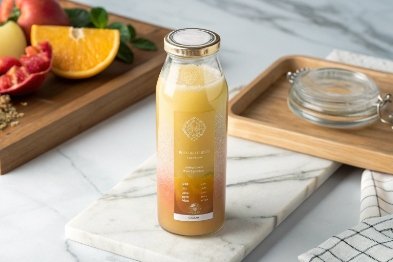
Glass aligns strongly with premium cues (clarity, heft, “pure” feel) and supports recycling and reuse narratives. Plastic aligns with convenience and lower transport emissions per unit because it is light, but sustainability depends heavily on collection and recycling outcomes.
Premium cues
Glass communicates:
- “clean” and “natural”
- ingredient transparency (color, pulp, separation)
- higher perceived value
Plastic communicates:
- on-the-go convenience
- safety in gyms and schools (no shatter)
- lightweight practicality
So brand positioning matters. A cold-pressed wellness brand often gains pricing power with glass. A mainstream value juice line often gains margin with plastic.
Sustainability reality check
Glass:
- is endlessly recyclable in theory
- supports returnable glass 6 loops well
- can be heavy, which raises transport emissions unless reuse offsets it
Plastic:
- is lightweight and efficient to ship
- can be recycled, but results vary by region and contamination level
- often faces consumer skepticism
The best sustainability outcome often comes from the system:
- Returnable glass can be strong when trip count is high and the loop is regional.
- Recycled-content PET 7 can be strong when collection is reliable and designs are recycling-friendly.
A decision guide that works in practice
| Your priority | Better default | Why |
|---|---|---|
| Maximum aroma and vitamin protection | Glass | near-zero OTR, inert |
| Long hot-fill shelf life | Glass | no warping, stable finish |
| Lowest landed cost and easiest shipping | Plastic | light and tough |
| E-commerce and home delivery | Plastic | low breakage risk |
| Premium shelf presence | Glass | clarity and heft |
| Reuse/return program | Glass | durable in loops when managed |
Conclusion
Glass usually wins on taste, aroma, and premium cues, while plastic wins on shipping cost and toughness. Process heat and distribution distance should decide the final choice more than opinion.
Footnotes
-
Definition and measurement context for OTR in packaging, useful when comparing barrier performance. ↩ ↩
-
Explains flavor–package interactions including scalping, helping you judge when plastics may mute juice aromas. ↩ ↩
-
Overview of hot-fill PET lightweighting and design constraints; helps evaluate heat-set PET options versus glass. ↩ ↩
-
Background on pasteurization methods; useful for understanding how tunnel pasteurization fits beverage shelf-life processes. ↩ ↩
-
Clear overview of high-pressure processing and where it’s used, useful when comparing cold-fill/HPP with hot-fill. ↩ ↩
-
Explains refillable bottle systems and return logistics basics, helpful when modeling returnable glass sustainability and economics. ↩ ↩
-
Practical rPET overview with examples and typical recycled-content ranges; helpful for evaluating recycled-content PET claims. ↩ ↩






