
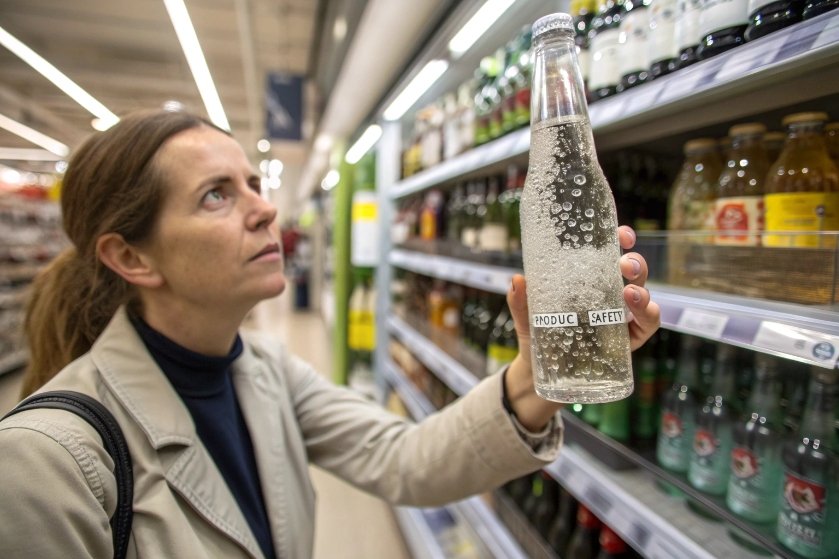
When customers see bubbles in a bottle wall, many worry about safety, not just looks. Inside the factory, we know those tiny voids can tell a bigger performance story.
Bubbles in glass bottles act as stress concentrators, can weaken impact and pressure performance, disturb coatings and hygiene, and often limit both AQL acceptance and brand positioning, depending on their size and location.
To manage bubbles well, we first separate “cosmetic” from “functional”. Some tiny seeds in non-critical zones are acceptable. Others, especially in the finish or as open blisters, are red flags for strength, sealing, and safety. Once we understand how a bubble interacts with stress and product, AQL rules become much easier to explain to customers.
Do bubbles create stress concentrators that weaken impact and pressure strength?
A bottle does not fail because of “glass” in general; it fails at its weakest point. Bubbles often become that point under impact or internal pressure.
Bubbles act as stress concentrators in the glass wall, so they reduce impact resistance, lower internal-pressure performance, and make bottles more sensitive to thermal shock and rough handling on the line.
How bubbles change the way a bottle carries load
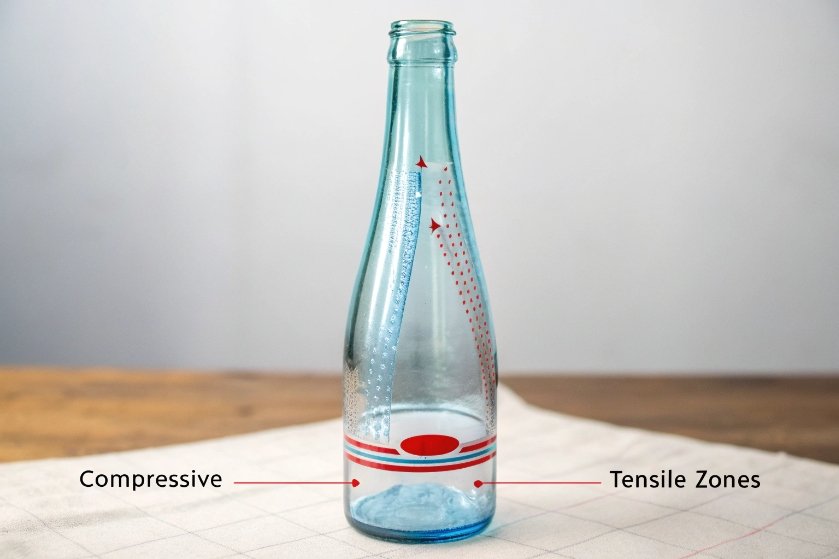
When glass is perfect, stress spreads smoothly through the wall. A bubble interrupts that flow. Stress lines bend around the void and become denser at the edges. That local peak is where cracks like to start—and teams often confirm the “weakest point” by reading fracture features using fractography of ceramics and glasses 1.
1. Tensile and impact strength
Most glass failures begin in tension. When a bottle is hit on the side, the outer wall on the opposite side goes into tension. If a bubble sits near that surface, the tension focuses around its edge. Even a small bubble can lower the local strength compared with solid glass, especially if several seeds form a cluster.
Under line handling, pallet vibration, or warehouse drops, these local weaknesses increase the chance of random breakage. That shows up as higher “field breakage” or more damage in distribution tests.
2. Internal pressure and carbonation
For carbonated beverages or pasteurized/retorted products, bottles must survive internal pressure. Here, bubbles in the body or shoulder behave like small flaws in a pressure vessel. The hoop stress 2 around the circumference is highest in these regions. A seeded wall will usually fail at a lower pressure than a clean wall with the same thickness.
Bubbles near thin sections are even more critical. The wall there already carries more stress per millimeter. Add a void, and the safety margin shrinks quickly.
3. Thermal shock resistance
Thermal shock loads the outside and inside surfaces differently. Any flaw at or near these surfaces amplifies the thermal stress. Bubbles close to the outer wall reduce the temperature jump the bottle can tolerate, especially under thermal shock 3. So a bottle with many surface-adjacent seeds may fail thermal shock tests, even if geometry and thickness are correct.
4. Quick comparison
| Bubble position | Main risk type | Typical effect |
|---|---|---|
| Near outer surface | Impact, thermal shock | Higher breakage on handling and washing |
| Mid-wall (isolated) | Moderate impact/pressure risk | Often tolerable within limits |
| Near inner surface | Pressure, pasteurization | Earlier failure under internal load |
| Cluster in shoulder | Combined impact + pressure | Weak zone during line and field use |
This is why many QA standards focus not just on “count”, but on bubble size, position, and clustering when judging mechanical performance.
Can bubbles compromise barrier, cleanliness, or product safety?
Most customers worry about safety first. They ask: “Will these bubbles leak? Will they affect the product?” The answer depends on whether the bubble is fully closed or open to the surface, and where it sits.
Closed seeds inside the wall usually do not affect barrier performance, but surface-breaking blisters and bubbles in the finish or neck can create leak paths, harbor contamination, and threaten product safety.
When bubbles move from cosmetic to hygiene and barrier problems
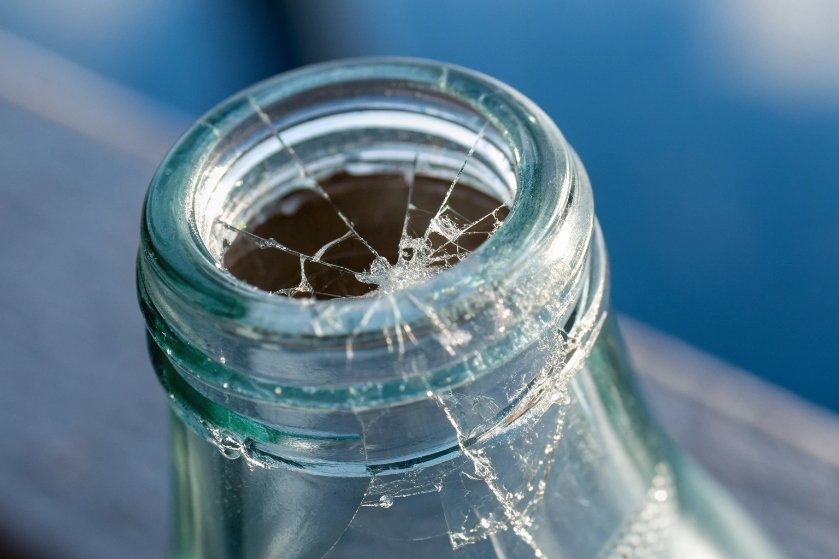
Barrier and cleanliness issues do not come from every bubble. They come from specific bubble types that break the smooth, clean surface the product and closure rely on.
1. Open blisters and sharp cavities
If a bubble breaks through to the surface, it leaves a pit, a crater, or a thin shell of glass over a void. This area may have microcracks and sharp edges. It can chip under contact, especially on filling lines or in capping. Those chips can fall into the product or create further cracks.
Open blisters on the internal surface can trap product residues. Cleaning becomes harder, and biofilm or mold risk rises if the bottle is reused. Even for one-way packaging, trapped residues combined with a rough micro-surface are not ideal for hygiene.
2. Bubbles in finish and sealing areas
The finish is the most sensitive zone from a barrier view. A bubble right on the sealing surface (“land”) 4, thread, or under the pilfer band can interrupt the contact between closure and glass. Under torque and internal pressure, this weak spot can “relax”, leading to slow leaks, CO₂ loss, or oxygen ingress.
Even small bubbles in the neck bore can interfere with cork or plug-style closures. They may cause local thinning that cannot withstand insertion forces or removal forces without chipping.
3. Coatings and cleanability
Hot-end and cold-end coatings form thin, continuous layers that help with abrasion and scuff resistance. Bubbles and blisters disturb these layers. Raised blisters burn or wear faster; pits do not receive enough coating. During handling and washing, these sites become hotspots for scratches and wear—especially when cold-end bottle coatings 5 are expected to protect the surface.
4. Safety view summary
| Bubble type/location | Barrier / cleanliness risk | Typical QA decision |
|---|---|---|
| Closed seed, body wall | Very low | Often acceptable |
| Open blister, inner surface | Residue trap, hygiene risk | Usually reject |
| Bubble on sealing surface | Leak, torque loss, CO₂ retention problems | Critical defect, reject |
| Blister in thread area | Chipping, closure damage | Major defect |
So, while many bubbles are more about appearance, a small group is directly tied to safety and must be controlled strictly.
How do visible bubbles influence brand perception and AQL limits?
From a consumer’s eyes, bubbles are not a process story. They are a visual signal: “high quality” or “cheap and flawed.” Brand teams are very sensitive to this, especially for clear and premium products.
Visible bubbles reduce perceived quality, push brands to tighten AQL limits, and increase factory scrap and inspection effort, even when those bubbles are technically harmless.
Why aesthetics around bubbles cost real money
The same bottle that passes all strength and sealing tests may still fail in the market if buyers see too many bubbles in the main viewing area.
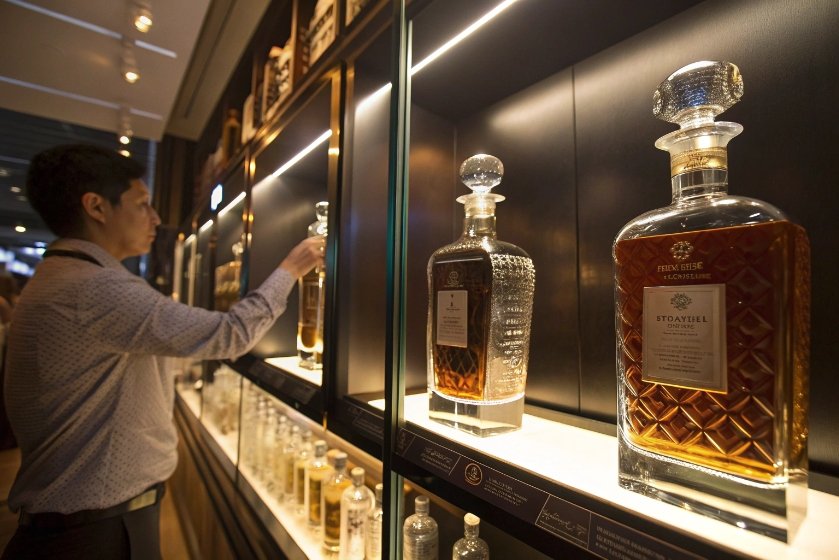
For mass beer or sauce in amber glass, a few seeds are often seen as normal. Consumers rarely inspect the wall under strong light. For premium spirits, cosmetics, and high-end water in flint or extra-flint glass, expectations are different. Clear, flawless appearance is part of the brand promise.
In these segments, visible bubbles in the front panel are often treated as a major defect, even if structurally harmless. This pushes AQL numbers down and increases sorting and rework.
2. AQL and inspection impact
When brands tighten bubble acceptance criteria, factories must invest more in both manual sampling and automatic inspection. Vision systems are very sensitive to optical distortion from bubbles. They may flag bottles that a human would accept, especially when settings are conservative.
More false rejects mean more cullet, more re-melt, and more cost per sellable bottle. At the same time, the plant must ensure that truly defective bubbles (for example, in the finish) are never missed. Balancing these two needs is a constant QA challenge.
3. Communication and agreed standards
To avoid disputes, the best approach is to define bubble zones, size limits, and count per bottle in a joint standard. Then everyone knows which visible bubbles are “allowed” and which are not.
For example, a brand may accept a small number of tiny seeds in the shoulder, but zero bubbles above a certain size in the main viewing panel. Another may accept more bubbles in tinted bottles but almost none in clear glass.
4. Brand and QA view combined
| Product type | Typical bubble tolerance in viewing area | Brand perception impact |
|---|---|---|
| Value food in amber | Some small seeds accepted | Low impact |
| Mainstream beer | Limited seeds, no large blisters | Moderate impact |
| Premium spirits | Very low visible seeds, no blisters | High impact |
| Luxury cosmetics | Near-zero visible bubbles in front panel | Critical to brand image |
In short, bubbles that are harmless technically can still be “too expensive” commercially, because they damage how the product feels in the hand and in the store.
When are cosmetic bubbles acceptable versus functionally critical?
Not every bubble deserves a reject stamp. The key is to separate bubbles that only affect looks from those that threaten function, safety, or legal compliance.
Cosmetic bubbles are small, closed, and located in non-critical zones, while critical bubbles are large, clustered, surface-breaking, or located in finishes, sealing areas, or stressed structural regions.
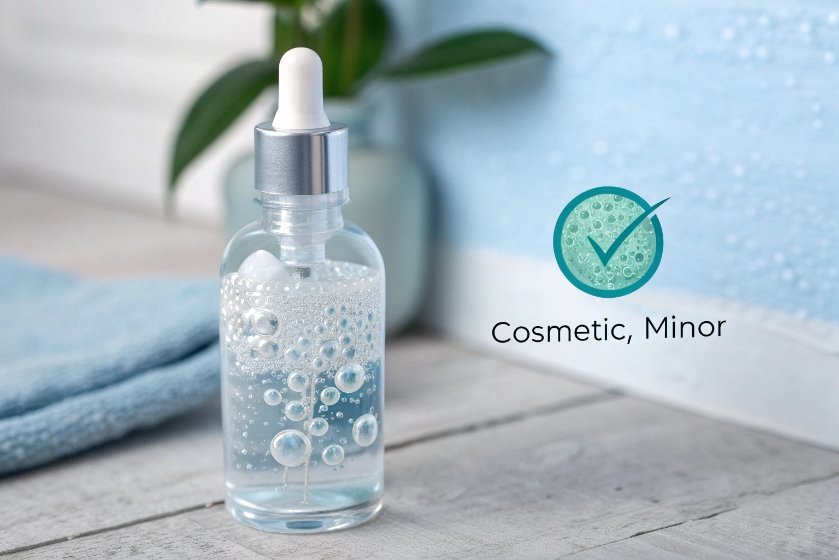
Turning bubble theory into clear acceptance rules
In real production, “acceptable” must be defined clearly. Otherwise, operators over-reject safe ware or pass risky defects.
1. Defining cosmetic bubbles
Cosmetic bubbles are usually:
- Small (for example, below an agreed diameter)
- Closed, not open to any surface
- Isolated, not clustered in groups
- Located away from critical stress or sealing areas
They do not affect strength tests, do not disturb closure performance, and are barely seen at normal viewing distance. Many standards treat them as minor defects or even ignore them within a small count per bottle.
2. Defining functional or critical bubbles
Functional or critical bubbles usually have at least one of these traits:
- Located on or near the sealing land, thread, or neck bore
- Open to the surface, forming pits or sharp cavities
- Large enough to thin the wall locally
- Positioned in high-stress areas (shoulder corners, base radius)
- Arranged in clusters that create a weak band
These bubbles can cause leakage, loss of carbonation, reduced impact strength, or unexpected field failures. They are treated as major or critical in AQL plans and usually trigger immediate rejection.
3. Typical acceptance matrix
Each project should map bubbles into a simple table the whole team can use:
| Bubble feature | Classification | Action |
|---|---|---|
| Tiny closed seed, mid-body | Cosmetic / minor | Accept within AQL limits |
| Several seeds, shoulder cluster | Functional risk | Tight control, limit count |
| Bubble on finish land | Critical | Reject |
| Open blister, inner surface | Major / hygiene risk | Reject |
| Large bubble in base radius | Structural risk | Reject or strict limit |
With this matrix, operators and buyers understand that “zero bubbles” is not realistic or necessary for all products. The target becomes “zero critical bubbles” and controlled cosmetic bubbles, matched to brand level and end-use risk.
When disputes happen, it also helps to point both sides to a shared reference like the glass container defect causes and remedies guide 6, then convert that language into your project’s zone-and-size limits.
Conclusion
Bubbles in glass bottles are more than small visual defects; they can weaken strength, disturb sealing and hygiene, and reshape brand perception. The real skill is not to chase zero bubbles, but to control where they appear and how they affect performance—then lock those rules into an ISO 2859-1 AQL sampling plan 7 that both buyer and factory apply consistently.
Footnotes
-
NIST fractography guide — Learn how flaws start cracks in glass. ↩ ↩
-
Pressure vessel hoop stress basics — See hoop-stress formulas behind pressure failures. ↩ ↩
-
Thermal shock lesson — Explains why rapid hot–cold swings crack glass. ↩ ↩
-
Bottle anatomy: sealing surface — Defines the sealing land and why defects leak. ↩ ↩
-
Cold-end coating overview — Shows how coatings reduce scuffs and protect strength. ↩ ↩
-
Container defect guide — Map bubble symptoms to likely causes and fixes. ↩ ↩
-
ISO 2859-1 AQL overview — Official summary of acceptance sampling by attributes. ↩ ↩






