
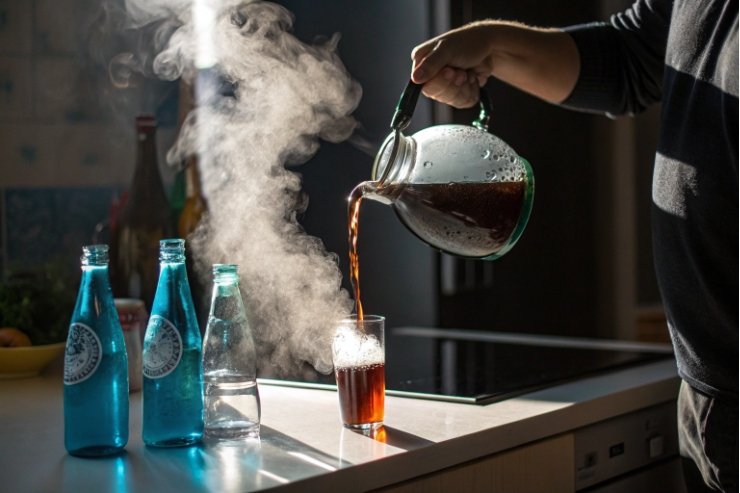
If a bottle must handle boiling water, ice, or lab-style infusions, choosing the wrong glass can turn one bad pour into a cracked mess.
Borosilicate glass bottles differ from ordinary soda-lime bottles mainly in thermal-shock resistance, chemical durability, weight, and clarity. They survive much higher ΔT, stay clearer and slightly lighter, but cost more, and their impact strength is not always higher than well-designed soda-lime.
In real projects, I see the same confusion: “borosilicate is always better, right?” The answer is: sometimes yes, sometimes very overkill. The key is to match glass type to how your bottle is used, how it is processed, and what your brand wants to say.
What CTE and ΔT advantages give borosilicate better thermal-shock resistance?
Many “mystery breaks” happen when someone pours hot tea into a cold bottle or moves a chilled bottle into hot water. The glass was not designed for that ΔT.
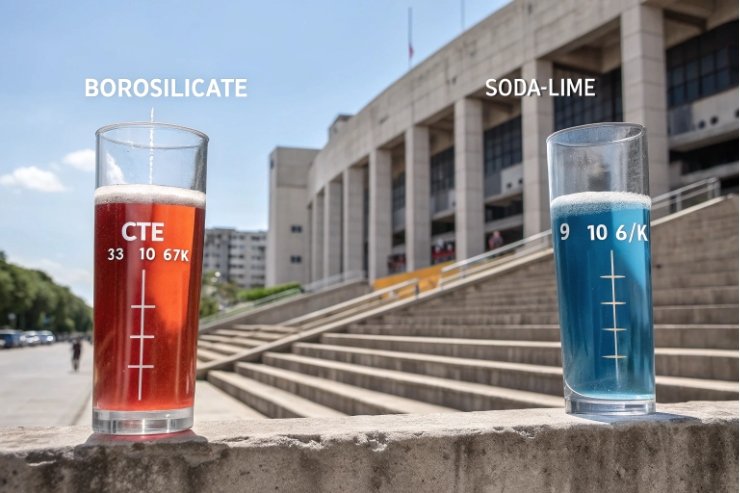
Borosilicate has a much lower coefficient of thermal expansion (CTE) and higher ΔT tolerance than soda-lime, so it builds less internal stress during fast temperature swings and is far less likely to crack from thermal shock.
Understanding CTE and thermal stress
When you heat glass, it expands; when you cool it, it shrinks. If the surface changes temperature faster than the core, you get stress. If that stress is higher than the glass can handle, cracks appear.
CTE tells us how much a material expands per degree of temperature change. Lower CTE means less expansion and less stress for the same ΔT. A quick reference for typical values is the coefficient of thermal expansion (CTE) table for common materials 1.
Typical values (order-of-magnitude guidance, not a substitute for your bottle spec):
| Property | Borosilicate glass | Soda-lime glass |
|---|---|---|
| CTE (approx.) | ~3.3 × 10⁻⁶ /K | ~9 × 10⁻⁶ /K |
| Safe ΔT range (typical bottle) | ~120–170 °C | ~40–60 °C |
| Typical use window | Freezer ↔ near boiling | Fridge ↔ moderate hot fill |
For a representative low-expansion lab grade, see the SCHOTT DURAN® borosilicate glass 3.3 property data 2. For the “ordinary” container baseline, most beverage bottles are soda-lime-silica glass 3.
Because borosilicate expands only about one-third as much as soda-lime per degree, the same hot-to-cold shock generates much lower surface stress.
Typical temperature scenarios
Think about what people actually do with “water bottles” and “lab-style” bottles:
- Brewed tea directly into a room-temperature bottle.
- Boiling water into a bottle just out of the fridge.
- Rapid rinsing with very hot water after iced use.
- Sterilizing bottles in hot ovens or steam.
Borosilicate handles these swings much more safely. A ΔT of 100 °C or more is usually fine. Soda-lime glass is happier with slower changes and smaller gaps. It does well in typical beverage hot-fill or pasteurization lines, but not in “freezer to kettle” abuse.
If you want to specify and verify this formally for container-style bottles, many labs reference the ASTM C149 thermal shock resistance test method for glass containers 4.
When soda-lime is still enough
For many beverage applications, soda-lime does the job:
- Ambient still water and juice.
- Carbonated drinks with controlled pasteurization.
- Chilled products that never see boiling water.
If your process stays within a ΔT of 40–60 °C and consumers do not expect “pour boiling water directly into the bottle”, soda-lime can be safer and cheaper. Borosilicate earns its keep when you know abuse and high ΔT are part of the product story.
How do weight, clarity, and impact strength compare to soda-lime glass bottles?
Thermal resistance is not the only difference. People also notice how heavy the bottle feels, how clear it looks, and how it behaves in drops.
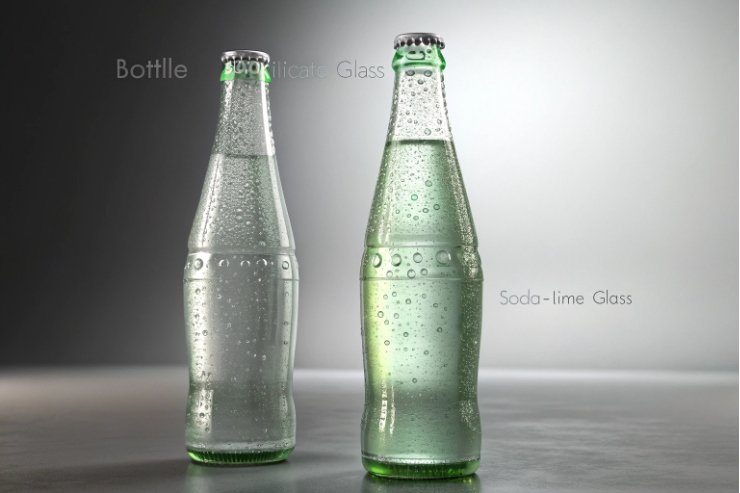
Borosilicate is slightly lighter and optically clearer than soda-lime at the same wall thickness, but its impact strength is similar or a bit lower in annealed form; soda-lime is still the main choice when you want heavy, tough, mass-market bottles.
Density and weight in the hand
In practice, a borosilicate bottle with the same design and wall thickness will weigh a bit less. The difference is not huge, but it can be useful when you want a tall, lab-style bottle that still feels manageable.
If your brand wants a “heavy, luxury” feel, soda-lime’s higher density can actually help. You can use the same volume but keep more weight in the base and walls without pushing cost too far.
Optical clarity and color
Borosilicate usually has lower iron content, so it looks more “neutral”:
- Very clear, almost no green tint.
- Works well for “laboratory clean” or “pure water” positioning.
Soda-lime often shows:
- Green cast in standard flint.
- Strong color in green or amber bottles.
Sometimes that green tint is a feature. It can signal “mineral water” or “classic beverage” style. For clear, color-critical drinks, borosilicate’s neutrality gives a crisper look.
Impact strength and break behaviour
A common myth is that borosilicate is “unbreakable”. It is not. Compared at similar thickness and annealing:
- Impact strength is similar, sometimes slightly lower than soda-lime.
- Borosilicate is stiffer and may be more brittle in some hit conditions.
- Soda-lime can also be strengthened via chemical strengthening (ion exchange) to create a surface compression layer 5.
So if your main risk is drops and side hits in daily life, geometry and thickness matter more than base glass type. A well-designed soda-lime bottle with soft curves can outperform a slender borosilicate bottle with sharp transitions.
For water bottles and pitchers, a useful rule is:
- Choose borosilicate when thermal shock is the main enemy.
- Choose robust soda-lime (or tempered soda-lime) when rough handling and impact are the main enemy.
When is borosilicate justified for hot/cold or lab-style bottle use?
Borosilicate clearly costs more. So it only makes sense when it solves a real problem or supports a clear brand story that soda-lime cannot.
Borosilicate is justified when your bottles must safely handle direct hot pours, big hot-cold swings, repeated sterilization, or a lab-style image, while standard soda-lime is usually enough for normal table water and ambient beverages.
Use cases that truly need borosilicate
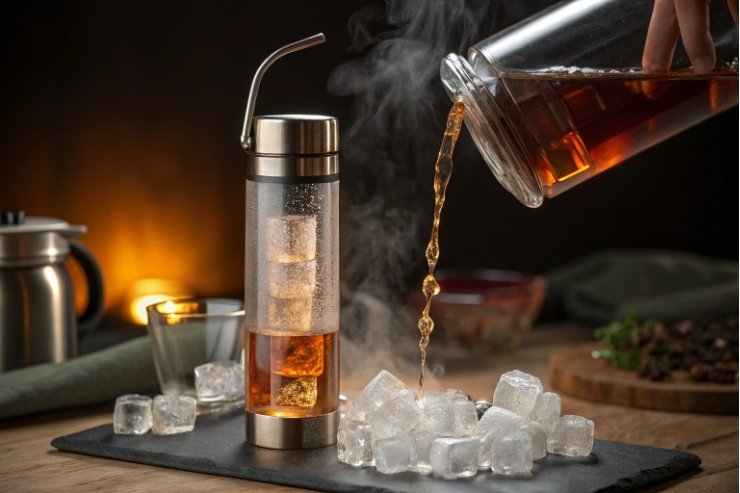
Here are situations where borosilicate earns its extra cost:
- Hot & iced in one bottle
Customers brew tea or coffee directly in the bottle, then add ice. - Stovetop kettles and direct-heat carafes
Glass sits over an open flame or electric hob (with proper design). - Lab-style infusion or detox bottles
Logo and marketing lean on “scientific”, “clean”, “precision.” - High-temperature sterilization
Bottles see repeated oven or autoclave cycles. - Laboratory or pharmaceutical use
Strict thermal and chemical resistance are mandatory and often referenced to the ASTM E438 laboratory glass specification 6.
In these cases, borosilicate reduces returns, breakage risk, and safety incidents. It also lets your marketing team promise “from boiling to ice” with much more confidence.
Cases where soda-lime is the smarter choice
Soda-lime stays the default in many beverage categories for good reasons:
- Standard bottled water
No direct boiling water. Normal filling and storage conditions. - Flavored waters and soft drinks
Controlled ΔT and internal pressure; impact resistance matters more. - Juices and teas with hot-fill or tunnel pasteurization
Processes stay within soda-lime thermal limits, and glass cost is sensitive. - Returnable, refillable pool systems
Soda-lime pool bottles handle many wash cycles at reasonable cost.
In these cases, spending more on borosilicate gives limited benefit. It does not change oxygen barrier or taste, so the main gain is thermal headroom that you may not use.
Matching material to product promise
A simple decision table helps:
| Product / use scenario | Recommended glass type | Why |
|---|---|---|
| Everyday still water, ambient | Soda-lime | Cost-effective, enough performance |
| Premium clear water, fridge only | Soda-lime or borosilicate | Choose by budget and clarity needs |
| Tea / coffee bottle, hot-to-cold use | Borosilicate | High ΔT, direct hot pour |
| Lab-style detox / infusion bottle | Borosilicate | Look + function match |
| Refillable horeca water bottle | Soda-lime (robust design) | Impact + cost more important |
Once you tie material choice to a clear use case, the “borosilicate or soda-lime?” debate becomes much easier to explain inside your team and to your customers.
Do tooling, cost, and lead times differ for borosilicate bottle production?
Even if borosilicate is technically ideal, you still have to get bottles made, at the right cost and schedule.
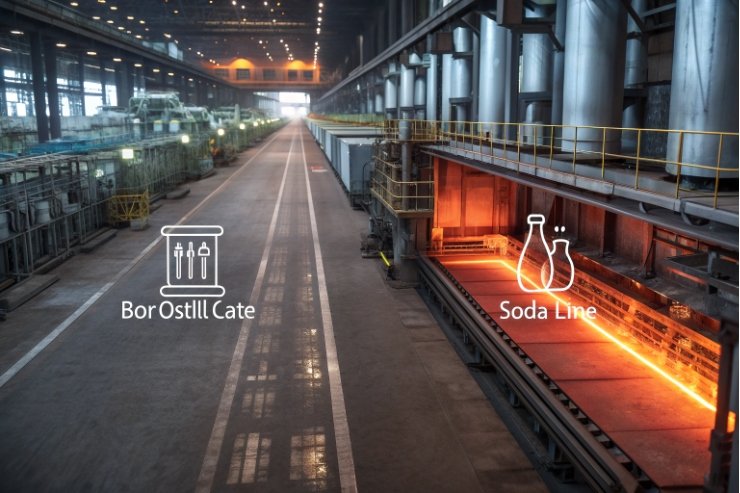
Borosilicate needs higher melting temperatures, more specialized furnaces, and smaller dedicated lines, so unit cost, MOQs, and lead times are usually higher than for soda-lime bottles made on large, standard container lines.
Melting and forming differences
Borosilicate melts and works at higher temperatures than soda-lime. This means:
- Furnaces need refractories and burners suitable for those higher temperatures.
- Energy use per kg of glass can be higher.
- Forming machines and molds may run different cycles to match viscosity.
Many large container plants are optimized for soda-lime only. Borosilicate is more common in labware, cookware, and specialty lines. That smaller base of capacity often leads to:
- Fewer suppliers who can do complex bottle shapes.
- More limited color options (often clear only).
- More careful planning of furnace campaigns and changeovers.
Tooling and design flexibility
Mold technology is similar in structure, but there are trade-offs:
- Complex shapes are possible, but the design must respect higher working temperatures and different flow behavior.
- Very thick heavy bases or extreme embossing can be harder to justify on cost.
- Minimum order quantities for new borosilicate shapes are often higher than for standard soda-lime bottles.
If you can adapt your design to an existing borosilicate “family” (for example, standard lab-style shapes), you reduce tooling and development time a lot. Fully custom borosilicate bottles need more engineering and trial work than standard water bottles in soda-lime.
Cost, MOQs, and lead time
From a commercial point of view, expect:
- Higher unit price per bottle versus soda-lime of similar size.
- Higher MOQs, because production runs need to justify furnace time.
- Longer lead times, especially for custom designs or when furnace campaigns are scheduled months in advance.
Recycling is another point. Most municipal glass streams are tuned for soda-lime. Specialty glasses like borosilicate (often found in ovenware) cannot be recycled back into soda-lime container glass 7 without risking melt defects, so you should think of borosilicate bottles as long-life, reuse-focused items rather than one-way mass packaging.
For premium hot/cold bottles or lab-style hero SKUs, these trade-offs can be acceptable. For mainstream water brands, soda-lime usually stays the better industrial fit.
Conclusion
Borosilicate bottles shine when your product promises real hot-cold performance or a lab-clean image; soda-lime remains the smart, efficient workhorse for everyday bottled water and most standard beverage lines.
Footnotes
-
Compare typical thermal expansion numbers to estimate stress risk during rapid hot–cold swings. ↩︎ ↩
-
Use a recognized “borosilicate 3.3” datasheet to sanity-check CTE, density, and temperature limits. ↩︎ ↩
-
Quick overview of ordinary soda-lime glass composition and why it’s more temperature-sensitive. ↩︎ ↩
-
See the standard method labs use to quantify thermal shock resistance for bottles and jars. ↩︎ ↩
-
Understand how ion exchange adds surface compression to improve drop and impact performance. ↩︎ ↩
-
Learn how lab standards classify borosilicate vs soda-lime and define tests for expansion and durability. ↩︎ ↩
-
Explains why specialty glass types can disrupt container-glass recycling and why separation matters. ↩︎ ↩






