

A bottle that passes lab tests can still crack on a filling line, in a container, or in a customer’s fridge door. Packaging alone cannot solve that.
You reduce fragility by combining smarter bottle geometry, tighter wall distribution, controlled annealing and coatings, and gentler line handling so stress never concentrates in one weak point.
Think of a wine bottle as a stress-management project. Design spreads stress. Forming and annealing set internal strength. Coatings and handling protect the surface. Line engineering decides how often the bottle gets hit. When all four are tuned together, breakage drops without simply “adding more glass”.
Which design tweaks make wine bottles mechanically stronger?
A small design change in the heel or shoulder can cut breakage more than adding 30 g of glass, especially on long export routes.
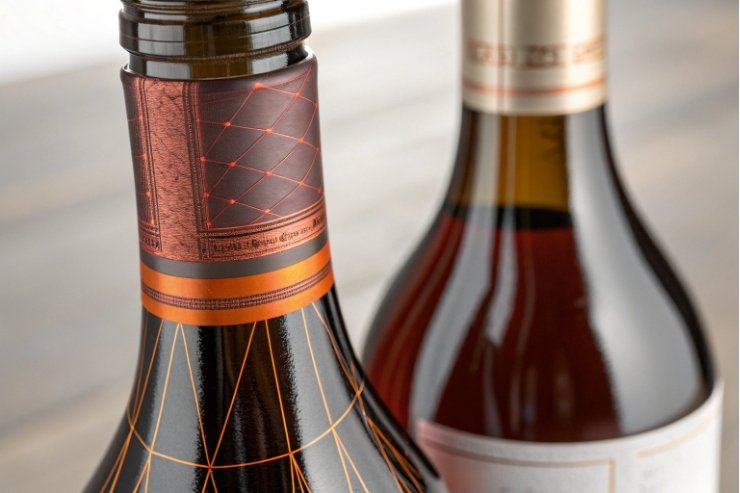
Design tweaks that improve strength include smoother shoulder radii, safer heel geometry, controlled base thickness, realistic punt depth, and shallow branding details that avoid sharp, stress-raising corners.
1. Use generous radii where stress likes to concentrate
The three fragile areas are:
- shoulder transition
- heel/base ring
- neck/finish transition
Sharp transitions act like crack starters. A gentle radius spreads tension, especially under impact and thermal change.
What to tune:
- Shoulder: avoid knife-like shoulders. A slightly softer radius still looks premium but lowers peak stress.
- Heel: design a rounded heel that rolls into the base instead of a sharp inside corner.
- Neck/finish: design a smooth neck-to-shoulder blend and keep any embossing away from that transition.
2. Treat base thickness and punt depth as structural tools, not only style
Heavier bases feel premium, but they are not magic if glass is stolen from the shoulder.
- Base thickness: specify a minimum structural ring thickness, not just “heavy base”. The ring takes a lot of impact and stacking load.
- Punt depth: a moderate punt helps stiffness and visual depth. An extreme deep punt can pull too much glass downwards and leave a thin shoulder or heel if forming is not perfect.
- Rocking control: a flat, stable base reduces point loading on conveyors and pallets. That lowers heel cracks and star fractures.
3. Keep embossing and engraving shallow and well supported
Deep embossing over thin walls or seam lines concentrates stress.
Better rules:
- keep embossing shallow, especially near the shoulder and heel
- use bold, rounded artwork instead of fine, sharp strokes
- avoid running deep features over mold seams or thickness transitions
- if you need a dramatic logo, place it over a slightly thicker panel
4. Use FEA and CAD early instead of fixing breakage late
Finite element analysis (FEA) 1 on the bottle model helps see likely high-stress zones before a mold is cut. This is especially useful for:
- lightweight bottles
- very tall or slender shapes
- complex embossing or unusual punts
A quick FEA pass often reveals that a 1–2 mm radius change or a slightly stronger heel band does more than adding 20 g of glass.
| Design element | Risk if ignored | Safer adjustment |
|---|---|---|
| Shoulder radius | Shoulder cracks under impact/ΔT | Slightly softer radius, thicker shoulder band |
| Heel shape | Star cracks and heel chips | Rounded heel, stronger base ring |
| Punt depth | Thin shoulders, thin heel | Moderate depth with controlled distribution |
| Emboss depth | Stress hot spots | Shallow, rounded embossing |
| Base stability | Rocking, point loading in cartons | Flat, stable footprint |
How do annealing curves and surface coatings reduce micro-checks and scuffing?
Many “mystery” cracks are not random. They are residual stress plus small scratches that grow quietly during storage and shipping.
A correct annealing curve removes internal stress so bottles can survive impact and temperature swings, while hot-end and cold-end coatings reduce surface scratches that become micro-cracks.

1. Annealing: invisible but critical for strength
During forming, the bottle cools unevenly and internal stress builds. The annealing lehr 2 slowly cools bottles through the critical temperature range to let stress relax.
Good annealing does three things:
- keeps temperature uniform across the belt and across the bottle wall
- controls cooling rate so stress can relax instead of freeze in
- repeats the same curve day after day, shift after shift
When annealing is wrong, you see:
- random neck or shoulder cracks after filling
- heel cracks that appear days into storage
- bottles that break on modest temperature change (cold storage → warm room)
What to demand from a manufacturer:
- documented lehr curve and setpoints
- routine stress checks with a polariscope 3
- clear reaction plan when stress readings drift
2. Hot-end and cold-end coatings: friction and scuff control
Glass is strongest when its surface is intact. Coatings protect that surface.
- Hot-end coating (often applied just after forming) improves scratch resistance and helps later handling.
- Cold-end coating (after annealing) reduces surface friction, so bottles slide instead of grab on conveyors and in cartons.
Benefits:
- fewer scuffs at shoulders and heels
- less label rub-through
- lower chance that tiny scratches evolve into cracks under load
Coating stability matters more than the brand name. Uneven coating creates high-friction spots where damage concentrates. If you want a concrete reference for what these lubricity layers are designed to do, review a typical cold-end coating specification 4 and align it to your handling and pack tests.
3. Link annealing and coatings to real-world tests
Do not just accept “we have coatings” or “we do annealing”. Ask for:
- stress map examples from bottle cross-sections or polariscope images
- scuff/abrasion tests before and after vibration in real cartons
- comparison of breakage rates before/after coating or lehr tuning
If you change bottle weight or geometry, ask the factory to re-confirm both stress and scuff performance. Even small changes can move hot spots.
| Control lever | What it reduces | Simple validation method |
|---|---|---|
| Annealing curve | Residual stress and checks | Polariscope checks + crack pattern review |
| Hot-end coating | Early surface scratches | Scuff test after conveyor simulation |
| Cold-end coating | Friction and bottle-to-bottle damage | COF feel + carton vibration test |
| Combined effect | Delayed breakage and returns | Retain samples aged through real route |
How can NNPB/PPB and weight maps tighten wall uniformity?
Adding grams is easy. Getting every gram into the right zone is hard. Thin shoulders and heels are where many fractures begin.
Narrow Neck Press and Blow (NNPB) and Press and Blow (PPB) improve wall distribution control, while regular weight/thickness mapping keeps forming tuned so shoulders, heels, and panels stay within safe limits.
1. Why wall uniformity often matters more than total weight
A “heavy” but uneven bottle can be weaker than a lighter bottle with good distribution. Thin bands at the heel or shoulder become weak links under:
- pallet stacking
- corner drops
- thermal shock
Uniform walls:
- keep local stress lower
- reduce the chance that damage localizes into one failure ring
- support lightweighting without sacrificing robustness
2. How NNPB/PPB improve glass placement
In blow-and-blow, the gob is shaped mostly by air. Variation in temperature or timing creates more wall variation.
In Press and Blow and NNPB, the parison is shaped more directly, which improves thickness placement. If you want a quick visual of how this works in practice, the narrow-neck press-and-blow process diagram 5 is a helpful reference for discussing wall targets with a factory.
For wine:
- NNPB is very useful for tall or lightweight bottles where wall control is critical.
- PPB is helpful for some larger finishes or format changes.
The tradeoff: these processes demand tight process control and skilled operators. A good supplier can show they use NNPB/PPB correctly, not just on a brochure.
3. Use weight and thickness maps as a control tool, not only as a report
A “weight map” or thickness map records measured thickness at key points:
- shoulder front/back
- body mid-height
- heel front/back
- punt zone
- neck transition
Actions:
- set clear min/max targets for each zone
- track by mold cavity, not only by batch
- adjust gob weight, gob temperature, and timing based on these maps
This lets you:
- remove a bad cavity early, before big losses
- catch slow drift in distribution as molds wear
- support lighter designs without extra breakage
| Forming / QC tool | What it controls | What you want to see |
|---|---|---|
| NNPB / PPB | Parison shape and wall | Stable thickness from neck to heel |
| Gob weight control | Overall mass and distribution | Low variation bottle-to-bottle |
| Thickness mapping | Thin spots and weak rings | All zones within spec limits |
| Cavity-level data | Localized faults | Fast removal or repair of bad cavities |
What handling and line-speed changes cut contact damage at filling?
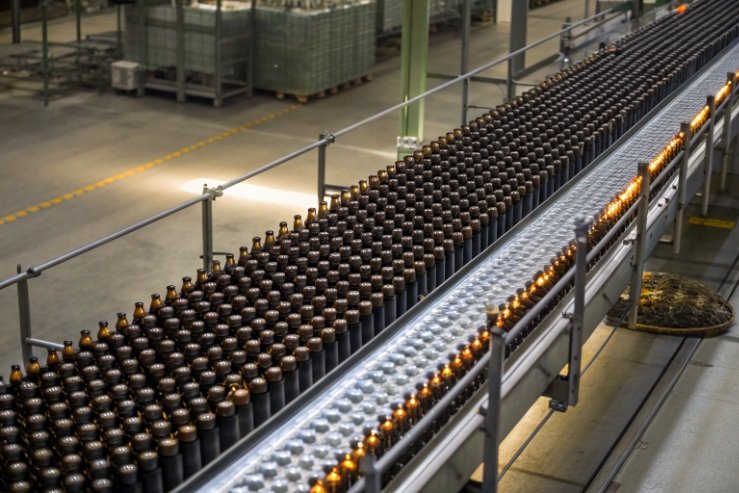
Many cracks are not from manufacturing. They are from the line: bottles slamming rails, backing up in accumulators, or hitting each other at star wheels.
You cut line damage by reducing glass-to-metal and glass-to-glass contact, aligning conveyors and transfers, controlling back pressure, and matching line speed to the bottle’s geometry and coating level.
1. Replace impact with controlled guidance
Common damage points:
- hard guide rails and tight squeezes
- sudden changes in conveyor speed
- level differences at transfers
- overfilled accumulation tables where bottles clink constantly
Better practice:
- use low-friction, forgiving rail materials
- fine-tune rail spacing so bottles are guided, not pinched
- align infeed/outfeed heights at star wheels and transfers
- keep accumulation pressure low and controlled
Even small improvements in rail alignment and transfer geometry reduce:
- heel and shoulder scuffs
- star cracks at the heel ring
- thin-line scratches that later become cracks
2. Match line speed to bottle robustness and coating
Higher speed raises:
- impact force at turns and transfers
- bottle-to-bottle contact frequency
- vibration levels in conveyors
If the bottle is:
- lightweight
- tall and slender
- matte-coated or decorated
then the safe speed window is narrower. The best approach is to:
- start at moderate speed
- monitor defects and scuffs by zone
- increase speed only when defect rates stay stable
- capture speed + defect data so operators see cause and effect
3. Control torque and corking force to avoid neck cracks
Closures can crack bottles when:
- torque is too high or too variable
- corking force is misaligned
- finish geometry and closure design do not match
For screw caps:
- set application torque windows
- track removal torque and strip events
- adjust tapper/capper heads based on real data
For corks/bar-tops:
- track insertion force and pull-out force
- align heads to avoid side loading
- avoid aggressive cork sizes on fragile finishes
4. Keep bottles and equipment clean
Dust, glass cullet, and label glue can all act as abrasives. They increase scuffing and can hide micro-cracks.
Simple habits:
- clean dead plates and star wheels frequently
- keep broken glass away from active conveyors
- avoid tape or glue build-up on rails and guides
When you validate improvements, use repeatable transit simulations that match your channel. An ISTA 3A shipment-ready packaging test 6 helps standardize vibration, drop, and compression expectations, and an ASTM D5276 free-fall drop test 7 can benchmark basic drop robustness on the final packed unit.
| Line factor | If uncontrolled it causes… | Better setting |
|---|---|---|
| Rail pressure | Heel checks, shoulder scuffs | Gentle guidance, not pinching |
| Speed/accumulation | Bottle clinking and panel scratches | Controlled back-pressure |
| Transfer level | Impact at heels and bases | Level, smooth transfers |
| Torque/cork force | Neck splits and finish rings | Defined windows, regular checks |
| Cleanliness | Extra abrasion and micro-cracks | Clean rails, no cullet in contact zones |
Conclusion
Fragility drops when bottle geometry, forming and annealing, coatings, and filling-line handling all support each other instead of fighting each other.
Footnotes
-
Overview of FEA fundamentals for predicting stress hot spots before cutting molds. ↩︎ ↩
-
Explains how a lehr controls cooling to relieve residual stress in glass. ↩︎ ↩
-
Learn how polariscopes visualize residual stress patterns that correlate with delayed cracking risk. ↩︎ ↩
-
Example cold-end coating reference for friction reduction and scuff control in glass packaging lines. ↩︎ ↩
-
Simple visual reference for how press-and-blow forms parisons and improves wall distribution. ↩︎ ↩
-
Practical training reference for standardized shipment-ready packaging transit test expectations. ↩︎ ↩
-
Quick overview of free-fall drop testing concepts aligned to ASTM D5276 discussions. ↩︎ ↩






