
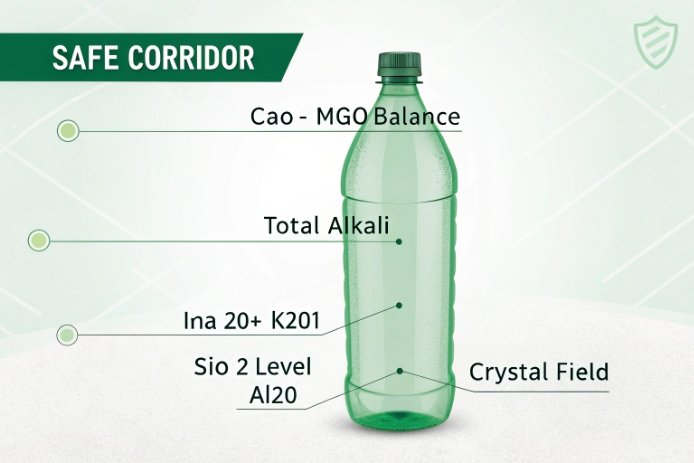
Devitrification looks like “random stones” until it hits a full run. Then yield drops, molds get blamed, and buyers start rejecting lots for specks.
Devitrification risk drops when the recipe keeps the liquidus low, keeps the melt well-balanced, and blocks crystal seeds from entering through cullet and raw impurities. Composition control plus melt-quality testing is the fastest way to stop stones before shipment.
Devitrification is a liquidus and impurity problem you can design around
Why devitrification shows up in bottle plants
Devitrification 1 is crystal formation inside molten or semi-molten glass. In bottle production, crystals often show up as stones, cords with sparkle, or dull specks that fail visual inspection. A bottle furnace runs with a hot melting zone and cooler conditioning zones. If the glass composition has a high liquidus temperature 2, crystals can form in those cooler zones, in forehearth corners, or near the feeder where flow is slower.
Composition controls devitrification in two ways:
1) Thermodynamics: what phases want to crystallize at your operating temperatures (liquidus level).
2) Kinetics and seeding: how easily crystals start (nucleation) and grow, often pushed by impurities and unmelted particles.
A clean melt with a safe liquidus margin can run for months with low stone risk. A drifted melt can create stones in days. This is why devitrification control must be written as a bulk-order discipline, not as “operator experience.”
The biggest mistake: chasing forming with chemistry without watching liquidus
When a plant adjusts alkali for meltability or adjusts CaO/MgO for durability, it can accidentally move the liquidus up. Then crystals appear in the forehearth. Operators respond by raising temperature, and then color and fining drift. The plant loses stability.
The safer strategy is to build a recipe window that protects:
-
viscosity for forming
-
durability and hardness targets
-
liquidus margin in the coldest process zones
-
impurity limits and cullet discipline
A simple picture of what composition is doing
| What you change | What it often changes first | How devit risk responds | What to watch daily |
|---|---|---|---|
| Alkali level and ratio | Viscosity and redox sensitivity | Can go up or down depending on balance | Forehearth setpoint drift |
| CaO/MgO package | Durability + liquidus tendency | Often the main devit trigger | Stones and cords trend |
| SiO₂ and Al₂O₃ | Network and liquidus behavior | Can reduce or increase devit based on balance | Melt homogeneity and stones |
| Cullet impurities | Nucleation seeds | Devit risk rises fast | Inclusion mapping and COA |
Once this framework is clear, the four questions become straightforward: what triggers devit, how SiO₂/Al₂O₃ and alkali ratios affect liquidus, how CaO/MgO and impurities matter, and what specs and tests prevent surprises in bulk orders.
Devitrification rarely comes from one oxide alone. It usually comes from a combination: an easier-to-crystallize composition plus a slow-flow, cooler zone plus a nucleation seed.
The most common composition triggers are high alkaline-earth content (CaO/MgO) in devit-prone balance, low margin between operating temperature and liquidus, and nucleating impurities or unmelted particles carried by cullet and raw materials.
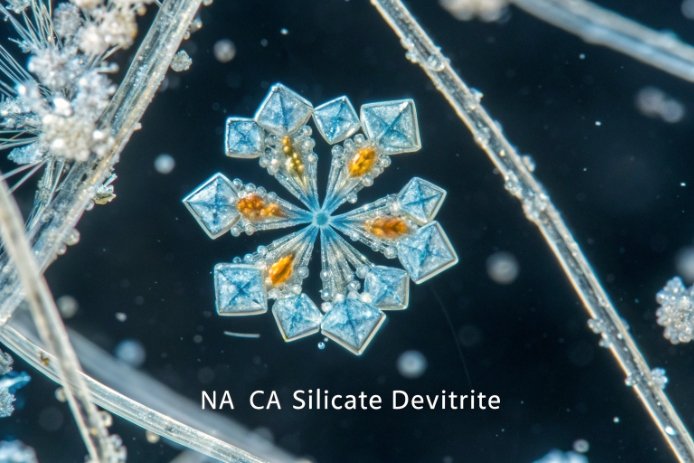
Trigger 1: Alkaline-earth imbalance that favors crystal phases
Many common devit phases in soda-lime glass are calcium- and magnesium-silicate crystals. If the CaO/MgO package drifts upward or shifts ratio, the melt can move closer to those phase fields. This raises liquidus and increases the tendency to form crystals when the glass cools in the forehearth.
A plant often sees this after:
-
a limestone purity change
-
a cullet stream that dilutes SiO₂ or Al₂O₃ relative to stabilizers
Trigger 2: Low Al₂O₃ or poor network balance in a high-stabilizer recipe
Al₂O₃ can stabilize the network and reduce ion mobility, but it also influences phase stability. In some systems, insufficient Al₂O₃ in a high CaO/MgO mix can increase crystallization tendency. In other systems, too much Al₂O₃ without proper charge balance can create melting problems that leave unmelted grains, which become seeds for devit-like defects.
So Al₂O₃ must be controlled as a window, not as a maximum.
Trigger 3: Cullet and raw impurities that nucleate crystals
Even if the recipe is perfect, nucleation seeds can push devit. Common cullet issues include:
-
ceramic contamination
-
refractory fragments
-
high-alumina or zircon contamination
-
titanium-rich particles
These particles do not dissolve well and can act as nucleation 4 sites. Once a crystal starts, it can grow in slower-flow regions.
Trigger 4: Mixed glass families entering through cullet
Mixed families can bring different liquidus behavior. A small amount of borosilicate or other special glass can change local composition and create crystal-prone regions. This is why “cullet rules” are part of devit control.
| Trigger type | What it looks like on the line | Why composition causes it | Fast containment action |
|---|---|---|---|
| CaO/MgO drift | Stones rise in cooler zones | Liquidus rises | Tighten dolomite/limestone spec |
| Al₂O₃ out of window | Stones + cords or unmelted specks | Poor dissolution or phase shift | Verify alumina source and melt |
| High Ti/Zr/ceramics in cullet | Sharp stones, sparkle lines | Nucleation seeds | Improve cullet sorting and screening |
| Mixed glass family cullet | Random devit spikes | Local composition pockets | Stop mixed cullet, use closed-loop |
When triggers are clear, the next question becomes practical: how do the big network and alkali levers shift liquidus and crystallization tendency?
How do SiO₂, Al₂O₃, and alkali ratios (Na₂O/K₂O) change liquidus temperature and crystallization tendency?
Many teams focus on viscosity only. Devitrification control needs liquidus thinking. Liquidus is the temperature where crystals can exist in equilibrium with the melt.
SiO₂ and Al₂O₃ change network structure and phase stability, which can shift liquidus. Alkali level and Na₂O/K₂O ratio change melt structure and can either suppress or promote certain crystal fields. The safest approach is to hold these oxides in proven windows and protect a liquidus margin in the coldest zones.
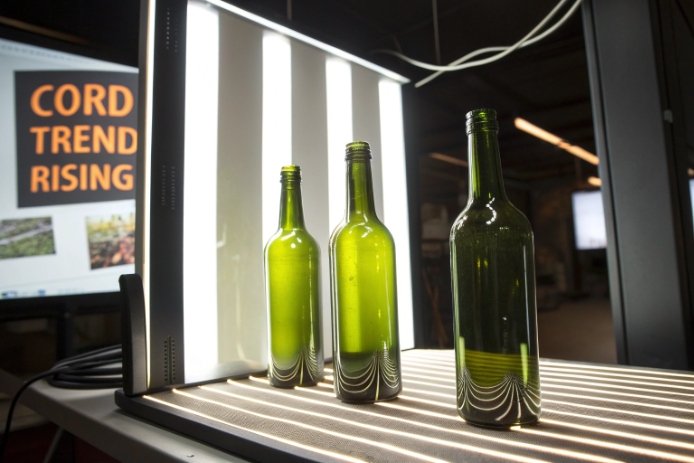
SiO₂: often lowers devit risk by diluting crystal-forming components
Higher SiO₂ generally increases network polymerization and can dilute the concentration of stabilizers that form crystals. In many soda-lime systems, this can lower crystallization tendency and keep liquidus safer. The tradeoff is higher melting demand and higher viscosity. If the furnace cannot fully melt and mix the batch, unmelted grains can appear. Those grains can look like stones and can also seed devit.
So the “SiO₂ fix” works only if the melting system supports it.
Al₂O₃: a stabilizer that must be charge-balanced and well-melted
Al₂O₃ 5 can improve durability and can help stabilize the melt when balanced. It often improves resistance to surface attack, which helps long-term bottle performance. For devit control, Al₂O₃ can improve melt stability, but it can also create problems if:
-
it is too high for the furnace and leaves unmelted alumina
-
it is not charge-balanced and changes local structure in unpredictable ways
Unmelted alumina particles are strong “defect starters.” They can act as nucleation sites and can become stones.
Alkali level and Na₂O/K₂O ratio: meltability vs stability
Alkalis lower viscosity 6 and help melting. They can also suppress crystallization in some regions by keeping the melt more fluid, but they can increase redox sensitivity and shift sulfate behavior, which affects fining and bubble stability.
The Na₂O/K₂O ratio matters because Na and K affect viscosity and phase behavior differently. Many bottle plants use mostly Na₂O, with K₂O at low levels. A drift in this ratio often comes from cullet and raw variability rather than intentional design. That drift can move the liquidus behavior slightly and can change how crystals form in cooler zones.
The safest practice is to treat alkali as:
-
a forming and melting tool
-
a durability risk if excessive
-
a devit risk if it forces high stabilizers into unstable balance
| Lever | How it can reduce devit risk | How it can increase devit risk | Safe control idea |
|---|---|---|---|
| Higher SiO₂ | Dilutes devit-forming components | Raises melting demand, unmelted grains | Increase only within furnace capacity |
| Al₂O₃ in window | Stabilizes and improves melt robustness | Unmelted alumina seeds stones | Tight Al₂O₃ window + source quality |
| Higher alkali | Lowers viscosity, helps bubble rise | Raises redox sensitivity and durability risk | Control Na₂O max and redox policy |
| Na₂O/K₂O ratio drift | Usually small effect if stable | Local pockets and instability | Track ratio in XRF and cullet COA |
Devitrification control is about keeping a safe liquidus margin without creating new melting problems. The largest lever in many container systems is the CaO/MgO package and impurity seeding. That is the next section.
How do CaO/MgO balance and cullet impurities (Al, Ti, Zr, Fe) increase or reduce the risk of crystals forming during production?
When stones appear, the first suspect should be the alkaline-earth package and the impurity seed load, not the forming machine.
CaO/MgO balance directly influences crystal-forming silicate phases and often drives liquidus in soda-lime melts. Impurities like Al, Ti, Zr, and refractory/ceramic contamination can act as nucleation sites, so even small increases can raise devit risk sharply, especially in cooler forehearth zones.

CaO/MgO: the liquidus driver in many bottle melts
CaO and MgO are needed for durability and stability, but they also participate in common crystal phases. If the CaO+MgO level rises, or if the ratio shifts into a devit-prone field, the liquidus temperature can rise. Then crystals can form in the coldest zones.
A practical rule is: hold MgO and CaO as a package. Do not let one drift while the other drifts opposite. Many stable bottle recipes keep MgO in a moderate band and keep CaO stable, so the ratio stays calm.
A second rule is: avoid uncontrolled dolomite shifts. Dolomite is not only MgO. It is also a source of CaO and impurities. A low-impurity dolomite reduces both color drift and devit risk.
Impurities: Al, Ti, Zr, and Fe have different roles
-
Al: dissolved Al₂O₃ is fine when controlled, but alumina-rich particles from refractories or unmelted batch can seed stones.
-
Ti: titanium compounds can act as strong nucleation agents. Even small Ti-rich contamination can increase crystallization tendency.
-
Zr: zircon 7 particles from refractories and ceramics are classic “hard stones.” They often survive melting and act as nucleation sites.
-
Fe: iron is mainly a color and redox driver, but iron-rich particles and refractory contamination can also contribute to inclusions and local crystallization behavior.
The key point is that impurity control is not only about chemistry numbers. It is also about physical contamination control: ceramics, refractories, and unmelted grains.
Why cullet is the biggest impurity pathway
-
ceramics from collection systems
-
labels and organics that shift redox
-
mixed glass families
-
random refractory fragments from external scrap streams
A plant can run a safe recipe and still devit if the cullet stream is dirty. For bulk manufacturing, a closed-loop or tightly verified cullet stream is one of the best investments.
| Risk factor | How it increases devit risk | Typical symptom | Best prevention control |
|---|---|---|---|
| High CaO+MgO or unstable ratio | Raises liquidus, favors crystals | Stones in forehearth and feeder | Tight CaO/MgO window + ratio SPC |
| Ti-rich contamination | Strong nucleation | Small, hard stones | Raw impurity limits + cullet sorting |
| Zr/ceramic contamination | Hard, persistent stones | Sharp inclusions, sparkle | Ceramic removal + refractory monitoring |
| Unmelted Al-rich grains | Seeds stones and cords | Cloudy cords + specks | Alumina source control + melting discipline |
| Mixed-family cullet | Local composition pockets | Random devit spikes | Cullet family segregation |
This is why composition adjustments alone are not enough. They must be supported by specs and melt-quality tests. That is what makes a bulk order safe.
What formulation specs and melt-quality tests should you require to prevent devitrification in bulk glass bottle manufacturing?
A good bulk spec does not say “no stones.” It defines what inputs and tests prevent stones, and what happens when the trend moves.
Prevent devitrification by specifying oxide windows that protect liquidus margin, setting strict cullet impurity rules, and requiring melt-quality tests that detect crystal tendency early. Combine XRF chemistry control with defect mapping, seed/stone inspection, and a liquidus or devit screening test for critical SKUs.

Formulation specs that actually work
A practical spec includes:
-
chemistry windows for major oxides: SiO₂, Na₂O, CaO, MgO, Al₂O₃
-
a CaO/MgO ratio control band
-
limits for impurity oxides or proxy limits in raw materials: TiO₂, ZrO₂, Fe₂O₃ (as relevant)
-
cullet requirements: source, color class, glass family, and contamination limits
The supplier should also commit to change control. If dolomite source changes, or cullet source changes, the supplier should notify and re-validate.
Melt-quality tests that catch devit before shipment
Devit can be detected by:
-
stone and inclusion counts on cut sections (base and heel)
-
polarized stress and cord checks (cords often rise with instability)
-
furnace/forehearth temperature profile audits (cold spots are devit factories)
-
periodic liquidus screening or devit tendency tests for critical runs
Many factories already have the tools for early detection. The difference is whether the data is recorded and tied to an action rule.
Shipment release controls that reduce disputes
Use:
-
AQL sampling 9 with clear defect classes
-
retained samples by lot
-
defect photo standards for “stone” vs “seed” vs “ceramic”
-
cavity mapping to separate melt issues from machine issues
| QC checkpoint | What it controls | Frequency | Pass/Fail idea for bulk orders |
|---|---|---|---|
| Finished glass XRF 10 | Oxide windows and CaO/MgO ratio | Each lot or daily | “Inside window; alert on trend” |
| Cullet inspection + COA | Impurity and family risk | Each delivery | “Ceramic level below limit” |
| Cut-section inclusion count | Stones and devit symptoms | Each lot (critical SKUs) | “Stones per bottle below limit” |
| Forehearth profile audit | Cold-spot risk | Weekly or change-triggered | “No zones below target” |
| Visual standard check | Buyer-facing appearance | Each lot | “Matches master standard” |
| Retain samples | Claim resolution | Each lot | “Retain X bottles for Y months” |
A strong spec also defines escalation rules:
-
If stone count rises above control limit, stop cullet source changes and verify CaO/MgO ratio first.
-
If stones appear mostly in specific zones, audit forehearth cold spots and flow patterns.
-
If stones look ceramic or zircon-like, treat it as contamination until proven otherwise.
This is how devitrification prevention stays practical. It is not only chemistry. It is chemistry plus disciplined inputs plus repeatable melt-quality checks.
Conclusion
Devitrification is driven by liquidus margin and nucleation seeds. Control CaO/MgO balance, keep SiO₂/Al₂O₃ and alkalis in proven windows, and lock cullet impurity rules with melt-quality tests before shipment.
Footnotes
-
The unwanted crystallization of glass during cooling, causing defects like stones and haze. [↩] ↩
-
The highest temperature at which crystals can coexist with the melt; cooling below this risks crystallization. [↩] ↩
-
A mineral source of calcium and magnesium used to stabilize glass chemistry and improve durability. [↩] ↩
-
The initial process where small crystal seeds form, providing a base for further crystal growth. [↩] ↩
-
Aluminum oxide, used to improve chemical durability and viscosity stability in the glass network. [↩] ↩
-
A measure of the glass melt’s resistance to flow, critical for forming and melting behavior. [↩] ↩
-
A highly refractory mineral often found as a contaminant that causes persistent stones in glass. [↩] ↩
-
Recycled broken glass added to the batch to lower melting energy and raw material costs. [↩] ↩
-
Acceptable Quality Limit, a statistical standard for defining the maximum number of allowed defects in a batch. [↩] ↩
-
X-ray fluorescence, an analytical technique used to determine the elemental composition of glass and raw materials. [↩] ↩






