
Many brands improve their formula, but keep the same “ordinary” bottle, so the shelf signal never catches up with the product quality. The result is weak pricing power and low recall.
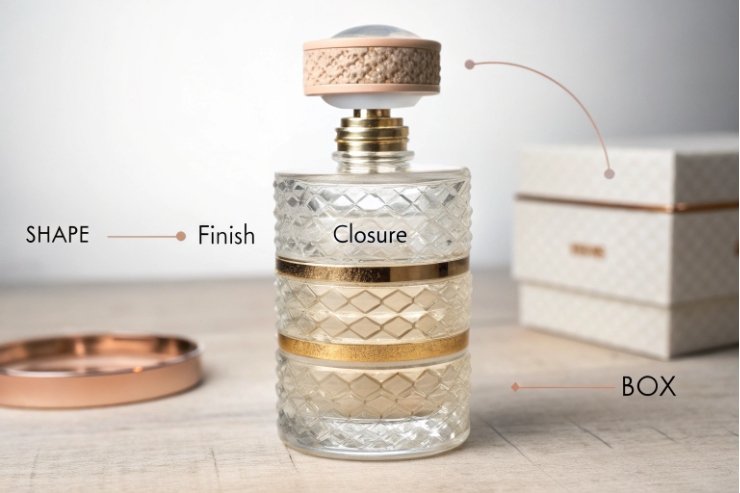
You make glass-packaged products look high-end by using structure, surface finishes, closures, and secondary packaging together, so every touchpoint reinforces a premium story instead of fighting it.
Think about it in layers. First the glass shape and weight. Then decoration and texture. Then closure, label, and finally the box. When these layers are simple, coherent, and deliberate, the whole pack starts to feel expensive before anyone reads one word.
Which decorations—frosting, UV spray, hot stamping, or metallization—signal luxury?
A plain clear bottle can work for value lines, but it rarely looks like a hero on the shelf. Surface treatments are where you add “drama” without changing the mold.
Frosting, UV spray, hot stamping, and controlled metallization can all signal luxury when they support a clear design idea, stay restrained, and match the brand’s price point and story.
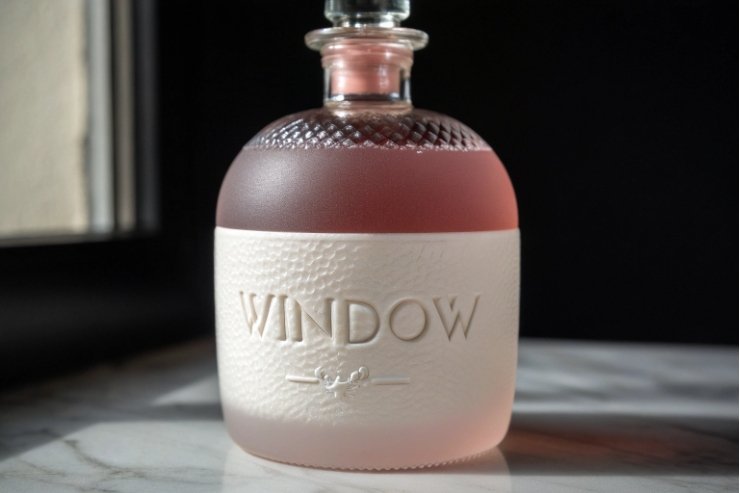
Using finishes as quiet luxury, not loud noise
The goal is not “add everything”. It is to choose one or two strong finishes and let them shine. In many projects, the best result comes from pairing a clean silhouette with one hero treatment.
Frosting and etching
Acid-frosted or sandblasted-style surfaces 1 diffuse light and give a soft, velvety look. The glass feels thicker and more crafted. Frosting works well for:
- Skincare and beauty bottles
- Premium spirits and liqueurs
- Gourmet sauces or oils
It hides minor product smudges and fingerprints, but it can also hide the liquid too much if coverage is 100%. A common solution is partial frosting: a band, a window, or a gradient.
UV spray and gradients
UV-curable coatings 2 can create solid colors or smooth gradients. This is powerful for:
- Creating strong color blocking by flavor or variant
- Hiding fill lines while showing only part of the liquid
- Adding modern, Instagram-friendly effects
Gradients that move from clear at the base to deep color at the shoulder feel premium and protect the liquid from light at the top where headspace sits.
Hot stamping and foil accents
Hot stamping 3 adds thin metallic layers to logos, borders, or patterns. Gold, copper, and gunmetal are common choices.
They work best when:
- Used on key brandmarks, not every line of text
- Paired with strong, simple typography
- Supported by good contrast in the background (frosted, tinted, or dark ink)
Over-foiling everything turns “premium” into “cheap” very fast, so restraint is important.
Metallization and mirror finishes
Full or partial metallization creates a mirror-like surface. It reads as very high-end, but it:
- Costs more per unit
- Needs careful design for recyclability and regulations
- Can hide the product completely
This is a good option for top-tier SKUs, gift editions, or fragrance-style packs where mystery is part of the appeal—especially when you understand how vacuum metallization 4 is commonly applied to packaging surfaces.
A simple decision table:
| Finish type | Luxury signal | Best use | Risk if overused |
|---|---|---|---|
| Frosting | Soft, crafted, thick glass | Premium beauty, spirits, sauces | Product looks dull or hidden |
| UV spray | Modern, colorful, bold blocks | Flavor ranges, RTDs, lifestyle spirits | Looks cheap if colors are too loud |
| Hot stamping | Refined, detailed, precise | Logos, crests, borders, key text | “Gold everywhere” discount feeling |
| Metallization | High drama, statement, collector vibe | Top-tier, limited editions, display bottles | Poor recyclability and cost blowout |
When decoration choices line up with the right glass shape and a clear idea about the customer, the bottle or jar jumps a full level in perceived value.
Yes. Even before ink and coatings, 3D glass geometry sends very strong signals about quality and investment. Many consumers cannot explain why a bottle feels expensive, but they react to depth and structure.
Embossed logos, custom punts, and faceted shoulders make the glass itself work as a luxury object, creating touchpoints that feel crafted and hard to copy.
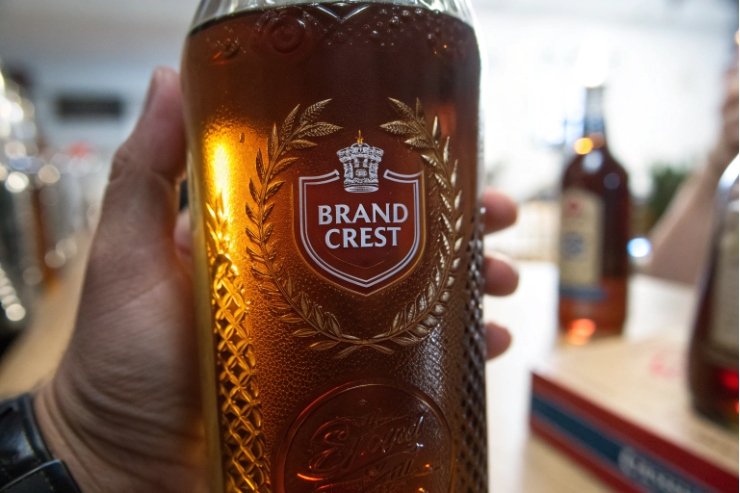
Turning the bottle into a 3D logo
Embossed or debossed glass 5 is one of the purest premium cues. It says, without words, “this brand paid for a custom mold”.
Smart uses include:
- A main logo band around the shoulder or base
- Year, origin, or monogram seals near the punt
- Pattern rings that reference brand motifs (agave, waves, leaves)
These details give a strong grip point and reward close inspection. When people rotate the bottle in their hand and feel the raised glass, they read it as care and craft.
Faceted shoulders and panels add another layer. They catch light, create reflections, and make the silhouette memorable in photos and on back bars.
The punt (the indentation in the base) is often ignored in design discussions, but it makes a big difference.
Custom punts can:
- Increase perceived depth and weight
- Make the bottle more stable on surfaces
- Offer a place for hidden logos or codes
For wine, spirits, and some oils, a deeper, well-shaped punt gives a “decanter” feeling. It also helps servers grip the bottle in service. For food products, a simpler but still defined punt can add structure and help with thermal processing.
Structure, ergonomics, and brand memory
3D features should not only look nice. They must also support use and logistics. So structural design should balance:
- Strong shoulders for safe lifting and pouring
- Flat, clear label panels for clean application
- Enough relief for tactile interest, but not so much that labels wrinkle or sleeves bridge
A simple planning table:
| 3D feature | Premium effect | Practical benefit |
|---|---|---|
| Embossed logo | Custom, investment, brand authority | Tactile recognition even when label wears |
| Patterned panels | Craft, detail, brand storytelling | Better grip and less slip |
| Deep custom punt | Luxury, decanter feel, extra stability | Grip for pouring, thermal mass in base |
| Faceted shoulders | Iconic silhouette, strong reflections | Clear visual block on shelf and in photos |
When structure, ergonomics, and brand language align, the bottle or jar feels high-end even with minimal printing or color.
How do closure choices (T-stoppers, wood/aluminum caps, tamper-evident bands) upgrade perception?
You can feel a cheap closure in one second. It squeaks, flexes, or looks out of scale with the glass. That one second can undo everything else you invested in the bottle.
Closures like T-stoppers, wooden or aluminum caps, and neat tamper-evident solutions upgrade perception when they are solid in the hand, proportional to the bottle, and visually tied to the rest of the design.
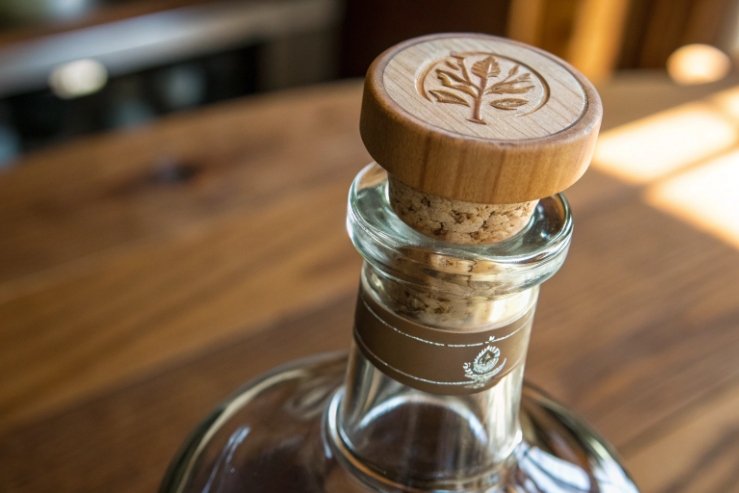
Matching closure style to category
Different product categories expect different closure cues:
- Spirits and premium oils: T-stoppers with cork or synthetic shanks, large tops.
- Beauty and skincare: Heavy aluminum caps, fine misters, or treatment pumps.
- Food jars and sauces: Deep twist-off caps with clean edges and strong color.
Within each, material and finish choices push the pack up or down.
Wooden and bamboo tops feel natural, warm, and sustainable. They pair well with frosted glass, matte inks, and earthy palettes.
Anodized aluminum caps feel modern, technical, and precise. Brushed or satin finishes avoid cheap shine and match minimalist brands.
High-quality plastic components can still look premium when:
- Wall thickness is generous, not flimsy
- Color is deep and consistent
- Surface is matte or soft-touch, not too glossy
T-stoppers and the sound of quality
For spirits and some oils, T-stoppers add a small “theater” moment. The “pop” of removal and the firm reseal send strong subconscious signals.
Premium choices include:
- T-stoppers with natural or technical cork 6 with beveled edges
- Synthetic corks color-matched to the brand
- Tops in wood, ceramic, or metal, sometimes with embossing or inlays
The neck must be designed around the stopper. If the fit is wrong, leaks, chipping, or “frozen” stoppers will destroy trust in the product.
Tamper-evident solutions that do not look cheap
Safety and authenticity matter, but visible safety elements can look low-cost if handled badly.
Better options:
- Neat shrink bands in clear or color that align with shoulder geometry
- Perforated tear bands hidden inside aluminum shells
- Wax dips for small-batch or craft spirits, used with control
The goal is to show that the product is untouched without adding visual clutter. For high-end products, integrated, almost invisible tamper features read as more refined than big plastic bands.
A quick closure comparison:
| Closure type | Luxury signal | Best suited for |
|---|---|---|
| Wood-topped T-stopper | Craft, warmth, hand-made detail | Spirits, oils, vinegars |
| Brushed aluminum cap | Modern, clean, technical | Beauty, spirits, RTDs |
| Heavy twist-off metal lid | Honest, gourmet, pantry premium | Sauces, spreads, pickles |
| Soft-touch pump / sprayer | Care, precision, protection | Skincare, haircare, treatments |
In every case, the closure should feel like a natural extension of the bottle, not an afterthought.
Can structured gift boxes, labels, and textures boost unboxing while controlling costs?
You do not need a huge wooden chest to create a premium unboxing moment. Many brands overspend on boxes and underspend on structure and graphics. There is a smarter way.
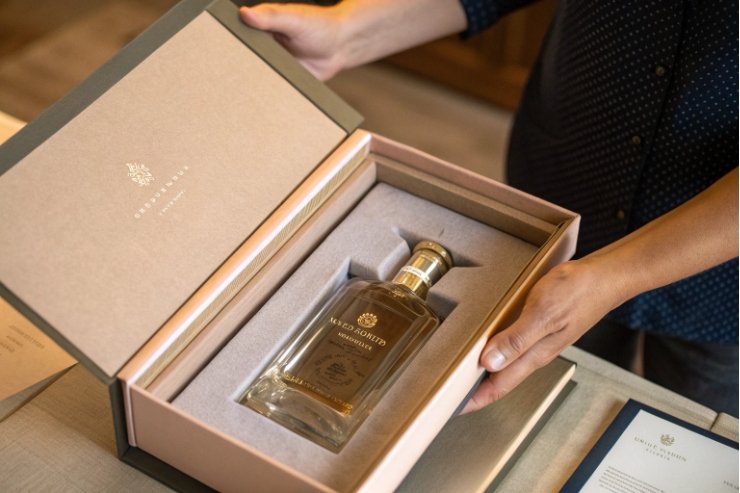
Structured gift boxes, well-designed labels, and smart textures can deliver a rich unboxing experience while controlling cost if you focus on paper quality, touch, and simple construction instead of complex gimmicks.
The role of secondary packaging
Secondary packaging has three jobs:
- Protect the glass in transit and on shelf.
- Make the product feel giftable and special.
- Carry extra storytelling and legal content.
You can do all three with:
- Rigid board gift boxes 7 made from good board
- Sleeves that slide over the bottle for limited editions
- Tubes or book-style boxes for very high-end SKUs
What matters most is not “complexity”, but the first hand-feel: stiffness of the board, smoothness or texture of the paper, and how cleanly the box opens and closes.
Labels and textures as cost-effective upgrades
If full gift boxes are not in budget for every SKU, labels and simple add-ons can do a lot of the work.
Upgrades that give a big lift per dollar:
- Tactile papers with uncoated or linen finishes. a
- Embossed or debossed logos and seal elements.
- Spot UV or hot-foil on key parts of the label.
- Die-cut windows that show the glass or liquid.
You can also add small structural pieces such as:
- Neck tags or medallions for limited batches.
- Paper belly bands on top of standard cartons.
- Simple corrugated wraps printed one color for e-commerce.
These keep material and tooling costs low while still adding “layers” to the unboxing.
Designing for production and logistics
Premium packaging must still be realistic on the line and in the warehouse.
So it helps to check:
- Can the box be erected quickly and consistently?
- Does the bottle fit snugly without extra loose fill?
- Are all elements recyclable or easy to separate?
- Does the pack fit standard outer cartons and pallets?
A simple planning table:
| Element | Premium move | Cost / practicality tip |
|---|---|---|
| Primary label | Textured paper, emboss, short copy | Use one die-line across SKUs |
| Neck / back label | Minimal, clean, clear hierarchy | Combine legal info where allowed |
| Gift box | Rigid board, soft-touch or linen finish | Start with top SKUs only |
| Insert / fitment | Simple molded pulp or folded board | Keep single insert design for a bottle family |
By building a clear tier system—core, premium, and gift—you can reserve the most expensive boxes for SKUs that really need them, while still keeping the whole range visually coherent.
Conclusion
High-end glass packaging comes from many small, consistent decisions about structure, finishes, closures, and boxes, all pointing in the same premium direction instead of trying to impress with one loud trick.
Footnotes
-
Glass etching explains frosting methods and when partial coverage keeps products visible. ↩︎ ↩
-
Ultraviolet curing clarifies how UV coatings harden fast for durable color blocks and gradients. ↩︎ ↩
-
Hot stamping shows how foil transfers create crisp metallic accents without full metallized coverage. ↩︎ ↩
-
Vacuum metallizing outlines mirror-finish processes and why they’re typically reserved for hero SKUs. ↩︎ ↩
-
Embossing explains raised/depressed detailing that adds tactile branding and “tooling investment” cues. ↩︎ ↩
-
Cork stoppers covers cork basics that affect fit, feel, and the “pop” ritual. ↩︎ ↩
-
Set-up boxes explains rigid gift-box construction for premium unboxing without complex gimmicks. ↩︎ ↩






