
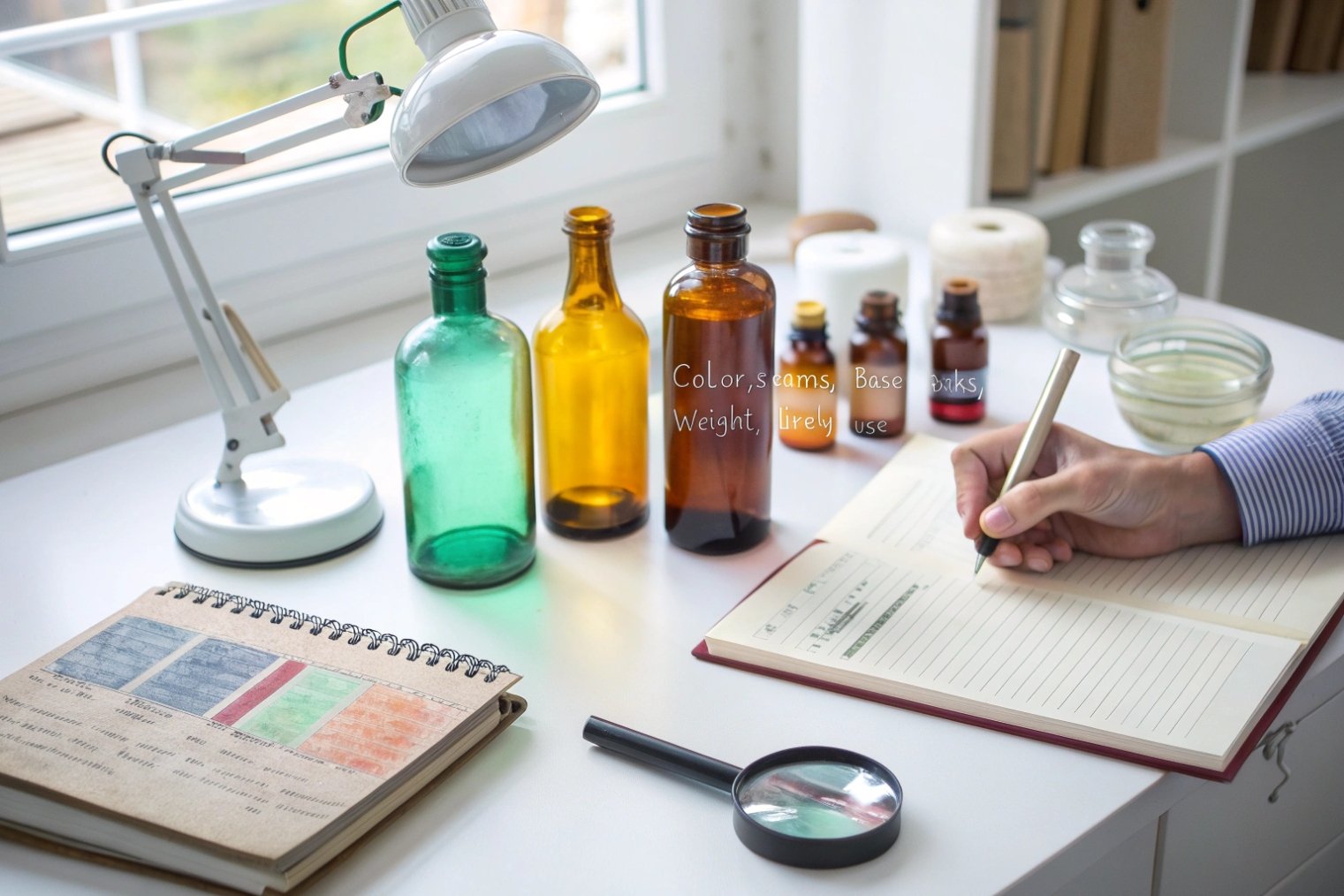
When you work with glass every day, you stop seeing “just a bottle”. Each detail tells you what that bottle can safely do.
You differentiate glass bottles by reading color, shape, seams, codes, and simple measurements together, so you can guess composition, process limits, and best-fit application without a full lab test.
Most of the time you only have a sample on your desk, no datasheet, no supplier on the call. In that moment, a fast and structured way to read the bottle can save you from painful mistakes.
What visual cues separate flint, amber, green, and opal glass?
When you first put bottles on the table, color and transparency speak before any code on the base. They already tell you a lot about function.
Flint, amber, green, and opal glass each have their own look and typical use, so by checking hue, clarity, and opacity you already know a lot about light protection, branding style, and likely product.
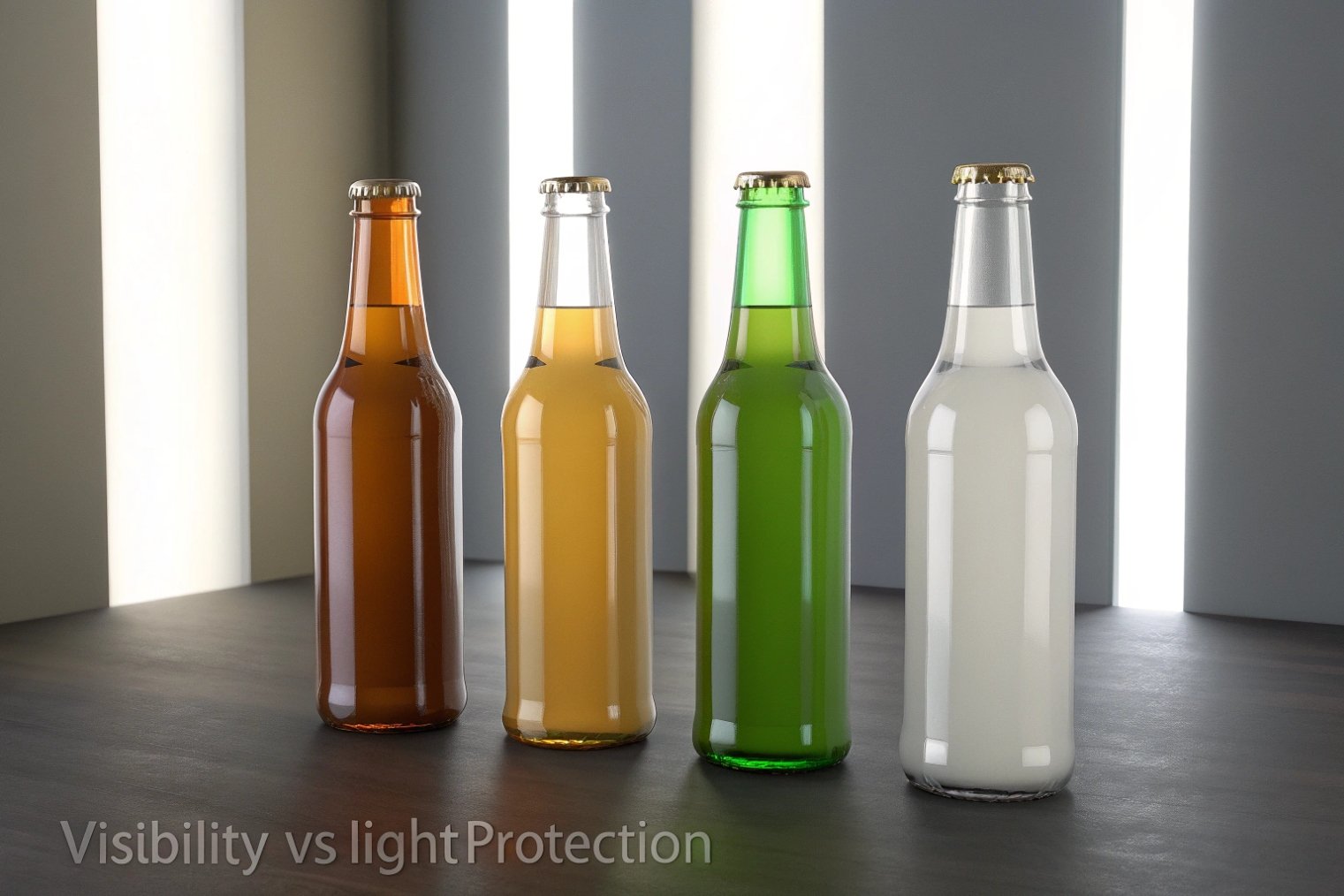
Flint glass is what most people call “clear glass”. True flint for packaging should be almost water-clear, with only a very slight green or grey tint when you look through the thick base or shoulder. If the green is strong, iron oxide impurities 1 are higher and the glass was not tuned for premium clarity. Flint shows the product very well, but it gives almost no UV or blue-light protection. So it fits water, spirits, sauces, and anything that must be seen to sell, as long as light is not a big risk.
Amber glass ranges from honey to dark brown. When you line amber bottles up, you can see how some are almost black in the shoulder. These dark ones give very strong light protection, especially in the UV and blue range 2. That is why beer, many medicines, and essential oils live in amber as a default. When I see a rich, even amber, I expect a brand that cares about both stability and tradition.
Green glass usually carries tradition more than pure function. Wine and some beers use it for style and for moderate light protection. A deep olive green cuts some light, but not as much as a dark amber. When I put a light behind a green bottle, I still see the liquid clearly, just with a colored cast.
Opal (or “milky”) glass 3 is opaque or near-opaque. It comes from crystals or bubbles inside the glass that scatter light. When you see a white, non-see-through glass bottle, think dairy, vitamins, or cosmetics that dislike light. Opal hides the product completely, so all communication lives on labels, embossing, or the outer box.
One more small cue: look at how the color behaves at thin and thick spots. True colored glass keeps a similar hue in both areas, just darker when thicker. Coated glass may show a stronger difference between shoulder and body, and a tiny chip will reveal clear glass under the coating. That matters if you worry about chipping, scuffing, or recyclability.
Do base codes, embossing, or batch marks reveal composition or use?
Color gives you first hints. The base and shoulder give you the second wave of clues. If you know how to read them, they tell you a lot about origin, mold, and sometimes even glass family.
Embossed logos, volume marks, mold codes, and glass-family symbols on the base or shoulder can reveal manufacturer, plant, cavity, nominal volume, and sometimes color family, which together help you guess composition and quality level.
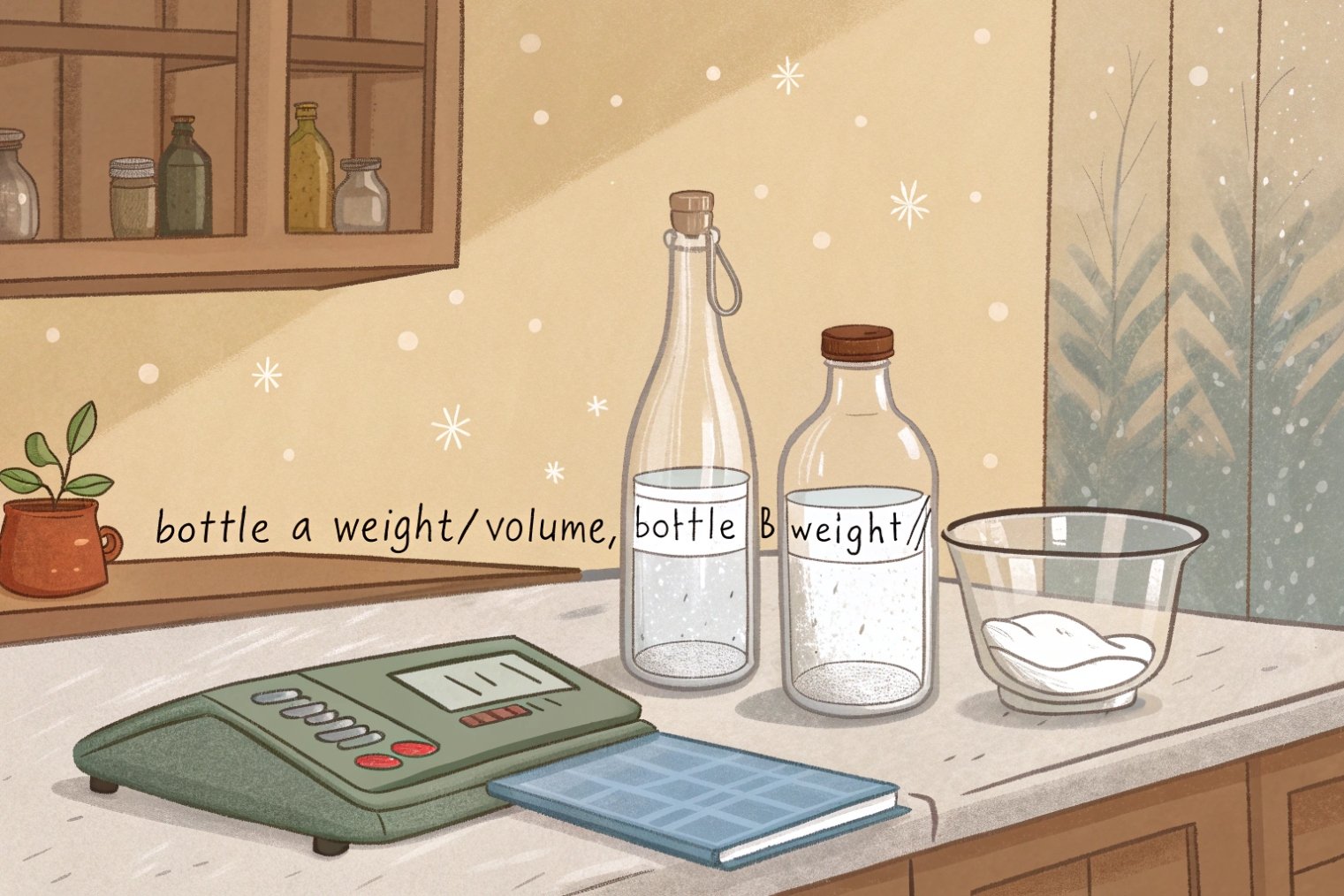
Turn any bottle over and you will usually see a small “city” of marks. I normally look at them in this order:
First, the logo or brand mark. This can be the glass maker’s logo or the filling brand. Once you know the main glass producers in your supply chain, that small logo already tells you about likely glass type, quality system, and country.
Second, the nominal volume and legal markings. You often see things like “750 mL”, “70 cl”, or “500 ml” on the base or lower body. In some regions, there is also an “e-mark” or similar symbol that signals metrology compliance. This tells you the target fill and that the bottle was designed for a specific legal market.
Third, the mold and cavity codes. These are usually small numbers or letters around the center. For example, a “3” at one position, a “23” at another. They exist for traceability. On a returnable beer bottle, they help the factory trace defects back to a single cavity. For you, they confirm the bottle comes from a professional mold system, not from a very small or untraceable source.
Fourth, the glass-family or recycling code. In some markets you see codes such as GL 70/71/72 4 near the recycling logo, where different numbers mean clear, green, or brown glass families. These do not spell out Type I, II, or III, but they help recycling plants separate cullet. When I see clear glass marked as GL70 and a standard recycling symbol, I usually treat it as soda-lime unless other data says otherwise.
Surface details on the body and shoulder also talk. Vacuum panels and flexible ribs on a hot-fill jar, for example, tell you the bottle was designed to handle internal vacuum. A deep punt and heavy base on a sparkling-wine bottle tell you it was made for pressure. Embossed “returnable” or deposit marks signal a thicker, stronger bottle with more trips in its life.
One important note: for now, most base marks do not state “Type I / Type II / borosilicate / soda-lime”. You still need context: Is this sold as labware? Is it a pharma vial? Is it a beverage bottle from a mass producer? The codes help, but they work best together with product and channel knowledge.
Can simple tests like density or refractive index confirm material quickly?
Visual reading takes you far. Sometimes you still want a quick “sanity check” that the bottle is likely soda-lime or borosilicate without sending it to a full lab.
You cannot see composition with your eyes alone, but simple, safe checks like weighing, measuring volume, and checking optical behavior can give strong hints about whether a bottle is soda-lime, borosilicate, or tempered.
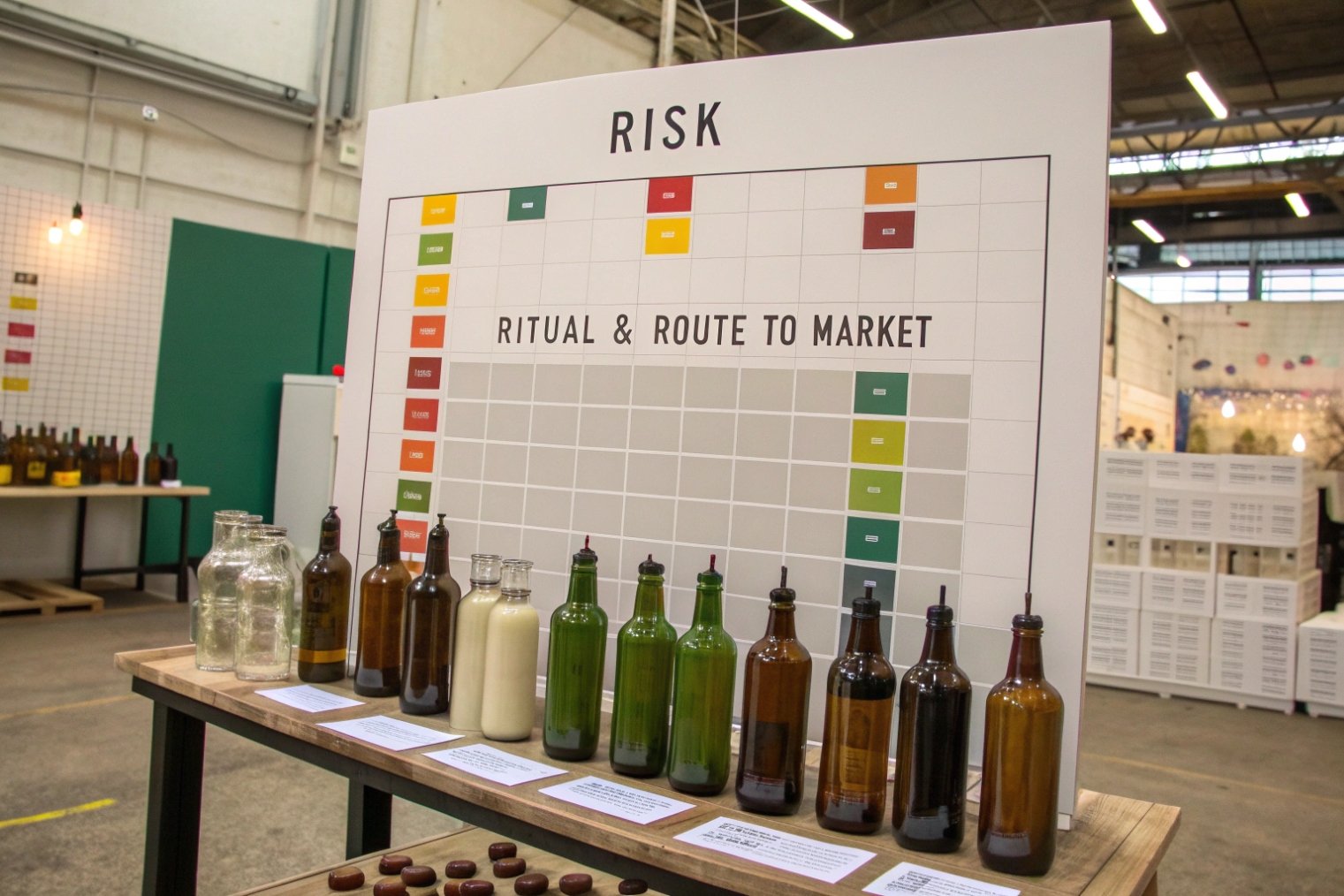
One easy test is a density check using only a kitchen scale and a measuring cup. The idea is simple: glass density sits in a known range, so you compare the ratio of mass to volume of a bottle wall.
A safe way is to:
- Fill the empty bottle with water to the brim.
- Weigh the full bottle.
- Empty and dry the bottle, then weigh it again.
- The difference in weight is the water mass, which equals the internal volume in milliliters.
- You can then compare the empty-bottle mass to that internal volume and to other bottles of known type.
This logic is basically Archimedes’ principle 5 applied as a quick, comparative check.
Typical density values:
| Glass family | Approx. density (g/cm³) |
|---|---|
| Soda-lime container glass | ~2.4–2.6 |
| Borosilicate (3.3 / 5.0) | ~2.2–2.3 |
| Lead crystal (for tableware) | >2.9 |
You do not need to calculate exact density. If two bottles have very similar design and internal volume, yet one is clearly lighter, that lighter one is more likely to be borosilicate. This works well when you compare, for example, a known soda-lime bottle and an unknown “high-heat” bottle of similar size.
Another informal cue is optical behavior. Borosilicate often has a slightly lower refractive index 6. In practice, this means less sparkle and a slightly “soft” edge compared to a high-index crystal glass. If you place the bottle over printed text, soda-lime crystal-type glass can distort lines more. This is not a precise method, but it adds to the picture.
You might think about thermal-shock tests to separate borosilicate from soda-lime. In a lab, people do pour-and-quench tests. At home or on a factory floor, I do not recommend this. A failed test can send shards flying. It is better to ask the supplier for certified data, or to send one sample to a lab if the project is critical.
For tempered vs non-tempered, simple polarized sunglasses can sometimes show strain patterns in heat-treated glass 7 under the right light. But for bottles, tempering is less common than for flat glass, so I rarely depend on that.
In the end, simple tests are support tools. Composition decisions for risky applications should still rely on proper documentation and standards, not only on a kitchen experiment.
Which bottle types map best to different use cases?
Knowing what a bottle is made of is one thing. Knowing where it belongs is even more important. Every application has its own “default” bottle type for a good reason.
You map bottle types to uses by matching glass family, color, neck finish, and strength to the product’s chemistry, light sensitivity, pressure, and image, so each liquid lives in a container that quietly protects it.
I usually start from three axes: risk, ritual, and route to market.
Risk covers chemistry, light, temperature, and pressure. Ritual is how people use and see the product. Route to market is line speed, logistics, and returnability.
Here is a simple mapping:
| Use case | Typical glass and color | Key reasons |
|---|---|---|
| Beer | Soda-lime, amber or green, crown finish | UV protection, pressure, drinking ritual |
| Carbonated soft drinks | Soda-lime, flint or green, crown/ROPP | Pressure rating, brand visibility |
| Spirits | Soda-lime, flint, heavy base, cork/ROPP | Premium feel, still liquid, no UV-sensitive actives |
| Table wine | Soda-lime, green or flint, cork/ROPP | Tradition, some light control |
| Essential oils | Soda-lime or boro, amber, dropper/pump | Light protection, volatile contents |
| OTC liquid medicines | Type II or III, amber, CRC closures | Light, child safety, moderate chemistry |
| Injectables, vials | Type I borosilicate, flint/amber | Highest chemical and thermal resistance |
| Dairy drinks in glass | Soda-lime, flint or opal, crown/ROPP | Light, hygiene, returnable systems |
| Lab reagents | Borosilicate, flint, special closures | Thermal shock, aggressive chemicals |
| Gourmet sauces, jams | Soda-lime, flint/amber, lug caps | Hot-fill, home use, label panel needs |
Some patterns repeat:
- If the product is sterile, injected, or very aggressive, it usually lives in Type I borosilicate, often as small vials or cartridges.
- If the product is acidic but not injected, it often fits Type II or high-quality Type III glass, with a big role for amber if it is light-sensitive.
- If the product is a beverage or table food, soda-lime Type III rules, with color and shape chosen for marketing and process.
Neck finish and closure complete the map. For example:
- Beer and sodas: crown or sometimes ROPP.
- Spirits and premium oils: cork or bar-top, sometimes ROPP for tamper evidence.
- Pharma syrups: threaded neck with child-resistant closure.
- Lab bottles: GL-type standardized threads with robust caps and liners.
Weight also signals position. A very heavy, thick-walled bottle often says champagne, premium spirits, or a prestige oil. A very light bottle of the same volume often says mass-market, cost focus, and strong recycling targets.
When I place new projects, I rarely try to be “creative” with this map at the start. I first check what the market already trusts for that product type, then I decide how far the new design should stay from that center, and only then do I push shape or color.
Conclusion
You read glass bottles the way you read people: color, shape, small details, and a few simple checks together tell you how they behave and where they truly belong.
Footnotes
-
How iron oxide impurities create the familiar green tint in soda-lime glass, especially in thick sections. ↩ ↩
-
Why amber glass blocks most UV/blue wavelengths and when it’s used for light-sensitive products. ↩ ↩
-
Definition of opal (milk) glass and why it appears milky due to dispersed crystallites. ↩ ↩
-
Official EU identification codes for glass packaging, including GL 70/71/72 for colourless, green, and brown. ↩ ↩
-
Classic buoyancy law used to infer volume and density by measuring displaced water. ↩ ↩
-
Clear definition of refractive index and how it relates to how strongly glass bends light. ↩ ↩
-
Shows why polarized sunglasses reveal strain patterns in heat-treated glass, useful for spotting tempering-like stresses. ↩ ↩






