
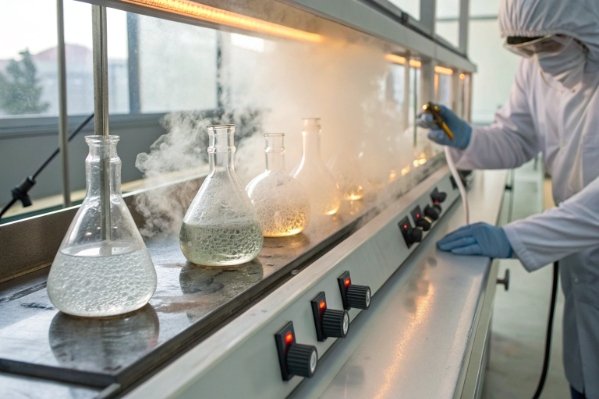
Imagine shipping thousands of returnable glass bottles, only to have them return from the washing line looking etched, cloudy, or "weathered" after just a few cycles. For manufacturers of alkaline pharmaceuticals or brands using aggressive bottle-washing protocols, failing to account for alkali resistance is a direct path to damaged inventory and brand dilution.
Determining the alkali resistance grade involves subjecting the glass to a boiling aqueous solution of mixed alkalis (sodium carbonate and sodium hydroxide) according to ISO 695 standards. The resulting weight loss per surface area determines the class (A1, A2, or A3), indicating how well the glass withstands silica network dissolution.
Understanding the "Silica Dissolution" Threat
At FuSenglass, we often educate our clients that while glass is generally considered inert, it has a specific weakness: strong alkalis. Unlike acids, which primarily exchange ions on the surface, strong alkalis attack the very backbone of the glass—the silica network (SiO2) 1.
This chemical attack breaks the siloxane bonds, literally dissolving the glass surface layer by layer. This isn’t just a cosmetic issue; it can lead to:
-
Etching/Clouding: The bottle loses its premium transparency.
-
Delamination: Micro-flakes of glass detaching into the liquid (a critical failure in pharmaceuticals).
-
Structural Weakening: Over time, the wall thickness can theoretically decrease, though surface flaws usually cause breakage first.
The Testing Landscape
To determine if your bottle can survive high-pH environments (like a pH 10+ cleaning cycle or an alkaline pharmaceutical reagent), we use specific gravimetric tests 2. We measure the sample, boil it in a caustic soup, and measure it again. The weight loss tells us exactly how much glass was "eaten" by the alkali.
Which standards classify alkali resistance for glass bottles and jars (ISO 695, ASTM methods, and industry specs)?
Procurement managers often copy-paste "Type I Glass" into their RFQs, assuming it covers everything. However, standard pharmaceutical glass types (I, II, III) are defined by hydrolytic (water) resistance. If your concern is alkali attack—like caustic soda washing—you need a completely different set of standards.
The global authority for alkali resistance is ISO 695, which defines the test method and classification for resistance to a boiling aqueous solution of mixed alkalis. In the US, ASTM C614 provides a similar method for alkali resistance, though ISO 695 is the dominant reference for international trade and compliance.
The Standardized Toolkit: ISO vs. ASTM
When we export to our partners in Europe or handle technical inquiries from Liam in the UK (who needs bottles that withstand repeated distillery wash cycles), we lean heavily on ISO standards. Here is the breakdown of the documents you need to know.
ISO 695: The Global Benchmark
This is the gold standard. The test involves:
-
Reagent: A solution of Sodium Carbonate (Na2CO3) and Sodium Hydroxide (NaOH).
-
Conditions: Boiling for 3 hours.
-
Measurement: Weight loss expressed in milligrams per square decimeter (mg/dm²).
-
Why it’s critical: It simulates the worst-case scenario of hot, caustic exposure, effectively "accelerating" years of wear into a few hours.
ASTM C614: The American Alternative
ASTM C614 3 ("Standard Test Method for Alkali Resistance of Porcelain Enamels") is often adapted for glass. While useful, it is less common in pure container glass specifications than ISO 695.
- Key Difference: ASTM often focuses more on coatings or enamels, whereas ISO 695 is strictly about the glass material itself.
DIN 52322 (German Standard)
Historically significant and virtually identical to ISO 695. If you see this in an old specification sheet from a German machinery supplier, you can confidently cross-reference it with ISO 695.
Industry-Specific Specs: The "Caustic Wash" Test
Beyond official ISO standards, the beverage industry (especially returnable beer and soda) has its own practical tests.
-
The "30-Cycle" Test: Bottles are run through an industrial washer 30 times with 2-4% caustic soda at 80°C.
-
Acceptance Criteria: No visible scuffing rings (wear bands) or hazing. This is a practical "pass/fail" rather than a gravimetric scientific grade.
How do ISO 695 alkali resistance classes (e.g., A1/A2/A3) work, and what do they mean for real applications?
A test result of "125 mg/dm²" might look like just a number, but in the world of glass manufacturing, it classifies the material into distinct performance tiers. Understanding these tiers helps you avoid paying for properties you don’t need or, worse, choosing a glass that will dissolve under your product’s influence.
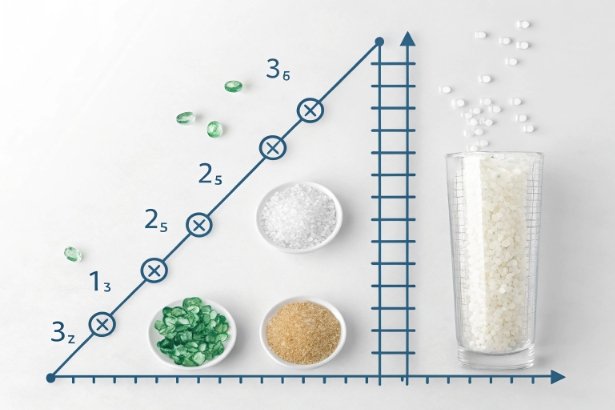
ISO 695 classifies glass into three grades based on weight loss: Class A1 (Maximum Resistance), Class A2 (Good Resistance), and Class A3 (Moderate/Low Resistance). Most borosilicate glass falls into A1 or A2, while standard soda-lime glass typically falls into Class A2, providing adequate resistance for most general applications.
Decoding the Classes
The classification logic is inverse to the weight loss: the less weight you lose, the higher your resistance class.
Class A1: The Fortress (Weight Loss < 75 mg/dm²)
-
Material: usually high-grade Borosilicate 3.3 4 or specialized aluminosilicate glass.
-
Characteristics: Extremely low reaction to alkalis.
-
Ideal Applications:
-
Laboratory beakers holding strong bases (NaOH).
-
High-value pharmaceutical reagents with pH > 9.
-
Severe industrial chemical storage.
-
-
Note: This is often "overkill" for standard food and beverage packaging.
Class A2: The Standard Workhorse (Weight Loss 75 – 175 mg/dm²)
-
Material: Most Soda-Lime Silicate Glass (Type III 5) and some treated glasses.
-
Characteristics: The glass will slowly etch over time if exposed to hot, strong alkalis, but it is stable enough for standard lifecycles.
-
Ideal Applications:
-
Returnable beverage bottles (Beer, Soda).
-
General food packaging.
-
Most cosmetic jars.
-
-
Real World Context: When we produce standard 330ml amber beer bottles for export to Southeast Asia, they are effectively Class A2. They can survive the washing line, but they aren’t immortal.
Class A3: The Vulnerable (Weight Loss > 175 mg/dm²)
-
Material: High-lead glass (crystal) or soft glass formulations with very high alkali content.
-
Characteristics: dissolves rapidly in strong bases.
-
Ideal Applications: Decorative items, perfume bottles where content is neutral/alcohol-based and never washed aggressively.
-
Warning: Never use Class A3 glass for returnable systems or alkaline liquid storage.
The "Zirconium" Factor
To achieve true "super-resistance" (better than standard A1), glassmakers sometimes add Zirconium Oxide (ZrO2) 6. This is rare in container glass but common in glass fibers for concrete reinforcement (AR-Glass), which must survive the highly alkaline environment of wet cement.
What’s the difference between alkali resistance of the glass itself vs. printed decorations/coatings under alkaline wash or CIP cleaning?
We often receive complaints stating, "The bottle isn’t alkali resistant!" only to find that the bottle is fine, but the beautiful logo has vanished. In modern packaging, the durability of the decoration (ACLA/Silk Screen) is often the weak link, not the glass substrate.
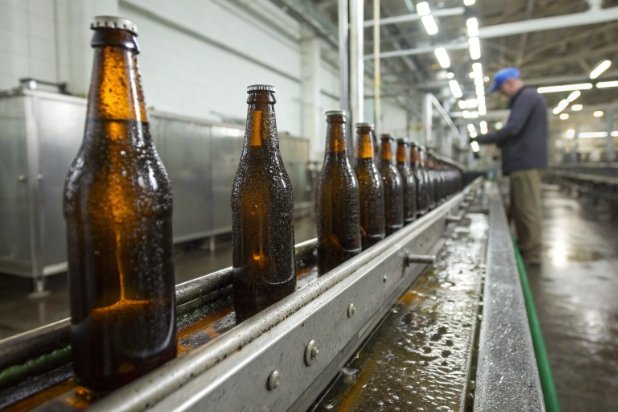
Glass alkali resistance refers to the substrate’s ability to resist dissolving, whereas decoration resistance refers to the adhesion and chemical stability of the ceramic or organic ink. Under Clean-in-Place (CIP) or caustic wash processes, printed labels often degrade, fade, or peel long before the glass itself shows signs of etching.
The Weak Link: Ink vs. Substrate
For clients like Ahmed (UAE Distributor) or JEmma (Skincare), branding is everything. A faded logo looks like expired product.
1. The Substrate (The Glass)
As discussed, the glass (Class A2) dissolves slowly. In a caustic wash (2-4% NaOH at 80°C), the glass might lose a few microns of thickness over 20 cycles. This is often invisible to the naked eye until "scuff rings" appear where bottles rub together.
2. The Decoration (The Print)
-
Ceramic Enamels (ACL): These are glass powders fused onto the bottle. They generally have good alkali resistance, but heavy metal-free (lead-free) enamels are often less resistant than older leaded paints. They can fade or lose gloss.
-
Organic Inks (Epoxy/UV Cured): These offer vibrant colors but have poor alkali resistance compared to ceramic. A hot caustic wash can strip organic ink entirely.
-
Precious Metals (Gold/Platinum): Real gold stamping is very sensitive. Alkalis can attack the binding layer, causing the gold to flake off.
CIP (Clean-In-Place) Considerations
For our B2B clients filling sauces or dairy, the filling lines are cleaned using CIP protocols 7 (often alternating acid and caustic flushes).
-
The Risk: If the cleaning solution splashes onto the exterior decoration, or if the bottle is submerged, the decoration suffers.
-
The Solution: We recommend Thermoplastic Ceramic Paints or Acid/Alkali Resistant Organic Inks specifically formulated for returnable glass.
Testing the Decoration
Don’t just rely on ISO 695 (for glass). Ask for LiOH (Lithium Hydroxide) Testing or specific Dishwasher Resistance Tests (EN 12875 8) for the printing. A common industry test is immersing the decorated bottle in 10% NaOH at 80°C for 2 hours to check adhesion.
What test reports and QC acceptance criteria should B2B buyers request to confirm alkali resistance before bulk production?
You cannot assess alkali resistance by looking at a bottle. It requires destructive testing. When you are approving a mold or a new glass recipe, you need to see the data. A missing report can mean a recall when your bottles turn hazy on the shelf.
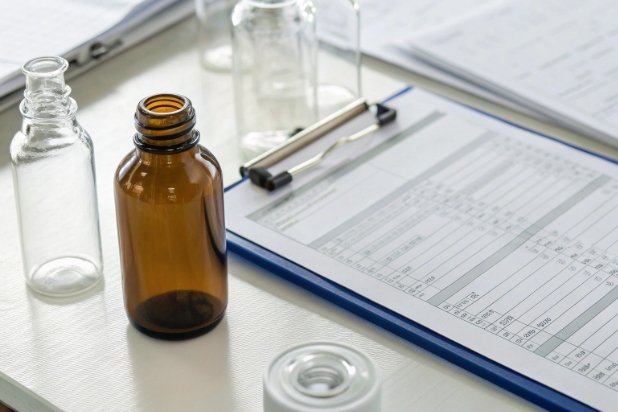
Buyers should request a physicochemical test report citing ISO 695 compliance, specifically looking for the weight loss value (mg/dm²) and the resulting Class (A1 or A2). For decorated bottles, request a separate "Caustic Wash Resistance" report detailing ink adhesion after exposure to NaOH solutions.
The Buyer’s QC Checklist for Alkali Resistance
At FuSenglass, we encourage our clients to be demanding. Here is the documentation package you should require for verification:
1. The ISO 695 Test Report
-
Must Include:
-
Method used (ISO 695).
-
Sample size and surface area calc.
-
Start weight vs. End weight.
-
The Result: "Weight loss = X mg/dm²" and "Classification = Class A2."
-
-
Acceptance Criteria: For standard food/beverage, Class A2 is the pass/fail line. If it hits Class A3 (>175 mg/dm²), reject it for any liquid application.
2. The Decoration Durability Report (If Printed)
-
Test Method: "Resistance to Alkali" (often an internal manufacturer standard or ASTM equivalent).
-
Common Protocol: Immersion in 2-3% NaOH at 60-80°C.
-
Acceptance Criteria: No peeling, blistering, or significant color change (Delta E < 2.0).
-
Adhesion Test: Cross-hatch tape test after alkali exposure.
3. Surface Quality Check (Visual)
-
While not a chemical test, QC inspectors should check for "Weathering" on stored pallets.
-
The Sign: A hazy, white, salty film on the glass.
-
The Cause: High humidity reacting with the glass alkali (sodium) over time. While this is technically weathering, it indicates high alkali mobility.
-
The Fix: Request "anti-weathering treatment" 9 (internal ammonium sulfate dosing) for long ocean shipments.
4. Third-Party Verification
For critical applications (e.g., a new line of returnable bottles for a brewery), send samples to a lab like SGS or TÜV.
-
Specific Instruction: "Perform ISO 695 Alkali Resistance Test."
-
Cost vs. Benefit: The test costs a few hundred dollars; a recalled shipment costs thousands.
Summary Table for RFQs
| Feature | Standard to Cite | Target Value (General Use) | Target Value (High Perf) |
|---|---|---|---|
| Glass Material | ISO 695 | Class A2 | Class A1 |
| Decoration | Industry Wash Test | 20 Cycles (No Fade) | 50+ Cycles (No Fade) |
| Weathering | Visual / pH Test | Clear / Neutral pH | Surface Treated |
Conclusion
While acid resistance protects the flavor of your vintage, alkali resistance protects the structural integrity and aesthetic life of the bottle itself. By specifying ISO 695 Class A2 or A1 and distinguishing between the durability of the glass and its decoration, you ensure your packaging survives the harsh realities of industrial washing and alkaline contents. Always demand the specific weight-loss data in your QC reports 10—because in the glass business, what you can’t see can definitely hurt your brand.
Footnotes
-
The structural framework of glass, primarily made of silicon dioxide, which determines its chemical durability. ↩
-
Analytical methods that determine the amount of a substance by measuring its mass. ↩
-
Standard test method for determining alkali resistance of porcelain enamels, often adapted for glass. ↩
-
A type of glass with high chemical and thermal resistance, classified as Type I glass. ↩
-
Standard commercial soda-lime glass used for most beverage and food containers. ↩
-
A chemical compound added to glass fibers to improve resistance to alkaline environments like concrete. ↩
-
Automated cleaning methods used in manufacturing to clean equipment without disassembly. ↩
-
European standard for testing the resistance of dishware to mechanical dishwashing. ↩
-
Treatments applied to glass surfaces to prevent the formation of haze or bloom caused by humidity. ↩
-
Documents that verify a product meets specified quality criteria and standards. ↩






