
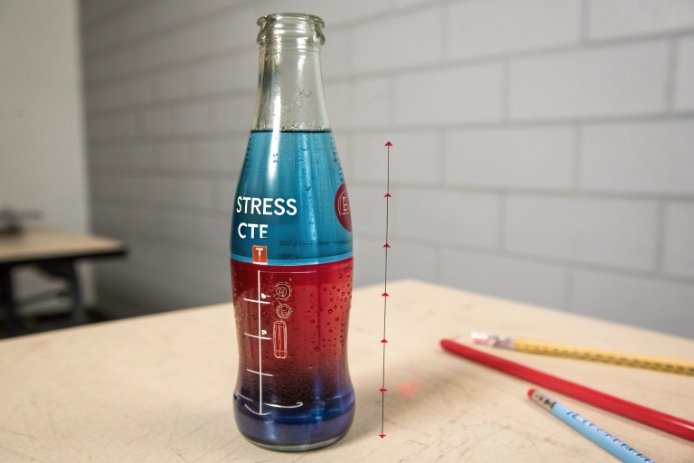
Hidden stress turns a good-looking bottle into a future crack. It shows up after filling, after shipping, or in a pasteurizer, and it feels random.
Internal stress drops when the recipe keeps CTE stable, keeps the viscosity curve predictable, and supports clean, uniform glass so the lehr can relax stress before it freezes in.
The stress equation inside a bottle
What residual stress really is
Residual stress 1 is “frozen” stress from uneven cooling. The outside skin cools first and locks in shape. The core cools later and wants to shrink. If the glass cannot relax at the right time, stress stays inside. That stress can sit quietly until a trigger appears, like a hot-fill, a cold rinse, or a small impact on the heel.
Composition matters because it sets two things the lehr 2 cannot change by itself: the CTE (how much the glass wants to expand or shrink) and the viscosity points (when the glass is able to relax stress). If CTE is high, the same temperature gradient creates more stress. If the annealing and strain points drift, the same lehr schedule can under-anneal one lot and over-anneal the next.
Where formulation has real leverage
I treat formulation leverage in three layers:
-
Stress creation: mostly CTE and thickness gradients.
-
Stress relaxation: annealing point 3, strain point, and viscosity curve slope.
-
Stress localization: cords, seeds, stones, and micro-checks that turn stress into cracks.
A formulation that looks “strong” but creates cords or devit is not a stress solution. It is a stress amplifier. The goal is a recipe that stays stable through normal plant variation, including cullet swings and redox drift.
A simple map that helps decisions
| Lever | What it changes | How it reduces stress | What it can break if pushed too far |
|---|---|---|---|
| Higher SiO₂ + controlled Al₂O₃ | Network stiffness | Lower CTE drift, better durability | Higher melt energy, tighter liquidus margin |
| Controlled total alkali | Ion mobility and CTE | Lower stress sensitivity, stable curve | Harder melting if too low |
| Balanced CaO/MgO | Stability and devit risk | Fewer crystals and cord bands | Stones/devit if balance is wrong |
| Small B₂O₃/ZnO tuning | Curve shape and expansion | Smoother behavior, wider lehr window | Volatility, durability shifts, more QA load |
| Stable redox + fining | Homogeneity | Fewer cords/seeds that localize stress | Foam, color drift, variable refining |
| Clean cullet | Inclusion control | Fewer stress concentrators | Cost and supply discipline needed |
A strong stress plan is never “chemistry only.” It is chemistry plus lehr logic plus thickness discipline. The next sections show how to tune each lever in a way that is realistic for container production.
Keep reading because the biggest stress reductions usually come from small, controlled recipe moves paired with tighter melt and cullet control.
Which oxide ratios (SiO₂–Na₂O–CaO–MgO–Al₂O₃) best align CTE and raise annealing/strain points to lower residual stress?
Stress problems often start with a recipe that drifts. A few tenths of a percent change can shift CTE or viscosity points enough to make the lehr miss the window.
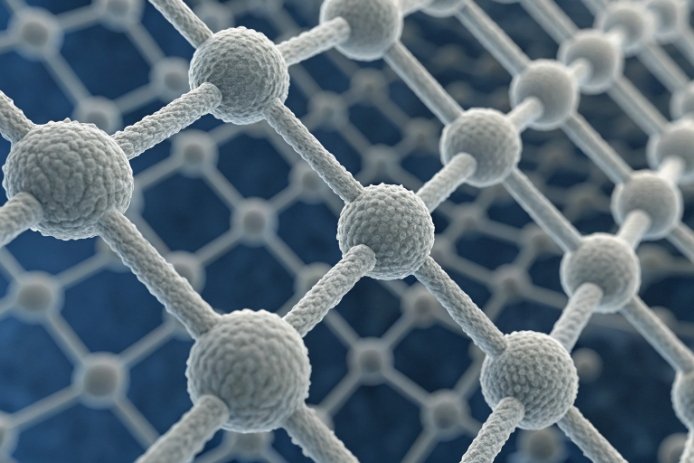
A stress-friendly ratio raises (SiO₂ + Al₂O₃) relative to total alkali, keeps CaO/MgO balanced for stability, and avoids high alkali that lifts CTE and makes stress freeze in faster.
Use ratios that reflect network vs modifiers
For soda-lime glass 4, the most useful stress ratios are simple:
-
(SiO₂ + Al₂O₃) / (Na₂O + K₂O): higher usually means a higher viscosity curve and less stress sensitivity.
-
Al₂O₃ / total alkali: higher usually means less alkali leaching and more stable stress behavior over storage.
-
MgO / (CaO + MgO): a balanced share helps stability and can help CTE control, but extremes raise devit risk.
More SiO₂ and Al₂O₃ generally lower CTE 5 and raise annealing/strain points. That gives the lehr a clearer “relax then freeze” schedule. The bottle relaxes stress at a slightly higher temperature, then locks in stress at a higher strain point. That sounds like it could increase stress, but it usually reduces stress when the lehr is tuned, because the glass can relax more cleanly during the soak and becomes less sensitive to gradients later.
Keep alkali in a stable window, not a minimum
Lowering Na₂O can help CTE and stress. Still, dropping alkali too far makes melting and refining harder. That can increase cords and seeds, which then localize stress. So I prefer “stable and controlled alkali,” not “lowest alkali.”
Balance CaO and MgO to protect devit margin
CaO and MgO can support durability and stability. But too much MgO, or the wrong balance for a given furnace, can raise liquidus 6 and trigger crystals. Crystals and stones are stress concentrators. They turn harmless stress into a crack.
| Ratio target | Stress benefit | Why it works | Guardrail check |
|---|---|---|---|
| (SiO₂ + Al₂O₃) / alkali slightly higher | Lower residual stress spread | Lower CTE drift and higher viscosity points | Furnace energy and refining stability |
| Al₂O₃ ≈ 1–2% or higher baseline | Better stress repeatability | Lower ion exchange and stronger network | Liquidus margin and cord rate |
| MgO share balanced vs CaO | Fewer stress hotspots | Less devit and better uniformity | Stones, base defects, forehearth cold spots |
If the goal is fewer stress cracks, the best recipe is the one that lets the lehr run with fewer tweaks. Stable ratios make the annealing response repeatable. That repeatability is what reduces stress across real production lots.
How do small additions of B₂O₃/ZnO or Li₂O/K₂O tweaks smooth the viscosity–temperature curve for stress-free forming?
A line can hit target dimensions and still build stress if the viscosity curve is steep. Then small temperature drift creates big viscosity changes, and the bottle cools with uneven strain history.
Small B₂O₃/ZnO tuning or careful alkali swaps can smooth the viscosity–temperature behavior, so forming becomes less sensitive and stress becomes easier to anneal, but these moves must stay inside a stable devit and durability window.
Curve smoothing means reducing sensitivity, not just moving temperatures
A “stress-friendly” curve has two traits:
-
It does not collapse too fast with small temperature changes.
-
It keeps the working range wide enough for stable distribution.
B₂O₃ can help by changing how the network responds to heat. In many practical cases, small B₂O₃ additions make the glass feel less “touchy” in the mid-viscosity range. That can reduce distribution swings that later create stress differences between heel and shoulder. The downside is that B₂O₃ can change volatility and can alter chemical durability and redox response. So it is a controlled tool, not a casual fix.
ZnO can act as a stabilizing intermediate in some silicate systems. Small ZnO additions can support durability and can shift viscosity behavior in a way that improves forming stability. It can also change devit behavior depending on the full recipe. So it needs trials and defect tracking, especially for stones and cords.
Li₂O and K₂O tweaks can also change curve shape. A small replacement of Na₂O with Li₂O can sometimes reduce CTE and shift viscosity behavior because lithium has high field strength. K₂O can shift curve slope and can change thermal expansion. The risk is that K₂O often raises CTE compared with Na₂O in many soda-lime designs, which can increase thermal stress even if forming feels smoother. This is why any alkali tweak must be checked against both viscosity behavior and CTE, not only gob feel.
| Tweak | What it can improve | Stress risk it can reduce | Main risk to watch |
|---|---|---|---|
| Small B₂O₃ | Wider working behavior | Less distribution-driven stress | Volatility, durability drift |
| Small ZnO | More stable forming window | Fewer local stress zones | Devit and raw material variation |
| Small Li₂O (swap) | Potentially lower CTE, curve tune | Lower thermal stress sensitivity | Narrower stability window, cost |
| Small K₂O (swap) | Curve tuning in some plants | Less sensitivity to drift (sometimes) | Higher CTE, higher stress in thermal cycles |
These tweaks work best when they are treated as “fine tuning” after the base soda-lime system is already stable. If cords, stones, or redox drift are still present, curve tuning will not fix stress. It will only hide it for a short time.
Can tighter redox and fining control (SO₃, CeO₂/Sb₂O₃; Fe²⁺/Fe³⁺) cut cords/seeds that localize stress?
A bottle can have acceptable average stress and still fail because one band carries high local stress. Cords and seeds create those local zones.
Yes. Stable SO₃ and redox control reduce cords and seeds, which removes local stress concentrators and makes annealing more uniform, especially in heels and thick-to-thin transitions.

Why cords and seeds turn into stress problems
Cords are composition streaks. That means local CTE, viscosity, and relaxation behavior can differ from the surrounding glass. During cooling, those zones shrink differently. That creates local stress even when the lehr is correct.
Seeds are bubbles. A bubble near the surface can magnify tensile stress. It can also act as a weak start point for stress corrosion in humid storage. In thermal cycling, these weak points show up as “random” cracks that do not match a simple handling story.
SO₃ fining and redox must be treated as one system
Sulfate fining 7 is powerful, but it depends on furnace redox. If the melt drifts reducing, sulfate behavior changes. Bubble release timing changes. Foam risk changes. That leads to variable refining and more cords.
CeO₂ and Sb₂O₃ choices also affect the redox window and refining behavior. The better choice depends on your furnace, pull rate, and color family. The key point is consistency. A fining system that swings week to week creates stress swings, because cords and seeds swing with it.
Iron redox 8 (Fe²⁺/Fe³⁺) is a useful indicator of furnace redox health, even beyond color. When iron state drifts, many other reactions drift too, including sulfate behavior. So tracking Fe redox trends helps predict when stress will drift, before breakage data shows it.
| Control | What it reduces | How it lowers internal stress | Simple plant KPI |
|---|---|---|---|
| Stable SO₃ input and behavior | Seed spikes and foam events | Fewer weak points and fewer thickness swings | Bubble count trend, foam observation |
| Tight redox window | Cord formation and color drift | More uniform CTE and relaxation behavior | Color stability, Fe redox proxy trend |
| Consistent fining strategy | Inhomogeneity and bubbles | More repeatable annealing response | Cord band inspection, defect map |
| Better mixing/homogenization | Cord amplitude | Less local stress banding | Striae/cord checks in critical zones |
When redox and fining are stable, the lehr becomes easier. The bottle cools more uniformly because the glass is more uniform. That is the fastest way to reduce “mystery stress” without changing the whole recipe.
How do cullet quality and composition uniformity (ppm heavy metals, TiO₂/ZrO₂ limits) reduce thermal gradients and stress variations?
Cullet is a major lever for cost and energy, but it can also be the biggest driver of stress variation if it is not controlled tightly.
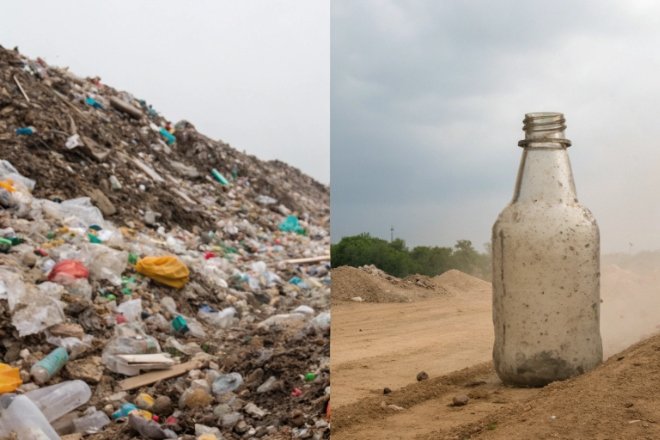
Clean, consistent cullet reduces cords, stones, and redox swings, which lowers local thermal gradients and stress variation; tight limits on heavy metals and TiO₂/ZrO₂ contaminants reduce inclusions that act like stress concentrators.
Cullet controls stress through uniformity
Stress variation often comes from batch variation. Cullet 9 is the largest variable input in many container plants, so it needs a real specification:
-
Color consistency (for redox and absorption stability)
-
Low organics (to avoid reducing swings)
-
Low ceramics (to avoid stones)
-
Low metals (to avoid inclusions and reactions)
Organics drive reducing conditions and can shift sulfate fining behavior. That changes bubble removal and mixing. It also changes iron redox and color. Even if color is not the customer focus, the redox drift changes refining, and refining drift creates cords. Cords create stress bands.
Heavy metals and “trace oxides” are stress risks when they arrive as particles
ppm-level heavy metals are not always a problem in dissolved form. The risk is fragments and inclusions:
-
Stainless fragments can become stones or react in the melt.
-
Ceramics and refractories become hard inclusions.
-
TiO₂/ZrO₂ often matter most when they drift or arrive as unmelted specks.
Those inclusions change local heat flow and local shrinkage. That creates stress spikes. A stress spike plus a small surface scratch becomes a delayed break.
The cullet spec should connect to stress metrics, not only to appearance
A strong cullet program links incoming control to lehr outcomes:
-
If cullet organics rise, redox drifts, and stress drift follows.
-
If ceramics rise, stones rise, and local stress failures rise.
-
If metal fragments rise, inclusion-driven stress failures rise.
| Cullet/impurity control | How it reduces stress | What it prevents | Practical screening |
|---|---|---|---|
| Low organics | Stabilizes redox and fining | Cord bands, stress drift | Washing, LOI audits, supplier discipline |
| Low ceramics | Removes hard inclusions | Local stress spikes and cracks | Optical sorting 10, manual audits |
| Low stainless/Cr–Ni | Reduces metal inclusions | Stone-like defects and weak spots | Magnets + eddy current separation |
| TiO₂/ZrO₂ limits | Keeps scatter and inclusions stable | Haze spots and pinholes after decoration | Raw material control + cullet purity audits |
When cullet is controlled, the whole process becomes calmer. Gob temperature control improves, refining is more stable, and the lehr runs closer to one steady recipe. That is how composition uniformity reduces internal stress at scale, even before any major oxide redesign.
Conclusion
Internal stress drops when oxide ratios stabilize CTE and viscosity points, curve tweaks stay controlled, redox and fining stay steady, and cullet purity prevents cords and inclusions that turn normal cooling into stress spikes.
Footnotes
-
Residual stress is stress that remains in a solid material after the original cause of the stresses has been removed. ↩
-
Annealing lehr is a long kiln used to anneal glass. ↩
-
Annealing point is the temperature at which internal stresses are relieved in minutes. ↩
-
Soda-lime glass is the most common type of glass, used for windowpanes and glass containers. ↩
-
Liquidus temperature is the highest temperature at which crystals can exist in equilibrium with the melt. ↩
-
Fining is the process of removing gas bubbles from molten glass. ↩
-
Redox state influences the color and heat absorption properties of glass. ↩
-
Cullet is crushed, recycled glass used to facilitate melting. ↩
-
Optical sorting uses cameras and lasers to separate materials based on color and shape. ↩






