
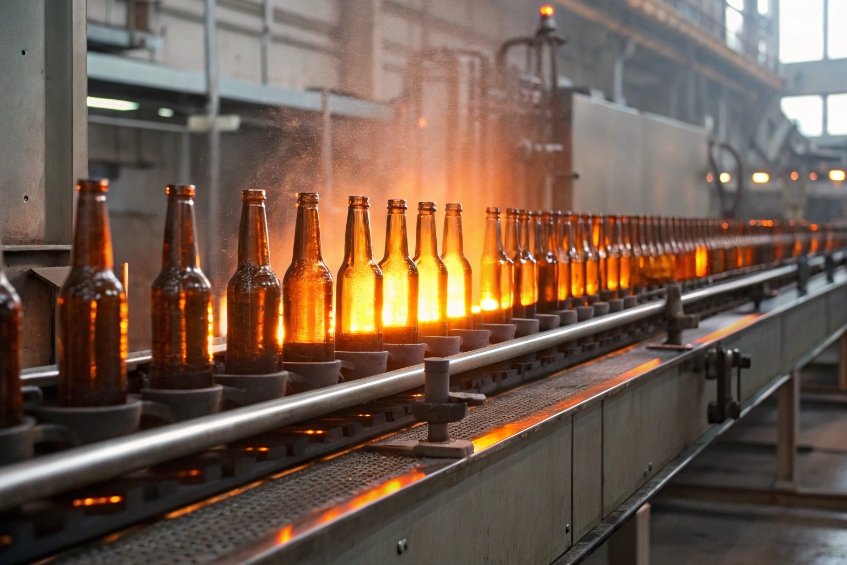
Scratches and burst fractures are not random accidents. They are the final result of many small weaknesses that start on the hot end and follow every bottle to the pallet.
Scratches and burst fractures are best prevented by combining strong coatings, low-friction conveying, robust container design, verified annealing, realistic performance tests, and transit packaging that keeps bottles separated, stable, and protected from rubbing and impact.
In daily production, it is hard to control what you cannot see. Coefficient of friction, residual stress, and pallet rub all feel abstract. When we link each control to a clear failure mode, it becomes easier to justify changes to equipment settings, designs, and packaging specs.
Which hot-end/cold-end coatings and low-COF conveyors cut scuffing?
Even a well-designed bottle loses most of its strength at the surface. If friction and abrasion are not controlled, coating failures quickly turn into scuffs, scratches, and later breakage.
Scuffing drops fast when hot-end SnO₂ is uniform, cold-end polymer or wax keeps COF in spec, all contacts use low-friction materials, and conveyors run clean, aligned, and fully synchronized.
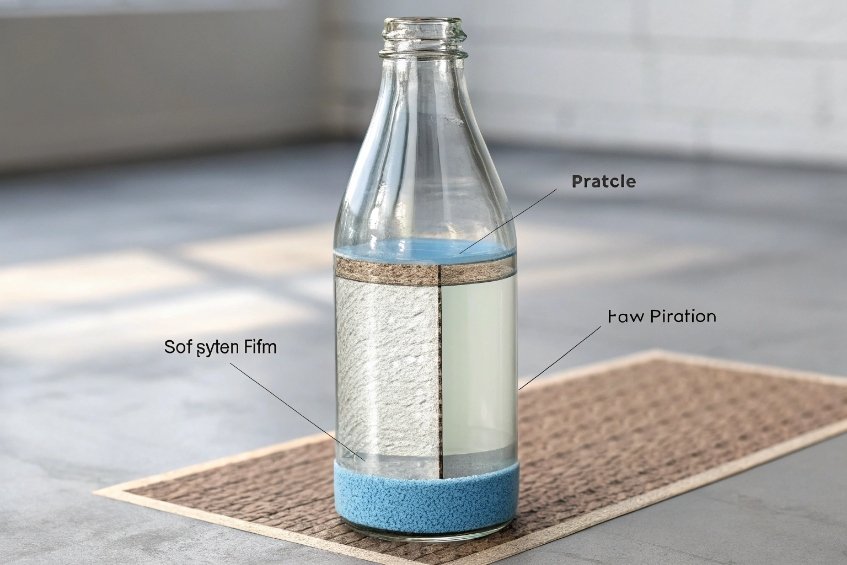
Building a low-friction, low-damage surface system
Surface protection starts at the hot end. A stable tin oxide (SnO₂) hot-end coating 1 creates a hard, chemically bonded layer that improves scratch resistance. This layer must be continuous across body, shoulder, and neck. If burners clog or drift, bare patches appear, and those zones become high-friction islands. On top of this, cold-end coating, usually polyethylene or wax-based, adds lubricity. The key is not “more is better” but “correct and uniform”. Over-dosing builds sticky films and dust pickup; under-dosing leaves high COF and scuff bands.
It helps to treat coating and friction as measurable, not just “by feel”, by defining a coefficient of friction (COF) window 2 and checking it at the body/shoulder/neck.
| Control point | What to measure | Typical target idea |
|---|---|---|
| SnO₂ hot-end coating | Weight or optical density | Uniform across height and lanes |
| Cold-end coating | COF body/shoulder/neck | Stable within spec window |
| Conveyors and guides | COF vs bottle under load | Low and repeatable |
Low-COF conveyors, rails, and starwheels matter just as much. Stainless steel with dust and caustic residue becomes sandpaper. Changing contact parts to UHMWPE, acetal, or other low-friction plastics reduces scratching at the critical transfer and accumulation points. At the same time, regular cleaning and debris control are essential. Air knives, ionized blow-off, and simple vacuuming remove cullet fines, sand, labels, and caustic crystals that otherwise cut the glass.
Speed and timing complete the picture. When conveyors or starwheels are out of sync, bottles sheer, rotate, and lean. Back-pressure builds scuff rings almost instantly. Matching speeds, opening small gaps, and controlling accumulation logic cut both friction and contact force. Good coatings plus low-friction hardware plus clean, synchronized motion create a line where bottles glide instead of grind.
Can design tweaks—shoulder radius, base thickness—raise impact strength?
Glass strength comes from geometry as much as from chemistry. When shapes are harsh, thin, or highly stressed, even well-coated bottles struggle under impact or pressure.
Yes. Smoother shoulders, stronger heel and base design, controlled wall distribution, and realistic finish details raise impact and burst strength without always adding heavy weight.
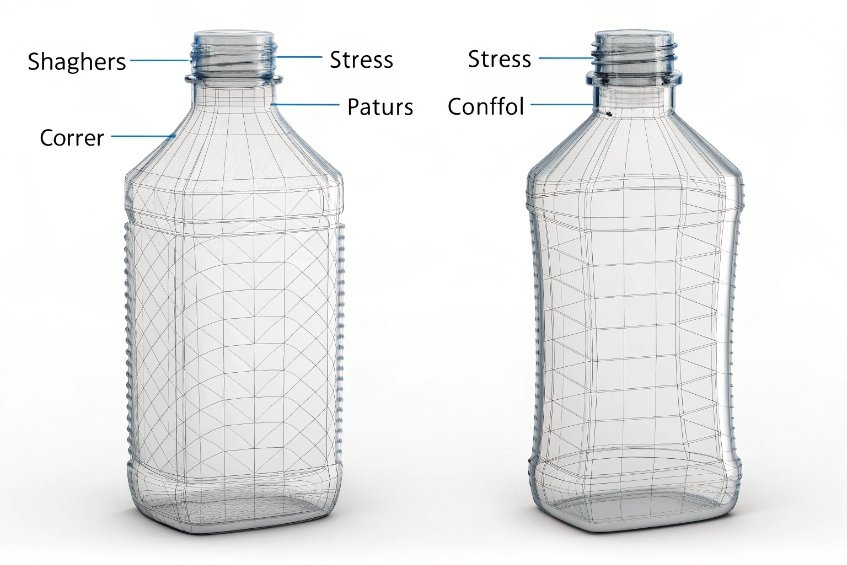
Designing strength into the container, not just adding weight
Many fixes start with “make the bottle heavier”. This helps a little, but it is not always efficient. The better question is where the glass is placed, and how stress flows through the shape. Stress tends to peak in tight radii and thin sections. The shoulder, heel, and finish are repeat offenders.
Key design levers:
| Area | Design tweak | Effect on strength |
|---|---|---|
| Shoulder | Increase radius, smooth blends | Lower bending stress and impact risk |
| Heel | Avoid knife heels, add support | Reduce base and heel fracture |
| Base | Correct push-up and thickness | Better load distribution, less cracking |
| Finish | Robust thread and support ring | Less risk of neck splits under torque |
By easing shoulder curves and smoothing transitions, impact loads spread over a wider area. The same impact energy leads to lower peak stress. At the heel, adding a little thickness and avoiding knife edges makes a big difference. A tight, sharp heel is very sensitive to tiny scratches from deadplates and conveyors. A more generous heel radius combined with proper thickness gives you a forgiving zone where small scuffs do not instantly become failures.
Wall distribution is just as important. Controlled gob weight and temperature, proper IS timing, and balanced mold cooling help avoid thin bands in high-stress regions. When designing, it helps to review thickness maps next to breakage data—or run a formal container design study 3 to locate the most likely weak zones before the market does.
Finally, finish and closure work together. Overly thin thread roots or sharp corners at the support ring concentrate hoop stress from torque and pressure. A slightly thicker, better-rounded finish often prevents neck splits without large extra weight. So yes, design tweaks can raise impact strength. They just need to focus on stress flow, not only on aesthetic trends.
What pressure, drop, and thermal-shock tests validate durability?
A bottle that survives the production line can still fail at the filler, in the warehouse, or in a hot wash sink. Without realistic performance tests, these risks stay invisible.
Durability needs a balanced test set: calibrated internal pressure tests, defined drop and impact tests, and thermal-shock tests that reflect real hot and cold conditions for the product.
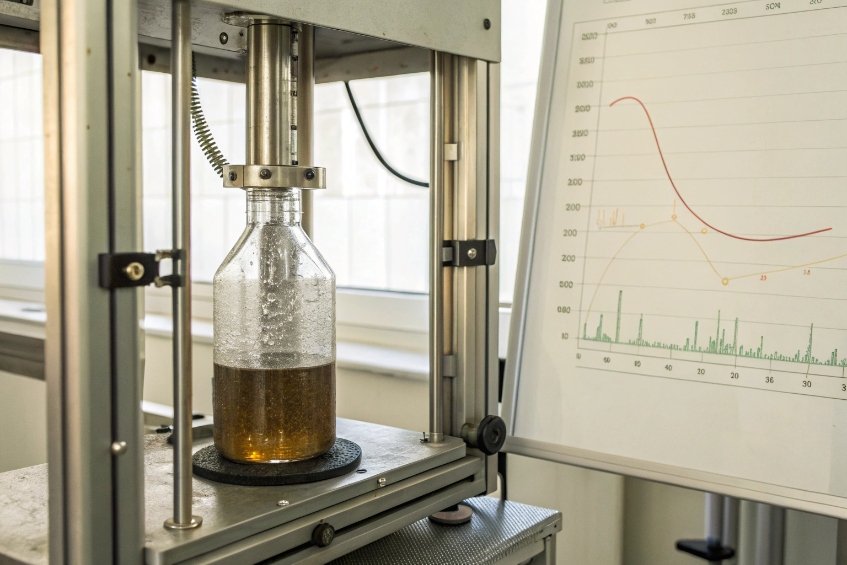
Building a test plan that matches real life
Performance tests must match how the bottle will be used, not just a generic standard. Internal pressure testing is essential for carbonated and pressurized products, and referencing ISO 7458 internal pressure resistance 4 helps keep burst methods, ramp rates, and reporting consistent. Acceptance levels should include a safety margin above the maximum service pressure, plus extra allowance for line variation and aging.
Drop and impact tests simulate shocks during handling and transport. These tests should target realistic heights and surfaces. For example, returnable beverage bottles might see repeated crate drops and hard knocks on fillers. A simple set of controlled drops—different orientations, onto defined plates—already shows which designs and coatings are fragile.
Thermal-shock testing closes another gap. Hot fills, pasteurization, cold storage, and dishwashing cycles all create temperature swings. Using ISO 7459 thermal shock resistance 5 as a reference helps align ΔT, dwell times, and “endurance” cycles with how glass containers are commonly evaluated.
A test matrix can look like this:
| Test type | Typical purpose | Key parameters |
|---|---|---|
| Internal pressure | Validate burst / service margin | Max pressure, ramp rate, sample size |
| Drop / impact | Simulate handling and line shocks | Height, impact surface, orientation |
| Thermal shock | Simulate hot/cold service conditions | ΔT, dwell times, number of cycles |
| Residual stress | Check annealing quality | Polariscopic pattern, stress level |
It helps to run these tests both on fresh ware and on bottles that have gone through realistic handling, washing, or decoration. Scratches and coatings behave differently over time. When the same bottle design passes all tests with margin, confidence in field performance rises. When failures cluster under specific tests, they point back to either design changes or process improvements that will give the best return.
How should pallets, dividers, and shrink wrap be specified for transit?
Even strong, well-tested bottles can arrive broken or scuffed if pallets and packaging are not designed to control movement, rubbing, and stacking loads.
Transit damage drops when pallets, dividers, and shrink wrap are specified to keep bottles separated, stable, and dry, with controlled compression and minimal relative motion during transport.
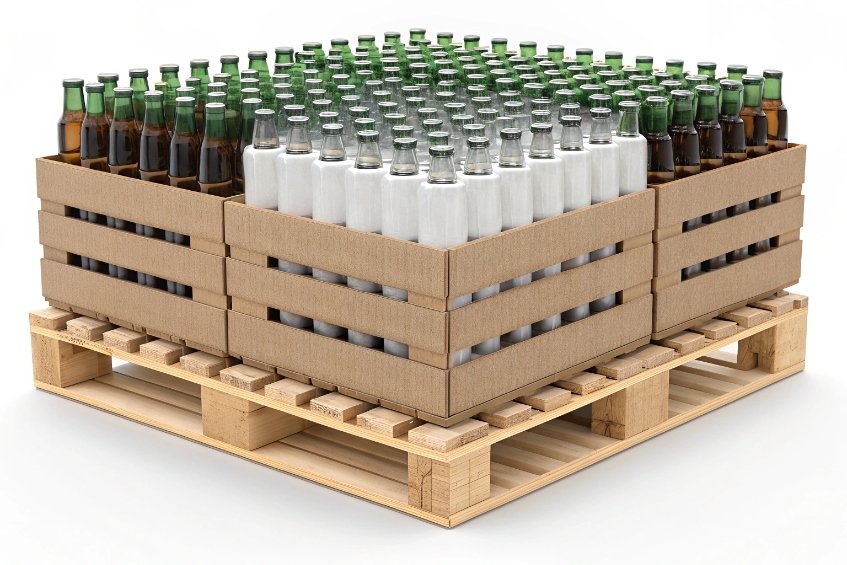
Turning pallets and cases into part of the protection system
Transit packaging is more than a way to move product. It is the last armor for glass. Good pallet specs begin with a stiff, flat base that does not flex too much during handling. If pallets sag, middle layers see extra stress and rubbing. Slip sheets or anti-slip layers between pallet and first layer can reduce sudden sliding or shock.
Inside each case, dividers control glass-to-glass contact. For fragile or high-pressure containers, full-height or at least neck-height dividers are worth the space. The material should have enough stiffness to hold shape, but also some cushioning. Coated or treated boards reduce abrasion compared with hard or rough carton stock.
Key packaging parameters:
| Element | Important spec points |
|---|---|
| Dividers | Height, material stiffness, edge smoothness |
| Cartons / trays | Board strength, internal surface roughness |
| Layer pads | Thickness, compression strength, surface finish |
| Shrink wrap | Tension, coverage, venting |
Shrink wrap and top frames then lock the whole unit together. Wrap tension must be high enough to stabilize the load, but not so high that it crushes cartons and forces bottles hard against dividers. It helps to test different patterns and tensions on a real transport route, then check for scuff bands and breakage.
Environmental factors count too. Wet cartons lose strength and become abrasive as fibers rise. Long storage in damp conditions raises risk of pallet collapse and extra rubbing. So specs should include moisture resistance where needed, plus clear rules for storage and handling in the warehouse.
Finally, transit tests close the loop. A practical way to formalize pallet/case validation is to reference ASTM D4169 distribution testing 6 and then tune the vibration, compression, and drop/impact sequence to your real routes. When the same pallet spec runs clean across routes and seasons, it becomes the standard. Combined with strong bottles and stable coatings, solid packaging usually removes the last major driver of field breaks.
Residual stress is invisible in normal light, but it decides how far a scratch or check can grow before a bottle breaks.
A disciplined annealing plan includes verified lehr curves, lane-to-lane balance, and routine stress checks using ASTM C148 polariscopic examination 7 so drift is caught before breakage rates climb.
Typical controls that help:
- Track lehr entrance drafts and cross-lehr airflow balance
- Avoid over-crowding (bottle-to-bottle temperature variation freezes stress)
- Set and verify soak and cooling rates for each container family
- Add stress checks at start-up, after changeovers, and after lehr maintenance
When anneal quality is stable, scratches stay “cosmetic” more often, and delayed pressure bursts become far less common.
Conclusion
Strong glass is a system result. When coating, design, annealing, testing, and packaging work together, scratches stay shallow and burst fractures become rare exceptions.
Footnotes
-
Learn why hot-end SnO₂ improves abrasion resistance and anchors cold-end lubricants. ↩ ↩
-
Use a standard COF method reference to set slip windows and detect friction drift early. ↩ ↩
-
See how thickness distribution and stress criteria identify weak zones before field failures. ↩ ↩
-
Align burst-test setup to a recognized internal pressure resistance method for glass containers. ↩ ↩
-
Reference common thermal-shock resistance/endurance methods for hot-fill, pasteurization, and cold-chain conditions. ↩ ↩
-
Use distribution simulation guidance to validate pallets/cases against vibration, compression, and impact hazards. ↩ ↩
-
Reference standard polariscopic methods to verify anneal quality and residual stress in containers. ↩ ↩






