
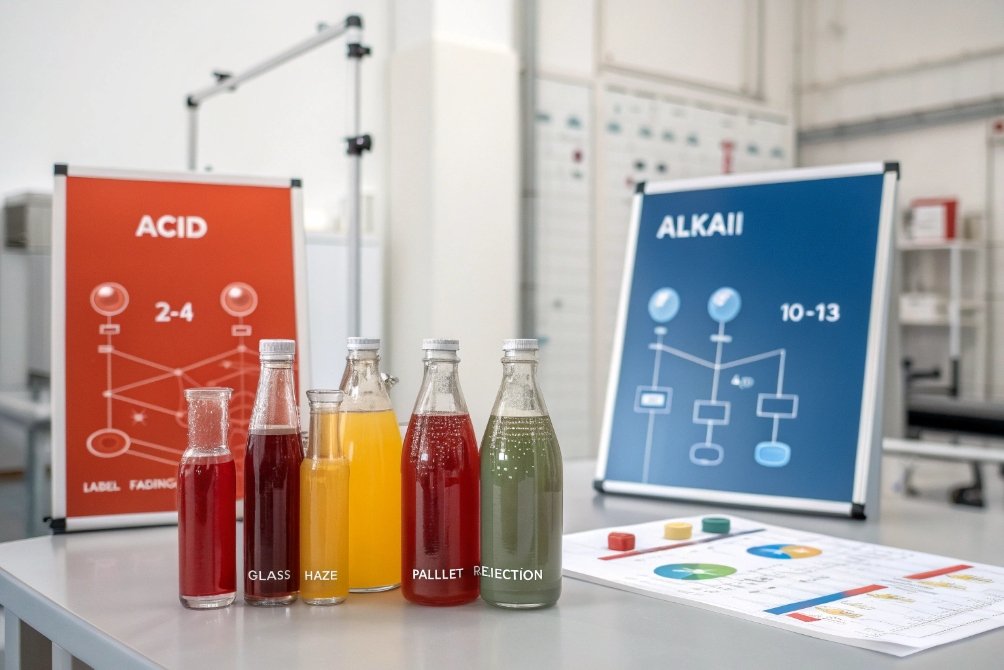
Acidic drinks, alkaline cleaners and caustic bottle washers all touch the same glass surface. If chemical resistance is wrong, labels fade, glass clouds, and whole pallets get rejected.
Glass bottles handle most food acids easily, but strong alkalis and hot caustic wash are more aggressive. Borosilicate outperforms soda-lime, while the right closure liners and food-contact tests prove long-term chemical safety. :contentReference[oaicite:0]{index=0}
For buyers and brand owners, “chemically resistant” only helps when it is linked to glass type, wash process, closure choice and the actual standards behind the claim. So in this article I break the topic into four parts: soda-lime vs borosilicate, caustic wash damage, closure and liner selection, and the food-contact standards that prove chemical durability.
Does soda-lime or borosilicate glass perform better with acids and alkalis?
Chemical attack on glass is slow and invisible at first. Problems show up later as haze, flakes, or unexpected breakage during filling or autoclave.
Borosilicate (Type I) glass gives the best resistance to both acids and moderate alkalis, while soda-lime (Type III) is fine with most acids but only moderate with alkaline products, especially at higher temperature. :contentReference[oaicite:1]{index=1}
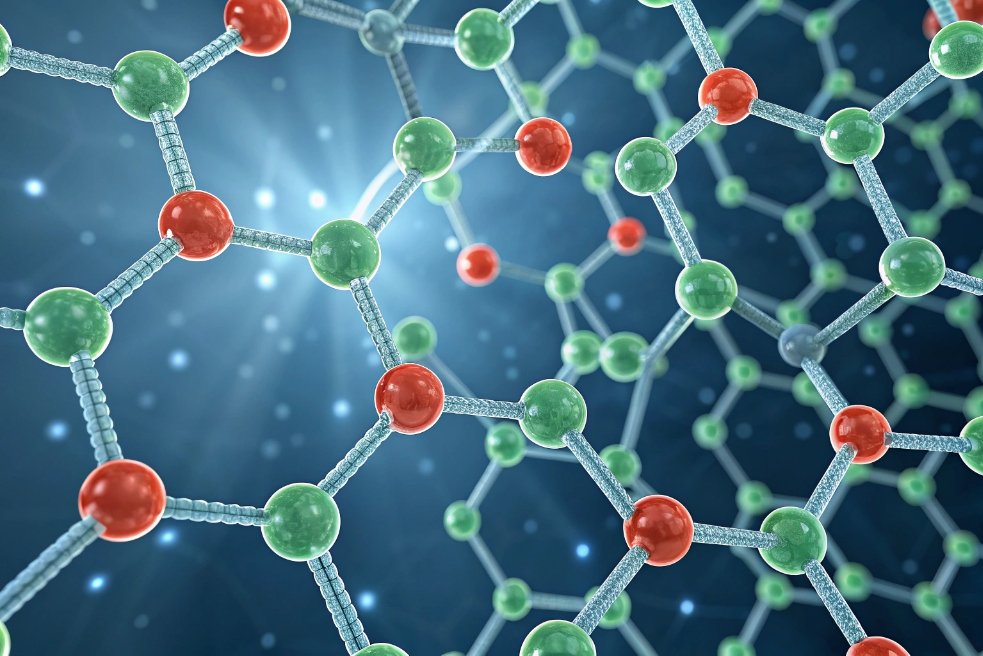
How glass composition drives chemical resistance
Glass looks simple, but the recipe matters a lot.
- Soda-lime glass 1 is rich in sodium and calcium. These alkali ions can exchange with hydrogen ions in water or alkaline cleaners. Over time this leaching roughens the surface and can lower strength.
- Borosilicate glass 2 has more SiO₂ and B₂O₃ and less alkali. The network is tighter and more stable, so acids and moderate alkalis attack it much more slowly. :contentReference[oaicite:2]{index=2}
DWK and other suppliers describe expansion borosilicate glass as highly resistant to water, acids, salt solutions and many solvents, with only hydrofluoric acid, hot concentrated phosphoric acid and strong hot alkalis causing significant corrosion. :contentReference[oaicite:3]{index=3} Studies comparing soda-lime and borosilicate show that at pH 6–10 and elevated temperature, soda-lime can degrade about ten times faster. :contentReference[oaicite:4]{index=4}
Acid vs alkali behaviour
In real packaging, the pattern is simple:
-
Acids
- Most mineral and organic acids (HCl, H₂SO₄, HNO₃, acetic, citric) barely affect either glass type at room temperature. Long shelf life is normal. :contentReference[oaicite:5]{index=5}
- Hydrofluoric acid (HF) 3 dissolves silica and must never go in glass. It needs plastic containers like PTFE or HDPE. :contentReference[oaicite:6]{index=6}
-
Alkalis
- Above about pH 9–10 and with heat, alkali solutions attack the silica network. Corrosion accelerates with temperature and time, especially for soda-lime. :contentReference[oaicite:7]{index=7}
- Strong NaOH or KOH can cause surface roughness, haze and, in pharma, even glass flaking into the product. :contentReference[oaicite:8]{index=8}
How standards classify chemical durability
Hydrolytic resistance of glass is measured and classified by standards such as:
- ISO 719 – hydrolytic resistance of glass grains at 98 °C, focused on less resistant glasses like soda-lime. :contentReference[oaicite:9]{index=9}
- ISO 720 – hydrolytic resistance of more resistant glasses, e.g. borosilicate, tested at 121 °C. :contentReference[oaicite:10]{index=10}
- Ph. Eur. 3.2.1 4 and USP <660> – classify pharmaceutical glass into Type I, II, III based on hydrolytic resistance of either grains or the inner surface. Type I (borosilicate) is highest, Type II is treated soda-lime, Type III is untreated soda-lime. :contentReference[oaicite:11]{index=11}
A simple way to think about it:
| Glass type | Typical code | Acid resistance | Alkali resistance (room temp) | Typical uses |
|---|---|---|---|---|
| Type I borosilicate | Pharma, labware | Excellent (except HF) | Good in moderate alkali | Injectables, strong acids, lab reagents |
| Type II dealkalized | Treated soda-lime | Very good | Better than untreated soda-lime | Many pharma liquids with higher pH |
| Type III soda-lime | Standard bottles | Good with food acids | Moderate; avoid strong/hot alkali | Beverages, food, dry powders |
So for acidic foods and drinks, good soda-lime is usually fine. For high-pH contents or aggressive cleaning, borosilicate or Type II treated soda-lime is safer.
Will caustic wash cycles dull or etch glass bottle surfaces?
Returnable bottles live a hard life. They meet hot caustic every cycle, bump each other in crates, and run over steel conveyors for years.
Yes. Hot caustic bottle washers slowly etch soda-lime surfaces and strip coatings, which leads to haze, loss of gloss and scuff bands on the shoulder and base over many wash cycles. :contentReference[oaicite:12]{index=12}
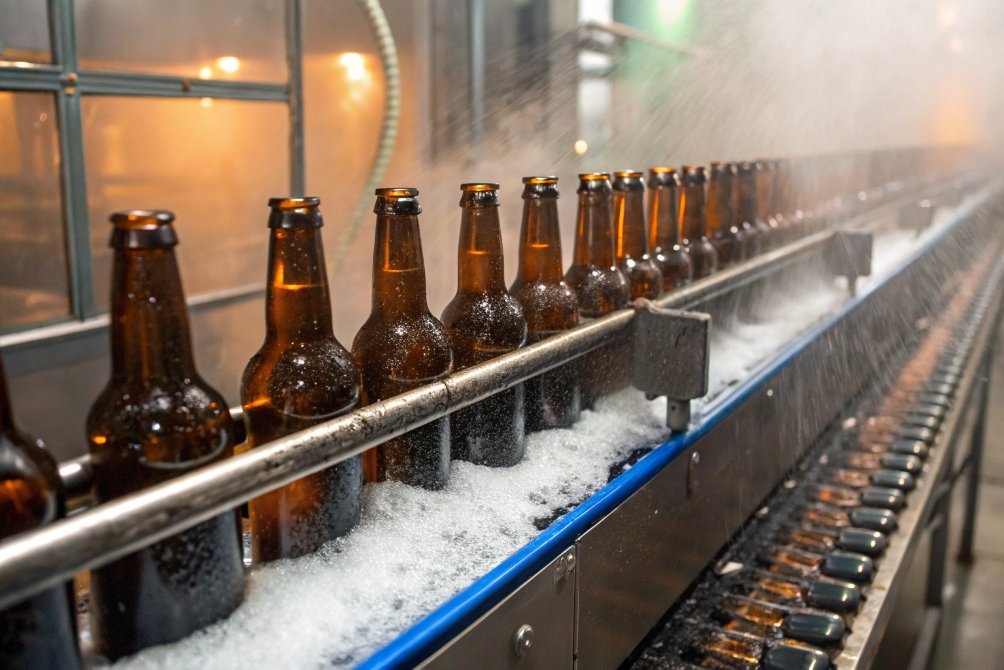
What caustic wash does to glass
Returnable beverage lines usually wash bottles in:
- Strong sodium hydroxide (NaOH) 5 solution (often 1.5–3 %)
- At high temperature (60–80 °C or higher)
- For several minutes, sometimes with phosphates, chelants and surfactants
Industry notes and technical blogs explain that these caustic formulations can etch glass during repeated cycles. Ions like calcium and sodium leach from the surface, which then becomes softer and more prone to scuffing. :contentReference[oaicite:13]{index=13}
Brewing and labware sources make the same point: repeated cleaning with strong hot alkaline detergents slowly etches soda-lime glass, leaving a frosted or cloudy appearance. :contentReference[oaicite:14]{index=14}
Typical symptoms on returnable bottles:
- Dull, matte finish instead of high gloss
- White “ring” or scuff band on the shoulder and heel, where bottles rub together
- More surface flaws, which also reduce impact and pressure strength
Why coatings and glass type matter in wash cycles
Hot-end (tin oxide) and cold-end (polymer) coatings are applied during manufacture to protect bottles from abrasion. But hot caustic washes slowly remove these layers, especially on returnable lines. :contentReference[oaicite:15]{index=15}
Some suppliers now offer special returnable coatings that survive more caustic cycles before they wear off. Even so, strong hot alkali will attack the glass surface itself over time.
Borosilicate glass handles caustic better than soda-lime, but in mass-market beverages the cost and forming constraints often keep returnable bottles in soda-lime. So the main control levers are:
- Caustic concentration
- Temperature
- Contact time
- Additive package (to limit etch and support label removal)
Practical levers to reduce dulling and etching
In projects with returnable fleets, I like to pull a few simple levers:
-
Tune the washer recipe
- Use the lowest caustic concentration that still cleans and removes labels.
- Avoid unnecessary over-temperature settings.
-
Limit cycles per bottle
- Track fleet age and retire heavily etched bottles before appearance reaches the consumer threshold.
-
Specify coatings and glass type clearly
- Ask suppliers for data on surface roughness and gloss after a defined number of caustic cycles.
-
Control mechanical scuffing
- Use good crate design and softer contact surfaces on lines where possible to reduce bottle-to-bottle rubbing.
Good wash control does not stop chemical attack completely, but it slows it down and keeps bottles looking acceptable for more trips.
Which closures and liners protect against corrosive contents?
Glass is only half of the story. The closure can be the weak link if the liner swells, cracks, or leaches into aggressive products.
For strong acids and solvents, PTFE-faced liners under PP or phenolic caps give the broadest chemical resistance; for mild food acids and alkalis, PE foam, vinyl or PV liners are usually enough. :contentReference[oaicite:16]{index=16}
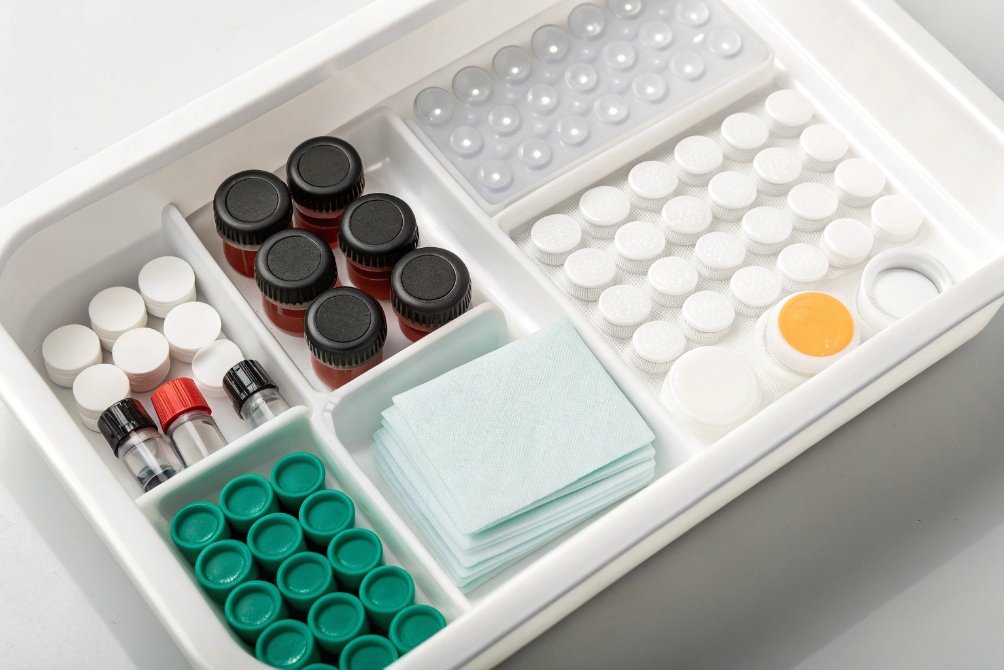
Common closure and liner options
Packaging guides and lab catalogs describe a few standard combinations:
-
PTFE-faced liners 6 (often F-217 foam-backed)
- PTFE is chemically inert to almost all chemicals at room temperature.
- Used for strong acids, organic solvents, high-purity chemicals and sensitive reagents. :contentReference[oaicite:17]{index=17}
-
PE foam liners (in PP caps)
- Good sealing and good resistance to many acids, alkalis, aqueous products and mild solvents. :contentReference[oaicite:18]{index=18}
-
Vinyl-pulp or PV liners
- Often used in food, beverage and general chemicals for mild acids and alkalis at moderate temperatures. :contentReference[oaicite:19]{index=19}
-
Rubber or silicone liners
- Good for moisture sealing and autoclaving, but not always ideal with strong acids or oxidizing chemicals; need case-by-case review. :contentReference[oaicite:20]{index=20}
Matching closures to product chemistry
A simple selection mindset:
| Product type | Recommended closure approach |
|---|---|
| Strong mineral acids, solvents | PTFE-faced liner under PP or phenolic cap |
| Acidic foods (juice, sauces, vinegar) | PE foam, PV or other food-grade liners in metal or PP caps |
| Alkaline cleaners, mild alkali | PE or PV liners rated for alkalis; avoid bare metal contact |
| High-pH lab reagents | PTFE-faced or chemically rated liners, checked against SDS |
For food packaging, caps and liners also need to meet food-contact regulations. Many commercial liners are already designed for this and come with migration test data. :contentReference[oaicite:21]{index=21}
When contents are very aggressive but the brand still needs glass appearance, one practical option is:
- Use glass for the body,
- Use a chemically inert liner (PTFE-faced) inside a PP or phenolic cap,
- Keep headspace small to limit vapour attack, and
- Make sure the whole system is covered by a suitable food or chemical compliance document.
What food-contact standards verify chemical resistance of glass bottles?
A bottle and closure may look safe, but regulators want proof that the system is inert and that heavy metals or other components do not migrate into food.
Chemical resistance of glass for food and pharma is backed by hydrolytic-resistance tests (ISO 719/720, pharmacopeias) and by food-contact regulations like EU 1935/2004, plus specific migration tests for lead, cadmium and other elements. :contentReference[oaicite:22]{index=22}
Glass-focused performance standards
Several standards describe how to test the inner surface or grains of glass:
- ISO 719:2020 – hydrolytic resistance of glass grains at 98 °C, used mainly for soda-lime and similar less-resistant glasses. :contentReference[oaicite:23]{index=23}
- ISO 720:2020 – hydrolytic resistance of glass grains at 121 °C, used for more resistant glass types like borosilicate. :contentReference[oaicite:24]{index=24}
- Ph. Eur. 3.2.1 / USP <660> – containers for pharmaceutical use; classify glass types by hydrolytic resistance of both grains and container interior, and link those classes to product types. :contentReference[oaicite:25]{index=25}
These tests do not use food directly. They usually use purified water at high temperature, then titrate the extract to see how much alkali came out of the glass. Low extract = high resistance.
Food-contact frameworks and migration limits
For food packaging, regulators focus on migration into food:
- EU Framework Regulation (EC) 1935/2004 7 sets general rules for all materials in contact with food. Glass is covered, but there is no single EU “glass regulation”; instead, the sector relies on harmonised and industry guidelines. :contentReference[oaicite:26]{index=26}
- Glass Alliance Europe guidelines for glass as food-contact material state that soda-lime, borosilicate and glass-ceramic are considered inert when made to standard recipes and processes. They describe recognised test procedures to prove this and how to issue declarations of compliance. :contentReference[oaicite:27]{index=27}
- Standards like ISO 7086 and EN 1388-2 define methods and permissible limits for lead and cadmium release from glass and other silicate surfaces intended for food contact. :contentReference[oaicite:28]{index=28}
In the US, glass food-contact articles are usually treated as generally recognized as safe, but overall systems still need to comply with FDA 21 CFR food-contact rules and with any relevant migration testing that brand owners specify. :contentReference[oaicite:29]{index=29}
How this translates into everyday documentation
For a beverage or food project, I normally ask suppliers for:
- The glass type (e.g. soda-lime to USP Type III, borosilicate Type I). :contentReference[oaicite:30]{index=30}
- A certificate or declaration confirming compliance with:
- ISO 719 / ISO 720 or equivalent hydrolytic-resistance tests.
- For pharma, Ph. Eur. 3.2.1 or USP <660>.
- For food, EU 1935/2004 (if shipping to Europe) and any Pb/Cd migration tests (ISO 7086 / EN 1388-2) when decoration or special colours are used.
- Data on cap and liner materials, with migration tests in relevant food simulants where needed. :contentReference[oaicite:31]{index=31}
This paperwork connects lab test methods to real products and gives brand owners a clear line of sight from regulations to the actual glass bottle and closure on the shelf.
Conclusion
Glass bottles are naturally strong against most food acids, but hot alkalis, caustic wash and poor closure choice can still damage them. Matching glass type, wash conditions, liners and standards keeps both the product and the brand safe.
Footnotes
-
Overview of soda–lime glass composition and typical properties relevant to packaging durability and chemical leaching. ↩︎ ↩
-
Learn why borosilicate’s chemistry improves resistance to acids, water, and thermal shock compared with other glasses. ↩︎ ↩
-
Quick reference on HF hazards and why it attacks silica-based materials, making glass containers unsuitable. ↩︎ ↩
-
EDQM update on Ph. Eur. chapter 3.2.1 requirements for glass containers used in pharmaceuticals. ↩︎ ↩
-
Background on sodium hydroxide used in caustic washers, including concentration and temperature effects on materials. ↩︎ ↩
-
PTFE material profile and broad chemical inertness—useful when choosing liners for aggressive acids, bases, and solvents. ↩︎ ↩
-
Official EU regulation text defining safety and compliance principles for food-contact materials and articles. ↩︎ ↩






