
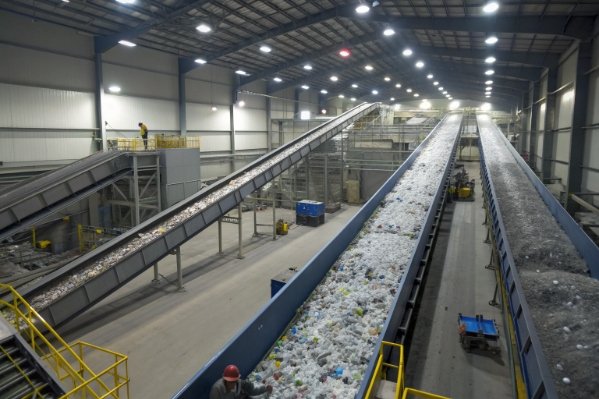
Balancing the demand for sustainability with the rigorous safety standards of high-temperature filling is one of the toughest challenges in modern manufacturing. Using recycled glass is essential for carbon reduction, but if mismanaged, it introduces hidden defects that explode under thermal stress.
No, using clean, high-quality recycled glass (cullet) does not reduce heat resistance; in fact, it can improve it by enhancing melt homogeneity. However, contaminated cullet containing ceramics, metals, or heat-resistant glass varieties introduces critical defects that drastically lower the thermal shock threshold.
The Cullet Paradox: Flux vs. Contaminant
At FuSenglass, we use significant amounts of cullet—typically 20% to 40% for flint (clear) glass and up to 80% for amber glass. I often correct the misconception that "recycled" means "weaker." Chemically, cullet 1 is just pre-melted glass. When added to the furnace, it acts as a flux—it melts at a lower temperature than raw sand and soda ash.
This "fluxing" effect is beneficial. It allows the entire batch to melt more evenly and rapidly. A better-melted glass is more homogeneous, meaning it has fewer "cords" (streaks of varying composition). Since cords are a primary cause of internal tension, using clean cullet can actually reduce the risk of thermal breakage by producing a chemically uniform bottle.
The danger is not the glass; it is what comes with the glass. Post-consumer collection systems often mix in materials that look like glass but act like stones.
Under what conditions can higher cullet content maintain or even improve thermal performance in glass bottles?
Consistency is the foundation of strength. When the furnace runs smoothly, the glass comes out stronger. Cullet is the stabilizer that keeps the furnace temperature steady.
High cullet levels improve thermal performance when the cullet is strictly "beneficiated" (cleaned) and chemically matched to the target glass. The lower melting energy required stabilizes the furnace temperature, reducing "seeds" (bubbles) and "reams" (cords) that would otherwise weaken the bottle against heat.
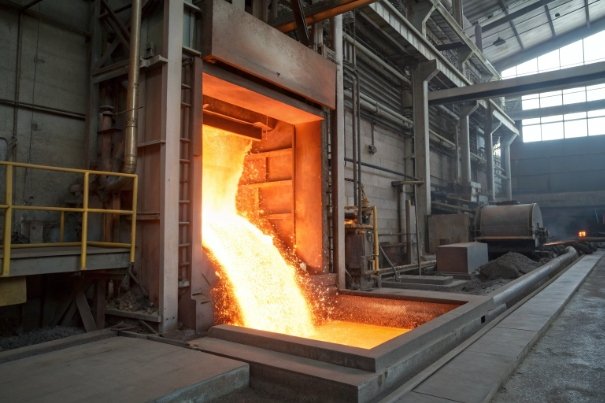
The Homogeneity Benefit
Thermal shock failures often start at a "discontinuity" in the glass matrix—a bubble, a stone, or a streak of different density.
-
Energy Efficiency: For every 10% cullet added, furnace energy consumption drops by ~2.5%. This means the furnace runs "easier." A stable furnace produces fewer defects.
-
Mixing: Cullet helps the raw batch materials (Sand, Soda, Limestone) dissolve into the liquid melt faster. This creates a more uniform mixture. A bottle with uniform wall composition expands evenly when heated, surviving higher ΔT (Delta T) shocks.
The Chemical Match
The cullet must match the recipe. If we are making flint bottles with a CTE 2 (Coefficient of Thermal Expansion) of 90, we must use flint cullet with a CTE of 90. If we do this, the physical properties remain identical to virgin glass.
| Factor | Low Cullet (10-20%) | High Cullet (50-70%) | Impact on Thermal Resistance |
|---|---|---|---|
| Melting Energy | High | Low | Lower energy = More stable process control. |
| Homogeneity | Lower (Risk of unmelted sand) | Higher | Better homogeneity = Higher Resistance. |
| Defect Density | Low (Pure raw materials) | Variable (Depends on cleaning) | Clean cullet = Low defects; Dirty cullet = High risk. |
| Furnace Life | Standard | Extended | Better refractory condition = Fewer stone inclusions. |
What contamination risks in recycled cullet most often lead to thermal-shock failures or cracking defects?
One piece of ceramic in a ton of glass is enough to shut down a filling line. The contaminants in external cullet act as "stress concentrators" 3 that sabotage the bottle from the inside.
The three deadly contaminants are CSP (Ceramics, Stones, Porcelain), Metals (Aluminum/Lead), and Pyroceram (Heat-Resistant Glass). These materials do not melt at glass furnace temperatures, remaining as solid inclusions that generate massive internal stress differentials during heating.
1. CSP (Ceramics, Stones, Porcelain)
This is the #1 enemy. Fragments of coffee mugs, plates, or spark plugs often get mixed into recycling bins.
-
The Physics: These materials have a melting point much higher than glass (>1600°C). They float in the molten glass and end up embedded in the bottle wall.
-
The Failure: A ceramic stone has a different expansion rate than glass. When you pour hot liquid (90°C) into the bottle, the glass expands, but the stone does not. The glass tears away from the stone, causing an immediate explosion.
2. Pyroceram (Glass Ceramics)
This is insidious because it looks like glass. It comes from heat-resistant cookware (like Pyrex 4 lids or vision ware) thrown into recycling.
- The Risk: It is designed not to melt. It is transparent, so optical sorters miss it. It ends up as a clear "knot" in the bottle. Because it has near-zero expansion, it creates huge tension in the surrounding soda-lime glass.
3. Non-Ferrous Metals (Aluminum)
Aluminum caps or foil wrappers.
- The Reaction: Aluminum melts in the furnace and reacts with the silica to form "Silicon Spheres" or "Elemental Silicon" 5." These tiny metallic balls create massive stress (up to 50,000 psi) in the glass. A bottle with a silicon inclusion will often break spontaneously, even without thermal shock.
| Contaminant | Source | Visual Defect | Thermal Impact |
|---|---|---|---|
| Ceramics (CSP) | Plates, Mugs | Opaque White Stone | Critical. Immediate fracture at stone interface. |
| Pyroceram | Cookware | Clear Knot / Lump | Critical. High tension due to CTE mismatch. |
| Aluminum | Bottle Caps | "Birdswing" or Black Specks | Fatal. Spontaneous breakage risk. |
| Lead Glass | Crystalware | Black streaks (reduction) | Weakens bottom; chemical contamination. |
How should cullet sourcing, sorting, and batch control be specified to protect heat resistance for hot-fill or sterilization bottles?
You cannot just order "cullet." You must specify the purity level. For high-risk applications like hot-fill, you need "furnace-ready" cullet with strict impurity limits.
Specify "Beneficiated Furnace-Ready Cullet" with a CSP limit of <5 grams/ton and zero tolerance for Pyroceram. Prioritize "Post-Industrial" (Factory) cullet over "Post-Consumer" (Curbside) cullet for critical thermal applications to minimize contamination risk.
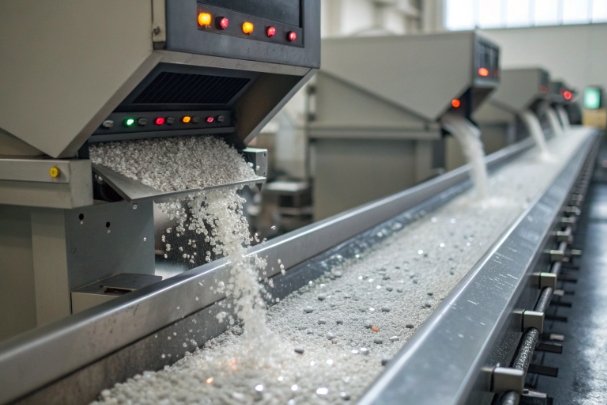
Sourcing Strategy
-
Tier 1: In-House Factory Cullet: (Run-around scrap). 100% safe. This is our own glass being remelted.
-
Tier 2: Post-Industrial Cullet: (Flat glass trimmings). Very clean, but chemistry (Magnesium/Calcium ratio) might differ. Must be carefully calculated.
-
Tier 3: Post-Consumer (PCR): (Bottle bank glass). High risk. Must pass through advanced sorting.
Sorting Technology Requirements
If using PCR, the supplier must use:
-
Optical Sorting: Cameras that eject opaque materials (Ceramics).
-
X-Ray / Metal Detection: To remove aluminum and lead.
-
Advanced Sensing: Newer machines can detect Pyroceram (using UV fluorescence 6 or X-ray transmission).
Batch Control Specs
When writing a supply contract for cullet, we at FuSenglass impose these limits:
-
Grain Size: 10mm – 50mm. (Too much dust = foaming; too big = slow melting).
-
Moisture: < 2%. (Water throws off the batch weight accuracy).
-
CSP Content: < 5 g/ton (Standard) or < 2 g/ton (Premium Hot-Fill).
-
Aluminum: < 10 ppm.
Which QC tests and certificates should be required to validate heat resistance when recycled content is used?
Trusting the cullet supplier is not enough. You must verify the final bottle’s integrity daily. A spike in cullet contamination will show up immediately in physical testing.
Mandate "Daily Stone Count Analysis" to track inclusion rates and increase the frequency of ASTM C149 Thermal Shock Testing. Additionally, use Automatic Inspection Machines (AIM) with "Check Detection" to spot stress cracks caused by invisible inclusions.
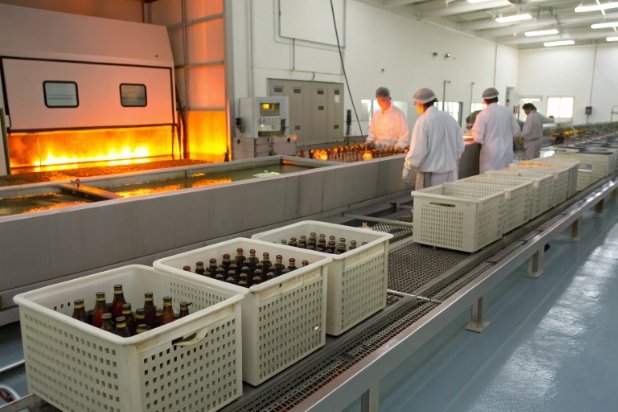
1. Stone Count Analysis
QC personnel visually inspect a set volume of bottles (e.g., 1000 per shift) and count the number of "seeds" and "stones."
-
Metric: Stones per Pack.
-
Action: If stone count rises, we immediately reduce the external cullet ratio until the source is identified.
-
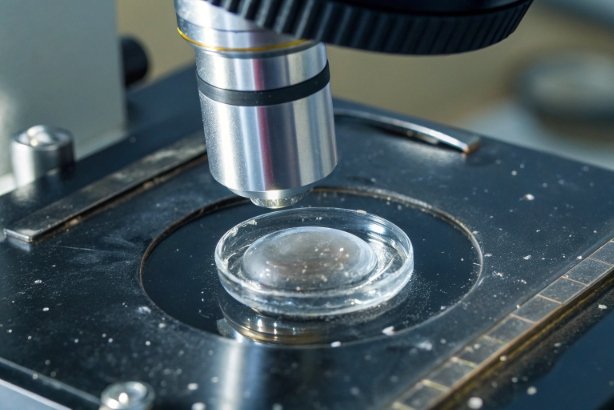
Microscopy: We analyze the stone under a microscope. If it is "Refractory" (from our furnace), it’s a process issue. If it is "Ceramic" (foreign), it’s a cullet issue.
2. Enhanced Thermal Shock Testing (ASTM C149)
If running high PCR (Post-Consumer Recycled) content:
-
Standard Frequency: 1 test per 4 hours.
-
High-Cullet Frequency: 1 test per hour.
-
Rationale: Contamination is not uniform; it comes in pockets. More frequent testing increases the chance of catching a bad batch of cullet moving through the tank.
3. Density Monitoring
Density checks confirm the chemical consistency.
-
The Logic: If a batch of lead glass or flat glass cullet was dumped into the mix, the density of the final bottle will shift.
-
Control Limit: ±0.003 g/cm³. A shift indicates the cullet chemistry is contaminating the recipe.
| Verification Test | Purpose related to Cullet | Frequency (High Cullet) | Passing Criteria |
|---|---|---|---|
| Stone Count | Detect solid contaminants (CSP). | Every 2 hours | < 1 critical stone per 10,000 units. |
| ASTM C149 | Verify thermal shock survival. | Every 1 hour | 100% Pass at ΔT 42°C. |
| Density Check | Detect chemical drift (wrong cullet). | Daily | Stable within ±0.003. |
| Residual Stress | Check homogeneity (Cords). | Daily (Polariscope 7) | Grade 2 Annealing or better. |
Conclusion
Recycled glass is not the enemy of quality; dirty recycled glass is. By specifying low-CSP (<5g/ton) beneficiated cullet and implementing rigorous stone count and thermal shock protocols, you can achieve both your sustainability goals and your hot-fill performance targets without compromise.
Footnotes
-
Crushed or broken glass used as a raw material in glassmaking to facilitate melting. ↩
-
A material property that describes the fractional change in length per degree of temperature change. ↩
-
A location in an object where the stress is significantly greater than the surrounding area. ↩
-
A brand of heat-resistant borosilicate glass often used in cookware. ↩
-
A chemical element with symbol Si; pure silicon inclusions can cause high stress in glass. ↩
-
The emission of light by a substance that has absorbed light or other electromagnetic radiation. ↩
-
An optical instrument used to detect internal stresses and inhomogeneities in glass. ↩






