
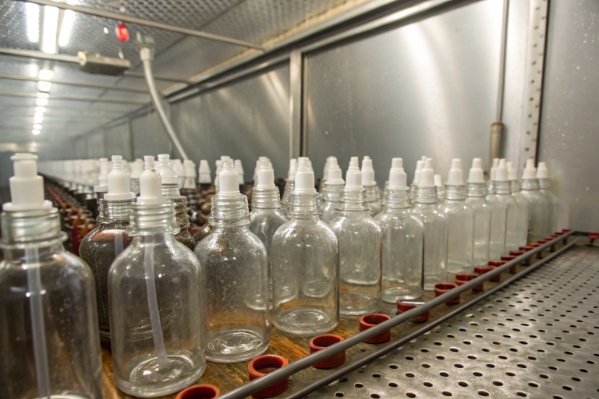
Shipping products across oceans or retailing in humid coastal cities subjects your packaging to a relentless, corrosive atmosphere. We must understand that while the glass jar itself is invincible to salt, the "packaging system"—the cap, the pump, and the metallic label—is not.
Salt spray testing does not degrade the chemically inert silicate glass surface, but it brutally exposes weaknesses in the surrounding components. It acts as an accelerated aging process that attacks electroplating, rusts metal closures, and causes organic coatings to blister, revealing whether your premium packaging can survive the journey from factory to shelf without losing its aesthetic value.
The "Invincible" Glass vs. The Vulnerable System
At FuSenglass, I often encounter a dangerous misconception. A client will order a high-end perfume bottle with a gold-plated cap and a metallic logo print. They ask, "Is the glass resistant to salt?" I answer, "The glass will survive a thousand years in the ocean. But your gold cap might turn green in two weeks."
When we talk about "Salt Spray Testing" (usually ASTM B117 1), we are rarely testing the glass material itself. Silica glass 2 is immune to sodium chloride. You could boil glass in saltwater, and it would remain unchanged.
However, a bottle is never just glass. It is a system. It includes an aluminum atomizer, a tinplate twist-off lug cap, a foil stamp, or a soft-touch coating. Salt spray testing is the industry standard for simulating the corrosive effects of marine environments (shipping containers) and coastal storage conditions.
Salt mist creates a highly conductive electrolyte (salt water) on the surface of the package. This accelerates two primary failure modes:
- Galvanic Corrosion: Where two different metals (like the copper underplate and the gold topcoat of a cap) react, causing rapid pitting and tarnishing.
- Osmotic Blistering: Where salt water permeates microscopic pores in organic paints or coatings, creating pressure that lifts the paint off the glass.
If you are a global brand shipping from China to Miami or Mumbai, this test is your insurance policy.
Impact of Salt Environment by Component
| Component | Material | Vulnerability to Salt | Potential Failure |
|---|---|---|---|
| The Bottle | Soda-Lime Glass | Inert (None) | None (Physical salt crystals wash off). |
| The Cap | Tinplate / Aluminum | High | Rust (Red/White oxidation), thread seizure. |
| The Pump | PP + Steel Spring | Moderate | Internal spring corrosion; stuck actuator. |
| Decoration | Electroplating | Very High | Pitting, green/black tarnish, delamination. |
| Labeling | Paper / Foil | High | Adhesive failure, peeling, discoloration. |
To fully audit your packaging, we need to break down exactly what the salt fog is attacking.
What does salt spray actually damage on a “glass bottle system” (glass surface vs. coatings, decoration, and closures)?
The damage hierarchy is clear: metals fail first, organic coatings second, and glass last. The salt fog seeks out the microscopic pores and material impurities that are invisible to the naked eye but fatal to the brand image.
Salt spray primarily damages metallic closures and electroplated decorations by initiating oxidation and galvanic corrosion, leading to visible rust or pitting. Secondly, it attacks the interface between the glass and organic coatings (paints/inks), causing adhesion loss and blistering. The glass surface itself remains unaffected unless the salt trap moisture leads to alkali blooming (weathering), but this is secondary to component failure.
The Hierarchy of Destruction
When we open the salt spray chamber after 48 hours, the results are often stark.
1. Closures (The Weakest Link):
Metal caps are the first to fall.
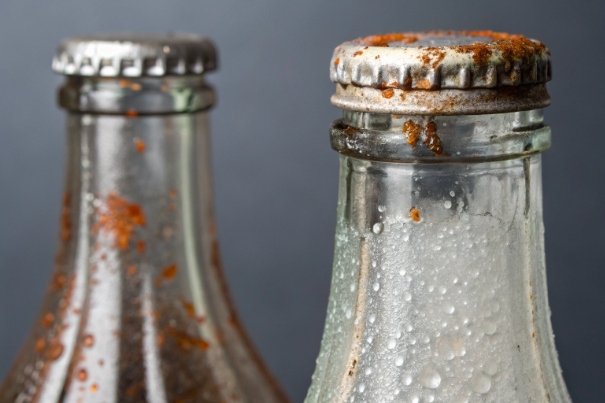
- Tinplate (Lug Caps): If the lacquer coating has even a microscopic scratch or pinhole, the salt water touches the steel. Iron oxide (Red Rust) forms immediately and bleeds onto the glass neck.
- Aluminum (Screw Caps): Aluminum doesn’t rust red; it oxidizes white. You get a powdery white residue. If the anodization is poor, the metal pits.
- Plastic Caps (with Liners): The plastic is fine, but salt can creep under the liner, causing mold growth or corrosion of the glued interface.
2. Decoration (The Aesthetic Failure):
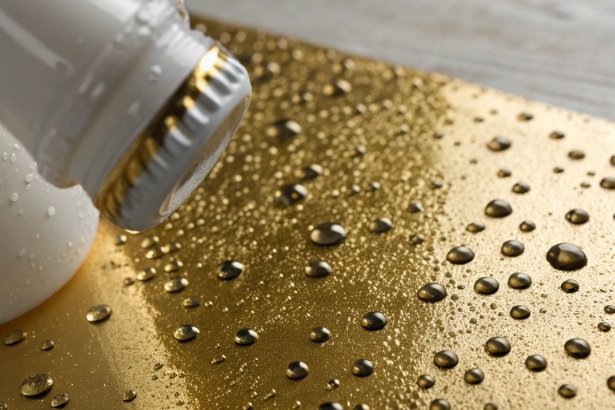
- Electroplating: This is common in perfume and spirits. We plate a plastic cap or the bottle shoulder with "fake gold" or silver. Salt spray causes "pitting." The salt creates tiny electrical cells that drill holes through the gold layer, revealing the base material (often copper or nickel). It looks like black pepper spots on the gold.
- Hot Stamping: The foil is metallic. Salt can cause the edges of the foil to lift or tarnish (turn black).
3. The Glass Surface (The Survivor):
The glass itself does not corrode from salt. However, if a salt crust dries on the glass and stays there in high humidity, it can trap moisture against the glass surface. This can promote "weathering" 3 (alkali extraction) over months, but in a 48-hour spray test, the glass simply gets dirty. It wipes clean.
Damage Mode Analysis
| Component | Visual Defect | Cause | Brand Impact |
|---|---|---|---|
| Tinplate Lid | Red Rust streaks. | Iron oxidation at cut edges. | Critical. Looks unsanitary (Food safety fear). |
| Gold Plating | Black/Green spots. | Galvanic corrosion 4 of base metal. | High. "Cheapens" luxury product. |
| Painted Glass | Bubbles/Blisters. | Osmotic pressure under paint. | Moderate. Paint flakes off. |
| Pump Engine | Stuck/Frozen. | Internal steel spring corrosion. | Functional Failure. Product unusable. |
| Glass Wall | Salt residue. | Surface deposition. | None. Wipes off. |
The most expensive bottles usually have the most delicate finishes. How does salt affect the "value-added" layers?
Can salt fog exposure accelerate failure of printing, UV coatings, electroplating, or frosted finishes on glass bottles?
Complexity invites corrosion. Every layer you add to the glass—whether it’s a soft-touch spray, a metallic print, or an electroplated shoulder—creates a new interface where salt water can penetrate and destroy the bond.
Salt fog aggressively accelerates the failure of metallic finishes like electroplating and hot stamping by triggering electrochemical reactions that tarnish and pit the surface. For organic UV coatings and screen printing, the high humidity and salinity penetrate the coating matrix, causing "under-creep" where the coating loses adhesion to the glass, resulting in peeling or blistering that wouldn’t occur under normal dry conditions.
The Vulnerability of "Premium" Finishes
At FuSenglass, we warn clients: "The more beautiful the finish, the more rigorous the testing must be." Standard clear glass is tough. A painted, plated, stamped bottle is fragile.
Electroplating (The #1 Victim):
Electroplating 5 on glass (or on plastic components attached to glass) is extremely sensitive.
- The Mechanism: Plating is a stack of metals (e.g., ABS Plastic $\rightarrow$ Copper $\rightarrow$ Nickel $\rightarrow$ Chrome/Gold). Salt water acts as a bridge between these layers if there is any porosity.
- The Failure: The underlying copper corrodes, pushing up the gold layer. This creates rough "blisters" or dark tarnish spots. A 24-hour salt spray test can turn a shiny gold bottle into a speckled mess.
Spray Coatings (Frosted/Soft Touch):
Many brands use organic sprays to achieve a "frosted" look or a specific color.
- The Mechanism: These coatings rely on chemical adhesion (Silane 6 binders) to stick to the glass. Salt water is a "searching" liquid—it lowers surface tension and finds tiny gaps at the base of the bottle or the parting line.
- The Failure: Osmotic Blistering. Water migrates through the coating to the glass surface. It gets trapped. Pressure builds up. The paint bubbles up like a blister on skin.
Screen Printing (Ceramic vs. Organic):
- Ceramic Ink: Fired at 600°C. It fuses with the glass. It is impervious to salt spray.
- Organic Ink (Low Temp): Just a polymer sitting on the surface. Salt spray can cause the edges of the letters to lift or peel, especially if the glass wasn’t perfectly clean before printing.
Decoration Durability Matrix
| Decoration Type | Salt Spray Resistance | Typical Failure Mode | Prevention Strategy |
|---|---|---|---|
| Ceramic Decal | Excellent | None. | Use ceramic whenever possible. |
| Organic Spray | Moderate | Blistering / Adhesion Loss. | Ensure perfect flame treatment before spraying. |
| Electroplating | Poor / Sensitive | Pitting / Tarnish. | Increase lacquer thickness; use precious metal topcoat. |
| Acid Etching | Excellent | None (It is glass). | Preferred over spray frosting for marine markets. |
| Hot Stamping | Low | Oxidative Blackening. | Apply a clear protective varnish over the stamp. |
So, how do you simulate a 4-week ocean voyage in a lab?
How should brands set a realistic salt spray test plan for coastal/marine distribution (conditions, distribution channel, and sample prep)?
Over-testing wastes money, but under-testing risks reputation. You need a test plan that mimics the logistics chain, focusing on the duration that matches your shipping reality.
Brands should implement ASTM B117 (Neutral Salt Spray) using a 5% NaCl solution at 35°C. For general global shipping, a 24-hour test is the minimum standard; for premium electroplated goods or coastal retail markets, a 48-hour to 96-hour duration is required. Samples must be tested as fully assembled "capped" units to simulate the real galvanic interactions between the closure and the bottle.
Designing the Simulation
You don’t need to reinvent the wheel. ASTM B117 is the global bible for this. However, the duration is up to you.
1. The Setup:
- Solution: 5 parts Sodium Chloride (Salt) to 95 parts Water. Neutral pH (6.5 – 7.2).
- Temperature: 35°C (95°F). This mild heat speeds up the reaction.
- Fog: Continuous misting. The sample is always wet.
2. Sample Preparation (Crucial):
- Do not test components separately. Test the capped bottle.
- Why? The corrosion often starts where the metal cap touches the glass threads (crevice corrosion 7) or where the pump spring touches the housing. If you test the cap alone, you miss the galvanic interaction.
- Scoring (Optional): For painted bottles, we sometimes scratch an "X" through the paint to see if the corrosion spreads (undercutting). For finished goods, we usually test intact samples.
3. Setting the Duration:
How long should they sit in the fog?
- Level 1: The "Safe Harbor" (24 Hours): Minimum for any product crossing the ocean. Roughly simulates 1-2 weeks of sea freight.
- Level 2: The "Premium Standard" (48 Hours): Standard for perfume and spirits with metallized parts. Simulates extended storage in a port city.
- Level 3: The "Marine Grade" (96 Hours): For products sold in beach resorts, spa products, or high-end electroplating. If it survives this, it is bulletproof.
Recommended Test Protocol
| Distribution Channel | Product Type | Recommended Duration | Rationale |
|---|---|---|---|
| Domestic Trucking | Standard Food/Bev | N/A or 12h | Low risk of salt exposure. |
| Ocean Freight | Standard Food/Bev | 24 Hours | Simulates container condensation/salt air. |
| Global Retail | Perfume (Plated) | 48 Hours | High aesthetic standard; sensitive materials. |
| Tropical/Coastal | Spa/Bathroom | 72 – 96 Hours | High humidity + salt environment in use. |
| Luxury Gifting | Heavy Gold Decor | 96 Hours | Zero tolerance for tarnish. |
The test is done. The bottles are wet and salty. Now, how do you judge them?
What post–salt spray inspections and pass/fail criteria should B2B buyers require (adhesion, discoloration, cap corrosion, leakage)?
A "Pass" doesn’t mean the bottle looks perfect; it means it looks acceptable based on predefined standards. You must inspect for rust, perform adhesion tests on coatings, and verify that the closure still functions.
Post-test inspection must occur after rinsing and drying the samples. Fail criteria include any visible red rust on closures (Grade Ri 1), blistering of coatings visible to the naked eye, failure of the cross-cut adhesion test (ISO 2409), or functional seizure of pumps/caps. Minor tarnishing may be acceptable for industrial goods but should be a strict failure for luxury cosmetics.
The Inspection Checklist
When the timer rings, we take the bottles out, rinse them with fresh warm water (to remove salt deposits), and dry them. Then the real work begins.
1. Visual Inspection (The "Shelf" Test):
Hold the bottle at arm’s length under bright light.
- Rust: Any Red Rust 8 on a food cap is an automatic FAIL. White oxidation (on aluminum) might be acceptable if minor.
- Plating: Any black spots or green corrosion on gold caps is a FAIL for luxury goods.
- Haze: Does the glass look cloudy? (Usually wipes off, but check for etching).
2. Adhesion Test (The Tape Test):
For painted or printed bottles:
- Use a razor blade to cut a grid (Cross-Hatch) into the paint.
- Apply strong tape (ISO 2409 9 standard tape). Rip it off.
- Pass: The paint stays on the glass.
- Fail: The paint peels off. Salt has destroyed the bond.
3. Functional Test:
- Caps: Unscrew the cap. Is it stuck? (Corrosion products can glue threads). Is there rust inside the thread?
- Pumps: Actuate the sprayer. Does it spray? If the internal spring rusted, it might seize.
4. Leakage Check:
Sometimes salt crystals form on the sealing liner, compromising the seal.
- Place the bottle on its side on blotting paper. Check for leaks.
Pass/Fail Acceptance Criteria
| Parameter | Method | Acceptance Criteria (Luxury) | Acceptance Criteria (Industrial) |
|---|---|---|---|
| Red Rust | Visual (ISO 4628 10) | None Allowed (Ri 0) | < 1% Surface Area (Ri 1) |
| White Rust | Visual | None Visible | Minor dusting allowed. |
| Blistering | Visual | None Allowed | Density 2 / Size 2 (ISO 4628-2). |
| Adhesion | Cross-Cut Tape | Class 0 (No detach) | Class 1 (Trace detach). |
| Plating Pits | Visual | 0 pits / 10cm² | < 3 pits / 10cm². |
| Function | Manual Test | Smooth operation. | Operational (even if stiff). |
Conclusion
Salt spray testing is the ultimate reality check for the "Glass Bottle System." While your FuSenglass bottle will withstand the ocean with ease, the jewelry you dress it in—the gold caps, the metallic labels, the soft-touch paints—are at risk. By integrating a 48-hour ASTM B117 test into your quality protocol, you ensure that your brand arrives in Shanghai, New York, or Dubai looking exactly as prestigious as it did when it left the factory.
Footnotes
-
The primary international standard for operating salt spray (fog) apparatus. ↩
-
A high-purity glass composed of silicon dioxide, known for its extreme chemical inertness. ↩
-
The surface degradation of glass caused by environmental factors like humidity and heat. ↩
-
Accelerated corrosion occurring when noble and less noble metals are in contact in an electrolyte. ↩
-
The process of coating an object with a metal layer using an electric current. ↩
-
A chemical compound used as an adhesion promoter between inorganic glass and organic coatings. ↩
-
Localized corrosion occurring in confined spaces where the access of the working fluid is limited. ↩
-
Iron oxide formed by the reaction of iron and oxygen in the presence of water. ↩
-
Standard test method for assessing the resistance of paint coatings to separation from substrates. ↩
-
Standard for evaluating degradation of coatings, including degree of rusting and blistering. ↩






