
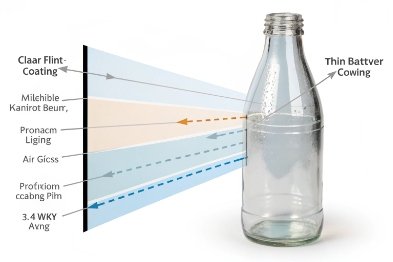
A clear bottle can look perfect, yet the product still fades on shelf. This often happens because the photodegradation risk 1 was not fully evaluated during the packaging design phase.
Yes. An inner spray coating can change glass bottle transmittance, but the size and direction depend on coating chemistry, thickness, and haze. Clear barrier liners often keep visible transmittance similar, while UV-absorbing or scattering coatings can cut UV and blue light.
The real transmittance impact of inside coatings in production
When a coating changes transmittance and when it does not
A bottle wall is already a filter. A thin internal coating becomes a second filter layer. Some coatings are designed to be “optically quiet.” They are thin, smooth, and clear. Those coatings usually cause only small changes in visible light. Many teams do not notice a difference by eye.
Other coatings are made to do more than chemical protection. Some incorporate UV-absorbing pigments 2 to shift the spectral curve. These functional additives canDetection of UV result drift immediately in lab data, even if a quick visual check looks fine.
Three optical mechanisms that matter for transmittance
Inside coatings interact with light in three basic ways:
1) Absorption
UV absorbers inside the coating reduce transmittance in a targeted band. This is the cleanest way to lower UV exposure without changing bottle shape.
2) Scattering (haze)
If the coating is not perfectly smooth or it contains particles, it can scatter light. Scattering lowers regular transmittance and can make the bottle look milky.
3) Reflection from refractive index mismatch
A coating adds interfaces. Each interface reflects a small amount of light. A refractive index mismatch 3 between the glass and the coating can cause a small, steady loss of clarity.
| Coating intent | Typical visible impact | Typical UV impact | Main risk to manage |
|---|---|---|---|
| Chemical barrier, “clear” | Very small change if smooth | Small change unless UV additives exist | Streaks, pooling, haze |
| Slip / anti-scuff layer | Small to moderate (can add haze) | Usually small | Camera distortion |
| UV-absorbing layer | Small to moderate (may shift color) | Moderate to high reduction | Color drift |
What is internal coating and how does it interact with light?
An internal coating is a thin layer applied to the bottle’s inner surface to change how the glass interacts with the product or the environment. Light passing through the bottle also passes through this layer, so the coating can absorb, scatter, or slightly reflect parts of the spectrum.
How to describe the coating-light interaction in a spec
A good spec uses optical language that a lab can measure. Words like “clear” and “transparent” are not enough. A buyer should ask for:
- spectral transmittance curves of coated bottles
- haze or diffuse transmittance data if camera inspection matters
- a defined bottle test location, because coating thickness can vary by height
Why can inside coatings reduce photodegradation risk?
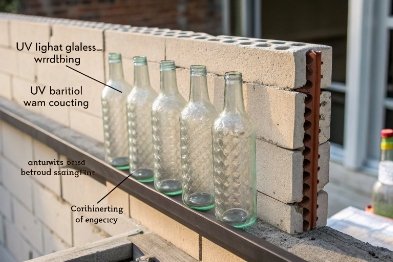
Inside coatings can reduce photodegradation risk because they can cut UV and short-wave visible light. By improving shelf-life stability 4 for sensitive formulas, these coatings allow brands to maintain a premium clear look without compromising quality.
The inside layer can also reduce non-light triggers
Light damage is often faster when oxygen, trace metals, or reactive surfaces are present. Some coatings are designed to be more inert than bare glass in certain formulas. This reduces side reactions, supporting a longer stable window for food and cosmetic fills.
How to validate coating thickness, adhesion, and spectra?
A coating can pass a visual check and still fail in use. Thickness can drift, and adhesion can fail after hot fill. Validation needs a full checklist to ensure performance.
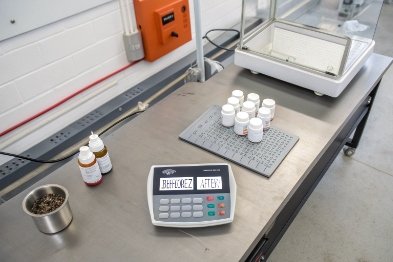
Validation should link three things: thickness uniformity, adhesion durability, and spectral transmittance results. A strong plan uses witness coupons, destructive checks on samples, and repeatable UV-Vis scans at fixed bottle locations.
Adhesion: prove durability under real conditions
A coating that sticks on day one can peel after thermal cycles. Adherence to ASTM adhesion standards 5 ensures the coating remains intact through pasteurization or chemical exposure.
Spectra: test coated bottles like a new material
A coated bottle should be treated as a new optical system. Regular UV-Vis spectrophotometer scans 6 across the 290–450 nm range provide the necessary data to prevent disputes between buyers and suppliers.
| Validation item | Best practice method | Procurement acceptance proof |
|---|---|---|
| Coating thickness | Witness coupon + mapping logic | COA with range and method |
| Adhesion | Thermal + immersion durability | Report with pass/fail criteria |
| Spectral transmittance | UV-Vis scan at fixed location | Curve + summary band metrics |
Are food-safe inner coatings enabling clear glass use?
Food-safe inner coatings can enable clear glass in more projects when they block UV while staying stable and compliant for contact. However, manufacturers must perform migration limit testing 7 to verify that no harmful substances transfer into the product.
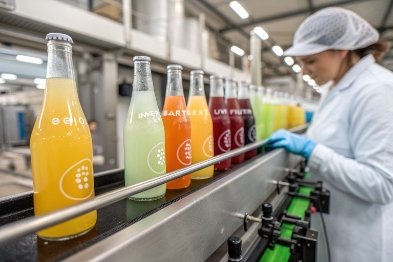
The internal-coating route is attractive because it preserves the outer look and it can protect the product even when labels shift. It must survive filling, storage, and cleaning without creating taste or odor issues.
Conclusion
Inside spray coatings can change transmittance through absorption and haze. A strong program controls thickness, adhesion, and spectra, and it uses compliance documents to support clear-glass strategies.
Footnotes
-
Learn how UV light causes chemical breakdown in products, leading to color fading and loss of potency. ↩ ↩
-
Technical data on chemicals that absorb harmful ultraviolet radiation to shield sensitive product formulations from damage. ↩ ↩
-
Understanding how light bends when transitioning between materials, affecting overall bottle clarity and transmission levels. ↩ ↩
-
Scientific insights into maintaining product quality and effectiveness over time through advanced protective packaging solutions. ↩ ↩
-
Industry-standard methods for evaluating how well internal coatings bond to glass surfaces under various environmental conditions. ↩ ↩
-
A precise analytical method used to measure the exact amount of light passing through glass at specific wavelengths. ↩ ↩
-
Safety protocols used to ensure that packaging materials do not transfer harmful substances into food or cosmetic products. ↩ ↩






