We often treat glass chemical resistance as a static number on a datasheet, but in the real world of hot-filling and industrial washing, heat changes everything. A bottle that is perfectly stable at room temperature can become a source of contamination or failure when the thermometer rises.
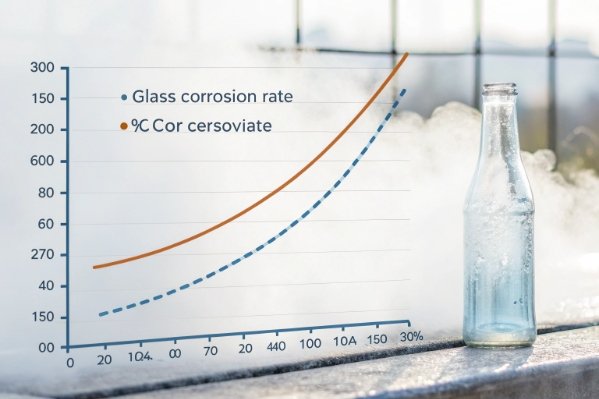
Temperature acts as a potent catalyst for glass corrosion, exponentially increasing the rate of chemical attack. As thermal energy rises, molecular vibrations weaken the glass network bonds and accelerate the diffusion of ions. This means that a 10°C increase in temperature can double the rate of alkali etching or acid leaching, transforming a minor stability issue into a critical product failure.
The Thermodynamics of Glass Corrosion
At FuSenglass, I often see clients conduct their stability testing at ambient room temperature (25°C), only to face product recall issues after their bottles have sat in a hot shipping container crossing the equator, or after they implemented a new high-temperature sterilization tunnel. They ask me, "The datasheet says this is acid-resistant. Why is it failing?"
The answer lies in thermodynamics. Glass corrosion is a chemical reaction, and like all chemical reactions, it is driven by energy. The resistance of a glass bottle is not a fixed wall; it is a kinetic barrier. When you add heat, you are giving the attacking chemicals (acids or alkalis) and the glass ions (sodium, calcium) the energy they need to jump over that barrier.
In the glass industry, we generally follow a simplified Arrhenius principle 1: For every 10°C increase in temperature, the rate of chemical reaction roughly doubles. This "Q10 coefficient" is a terrifying multiplier for quality control. It means that washing a bottle at 80°C is not just slightly more aggressive than washing it at 60°C—it is four times more destructive.
Whether you are hot-filling tomato sauce at 90°C or autoclaving 2 a pharmaceutical vial at 121°C, heat turns the slow "geologic" process of glass weathering into a rapid event. Understanding this thermal multiplier is essential for designing a packaging process that ensures safety from the factory floor to the consumer’s table.
Temperature Multiplier Effect on Reaction Rates
| Temperature Condition | Approx. Multiplier (vs 20°C) | Real-World Scenario | Potential Consequence |
|---|---|---|---|
| 20°C (Ambient) | 1x (Baseline) | Warehouse Storage | Standard shelf-life stability. |
| 40°C (Hot Storage) | 4x | Shipping container / Tropical climate | Accelerated weathering/blooming. |
| 60°C (Pasteurization) | 16x | Beer/Juice tunnel pasteurizer | Increased surface leaching during process. |
| 80°C (Hot Fill/Wash) | 64x | Jam filling / Caustic bottle wash | Rapid alkali etching; haze formation. |
| 121°C (Retort) | ~1000x+ | Canned food / Pharma autoclave | Extreme stress; requires Type I or treated glass. |
To manage this risk, we must look at the molecular level to see why heat makes the glass network so vulnerable.
Why does higher temperature usually accelerate glass corrosion in acidic or alkaline media?
Heat is kinetic energy. When applied to a liquid-glass interface, it disrupts the static equilibrium, vibrating the atomic lattice and energizing the attacking ions to breach the glass surface.
Higher temperatures increase the kinetic energy of both the solvent molecules and the glass network ions. In acidic environments, heat accelerates the diffusion of sodium ions out of the glass (ion exchange). In alkaline environments, heat lowers the activation energy required to break the strong Silicon-Oxygen bonds, causing the silica network to dissolve rapidly and leading to significant surface erosion.
The Kinetics of Destruction
When I explain this to our engineering team, I describe the glass surface as a busy border crossing. At low temperatures, the border guards (the silica network) are strong, and the people trying to cross (ions) are moving slowly. Very few get through.
1. The Acid Mechanism (Diffusion Driven):
Acid attack is primarily an ion exchange 3 process ($H^+$ goes in, $Na^+$ comes out). This process is "diffusion-controlled."
- Cold: The sodium ions are trapped in tight cages within the glass structure. They lack the energy to wiggle through the gaps.
- Hot: The thermal energy makes the glass network vibrate. The "cages" rattle and expand. The sodium ions gain enough kinetic energy to jump from one hole to the next. The diffusion coefficient 4 ($D$) increases exponentially with temperature.
- Result: You get a sudden spike in pH in your liquid because sodium is flooding out.
2. The Alkali Mechanism (Reaction Driven):
Alkali attack is the dissolution of the network itself ($OH^-$ breaks $Si-O-Si$). This is "reaction-controlled."
- Cold: The Silicon-Oxygen bond is very strong. The hydroxide ion ($OH^-$) bounces off because it doesn’t have enough energy to break the bond.
- Hot: The heat provides the "Activation Energy" 5 ($E_a$). Now, when the hydroxide hits the bond, it has enough force to snap it.
- Result: The glass wall literally dissolves. Because the activation energy for alkali attack is high, it is extremely sensitive to temperature. A small rise in temp causes a massive jump in corrosion.
This is why you can store bleach (alkaline) in a glass bottle for years at room temp, but if you boil that same bottle in bleach, it will turn white and cloudy in minutes.
Thermodynamic Drivers of Corrosion
| Mechanism | Controlling Factor | Temperature Influence | Physical Outcome |
|---|---|---|---|
| Ion Exchange (Acid) | Diffusion Coefficient ($D$) | $D$ increases exponentially. Ions move faster through the matrix. | Deep depletion layer; altered surface composition. |
| Network Dissolution (Alkali) | Activation Energy ($E_a$) | Reaction rate overcomes the energy barrier to break bonds. | Surface recession (thinning); pitting; roughening. |
| Hydration | Water Penetration | Water molecules gain energy to enter tight pores. | Gel-layer formation; surface swelling. |
| Precipitation | Solubility Limits | Hot solutions hold more dissolved glass; cooling causes precipitation. | Scale formation; flakes/sediment in product. |
This chemistry hits home when you are on the production line running a hot process.
How do hot-fill, pasteurization, and retort conditions change leaching risk for acidic products in glass bottles?
Processing steps are short, but their intensity can cause more chemical migration in 30 minutes than in 3 years of storage. The combination of heat and acidity creates a "leaching spike" that must be managed.
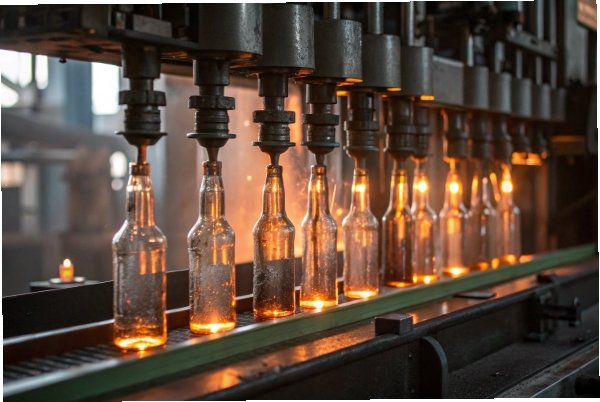
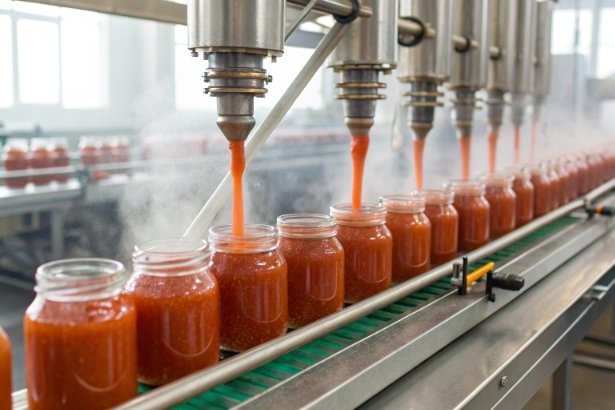
Thermal processing creates a temporary "super-leaching" window where the ion exchange rate skyrockets. During hot-fill (85°C-95°C) or retorting (121°C), the glass surface releases a surge of alkali ions into the acidic product. If not accounted for, this spike can neutralize the acidity of the boundary layer, potentially compromising food safety or altering delicate flavor profiles immediately after packaging.
The "Leaching Spike" Phenomenon
We often assume that leaching is linear over time—that it happens slowly, day by day. In reality, for hot-filled products 6, 80% of the total leaching might happen in the first hour.
Hot-Fill (Jams, Juices, Sauces – 85°C to 95°C):
When you pour nearly boiling tomato sauce (pH 4) into a glass jar:
- Thermal Shock: The inner surface of the glass expands rapidly. This physical stress can open up microscopic flaws.
- The Spike: For the 30-60 minutes it takes for the jar to cool down, the sodium is racing out of the glass surface.
- The Consequence: If you are using a standard soda-lime jar without surface treatment, you might find that the pH of the sauce right against the glass wall has shifted. For very sensitive products (like baby food), this mineral migration is a concern.
Pasteurization (Beer, Pickles – 60°C for ~30 mins):
Tunnel pasteurization is gentler, but it often involves spraying hot water on the outside while the product heats the inside.
- The risk here is less about internal leaching and more about thermal stress combined with the external environment. If the spray water is recycled and becomes alkaline (from broken bottles/detergent), the hot glass surface will haze rapidly.
Retort / Autoclave (Canned Food, Pharma – 121°C):
This is the danger zone. At 121°C, water acts like an acid and a base. It becomes incredibly aggressive.
- Standard soda-lime glass (Type III) often fails the USP limits 7 for hydrolytic resistance at this temperature.
- The Fix: You essentially must use Treated Soda-Lime (Type II) or Borosilicate (Type I) for retort applications. If you use standard Type III, the leaching will be so severe that you might get "glass flakes" (delamination) or sediment in your soup or medicine.
Processing Impact Matrix
| Process | Temperature Range | Duration | Leaching Risk | Recommended Glass |
|---|---|---|---|---|
| Cold Aseptic Fill | 20°C – 25°C | N/A | Low. Linear, slow leaching. | Standard Type III. |
| Tunnel Pasteurization | 60°C – 65°C | 20 – 45 mins | Moderate. External haze risk. | Standard Type III. |
| Hot Fill | 85°C – 95°C | Cool-down (1 hr) | High. "Leaching Spike" occurs. | Quality Type III or Type II. |
| Retort / Autoclave | 115°C – 121°C | 15 – 60 mins | Severe. Aggressive hydrolysis. | Type II (Treated) or Type I. |
| Oven Sterilization | > 200°C | Varies | None. (Dry heat = no leaching). | Any (Thermal shock concerns only). |
It’s not just the product inside; it’s the environment outside. What happens when we cycle heat and chemicals together?
Can thermal cycling plus chemicals worsen surface haze, etching, or coating/print failures compared to chemical exposure alone?
Glass is rigid, and coatings are flexible. When you combine the expansion and contraction of thermal cycling with chemical attack, you create a synergistic failure mode that destroys aesthetics faster than either force could alone.
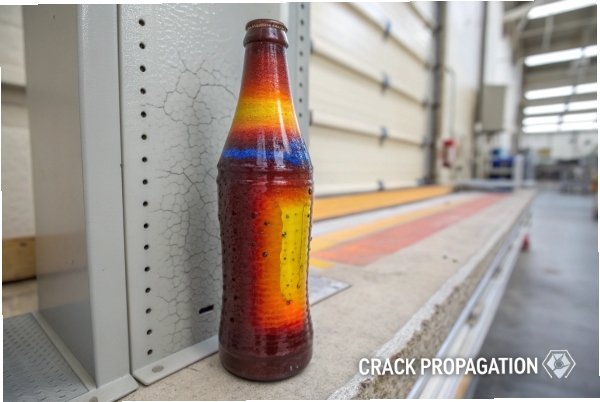
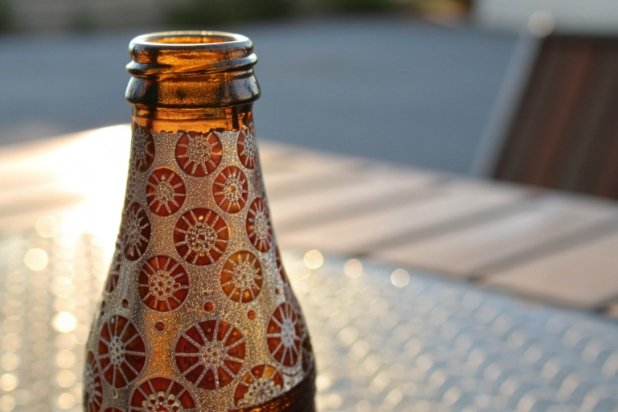
Thermal cycling induces mechanical stress at the microscopic level, expanding and contracting surface micro-cracks. When combined with chemical exposure, this "pumping" action allows corrosive agents to penetrate deeper into the glass and beneath organic coatings. This synergy leads to rapid delamination of inks, accelerated surface hazing (scuffing), and the propagation of stress-corrosion cracks.
The Synergistic Attack: Stress Corrosion
At FuSenglass, we see this often in the cosmetic and beverage sectors where bottles are decorated. A client paints a bottle, then puts it through a dishwasher test.
- Chemicals Alone: The soap attacks the surface slowly.
- Heat Alone: The coating expands, the glass expands (at different rates).
- Together: Disaster.
Mechanism of Decoration Failure:
- Mismatch: Glass has a low Coefficient of Thermal Expansion 8 (COE ~9.0). Organic inks/coatings have a high COE (expansion is 10x-50x greater).
- The Gap: As the bottle heats up, the ink expands and pulls away from the glass.
- The Ingress: The hot, alkaline detergent water creates a low surface tension solution that wicks into this tiny gap.
- The Attack: The alkali attacks the glass underneath the ink. This destroys the chemical bond (usually silane) holding the ink to the glass.
- The Failure: When the bottle cools, the ink shrinks back, but the bond is broken. The paint flakes off.
Mechanism of Accelerated Haze (Scuffing):
In returnable bottles, thermal cycling creates "micro-crazing."
- The repeated expansion/contraction fatigues the silica network at the surface.
- This physical fatigue makes the chemical bonds easier to break.
- A bottle washed at constant 80°C might last 50 cycles. A bottle cycled between 80°C and 20°C in aggressive detergent might look scuffed after 25 cycles. The "thermal shock" aids the chemical bite.
Failure Modes: Chemical vs. Thermo-Chemical
| Failure Type | Chemical Cause Only | Thermo-Chemical Cause | Severity Multiplier |
|---|---|---|---|
| Surface Haze | Slow uniform etching. | Deep pitting + micro-crack opening. | High. Haze appears much faster. |
| Print Adhesion | Edge attack. | Bond interface shear + alkali undercutting. | Very High. Main cause of deco failure. |
| Strength Loss | Slow tip blunting. | Stress corrosion cracking 9 (growing flaws). | Moderate. Burst pressure drops. |
| Delamination | Surface hydration. | hydration + thermal shear causing flaking. | Critical. (Pharma risk). |
So, how do you design a test that reflects this reality without waiting years for results?
How should B2B buyers set a realistic test plan (temperature, time, concentration) to validate acid/alkali resistance for their process?
A standard ISO test at 98°C tells you about the material, but it doesn’t tell you about your process. You must bridge the gap between lab standards and factory reality using accelerated aging principles.
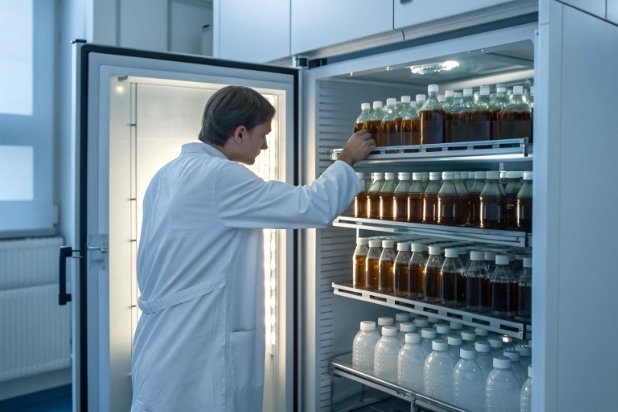
Buyers should implement a "Worst-Case + Safety Margin" testing protocol. Determine your maximum process temperature and multiply the exposure time by a safety factor (e.g., 2x). Utilize accelerated aging techniques—testing at elevated temperatures (e.g., 121°C instead of 80°C) to simulate long-term exposure in a shorter timeframe—while using the exact chemical concentration found in your production line.
designing the Validation Protocol
Don’t just ask for "ISO 719". That is a material classification test, not a performance test. As a ghostwriter for your QA manual, here is the strategy I recommend:
1. Define the "Real" Conditions:
- What is the max temp? (e.g., 85°C Hot Fill).
- What is the chemical? (e.g., Tomato Sauce, pH 3.8).
- What is the time? (e.g., 2 years shelf life).
2. The Arrhenius Acceleration (The Time Machine):
You can’t wait 2 years to approve a bottle. You use heat to speed up time.
- Rule of Thumb: Testing at 60°C speeds up reactions roughly 16x compared to 20°C. Testing at 121°C speeds it up ~1000x.
- The Test: To simulate 2 years at room temp, you might test for 4 weeks at 50°C or 1 hour at 121°C (autoclave).
3. The "Usage Simulation" (For Washers/Deco):
For returnable bottles or printed ware, you cannot use static soaking. You need cycling.
- Protocol: Create a bath with your specific detergent concentration (e.g., 2% NaOH).
- Cycle: Heat to 80°C $\rightarrow$ Soak 30 mins $\rightarrow$ Cool to 20°C $\rightarrow$ Repeat.
- Pass/Fail: Visual check for haze/peeling after X cycles (representing the bottle’s life).
4. The Leaching Verification (For Food Safety):
- Fill the bottle with a simulant (e.g., 4% Acetic Acid for vinegar, or pH 9 buffer for water).
- Subject it to the exact thermal profile of your production (e.g., heat to 90°C, hold 5 mins, cool).
- Measure the extract for Sodium, Calcium, and Heavy Metals (using ICP-MS 10). This confirms the "Leaching Spike" is safe.
Recommended Test Plan Template
| Objective | Test Method | Condition (Temp/Time) | Simulant/Chemical | Success Criteria |
|---|---|---|---|---|
| Material Class | ISO 719 | 98°C / 60 mins | Water | HGB 3 (Std) or HGB 1 (Boro). |
| Process Safety | Simulation | Max Process Temp + 10°C / 2x Duration | Actual Product | No pH shift; No sediment. |
| Shelf Life | Accelerated | 50°C / 4-8 Weeks | Actual Product | No visible precipitation/haze. |
| Deco Durability | Dishwasher | 65°C / 50 Cycles | IEC Detergent | Grade 0 (No visual change). |
| Returnable Life | Caustic Soak | 80°C / 24-72 Hours | 2-3% NaOH | Weight loss < limit; No scuffing. |
Conclusion
Temperature is the hidden variable that controls the chemical destiny of your glass packaging. By acknowledging that heat exponentially accelerates acid leaching and alkali etching, and by rigorously testing your bottles under conditions that mimic (or exceed) your thermal processing, you ensure that your FuSenglass containers remain the safe, pristine vessels your brand deserves.
Footnotes
-
The formula relating reaction rate to temperature, critical for predicting glass shelf life. ↩
-
A high-pressure steam sterilizer that acts as a torture test for glass leaching. ↩
-
The replacement of sodium ions in glass with hydrogen ions from the liquid, raising pH. ↩
-
A measure of how fast particles move through a medium, which increases with heat. ↩
-
The energy threshold required to initiate a chemical reaction, like breaking Si-O bonds. ↩
-
A packaging method where hot product sterilizes the container, increasing leaching risk. ↩
-
Official quality standards for pharmaceutical glass containers in the US. ↩
-
The rate at which a material expands with heat, causing stress when mismatched. ↩
-
Cracking induced by the combined influence of tensile stress and a corrosive environment. ↩
-
High-precision lab equipment used to detect trace metals leached from glass. ↩