
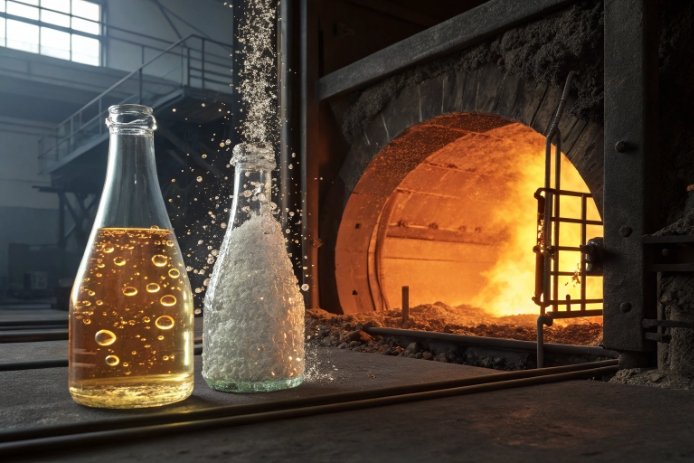
Seeds can jump overnight after a cullet change. Operators add heat, but the melt still looks “nervous,” and rejects climb.
Sulfides can improve fining only in a narrow, controlled redox window. In most bottle plants, sulfides are more often a risk signal, because they can trigger foam, reboil, ambering, and cords if the furnace balance drifts.
Why sulfides are both a fining tool and a defect trigger?
Sulfur chemistry in soda-lime bottle glass is not one reaction. It is a redox system. In an oxidizing melt, sulfur is mainly present as sulfate species (S⁶⁺). In a reducing melt, sulfur shifts toward sulfide species (S²⁻), and sometimes intermediate sulfite (S⁴⁺) is discussed in the middle redox range. This matters because the fining “engine” depends on when sulfur-bearing gases appear and whether they help bubbles grow and rise out, or whether they appear too early and create foam and trapped seeds.
Sulfur speciation is a redox dial, not a fixed ingredient
A batch can contain the same total sulfur, but the melt can behave very differently if oxygen activity changes. High cullet and dirty cullet can push the melt more reducing. Combustion balance can push it back. This is why sulfur feels unpredictable unless redox is measured 1 and controlled.
How sulfides can boost fining in the right spot
Sulfate fining under oxidizing conditions is commonly explained by thermal decomposition that releases SO₂ and O₂ at high temperature, which diffuse into bubbles and make them grow until buoyancy lifts them out. Under moderately reducing conditions, both sulfate and sulfide can coexist. Their chemical reaction can supersaturate the melt with SO₂ and nucleate or enlarge bubbles. That can accelerate primary fining if it happens when viscosity is already low and convection is strong. (See sulfate fining mechanics 2)
Why the same chemistry can create reboil and “random” blisters
If sulfur gas generation happens at the wrong time, it becomes a defect factory. Under reducing pockets at lower temperature, extra SO₂ can be released early. That strengthens foam, blocks heat transfer, and traps bubbles. Later, when the glass sees a different temperature or oxygen potential in the working end, sulfur-bearing gases can re-emerge (reboil). This is why “sulfide help” can quickly turn into sulphate blisters at the mould if the operating window is not tight.
| Furnace redox state | Dominant sulfur species in melt | What it can do for fining | What it can do to defects |
|---|---|---|---|
| Strongly oxidizing | Mostly sulfate (S⁶⁺) | Predictable sulfate fining at high T | If overdosed, can raise SOx/foam risk |
| Moderately reducing | Mix of sulfate + sulfide | Can trigger SO₂-driven bubble nucleation/growth | High risk of foam and timing instability |
| Strongly reducing | Mostly sulfide (S²⁻) | Can fining via oxidation of sulfide (needs controlled chemistry) | High risk of ambering, cords, sulfur reboil |
The main takeaway is simple: sulfides are not “good” or “bad.” They are a sign that redox moved. If redox is under control, sulfur becomes a tool. If redox drifts, sulfur becomes a defect amplifier.
The next sections break the topic into the four practical questions that matter on a bottle line.
When sulfur is controlled, bubble counts fall and the line speed stays stable. When it is not, every correction becomes expensive.
What are sulfide species in soda-lime melts?
When the melt drifts reducing, sulfur stops acting like sulfate. Then the “same” sulfur number leads to a different result.
Sulfide species are reduced sulfur forms in soda-lime melts, mainly S²⁻ and related complexes (including polysulfide-like forms depending on chemistry). They appear when oxygen activity drops, and they change both bubble chemistry and color chemistry.
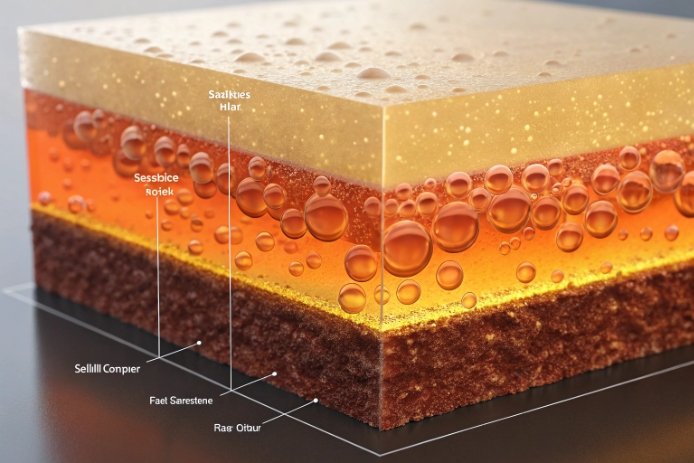
Sulfur exists in multiple oxidation states
In soda-lime-silica melts, sulfur is commonly described as:
- Sulfate (S⁶⁺): SO₄²⁻ dominant in oxidizing melts
- Sulfide (S²⁻): reduced sulfur dominant in reducing melts (key for amber glass 3)
- Sulfite (S⁴⁺): sometimes discussed as an intermediate form
This speciation links directly to oxygen potential. The classic “Budd curve” concept is often used to describe how sulfur solubility and valence shift with redox. The practical point is that sulfur is easiest to control when oxygen potential is measured, not guessed.
What “sulfide” means for bottle operators
On the floor, sulfide shows up as:
- ambering or dirty tint on flint lines
- higher foam persistence (see foam formation 4)
- more sensitivity to cullet contamination
- reboil waves after a furnace disturbance
Sulfide is also not always uniform. The furnace can have local reducing pockets, especially near dirty cullet entry or in areas with poor mixing. That creates redox gradients, which can create cords and “mixed chemistry” streaks downstream.
Measuring sulfide versus sulfate matters
Many plants only track total sulfur as SO₃ in glass samples. That helps, but it can miss the real driver in unstable furnaces: the valence split between sulfide and sulfate. Recent analytical work describes methods to separate and determine sulfide sulfur and sulfate sulfur in soda-lime-silica glasses. This matters because the same total sulfur can behave differently depending on sulfide fraction. (Method guide: sulfur speciation analysis 5)
| Sulfur form in melt | What shifts it up | What it affects first | What a plant can observe |
|---|---|---|---|
| Sulfate (S⁶⁺) | higher oxygen activity, lower reducer load | fining timing, SOx potential | stable refining when tuned |
| Sulfide (S²⁻) | cullet organics, excess carbon, reducing pockets | color drift, foam, reboil risk | ambering, cords, sulphate blisters |
| Sulfite (S⁴⁺) | intermediate redox zone | transition behavior | “hard to explain” variability |
A stable bottle operation treats sulfide as a process signal: it shows where oxygen activity drifted and where the furnace needs tighter control.
When can sulfides assist bubble rise kinetics?
A faster fining reaction is attractive. Still, a faster reaction in the wrong zone creates more bubbles, not fewer.
Sulfides can assist bubble rise kinetics when they help generate SO₂ (and related fining gases) at a stage where viscosity is already low enough for bubbles to grow and rise out quickly, and where foam does not trap them.
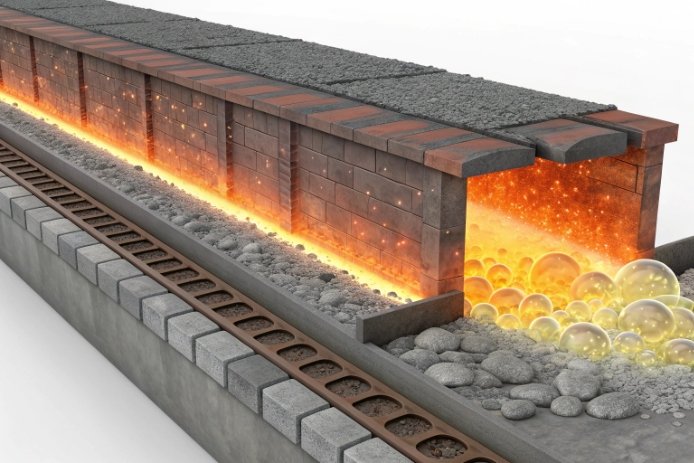
The bubble physics that decides whether “help” is real
Bubble rise depends on:
- bubble size (bigger rises faster)
- melt viscosity (lower viscosity helps)
- convection and residence time
- whether a foam layer blocks escape
Fining agents work by diffusing gas into existing bubbles so they grow. Sulfur-bearing fining is powerful because SO₂ and O₂ can diffuse into bubbles and increase buoyancy. If sulfide chemistry increases SO₂ availability at the right time, bubble growth can accelerate, and bubble rise can speed up.
The key chemistry window: moderate reduction
In moderately reduced melts, sulfate and sulfide can coexist. Chemical reaction between these sulfur states can supersaturate the melt with SO₂ and nucleate SO₂ bubbles around the working-range temperatures reported in literature. This can be useful if it happens in a hot refining zone where the melt can clear those bubbles quickly.
A summary that matches plant reality:
- Slight-to-moderate reduction can improve sulfate fining efficiency, because gas release and bubble nucleation can be enhanced.
- Too much reduction shifts behavior into foam and reboil, because gas appears at lower temperatures and gets trapped.
“Very reducing” sulfur fining exists, but it is not forgiving
Some fining discussions note that under very reducing conditions, sulfur fining can occur through oxidation of sulfide by iron, producing sulfur oxides that participate in fining. In practice, this is hard to run stably in bottle furnaces because the same chemistry is close to amber color formation and cord risk. It may fit some dark-glass systems with strong control, but it is rarely a good idea for flint.
| Situation | Can sulfides help fining? | Why it can work | What must be controlled tightly |
|---|---|---|---|
| High-T refining zone, stable convection | Yes, sometimes | SO₂ helps bubble growth when viscosity is low | redox band, foam, sulfate dose |
| Early melting zone with dirty cullet | No | SO₂ forms too early and feeds foam | organics, batch blanket, combustion balance |
| Forehearth with local reheating | Usually no | reboil risk rises (see reboil causes 6) | temperature uniformity, oxygen activity stability |
| Amber glass with defined redox recipe | Possibly | reduced sulfur is part of system | Fe/S/C balance, cord prevention |
Sulfide-assisted fining is real chemistry, but it is a narrow operating method. For most bottle plants, the safe approach is to keep sulfur fining mainly sulfate-driven and use only mild, controlled reduction where it improves refining without creating foam.
How to prevent sulfide-induced ambering or cords?
A furnace can be “on spec” for total sulfur and still amber unexpectedly. That usually means sulfide formed locally.
Preventing sulfide-induced ambering and cords means preventing local reducing pockets and preventing redox gradients. The most effective tools are cullet cleanliness, stable combustion oxygen balance, in-line redox monitoring, and controlled sulfate-to-reducer ratio.
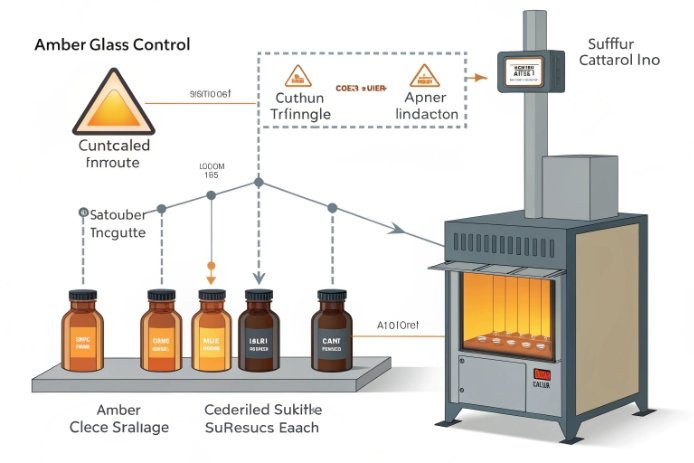
Why ambering happens fast
Amber color chemistry is often described as an iron–sulfur–oxygen chromophore that requires reduced sulfur (S²⁻) and oxidized iron (Fe³⁺) in the presence of alkali for charge balance. That means a flint furnace only needs a small amount of local sulfide creation to push the surface or a streak into an amber/brown direction. Once that happens, mixing can spread it into cords.
Why cords love sulfur imbalance
Cords are often a mixing and compatibility issue, but redox gradients make cords more visible. If one stream is more reducing (more sulfide) and another is more oxidizing (more sulfate), the contact line can trigger extra SO₂ formation and nucleation. This is also why mixed cullet lots with different coatings can create “stripe problems” in the working end. (Read about glass cord defects 7)
Controls that prevent ambering and cords without killing fining
1) Control cullet organics like a critical raw material. Label, ink, and polymer spikes are the fastest route to sulfide pockets. (See cullet quality standards 8)
2) Stabilize oxygen potential in the melt. Zirconia-based oxygen sensors and feeder redox sensors are used in industry to track oxygen activity in the melt, especially when high cullet share makes redox less predictable.
3) Keep sulfate and reducer additions stable and slow-changing. Fast corrections create oscillation. Oscillation creates gradients.
4) Protect temperature uniformity in forehearths and spouts. Local reheating and cooling both raise the chance that sulfur gases re-emerge as blisters.
5) Avoid mixing oxidized and reduced glass streams. That contact can trigger additional SO₂ generation and nucleation.
| Defect | Most common sulfur-related driver | Fastest check | Most reliable corrective action |
|---|---|---|---|
| Unexpected ambering on flint | local sulfide formation from organics | cullet audit + redox trend | clean cullet, raise oxygen activity slightly |
| Cords with tint streaks | redox gradients + poor mixing | cord mapping + feeder stability | improve mixing, stabilize redox, blend cullet lots |
| Sulfur reboil / blisters at mould | equilibrium shift and late gas release | correlate to temperature swings | tighten forehearth profile, stabilize redox and SO₃ |
| Foam events then seed spikes | sulfate/sulfide reactions at low T | foam height + off-gas | reduce reducing load, adjust sulfate timing |
A stable line does not fight sulfur with heat alone. It fights sulfur with predictability: predictable cullet, predictable oxygen potential, predictable sulfate timing, and predictable temperature fields.
Are tunable sulfur chemistries enabling cleaner melts?
Plants want cleaner melts, fewer emissions headaches, and fewer bubble surprises. Sulfur chemistry can support that goal, but only if it becomes measurable and controllable.
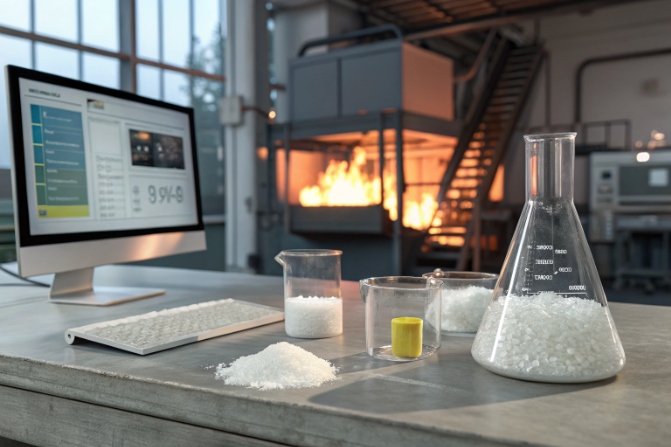
Tunable sulfur chemistry is enabling cleaner melts by separating “how much sulfur” from “what sulfur state,” then controlling oxygen potential so sulfate fining stays efficient without producing foam or reboil. New monitoring tools and alternative fining packages can also reduce how hard sulfate must work.
The big shift: control sulfur valence, not only SO₃
The emerging direction is moving from a single SO₃ number to a control strategy built on:
- total sulfur retained (SO₃ in glass)
- sulfur speciation (sulfide vs sulfate split)
- oxygen activity in the melt (redox)
- defect feedback (seed counts, foam events, reboil)
Analytical methods that separate sulfide and sulfate in soda-lime-silica glasses make it easier to close this loop. When speciation is visible, operators can stop over-correcting.
Process tools that reduce the need for “aggressive” sulfur chemistry
Cleaner melts often come from making sulfur chemistry less stressed:
- Better cullet sorting and washing reduces reducer spikes and stabilizes redox.
- Bubbling and improved convection can reduce required fining time and reduce sulfate dose pressure. (See bubbling systems 9)
- Oxy-fuel and oxygen staging can help stabilize combustion conditions and can reduce some emissions constraints, depending on the furnace.
- Model-based control can slow down oscillation and reduce reboil waves.
Alternative fining packages can lower sulfate dependence
There is growing focus on fining agents that avoid high-toxicity choices and reduce gas-release timing problems. Tin oxide (SnO₂) is discussed in technical literature as a fining agent in the right glass systems because it can release oxygen at a late stage when viscosity is low, which is similar to the “late gas” advantage that older toxic fining agents had. This does not eliminate sulfate in mainstream bottles overnight, but it can reduce the need to push sulfate chemistry into unstable zones.
What “near future” looks like in bottle plants
A realistic near-term roadmap:
- more in-line redox monitoring in feeders and forehearths (see digitalization in glass 10)
- more defect analytics tied to cullet lot tracking
- tighter sulfate dosing bands with slower correction rules
- selective use of alternative fining packages for special SKUs
| Lever | Maturity | What it improves | What it cannot replace alone |
|---|---|---|---|
| In-line oxygen activity sensing | commercial | stabilizes redox and sulfur behavior | does not remove organics spikes by itself |
| Sulfide/sulfate speciation testing | emerging for QA | explains variability and cords | not real-time yet in most plants |
| Bubbling / mixing upgrades | common | lowers seeds and reduces fining stress | still needs stable chemistry |
| SnO₂ or other alternative fining | niche to expanding | reduces reliance on risky fining agents | needs validation in soda-lime bottle systems |
| Digital models and ML alarms | growing | predicts foam/reboil events earlier | needs good sensors and disciplined operations |
Tunable sulfur chemistry is not a single new additive. It is a control philosophy: measure the state, hold it steady, and stop creating gradients that turn fining into defects.
Conclusion
Sulfides can enhance fining only under tight redox control. In most bottle furnaces, the best path is sulfate-led fining with measured oxygen activity, clean cullet, and controls that prevent sulfide pockets and reboil.
Footnotes
-
Technical article on measuring and controlling glass redox for color consistency. ↩
-
Study on sulfate fining efficiency and gas release mechanisms. ↩
-
Research on sulfur behavior and color formation in amber glass. ↩
-
Detailed guide on sulfate fining and foam formation issues in glass melting. ↩
-
Standard test methods for chemical analysis of soda-lime glass, including sulfur. ↩
-
Explanation of reboil phenomena and bubble nucleation in glass melts. ↩
-
Guide to identifying common glass defects like stones and cords. ↩
-
WRAP quality protocol for cullet contamination limits. ↩
-
Overview of furnace bubbling systems and their benefits for melt homogeneity. ↩
-
Siemens article on digitalization and process control in the glass industry. ↩






