
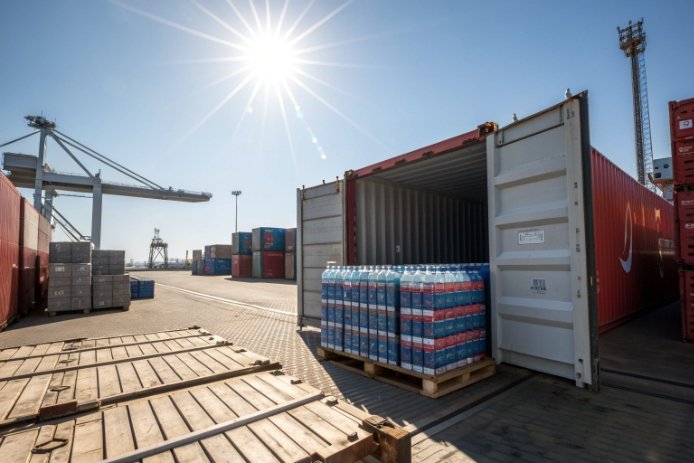
Glass bottles can look perfect at loading and still show cracks, leaks, or coating damage at arrival. That gap usually comes from temperature swings during transport.
Yes. Shipping temperature fluctuations can affect glass bottles by creating thermal gradients, growing hidden microcracks, reducing closure seal force, and worsening coating or label defects—especially when heat and vibration happen together.
What shipping temperature swings really do to a glass package system?
Where the heat and cold come from in real logistics
Most damage does not come from one “extreme” temperature. It comes from cycling and uneven heating. A pallet can sit in sun on one side and stay cool on the other. A container can heat during the day and cool at night. A warehouse door opening can create fast cold drafts on a warm load. Those changes create local thermal gradients 1 across glass thickness and around the bottle circumference.
Why glass is not the only thing at risk
The glass body is often the strongest part. The weak links are usually:
-
the heel and shoulder where stress concentrates
-
the neck finish where small chips become leaks
-
the closure system 2 where liners soften, creep, and lose compression
-
the coating/decoration stack where mismatch and moisture drive peeling
-
the labels where adhesive and film shrink behavior changes
This is why a shipment can arrive with “no obvious broken glass,” but still have vacuum loss 3, sticky necks, flaking, or label lift.
A practical risk map before picking controls
Shipping risk depends on your bottle style and pack format. A premium thick-bottom bottle can be great for shelf presence, yet it can trap thermal gradients at the base. Lightweight bottles can be more sensitive to paneling if vacuum changes. Painted and plated bottles can be sensitive to humidity plus cycling.
| Package element | What temperature cycling stresses | Typical symptom at destination | Fast indicator during inspection |
|---|---|---|---|
| Base/heel | thermal gradients + scuffs | base checks, late breaks | fine cracks near base corner |
| Shoulder | uneven airflow + hot/cold bands | shoulder cracks | short checks near shoulder radius |
| Neck finish | cap load + temperature drift | micro-leaks, chips | residue at land, small chips |
| Liner + cap | softening + compression set | torque loss, cap back-off | low removal torque, vacuum loss |
| Coatings/labels | CTE mismatch + moisture | flaking, blistering, lifting | edge lift, haze, blisters |
Shipping temperature swings should be treated as a design input, not as a “logistics problem.” When the bottle, closure, and decoration are qualified for the real cycle, surprises drop fast.
The next parts go step by step through the main risks and the controls that work in mass production and global shipping.
Shipping damage rarely comes from temperature alone. It is usually temperature plus time plus vibration. That is why testing and packaging design must match the route reality.
Shipping is full of small shocks. A bottle can survive each one, but the sum can grow a microcrack.
Thermal stress and hidden microcracks are most likely when bottles see repeated hot–cool cycles, fast local cooling (drafts, cold floors), or uneven heating (sun-facing pallet sides). Those conditions create tensile stress at the surface, especially at the heel and shoulder.
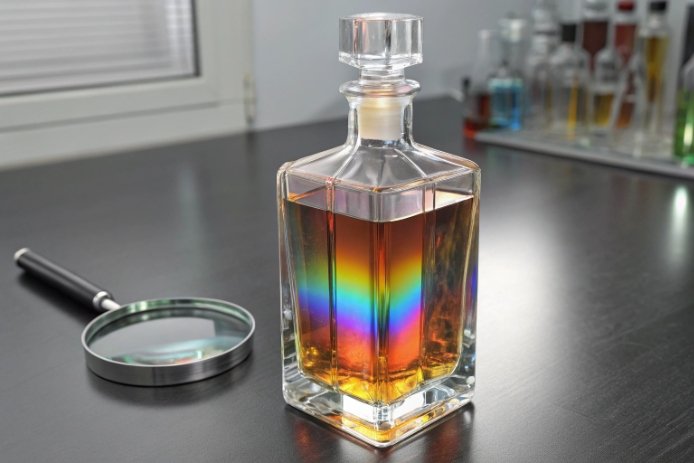
Thermal gradients, not “average temperature,” drive microcracks
Glass expands and shrinks with temperature, but cracking risk rises when temperature is not uniform. In shipping, the biggest gradient drivers are:
-
sun exposure on one side of a container or truck
-
cold floor contact for the bottom layer of cartons
-
night-day cycling in long routes
-
warehouse door drafts and fast air changes
-
refrigerated staging followed by warm loading zones
These conditions create tensile stress 4 at the surface. The heel and base corner are common crack origins because they combine geometry concentration and scuff damage from handling.
Why microcracks show up late
Hidden microcracks often do not cause immediate breakage. They can grow during:
-
pallet vibration
-
carton rubbing
-
later temperature cycles at the distributor
-
depalletizing impacts
So a route can look clean at arrival and still create late failures in downstream handling.
How to identify if shipping temperature is the trigger
The pattern is usually:
-
failures cluster on the outer corners of pallets (more exposed)
-
failures cluster on the sun-facing side
-
failures appear after route changes or season changes
-
cracks repeat at the heel ring or shoulder band, not randomly
| Shipping condition | What it does to the glass | Most vulnerable bottle zone | What to watch in returns |
|---|---|---|---|
| uneven heating (sun on one side) | bending stress around circumference | shoulder, heel | one-side cracks |
| fast cooling drafts | sharp surface tension | shoulder | short checks |
| cold floor contact | base becomes cold anchor | base corner | base checks |
| repeated day/night cycles | fatigue-like growth | heel scuffs | late breakage |
A route that includes long sun exposure and cold nights can be more damaging than a short extreme event. For global routes, the best defense is to qualify for cycling and to protect the base and shoulder from scuffing and concentrated cooling.
How do temperature changes impact closure torque retention, liner performance, and leak risk during shipping?
Most shipping leaks are not “cap defects.” They are seal force defects after the liner relaxes.
Temperature changes reduce torque retention because liners soften and creep at heat, then do not fully recover after cooling. Plastic closures can also expand and creep more than glass. After cycling, clamp load drops, which raises micro-leak and cap back-off risk.
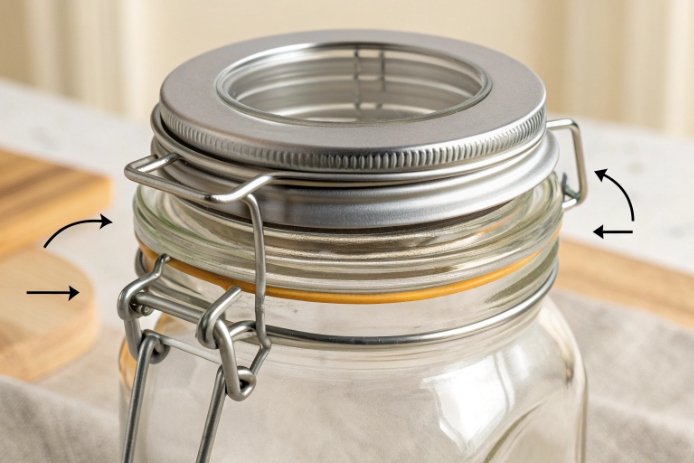
What heat does to a sealed bottle in transit
When a pallet warms, the closure system changes faster than the glass:
-
liners become softer
-
compression set 5 increases
-
thread friction changes
-
plastic shells can relax
A cap that was tight at packing can lose a meaningful part of its back-off torque after a warm hold. Then vibration and carton movement can promote small rotational back-off. That back-off is often enough to reduce gasket compression and open a micro-channel.
What cooling does next
Cooling creates contraction. If the product is hot-filled or if headspace 6 is sensitive, cooling can form vacuum. Vacuum “pulls” on the seal interface and can draw air in through micro-channels. That can cause:
-
loss of vacuum (food safety concern)
-
weeping and sticky necks
-
fragrance evaporation for cosmetic pumps
-
pressure drop for carbonated products
Why the leak can be invisible
A micro-leak can be small enough to avoid visible drips. It can still:
-
admit air and kill vacuum
-
release aroma
-
leave a thin sticky film that attracts dust
| Closure system change | Trigger in shipping | Result | Inspection method that catches it |
|---|---|---|---|
| torque loss | warm hold + liner creep | loose feel, lower back-off torque | torque audit at arrival |
| cap back-off | vibration + reduced friction | slow leaks | witness marks + removal torque |
| seal relaxation | cycling + compression set | micro-leaks | vacuum/pressure decay |
| liner hardening after cold | very low temperatures | poor conformity | dye ingress, leak test after cold |
For shipping reliability, torque settings must be designed for the after-cycling condition, not only for “right after capping.” In practice, this means defining:
-
an application torque range
-
a minimum back-off torque after thermal exposure
-
leak-free performance after cycling and aging
That approach stops the common trap where the capper hits target torque but the package fails two days later.
Can thermal cycling worsen coating defects (paint, frosting, electroplating) or label adhesion on glass packaging?
Decoration failures are often blamed on “bad coating,” but thermal cycling plus moisture is usually the true driver.
Yes. Thermal cycling can worsen coating defects and label issues by creating expansion mismatch stress between glass and the coating/adhesive layers. Cracks let moisture in, which drives blistering, flaking, haze, and label edge lift—especially on shoulders and sharp transitions.
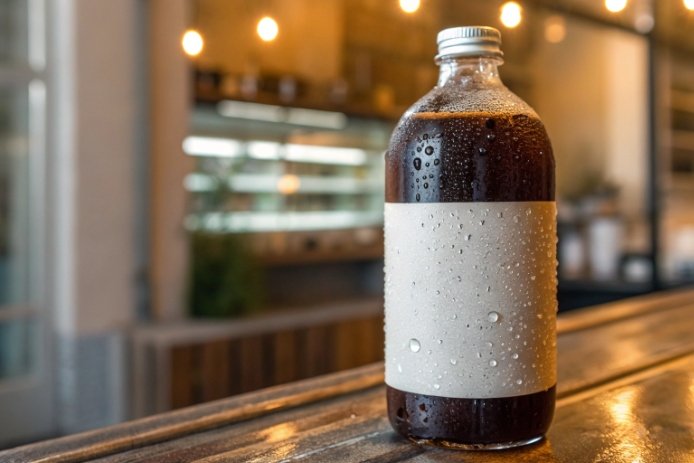
Coatings fail from mismatch plus moisture
Paint, UV coatings, frosting effects, and electroplated stacks behave differently than glass. When temperature swings, each layer expands and shrinks. If the stack is stiff or brittle, it cracks. If the adhesion is not strong, the crack becomes an edge lift and then a flake.
Moisture multiplies the damage. Condensation during cold-to-warm transitions can sit at microcracks and edges. Then:
-
paint can blister
-
frosting can haze or look uneven
-
electroplated layers can crack and lift at edges
-
primer layers can delaminate if cure was weak
Labels and sleeves respond to cycling in a different way
Label risk depends on label type:
-
pressure-sensitive adhesives 7 can creep at heat
-
hot-melt can soften and move
-
shrink sleeves 8 can shrink further or wrinkle if heat returns
-
paper labels can absorb moisture, swell, and lift
Label defects can also become functional defects if the label edge catches and rubs against other bottles, increasing scuff damage and crack starters.
Where decoration fails first
The common first-fail zones are:
-
shoulder curvature (stress concentration + airflow)
-
heel band (scuffs + bending)
-
embossed edges (local thickness and stress peaks)
-
masked edges (sharp boundary in coating thickness)
| Decoration type | Main thermal cycling failure | Common trigger in shipping | Best preventive lever |
|---|---|---|---|
| paint/UV coating | microcracks → flaking | hot sun + cool night | flexible basecoat + cure control |
| frosting | haze, patchiness | condensation cycles | surface prep + humidity control |
| electroplating | cracks, blistering, peel | mismatch + moisture | activation + primer + cycling test |
| PSA label | edge lift, ooze | warm hold | adhesive grade + dwell control |
| shrink sleeve | wrinkles, curl | re-heating in transit | stable film + tunnel settings |
A decorated bottle should be qualified like a “layered material system.” If the route includes big temperature swings, testing must include cycling and humidity, not only abrasion.
The best results come from simple controls applied consistently. The goal is to reduce gradients, reduce vibration, and keep surfaces protected.
Temperature-related damage drops when pallets are built for stiffness and airflow, bottles are cushioned against vibration and scuffing, containers avoid direct sun hotspots, and shipments are validated with thermal cycling plus torque and leak testing before release.
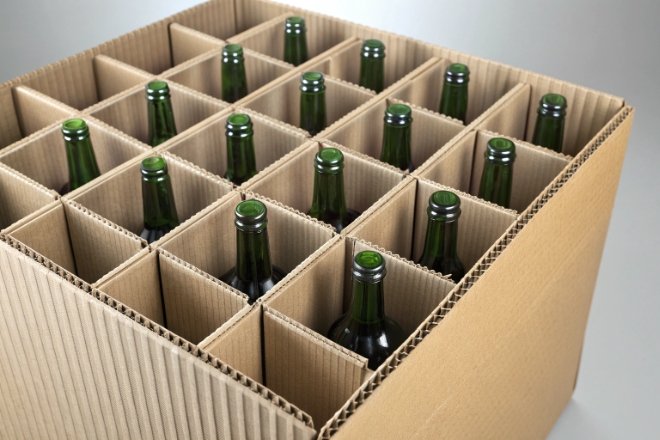
Palletization and unit load design
A strong unit load 9 reduces both vibration and uneven exposure:
-
use consistent carton compression strength
-
avoid overhang that exposes corners to sun and impact
-
use corner boards and stretch wrap patterns that reduce “breathing”
-
keep stable layer alignment so cartons do not rub bottle shoulders
For bottles shipped without cartons (dividers or trays), surface protection matters even more. Heel scuffs are a top driver of thermal crack growth.
Cushioning and scuff protection
Temperature makes glass more sensitive to surface flaws. So the fastest win is to reduce damage sources:
-
add dividers or partitions that stop glass-to-glass contact
-
control carton internal fit so bottles do not rattle
-
choose pad materials that do not trap moisture against coatings
-
manage label edges so they do not catch and scrape adjacent bottles
Container ventilation and route controls
Small logistics steps reduce temperature peaks:
-
avoid long dwell in direct sun at ports and yards
-
use shaded staging or reflective covers where possible
-
load so the most temperature-sensitive SKUs are not at container walls
-
consider ventilation strategies to reduce trapped heat, based on route reality
Pre-shipment testing that predicts failures
A reliable release plan uses a few tests that match the actual risk:
-
thermal cycling (hot–cool–hot) for route conditions
-
torque retention 10 audit at time points (0h, after heat, after cool, 24–72h)
-
vacuum/pressure decay leak tests after cycling
-
abrasion and scuff checks after vibration simulation
-
decoration checks after cycling (cracks, blistering, edge lift)
| Control area | Action | What it prevents | KPI to track |
|---|---|---|---|
| pallet build | no overhang + corner boards | corner exposure cracks | damage rate at pallet corners |
| cushioning | partitions + snug fit | scuffs → microcracks | heel scuff rate |
| ventilation/handling | shade + limit hot dwell | coating and liner creep | temperature logger peak time |
| testing | cycling + torque + leak | late leaks and returns | leak rate after 72h |
| labeling/decoration | humidity-aware materials | edge lift, flaking | decoration defect rate after cycle |
In my production work, the biggest gains usually come from two moves: reduce heel scuffing and qualify torque retention after cycling. Those two steps remove a large part of the “mystery return” category.
Conclusion
Yes. Shipping temperature swings can grow microcracks, reduce seal force, and damage coatings and labels. Strong pallet design, scuff protection, route controls, and thermal-cycle validation stop most failures.
Footnotes
-
Explains how uneven temperature distribution creates structural stress in materials like glass. ↩ ↩
-
Overview of cap and liner technologies used to seal glass packaging effectively. ↩ ↩
-
Discusses how seal integrity failures compromise product safety and shelf life. ↩ ↩
-
Defines the physical force that causes brittle materials like glass to crack. ↩ ↩
-
Technical details on how elastomer memory loss affects long-term sealing performance. ↩ ↩
-
Importance of empty space in bottles for expansion and vacuum formation. ↩ ↩
-
Understanding how PSA labels bond and react to temperature changes. ↩ ↩
-
Benefits and challenges of using heat-shrinkable films for bottle decoration. ↩ ↩
-
Best practices for stacking and securing cargo to prevent transport damage. ↩ ↩
-
Measuring how well caps stay tight over time and under thermal stress. ↩ ↩






