
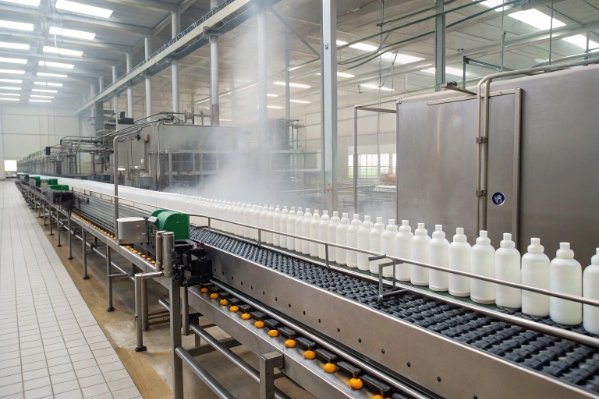
Aggressive cleaning protocols are a double-edged sword. While necessary for sterilization, the relentless alternation between high-pH caustics and low-pH acids chemically fatigues the glass, leading to structural weakness and aesthetic ruin.
Repeated acid-alkali cycles significantly reduce glass durability by creating a synergistic corrosion effect. The acid phase leaches alkali ions, leaving a porous silica-rich layer, which the subsequent alkali phase rapidly dissolves. This cyclic stripping thins the glass wall, creates stress concentrators, and destroys surface smoothness.
The "Ratchet Effect" of Chemical Cycling
As the face of FuSenglass, I often consult for beverage giants running Returnable Glass Bottle (RGB) fleets. They assume that because a bottle survived one wash, it can survive fifty. This is a dangerous misconception. A single wash is an event; repeated washing is a process of degradation.
Glass corrosion is usually slow. However, when you alternate between acid and alkali, you trigger a destructive mechanism I call the "Chemical Ratchet."
- The Acid Step: Acids (like Phosphoric or Nitric) attack the modifier ions ($Na^+$, $Ca^{2+}$). They leach these out of the glass surface via ion exchange 1 ($H^+$ replaces $Na^+$). This leaves behind a fragile, hydrated silica "gel" layer.
- The Alkali Step: Caustics (like Sodium Hydroxide) attack the silica network ($SiO_2$) itself. They readily dissolve the porous silica gel 2 layer created by the acid step because it is already weakened.
- The Result: The protective skin is stripped away, exposing fresh bulk glass. The cycle begins again, digging deeper into the bottle wall with every rotation.
In my experience, a bottle subjected to this cycle 20 times ages the equivalent of 100 years of static storage. The surface becomes microscopically rough, drastically reducing the bottle’s burst pressure strength and making it look "scuffed" or "milky." This is why returnable beer bottles eventually look white around the contact rings—the chemical attack is amplified by physical abrasion.
The Synergistic Damage
Data from our labs shows that the damage from alternating pH is greater than the sum of its parts. If you soak glass in acid for 10 hours, damage is minimal. If you soak in alkali for 10 hours, damage is moderate. But if you switch between them every 30 minutes for 10 hours, the material loss can be 5 to 10 times higher.
| Condition | Mechanism of Attack | Visible Result |
|---|---|---|
| Acid Only | Ion Exchange (Leaching) | Iridescence (Rainbows), slight haze. |
| Alkali Only | Silica Network Dissolution | Uniform etching, thinning, dullness. |
| Cyclic Acid/Alkali | Layer Stripping (Synergy) | Deep pitting, rapid haze, strength loss. |
| Thermal Shock | Physical Stress | Cracks, potential shattering. |
Understanding this mechanism is vital for anyone managing a filling line or a recycling program. The chemicals you use to clean are slowly eating your inventory.
How do acid–alkali cycling conditions accelerate glass surface degradation and haze?
Cleaning efficiency often comes at the cost of container lifespan. The speed of degradation is dictated by the severity of the pH swing, the temperature of the bath, and the frequency of the cycle.
Surface degradation accelerates exponentially with wider pH swings (e.g., pH 13 to pH 2), temperatures exceeding 70°C, and rapid cycle frequencies. High temperatures energize the ion exchange and dissolution reactions, while frequent cycling prevents the formation of any protective stable surface layer.
The Severity of the Swing
The "Delta pH" is the killer. In many industrial bottle washers, bottles pass through a caustic soak (pH 13.5) to remove organic soils and labels, followed immediately by an acidic rinse (pH 2.0) to neutralize the caustic and remove mineral scale.
This sudden shock does not allow the glass surface to equilibrate. The acid creates a protonated surface that is highly reactive to the incoming hydroxide ions in the next cycle.
- Mild Cycle: pH 10 (Detergent) $\leftrightarrow$ pH 5 (Weak Acid). Minimal Damage.
- Aggressive Cycle: pH 14 (Hot Caustic) $\leftrightarrow$ pH 1 (Nitric Acid). Severe Damage.
Temperature: The Catalyst
In the Sinner’s Circle 3 of cleaning, Temperature is a key quadrant. For glass corrosion, the rate roughly doubles for every 10°C rise.
- The Danger Zone: Running caustic tanks at >80°C. While this kills bacteria and melts glue faster, it also dissolves the silica network at a voracious rate. When this hot, etched surface is hit with cold acid, the thermal shock 4 adds micro-cracks to the chemical pitting, creating "Griffith Flaws" 5 that weaken the bottle.
Time and Frequency
It is not just about total time; it is about the number of switches.
A bottle washed once a year has time to "heal" (the surface silica re-condenses slightly). A bottle washed daily (like in a dairy loop) faces constant stripping. The "scuffing bands" seen on refillable bottles are the areas where physical rubbing removes the chemically softened layer, accelerating the wear locally.
| Parameter | Safe Operating Window | High-Risk "Glass Killer" |
|---|---|---|
| Caustic pH | < 12.0 | > 13.5 |
| Acid pH | > 3.0 (Phosphoric/Citric) | < 1.5 (Nitric/HF/Sulfuric) |
| Temperature | < 60°C | > 80°C |
| Cycle Time | Short exposure (<5 mins) | Long soaks (>20 mins) |
| Additives | Silica-inhibitors present | Pure Commodity Chemicals |
If the bottle is degrading, where does that glass go? It goes into the solution, and potentially, into the product.
Does acid–alkali cycling increase leaching risks and affect taste or safety?
A chemically roughened bottle is not just an aesthetic issue; it is a hygiene and safety risk. The breakdown of the glass surface alters the liquid inside and creates harborages for contaminants.
Repeated cycling drastically increases the risk of alkali leaching (pH rise) and "glass flaking" (delamination) into the beverage. Furthermore, the chemically pitted surface becomes difficult to sterilize, increasing the risk of biofilm retention and off-flavor development due to "flavor scalping."
The Flaking (Delamination) Nightmare
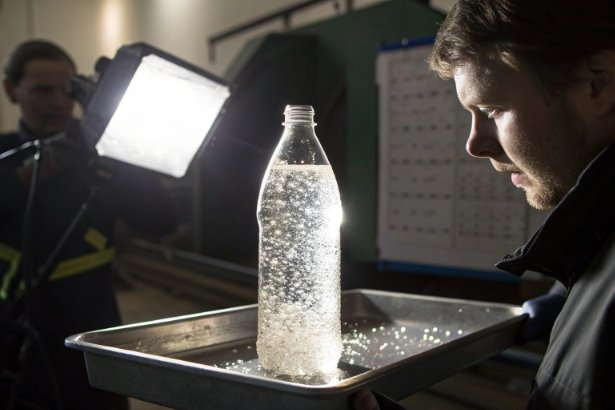
This is the most severe safety consequence. As the acid/alkali cycle creates that silica-rich gel layer, subsequent drying steps can cause this layer to crack and detach.
- The Look: Tiny, glittering shards floating in the drink. They look like crushed glass (though they are usually thin silica flakes).
- The Impact: Immediate product recall. Even if chemically harmless, no consumer will drink a beverage with floating "glass." This is particularly common in pharmaceutical vials or high-pH mineral waters stored in old, washed bottles.
Flavor and pH Drift
A "fresh" glass surface is relatively inert. A "weathered" surface from repeated cycling is active.
- pH Shift: The chemically attacked glass has a higher surface area 6. When filled with a neutral beverage (like vodka or water), it releases sodium ions rapidly, raising the pH. This can make the beverage taste "soapy" or "flat."
- Flavor Scalping: A rough, pitted surface has a massive surface area compared to smooth glass. It can adsorb flavor molecules (terpenes, oils) from the previous product. If you wash a bottle that held spicy tomato juice and then fill it with delicate apple juice, the etched glass might retain "ghost flavors" that standard washing cannot remove.
Microbiological Safety
Smooth glass is easy to sanitize. Pitted glass is a microscopic sponge. The pits created by chemical cycling can protect bacteria or yeast spores from the sanitizing spray.
- Biofilms: Once a biofilm 7 establishes itself in a chemical pit, it is incredibly difficult to remove. This leads to "random" spoilage events in batches that supposedly passed QC.
| Risk Category | Mechanism | Consequence for Buyer |
|---|---|---|
| Physical Safety | Delamination (Flaking) | Consumer injury fear; Recalls. |
| Chemical Safety | Ion Migration ($Na^+$, $Ca^{2+}$) | pH instability; Precipitation. |
| Sensory Quality | Flavor Scalping / Taint | Off-taste; "Old" flavor. |
| Microbial Safety | Surface Roughness | Spoilage; Reduced shelf life. |
While the glass suffers, the artwork on the outside often dies first.
How can repeated chemical cleaning weaken coatings and decorations?
Your brand’s visual identity relies on ink and metal adhesion. The expansion and contraction caused by thermal and chemical cycling inevitably leads to the failure of organic and metallic decorations.
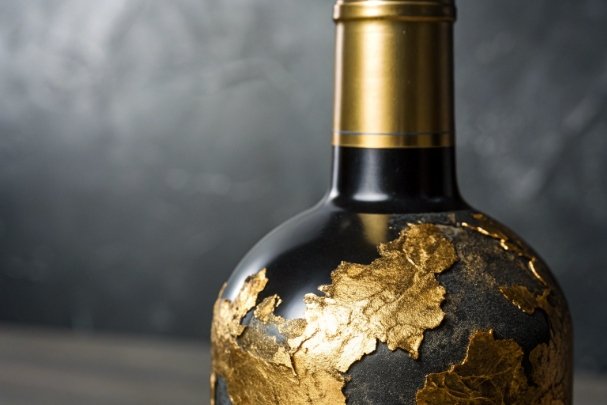
Repeated pH swings cause organic coatings (like screen printing and spray) to swell and contract, leading to delamination and embrittlement. Metallic finishes (gold/silver) are particularly vulnerable, as acids cause pitting and alkalis dissolve the adhesive bond, causing the decoration to wash off entirely.
The Stress of Expansion
Decorations are dissimilar materials bonded to glass.
- Organic Inks (Epoxy/UV): In hot caustic (Alkali), polymer networks swell as they absorb water and ions. In cold acid, they rapidly contract and become brittle.
- The Failure: This constant "breathing" breaks the chemical bond between the glass and the ink. The result is peeling, flaking, or the ink simply washing away in the rinse cycle.
- Color Shift: Certain pigments are pH sensitive. A vibrant red (often cadmium-based or organic) might bleach out to a dull pink or turn brown after 10 cycles of oxidation and reduction 8.
The Death of Metallics
Real gold and platinum pastes (used in premium spirits) are held on by a flux (a glass-like binder).
- Acid Attack: Acids attack the metal directly, causing micropores or "blackening" of the gold.
- Alkali Attack: Caustics attack the glass flux underneath the metal. The gold doesn’t dissolve, but it falls off because its foundation has been eaten away.
- Recommendation: For returnable bottles (washed repeatedly), only Ceramic (ACL) printing is viable. It is fused glass-on-glass. Everything else (organic spray, UV print, decals) is considered "semi-permanent" and will fail in a cyclic wash environment.
Surface Tension Changes
Repeated washing alters the "wettability" of the glass. A brand new bottle might hold a paper label (with casein glue) perfectly. A chemically etched bottle might repel the glue or absorb too much water, causing labels to flag or fall off on the filling line.
| Decoration Type | Resistance to Cyclic Wash | Typical Failure Mode |
|---|---|---|
| Ceramic (ACL) | Excellent | Fading after 50+ cycles (Physical wear). |
| UV Screen Print | Poor to Moderate | Peeling, cracking, loss of adhesion. |
| Organic Spray | Very Poor | Saponification (becomes sticky), stripping. |
| Gold/Silver | Poor | Blackening, complete removal. |
| Paper Label | N/A (Removed each cycle) | Residue buildup affects next label application. |
How do you prove your bottle can survive the machine? You simulate the torture.
What accelerated test protocols and pass/fail criteria should buyers use?
You cannot guess durability; you must engineer it. Validation requires rigorous laboratory simulations that compress years of washing into days of testing.
Buyers should mandate "Industrial Dishwashing Simulations" (EN 12875) or custom cyclic immersion tests (e.g., 50 cycles of NaOH $\leftrightarrow$ Acid). Pass/fail criteria must focus on zero visible decoration loss, gravimetric weight loss <0.1%, and burst pressure retention >80% of original spec.
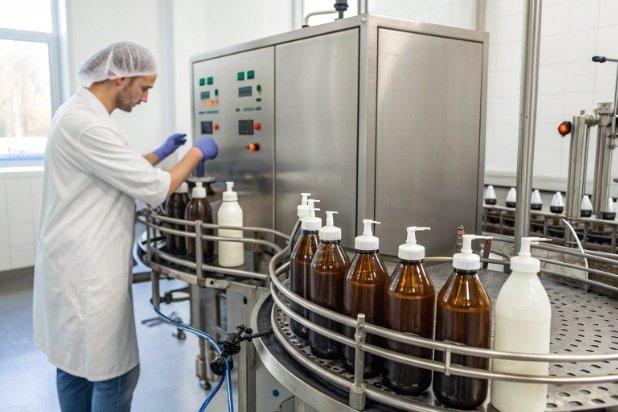
The "50-Cycle" Simulation
At FuSenglass, we don’t just dip bottles; we abuse them. A standard protocol for a Returnable Glass Bottle (RGB) might look like this:
- Immersion A (Alkali): 3.0% NaOH @ 80°C for 10 minutes.
- Rinse: Ambient water.
- Immersion B (Acid): 1.0% Phosphoric Acid @ 40°C for 2 minutes.
- Rinse: Cold water.
- Repeat: 30 to 50 times.
Key Metrics for Validation
After the cycling is complete, we measure:
- Weight Loss (Gravimetric): We weigh the bottle on a 4-decimal balance before and after. Significant weight loss indicates the glass wall is thinning.
- Limit: < 50mg loss per bottle (varies by size).
- Internal Pressure Resistance: We burst-test a control group and the washed group.
- Limit: The washed bottles must retain at least 80% of the initial pressure rating. If they drop from 20 bar to 10 bar, they are unsafe for carbonated drinks.
- Methylene Blue Test: We coat the bottle in dye. Methylene blue sticks to porous, etched silica but rinses off smooth glass.
- Pass: No blue stain remains.
- Fail: The bottle remains blue/hazy (indicates biofilm risk).
- Visual Decoration Grade:
- Grade 5: No change.
- Grade 3: Visible wear but legible.
- Grade 1: Decoration removed.
- Acceptance: Must be Grade 4 or better.
| Test Protocol | Parameter Measured | Acceptance Criteria (Typical) |
|---|---|---|
| BS EN 12875-1 | Dishwasher Resistance | No visible change after 125 cycles (Domestic). |
| Custom Cyclic | Weight Loss (Glass) | < 0.05% total mass loss. |
| Burst Test | Structural Fatigue | > 80% retention of original burst pressure. |
| Light Transmission | Haze / Opacity | < 2% increase in haze value 9. |
| Scotch Tape Test | Decoration Adhesion | 0% paint removal after cycling. |
Conclusion
Acid-alkali cycling is the ultimate stress test for glass packaging. It attacks the material chemically from both ends of the pH scale, leading to thinning, hazing, and structural fatigue. By understanding the "Ratchet Effect" and validating your FuSenglass bottles with rigorous cyclic testing, you ensure that your packaging remains safe, strong, and beautiful, whether it is used once or washed fifty times.
Footnotes
-
A reversible chemical reaction where an ion from solution is exchanged for a similarly charged ion attached to an immobile solid particle. ↩
-
A porous form of silicon dioxide made from sodium silicate, used as a desiccant or support for chemical catalysts. ↩
-
A cleaning model involving four factors: chemistry, mechanical action, temperature, and time. ↩
-
Mechanical stress caused by rapid changes in temperature, potentially causing glass to crack. ↩
-
Microscopic cracks in a material that concentrate stress and can lead to failure. ↩
-
The total area of the surface of a three-dimensional object, affecting reaction rates. ↩
-
A collective of one or more types of microorganisms that can grow on many different surfaces. ↩
-
Chemical reactions involving the transfer of electrons between two species. ↩
-
A standard test method for haze and luminous transmittance of transparent plastics. ↩






