
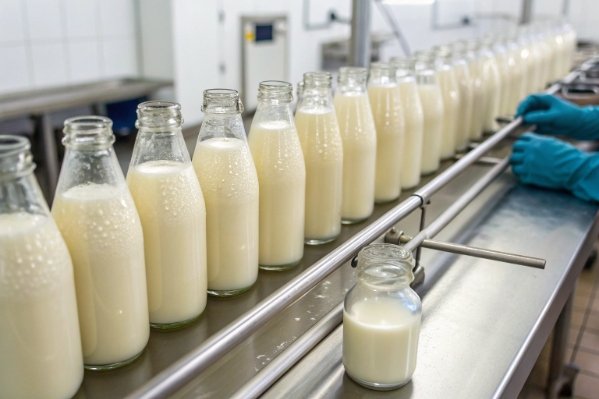
Fermented beverages like kefir, kombucha, and drinkable yogurts are alive and chemically active, raising concerns about packaging stability. Choosing the wrong container can lead to flavor scalping and reduced shelf life.
Yes, lactic acid beverages can be stored indefinitely in glass bottles without risk of corrosion; glass is chemically inert to lactic acid, providing a superior barrier against oxygen and contaminants compared to plastic or metal.
Can Lactic Acid Beverages Be Stored Long-Term in Glass Bottles?
The Ideal Vessel for Fermentation
As the head of FuSenglass, I work with numerous dairy and probiotic beverage brands. One constant question is stability. Lactic acid 1 ($C_3H_6O_3$) is the byproduct of fermentation—it’s what gives yogurt and sour beers their tang. Unlike strong mineral acids, lactic acid is relatively mild, but it is persistent.
Glass is, without a doubt, the superior choice for long-term storage of these products. Whether you are bottling a shelf-stable probiotic drink or a fresh milk kefir, the glass matrix provides a non-reactive environment. While plastics (PET) can be permeable 2 to oxygen (killing probiotics) and metals can corrode (altering flavor), glass remains unaffected. The silica structure of the bottle does not recognize lactic acid as a threat. There is no chemical mechanism for lactic acid to dissolve or etch the glass surface under normal storage conditions.
Long-Term Durability Factors
The "durability" concern usually stems from a misunderstanding of glass chemistry. Glass is not a sponge; it doesn’t absorb liquids. In long-term storage (12-24 months), the primary threats to lactic beverages are light and oxygen, not container degradation.
However, because many lactic beverages are "active" (containing live cultures), they can produce gas ($CO_2$). Glass is rigid. If the fermentation continues inside a sealed bottle without pasteurization, the internal pressure can rise. While the acid won’t eat the glass, the pressure can burst it if the bottle isn’t rated for carbonation (pressure ware). This is a physical limit, not a chemical failure.
Packaging Material Performance
| Material | Lactic Acid Resistance | Oxygen Barrier | Risk Factor |
|---|---|---|---|
| Glass (Type III) | Excellent (Inert) | Total Barrier | Pressure burst (if live culture). |
| PET Plastic | Good | Moderate | Oxygen ingress (Probiotic death). |
| Aluminum | Moderate | Total Barrier | Corrosion / Liner failure. |
| HDPE | Good | Poor | Flavor scalping 3 (Plastic taste). |
| Stainless Steel | Excellent | Total Barrier | Cost prohibitive (Bulk only). |
Glass wins on purity. The acid stays in the bottle, and the bottle stays out of the acid.
How Does the Presence of Lactic Acid Affect the Long-Term Durability of Glass Bottles?
While lactic acid is milder than vinegar, long-term exposure can still facilitate subtle ion exchange. You need to understand if this interaction compromises the structural integrity of your packaging.
Lactic acid has virtually no effect on the physical durability or structural integrity of glass bottles; the silica network is immune to organic acid attack, ensuring the bottle remains as strong after two years of storage as it was on day one.
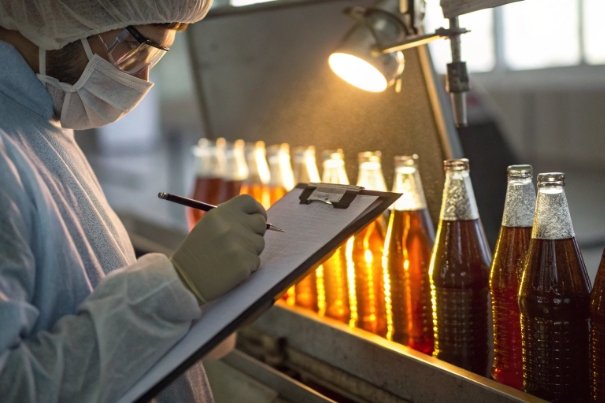
Chemical Inertness of Silica
Glass is resistant to all acids except Hydrofluoric (HF) and hot phosphoric acid. Lactic acid is an alpha-hydroxy acid (AHA). Chemically, it is far too weak to break the silicon-oxygen bonds ($Si-O-Si$) that form the backbone of the bottle.
In my 20 years of experience, I have never seen a glass bottle fail structurally because of the acidity of milk, yogurt, or fermented juices. You could store concentrated lactic acid (88%) in a glass bottle for decades, and the glass wall thickness would remain unchanged.
The Phenomenon of De-alkalization
While the structure holds, the surface does react slightly. Over very long periods, the hydrogen ions ($H^+$) in the lactic acid swap places with sodium ions ($Na^+$) on the glass surface.
- The Effect: This creates a silica-rich "skin" on the inner surface.
- The Result: This actually makes the glass more chemically resistant over time. It passivates the surface.
- The Myth: This is not "corrosion" in the destructive sense (like rust on iron). It is a stabilizing reaction that occurs at a microscopic level (nanometers deep).
Durability vs. Pressure
The only "durability" issue arises if the lactic acid is produced in situ (active fermentation).
- Scenario: Kombucha or Kefir bottled with residual sugar.
- Reaction: Yeast eats sugar $\rightarrow$ $CO_2$ + Alcohol/Acid.
- Risk: The bottle explodes.
- Clarification: This is not the acid weakening the glass. This is internal pressure exceeding the glass’s tensile strength 4. For these products, you must use Pressure-Rated Glass (heavyweight bottles with a concave bottom).
Durability Impact Assessment
| Feature | Impact of Lactic Acid | Consequence |
|---|---|---|
| Wall Thickness | None. | No thinning or weakening. |
| Surface Smoothness | None. | No etching or frosting. |
| Tensile Strength | None. | Pressure resistance remains constant. |
| Brittleness | None. | No change in impact resistance. |
| Cap Liner | Moderate. | Acid may degrade poor-quality liners. |
The bottle is immortal; the seal is the only mortal part.
What Are the Risks of Lactic Acid Reacting With Glass?
Even if the glass doesn’t break, you must ensure it doesn’t contaminate the sensitive dairy or probiotic product. Understanding potential chemical leaching is critical for regulatory compliance.
The primary risk is not surface degradation, but the potential leaching of heavy metals (lead/cadmium) from low-quality glass or external decorations; however, for standard food-grade glass, this risk is negligible compared to the risk of product spoilage from light exposure.
Surface Degradation: A Non-Issue
Lactic acid does not cause "etching." You will never see a glass bottle turn cloudy or rough solely because it held yogurt or sour milk. If you see haze, it is likely Protein Fouling (milk stone 5) or Calcium Lactate crystals depositing on the glass, not damage to the glass itself. A simple alkaline wash removes this, revealing pristine glass underneath.
Leaching: The Metal Question
As with citric and acetic acids, the only real chemical risk is Heavy Metal Migration.
- The Mechanism: Lactic acid can facilitate the exchange of Lead ($Pb$) or Cadmium ($Cd$) ions if they are present in the glass matrix.
- The Source: High-quality Type III flint glass is lead-free. The risk comes from using cheap, unregulated glass made with contaminated cullet (recycled glass).
- Decoration: If you use a "Painted" label (ACL) and the lactic acid drips down the side, it could extract lead from the paint. Always use lead-free organic inks for dairy packaging.
Calcium Interaction
Lactic beverages often contain high Calcium (milk).
- Reaction: There is no adverse reaction between the Calcium in the milk and the Calcium in the glass (Soda-Lime-Silica). They are chemically compatible.
- Precipitation: In high-acid, high-calcium environments, you might get sediment. This is product instability, not glass instability.
Risk Stratification
| Potential Risk | Likelihood with Glass | Severity | Prevention |
|---|---|---|---|
| Glass Etching | Zero | Aesthetic | None needed. |
| Lead Leaching | Very Low (Supplier dependent) | High (Safety) | Use ISO-certified Lead-Free glass. |
| Flavor Taint | Zero | Quality | Glass is tasteless. |
| Protein Adhesion | High | Aesthetic | Smooth surface finish helps. |
| Light Damage | High (Clear Glass) | Quality (Off-flavor) | Use Amber glass / Sleeves. |
For lactic beverages, the glass protects the liquid, not the other way around.
Which Types of Glass Are More Resistant to Lactic Acid?
While all glass resists the acid, not all glass protects the product equally. You need to balance chemical inertness with protection against light, which causes rapid spoilage in dairy-based lactic drinks.
All Type III soda-lime glass colors (flint, amber, green) are equally resistant to lactic acid corrosion; however, Amber glass is chemically superior for the product because it blocks UV light, preventing light-induced oxidation and "sunlight flavor" in dairy beverages.
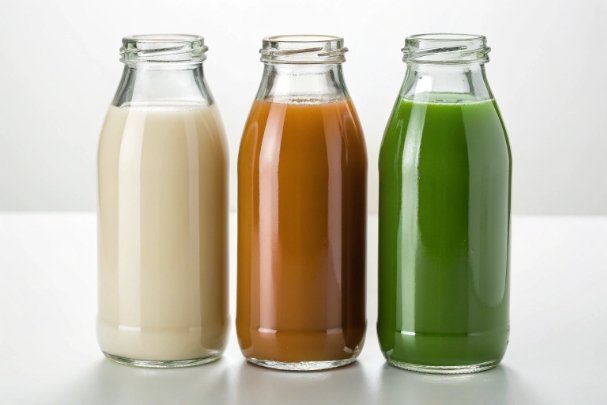
Chemical Resistance: A Tie
Chemically, there is virtually no difference in acid resistance between clear (flint), brown (amber), and green glass. They are all Soda-Lime-Silica bases.
- Flint: Standard for flavored waters and yogurts where color appeal is key.
- Amber: Contains Iron and Sulfur.
- Green: Contains Chrome.
None of these additives compromise the glass’s ability to withstand lactic acid.
The "Light Strike" Factor
For dairy-based lactic beverages (kefir, milk, drinkable yogurt), Light is the enemy.
Riboflavin 6 (Vitamin B2) in milk creates free radicals when exposed to blue/UV light. These radicals oxidize fats, creating a "cardboardy" or "burnt feather" taste within minutes.
- Amber Glass: Blocks 99% of UV and Blue light. It is the absolute best technical choice for preserving the flavor of lactic dairy drinks.
- Flint Glass: Offers zero protection. If you use clear glass for milk/yogurt, you must use a full-body shrink sleeve or store it in the dark (refrigerated sections).
Surface Treatments
- Sulfur Treatment (Internal): We often use this for pharmaceutical glass (Type II). It removes surface alkali. While not strictly necessary for lactic acid (which is mild), it provides an extra layer of insurance against any pH shift in very sensitive probiotic formulations.
- Siliconization: Rare for beverages, but used for high-end medical nutrition to ensure every drop drains out (hydrophobic).
Selection Guide
| Glass Type | Acid Resistance | Light Protection | Best Application |
|---|---|---|---|
| Flint (Clear) | Excellent | Poor | Fruit-based Lactic Drinks (Color is USP). |
| Amber (Brown) | Excellent | Superior | Dairy Kefir / Probiotics (Prevents oxidation). |
| Green | Excellent | Moderate | Niche Ferments / Historic look. |
| Opal (White) | Excellent | High | Premium Cosmetics / Some Yogurts. |
| Type II (Treated) | Superior | Varies | Medical / Infant Nutrition. |
If your product contains milk fat and riboflavin, Amber is the functional winner.
What Testing Methods Should Be Conducted to Ensure Safety?
You cannot rely on generic datasheets. You must validate the packaging system against the specific acidity and shelf-life requirements of your beverage.
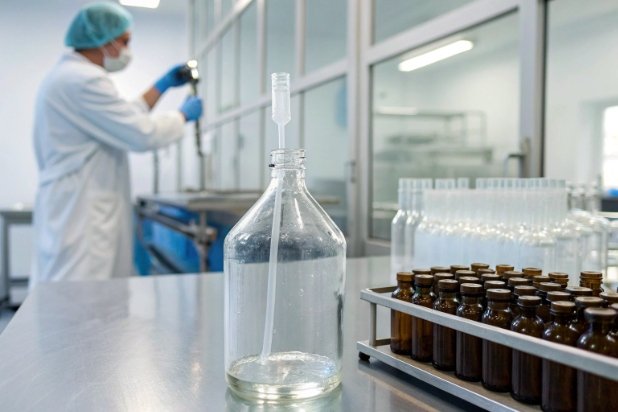
To ensure safety, manufacturers should conduct ISO 7086 migration tests (using acetic acid as a proxy), internal pressure testing for fermented products, and UV transmission tests if using amber glass to verify light protection.
Migration Testing: The Regulatory Proxy
There is no specific "Lactic Acid Migration Test" in global standards because Acetic Acid covers it.
- Standard: ISO 7086 / ASTM C738.
- Simulant: 4% Acetic Acid 7.
- Why: Acetic acid is more aggressive than lactic acid regarding metal leaching. If your bottle passes the test with acetic acid (Lead < 0.5 ppm), it is automatically safe for lactic acid.
- Frequency: Every production batch or annually.
Hydrolytic Resistance (ISO 4802)
This measures the glass quality.
- Method: Autoclave with water.
- Limit: Type III limit (< 15ml 0.01N HCl).
- Relevance: Confirms the glass surface is properly annealed and not "soft" (which would leach sodium).
Pressure Rating (Burst Test)
Critical for live ferments (Kombucha/Kefir).
- Method: ASTM C147. We pressurize the bottle until it breaks.
- Requirement: If you are carbonating, the bottle must withstand at least 12-16 Bar (internal pressure) depending on the carbonation volume. Standard "Still" bottles burst at ~6 Bar.
Light Transmission (USP <671>)
For Amber glass.
- Method: Spectrophotometer 8.
- Standard: Must block light between 290nm and 450nm (UV/Blue spectrum).
- Relevance: Ensures the "Amber" color is actually functional, not just painted on.
Buyer’s Testing Checklist
| Test Name | Target Parameter | Standard | Passing Criteria |
|---|---|---|---|
| Migration | Heavy Metals (Pb/Cd) | ISO 7086 | Pb < 0.5 mg/L |
| Burst Pressure | Carbonation Safety | ASTM C147 9 | > 1.5x Max Expected Pressure |
| Thermal Shock | Filling Safety | ASTM C149 10 | Delta T > 42°C |
| Light Transmission | UV Protection | USP <660> | < 10% transmission @ 290-450nm |
| Cap Liner Integrity | Acid Resistance | In-house | No swelling after 3 months. |
If you are bottling a live product, the Burst Test is more critical for safety than the Acid Test.
Conclusion
Lactic acid beverages find their perfect home in glass bottles. The material’s chemical inertness ensures no corrosion or leaching occurs. By selecting Amber glass to prevent light damage and conducting Pressure Tests for live ferments, you guarantee a safe, shelf-stable product that preserves the health benefits of your formulation.
Footnotes
-
An organic acid produced by fermentation, commonly found in dairy products and sour beers. ↩
-
The quality of a material or membrane that causes it to allow liquids or gases to pass through it. ↩
-
The absorption of flavor compounds by packaging materials, altering the taste of the food. ↩
-
The maximum stress that a material can withstand while being stretched or pulled before breaking. ↩
-
A mineral deposit found in dairy equipment caused by the precipitation of milk proteins and minerals. ↩
-
A vitamin (B2) found in food and used as a dietary supplement, sensitive to light degradation. ↩
-
The standard food simulant used in regulatory testing to mimic the leaching properties of acidic foods. ↩
-
A method to measure how much a chemical substance absorbs light by measuring the intensity of light as a beam passes through sample solution. ↩
-
Standard test methods for internal pressure strength of glass containers. ↩
-
Standard test method for thermal shock resistance of glass containers. ↩






