
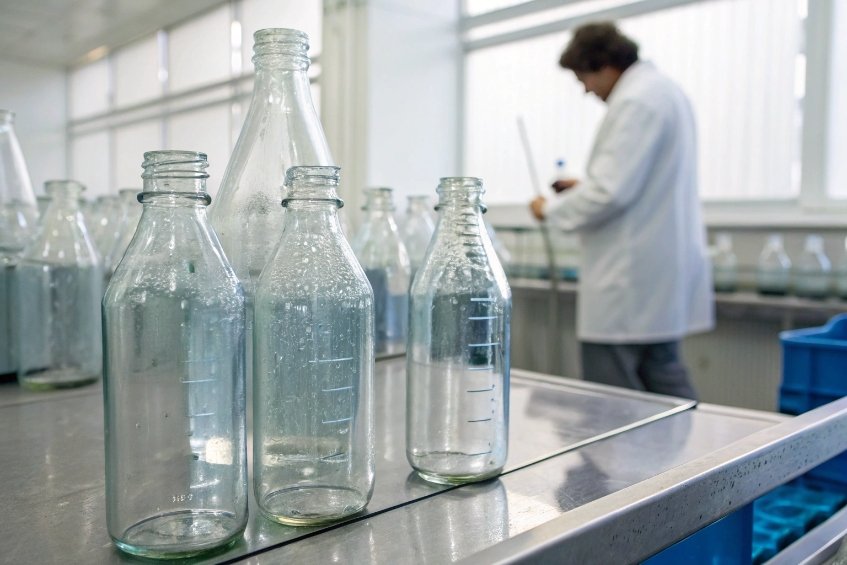
Pressure is one of the most important forces that a glass bottle must survive. Still beverages sit almost pressure-free. Carbonated products build strong internal forces, and temperature shifts push that pressure even higher. When you choose the right bottle, pressure becomes predictable. When you choose the wrong one, you get leaks, breakage, and safety risks.
Pressurized glass bottles can handle high internal forces when the design, weight, finish, and thermal limits match the carbonation level and temperature range. Still-beverage bottles cannot handle the same loads.
Pressure performance depends on the glass weight, wall distribution, punt geometry, annealing quality, finish type, and verification tests. Let us go through each factor clearly.
What pressure ratings do carbonated vs. still-beverage bottles require?
Still-beverage bottles work near zero gauge pressure. Carbonated beverages produce several bar of internal pressure even at room temperature.
Still bottles do not carry rated internal pressure. Carbonated bottles need to pass well above their service pressure, often 1.5× the highest expected value.
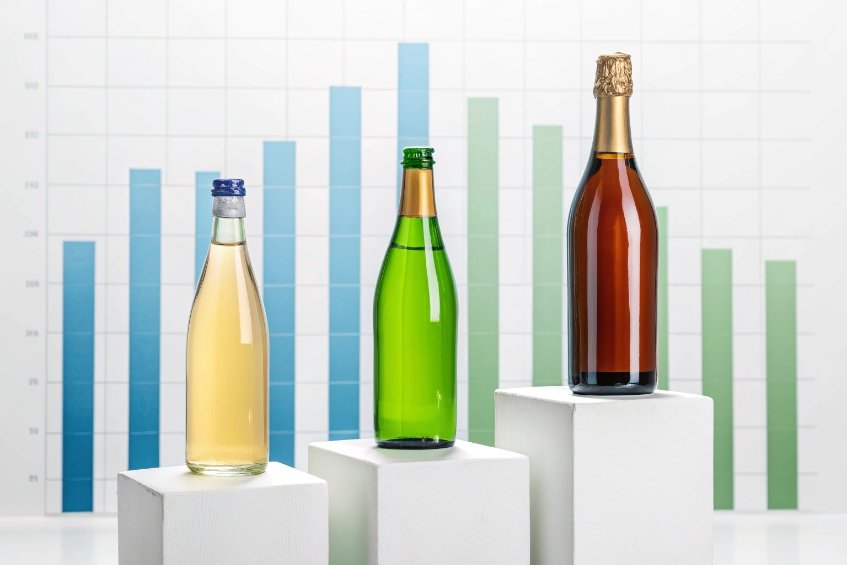
Typical ranges in real use
-
Still beverages
Still wines, juices, oils, vinegars, and spirits fill at ~0 bar (gauge). These bottles are not rated for carbonation. Any gas build-up (fermentation, spoilage, temperature rise) risks breakage. -
Carbonated soft drinks
Many soft drinks run around 2.7–4.7 bar at ~20–25°C. Carbonated bottles use stronger glass, controlled distribution, and pressure-rated finishes. -
Beer and cider
Many standard beer bottles are engineered around 2.5–3.5 bar in service. Requirements vary by market and packaging line. -
Champagne and sparkling wine
These sit at 5–6 bar in service. Sparkling bottles use heavier glass, deeper punts, and tighter annealing control. The weight may vary, but pressure rating stays high.
Why test values are higher than use values
Pressure tests on water-filled bottles usually aim at 50% above service pressure. This safety margin covers temperature swings, handling shocks, and minor defects—typically verified using standardized internal pressure resistance test methods like ISO 7458 1 and ASTM C147 2.
Pressure capability is not only about thick walls. It is about even walls, correct annealing, clean heels, and a stable punt.
How do temperature shifts change internal pressure safely?
Pressure inside a sealed bottle rises with temperature. A mild heat rise can double internal pressure in a carbonated product. This is why the same bottle behaves differently in warm warehouses vs. cold storage.
When temperature rises, internal gas pressure rises sharply. Good pressure-rated bottles must survive these swings without cracking.
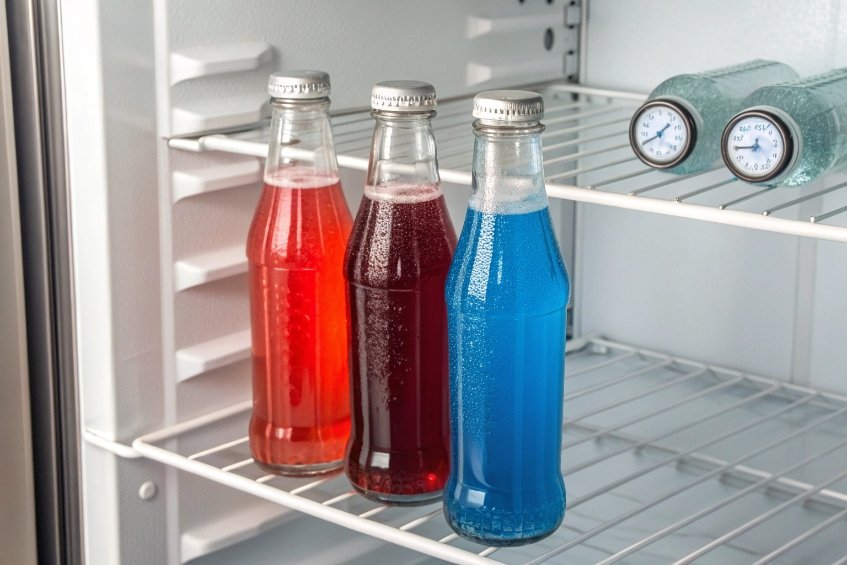
How temperature reshapes pressure
Carbonation pressure is temperature-sensitive. Roughly:
- A cold bottle (0–5°C) may show low pressure.
- The same bottle at 25°C can reach several bar more.
- At 35°C and above, internal pressure climbs fast into the danger zone if the bottle is not rated correctly.
If you need a practical reference for the CO₂/temperature effect, review a carbonation pressure–temperature relationship chart 3.
Even still beverages react to temperature:
- Hot filling, warm storage, or a closed trunk in summer can increase internal pressure.
- Spoilage fermentation inside a still bottle generates CO₂ and builds pressure unexpectedly.
Why proper annealing and wall distribution matter
A bottle with uneven walls or high residual stress can crack during a temperature rise even if the average pressure is below the rated value. Good annealing reduces this risk.
Safe practice for beverage producers
- Do not use still-wine bottles for carbonated drinks.
- Confirm the pressure rating for the hottest point in the supply chain.
- Use bottles tested with a margin above expected pressure at maximum temperature.
When should you choose returnable-grade or tempered bottles?
Returnable systems and harsh handling environments need stronger bottles. Some applications also use tempered or heat-strengthened glass for extreme conditions.
Choose returnable-grade bottles when you need repeated life cycles. Choose tempered or heat-strengthened bottles when you expect severe thermal or mechanical stress.
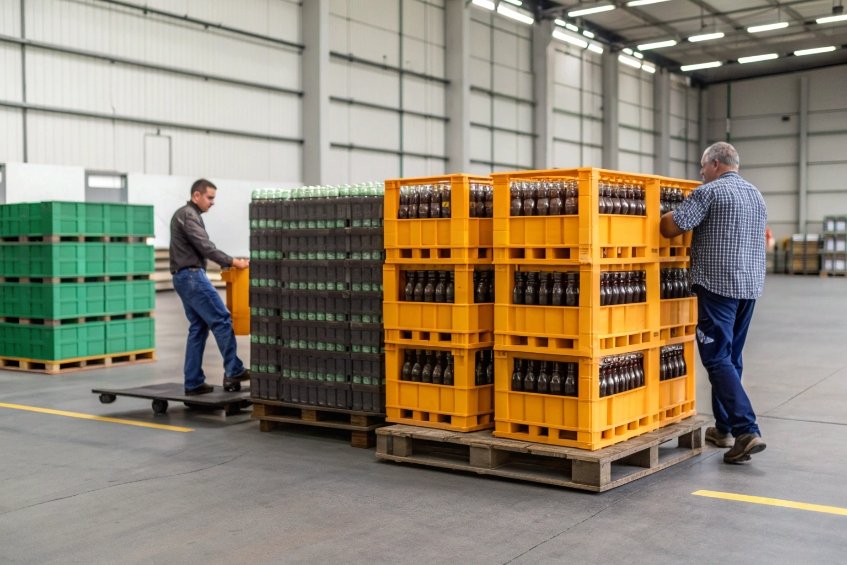
Returnable-grade bottles
Returnable bottles face:
- Repeated washing cycles
- Conveyor impact
- Crate-to-crate abrasion
- Aggressive caustic baths
To understand how wash chemistry and control extend re-use life, see guidance on returnable glass bottle washing efficiency 4.
They need:
- Heavier walls
- Stronger heels and shoulders
- Better coating systems
- Tight annealing control
Returnable beer bottles, for example, often tolerate impact and internal pressure better than one-way bottles because they use thicker, more robust designs.
Tempered or heat-strengthened bottles
Tempered glass creates a strong surface compressive layer. This improves resistance to impact and thermal shock.
Use tempered bottles when:
- The product faces high thermal shifts
- Industrial washing cycles are extreme
- Pasteurization or retort conditions push ΔT beyond ordinary limits (common in tunnel pasteuriser processing environments) 5
For a clear overview of how toughening changes break behavior, review toughened safety glass performance 6.
Tempered bottles break differently: they shatter into small pieces rather than large shards. This is safe for some applications but not suitable for many wine or premium spirits.
When not to use tempered glass
Tempered finishes cannot be reworked after forming. Engraving, grinding, or fire-polishing can break the surface layer. For premium wine and spirits with decorations, returnable-grade non-tempered glass with good annealing is usually preferred.
Do crown vs. screw-cap finishes affect pressure resistance?
The closure system changes how the top of the bottle handles pressure. A crown finish holds high pressure with a metal crimp. A screw-cap finish relies on thread strength and liner compression.
Crown finishes handle high pressure well because the crimped cap locks the glass and metal together. Screw-cap finishes also manage carbonated loads when built to the right standard.
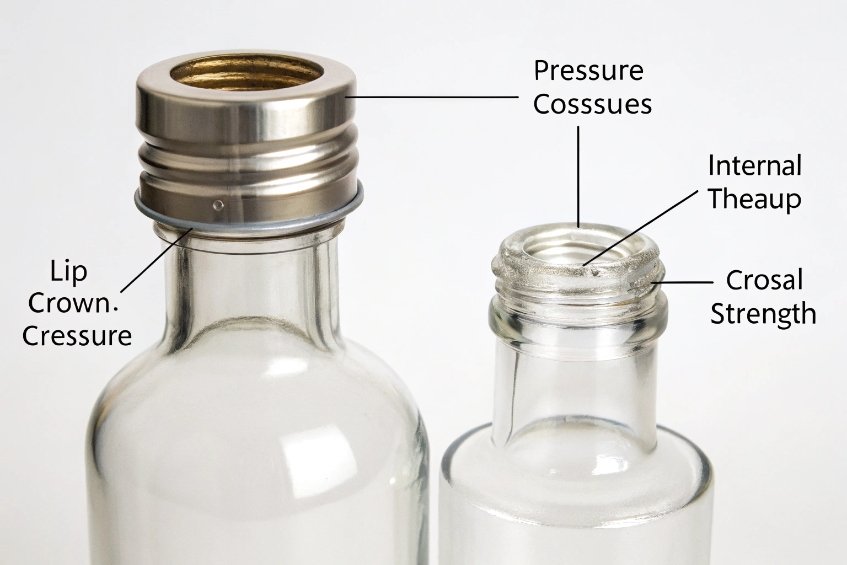
Crown finishes
Crowns are common for beer and some carbonated soft drinks. They support high pressure because:
- They create strong radial compression on the sealing ring
- They distribute load evenly around the finish
- They resist cap blow-off even at elevated pressures
For background on the closure style itself, see how a crown cork closure works 7.
Screw-cap finishes
Screw-cap designs also work well for many carbonated drinks when:
- The threads meet tight tolerances
- The glass finish (E, T, H dimensions) stays in spec
- The liner system is engineered for gas retention
A poor screw-cap finish leads to leak paths, even if the bottle walls can handle the pressure.
Finish strength vs. body strength
Most pressure failures occur at the heel or shoulder, not the finish. So while closure type matters, the internal pressure rating depends more on:
- Wall thickness distribution
- Quality of the heel radius
- Annealing uniformity
- Mechanical cleanliness (no checks, cracks, or stones)
Still, finish accuracy remains essential for full pressure performance.
Conclusion
A pressure-ready bottle is not only heavier. It is a balanced design: rated walls, controlled annealing, correct finish, and verified performance at the highest temperatures your product will face.
Footnotes
-
ISO method for glass container internal pressure resistance testing and definitions. ↩︎ ↩
-
ASTM test method reference for internal pressure resistance of glass containers. ↩︎ ↩
-
Quick chart showing how CO₂, temperature, and pressure relate in carbonated beverages. ↩︎ ↩
-
Tips on washer chemistry and process control for extending returnable bottle life. ↩︎ ↩
-
Practical context on tunnel pasteuriser conditions that stress bottles thermally and mechanically. ↩︎ ↩
-
Overview of toughened glass behavior and safety break pattern under stress. ↩︎ ↩
-
Explains crown cork closures and why they are widely used for pressurized beverages. ↩︎ ↩






