
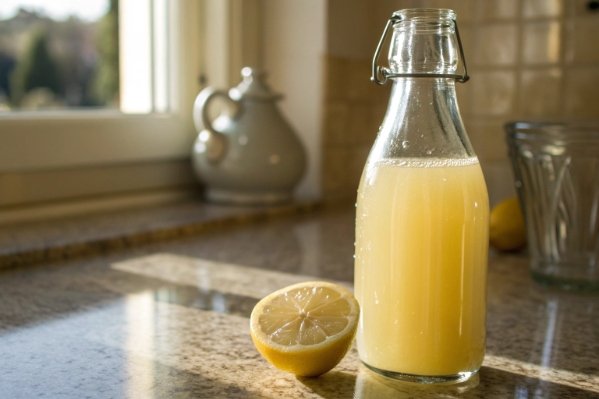
Manufacturers often worry that high-acid formulations will eat through packaging, causing leaks and contamination. Fortunately, glass provides an impermeable chemical fortress against organic acids.
No, citric acid cannot corrode, etch, or dissolve the silica structure of glass bottles; glass is chemically inert to organic acids, making it the safest storage medium for high-acid products like lemon juice and carbonated beverages.
Can Citric Acid Corrode Glass Bottles?
The Chemistry of Inertness
In my position at FuSenglass, dealing with clients from the beverage and cosmetic sectors, I frequently field questions about acidity. Whether it is a pH 2.5 lemonade or a concentrated Vitamin C serum, the fear is always the same: "Will the acid eat the bottle?"
The short answer is a definitive no. To understand why, we have to look at the chemistry. Glass is primarily Silicon Dioxide 1 ($SiO_2$). The silica network is incredibly stable. The only acid known to dissolve (corrode) silica at standard conditions is Hydrofluoric Acid (HF).
Citric Acid ($C_6H_8O_7$) is a weak organic acid. It lacks the chemical potential to break the silicon-oxygen bonds that hold the glass together. Even in its most concentrated powdered form or as a hot solution, citric acid simply cannot "digest" glass. When you see a glass bottle that looks cloudy after holding juice, it is almost never corrosion of the glass itself—it is usually residue, sediment, or in rare cases, a reaction with a low-quality coating, but the glass matrix remains intact.
The Phenomenon of Passivation
Interestingly, acidic environments can actually make the glass surface more stable over time. When an acidic liquid touches soda-lime glass, the hydrogen ions ($H^+$) in the acid swap places with the sodium ions ($Na^+$) on the glass surface.
Once the surface sodium is depleted, a silica-rich layer remains. This layer is even more resistant to acid than the original surface. This process is called "de-alkalization" or passivation 2. Essentially, the citric acid creates a shield that prevents further interaction. This is why we can find bottles of wine (containing tartaric and malic acids) that are over 100 years old with the glass in perfect condition.
Chemical Resistance Comparison
| Substance | Effect on Glass ($SiO_2$) | Visible Result | Risk Level |
|---|---|---|---|
| Citric Acid | Ion Exchange (Surface). | None (Stays Clear). | Zero (Structural). |
| Acetic Acid | Ion Exchange. | None. | Zero. |
| Hydrochloric Acid | Minor Leaching. | None. | Very Low. |
| Caustic Soda (Alkali) | Dissolution of Silica. | Etching / Haze. | High. |
| Hydrofluoric Acid | Rapid Dissolution. | Frosting / Holes. | Critical. |
While the glass is safe, we must explore if it is truly unaffected in other ways.
How Does Citric Acid Affect the Integrity of Glass Bottles?
While structural failure is impossible, you must distinguish between physical etching and chemical migration. Misunderstanding this difference can lead to regulatory compliance issues regarding heavy metals.
Citric acid does not cause physical etching or surface degradation; however, it can trigger the migration (leaching) of trace metals from the glass surface or decorative enamels via ion exchange.
Etching vs. Leaching: The Critical Distinction
It is vital to correct the terminology.
- Etching: This is the physical removal of glass material, creating a rough, frosted, or pitted surface. Citric acid does not etch glass. You could boil a flint bottle in citric acid for a month, and it would remain smooth and glossy.
- Leaching: This is the extraction of specific elements out of the glass while leaving the structure standing. Citric acid does facilitate leaching.
The Real Risk: Heavy Metal Migration
If the glass is of low quality (containing impurities) or if the bottle has external decorations (screen printing), citric acid acts as a solvent for metals.
- Mechanism: The acidity drives the release of Lead ($Pb$) or Cadmium ($Cd$) if they are present.
- Scenario: A painted label near the rim of the bottle. If the consumer drinks citric juice from the bottle, the acid contacts the paint. If the paint isn’t acid-resistant, the citric acid extracts the lead.
- Integrity: The bottle won’t break, but the product becomes contaminated.
Closure Corrosion
The most visible "damage" caused by citric acid is not to the bottle, but to the Cap.
Citric acid is corrosive to metals like steel and aluminum. If the bottle is stored upright and the liquid splashes, or if vapors condense, the acid attacks the metal closure.
- Result: Rust 3 forms on the threads. The consumer opens the bottle and sees brown residue on the glass rim. They assume the glass is corroding, but it is actually the cap dissolving onto the glass.
Integrity Impact Matrix
| Component | Citric Acid Impact | Mechanism | Visual Sign |
|---|---|---|---|
| Glass Wall | None. | Inertness. | Crystal Clear. |
| Glass Surface | De-alkalization. | Ion Exchange. | None (Microscopic). |
| Ceramic Label | Leaching. | Solvation of oxides. | Fading / Dullness. |
| Metal Cap | Corrosion. | Oxidation. | Rust stains on thread. |
| Plastic Liner | Swelling (Rare). | Absorption. | Cap tightens/loosens. |
The bottle is the strongest link in the chain; the cap and label are the weak points.
What Factors Increase the Likelihood of Citric Acid Corrosion?
Even though glass is resistant, extreme processing conditions can accelerate ion exchange. You need to know the operational limits to prevent exceeding regulatory migration thresholds.
Temperature is the primary accelerator; hot-filling citric beverages (>85°C) or retorting significantly increases the rate of ion exchange, whereas concentration and exposure time have minimal impact on the glass structure itself.
Temperature: The Kinetic Driver
The Arrhenius equation 4 dictates that chemical reaction rates increase with temperature.
- Cold Storage: At $4^{\circ}C$, the interaction between citric acid and glass is practically frozen.
- Hot Fill: Many juices are filled at $85^{\circ}C$ to pasteurize. During these few minutes of high heat, the rate of ion exchange (sodium leaching) spikes.
- Retort: Sterilizing bottles at $121^{\circ}C$ is the most aggressive condition. While the glass won’t etch, the water in the beverage becomes very aggressive, extracting surface alkali.
Concentration: The Non-Factor
Counter-intuitively, the concentration of citric acid matters little for glass.
- pH Effect: Whether the pH is 2.0 (Lime Juice) or 3.5 (Orange Juice), the glass behaves similarly. The abundance of hydrogen ions is sufficient in both cases to saturate the surface exchange sites.
- Comparison: A 50% citric acid solution is not significantly more damaging to glass than a 5% solution. This is unlike metals, where concentration drives corrosion rates linearly.
Exposure Time and Surface Area
- Time: Leaching is a diffusion-controlled process. It is fastest in the first few days and then slows down exponentially as the surface becomes depleted of sodium (passivated). A bottle stored for 2 years doesn’t have 200x the leaching of a bottle stored for 3 days; it plateaus.
- Surface-to-Volume: Small bottles (e.g., 50ml energy shots) have a high surface-to-volume ratio 5. This results in higher concentrations of leached ions in the beverage compared to a 1L bottle.
Factor Influence Table
| Factor | Condition | Impact on Glass | Consequence |
|---|---|---|---|
| Temperature | > $80^{\circ}C$ (Hot Fill) | High | Increased Sodium Leaching. |
| Time | > 12 Months | Low | Rate plateaus (Passivation). |
| Concentration | 1% vs 50% | Negligible | No difference in wear. |
| Agitation | Transport | Low | Refreshes surface boundary. |
| UV Light | Sunlight | None | Citric acid is UV stable. |
Heat is the only variable you really need to control to minimize migration.
Which Types of Glass Are More Resistant to Citric Acid Corrosion?
While all commercial glass resists citric acid, the purity of the formulation determines the safety margin. You must select the glass type based on your product’s sensitivity to pH shifts and leaching.
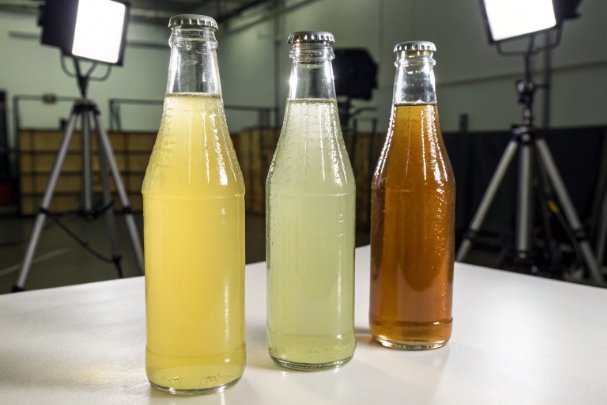
Type I Borosilicate glass is chemically superior with near-zero leaching; Type III Soda-Lime (Flint, Amber, Green) is the industry standard and fully resistant to citric acid, though surface treatments can further minimize alkali release.
Type I: Borosilicate (The Gold Standard)
- Composition: Contains Boron Oxide 6.
- Citric Resistance: Absolute.
- Leaching: Minimal. Because it has very low sodium content, there is almost nothing for the citric acid to extract.
- Use Case: Laboratory reagents, injectable drugs, and ultra-premium functional beverages where zero pH shift is tolerated.
Type III: Soda-Lime (The Industry Workhorse)
- Composition: Silica, Soda, Lime.
- Citric Resistance: Excellent structural resistance.
- Leaching: Releases small amounts of Sodium and Calcium.
- Colors:
- Flint (Clear): Standard for juices.
- Amber: Contains Iron/Sulfur. Excellent for UV protection (Vitamin C protection).
- Green: Contains Chromium.
- Note: The colorants (Iron/Chrome) are locked in the matrix. Citric acid does not extract them in meaningful quantities from modern glass.
Surface Treatments: De-alkalization
To make Type III glass perform like Type I, we use Sulfur Treatment (Ammonium Sulfate) at the hot end.
- Process: The sulfur gas reacts with the surface sodium while the bottle is hot, forming a "bloom" that is washed away.
- Result: The inner surface is stripped of sodium. When citric acid enters, there is no sodium left to exchange.
- Benefit: This prevents the slight pH rise that can occur in very mild acidic beverages stored in standard glass.
Resistance Hierarchy
| Glass Type | Acid Resistance (DIN 12116) | Leaching Risk | Best For |
|---|---|---|---|
| Type I Borosilicate | Class S1 (Best) | None. | Pharma / Concentrates. |
| Type II (Treated) | Class S1 / S2 | Very Low. | Infusions / Sensitive Juice. |
| Type III Flint | Class S2 | Low (Na/Ca). | Lemonade / Soda. |
| Type III Amber | Class S2 | Low (Trace Fe). | Vit C Drinks / Cider. |
| Lead Crystal | Fail | High (Pb) | NEVER USE for Citric Acid. |
Standard Type III glass is perfectly adequate for 99% of citric acid beverages.
How Can Manufacturers Test the Resistance of Glass Bottles to Citric Acid?
You cannot assume compliance; you must verify it. Using standardized acid-resistance protocols ensures your bottles meet global safety regulations.
Manufacturers verify resistance using DIN 12116 for structural acid durability and ISO 7086 (using Acetic Acid as a proxy) to test for heavy metal migration, ensuring the glass does not leach toxins under acidic conditions.
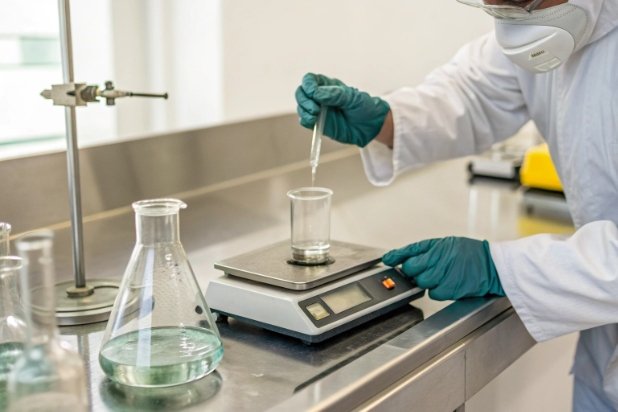
The Structural Test: DIN 12116
This is an extreme stress test used to classify the glass material.
- Method: A sample of the glass is boiled in 6N Hydrochloric Acid (far stronger than citric) for 6 hours.
- Measurement: We weigh the glass before and after. We calculate the weight loss in $mg/dm^2$.
- Result: If the glass survives boiling HCl with minimal weight loss, it is guaranteed to withstand room-temperature citric acid forever.
The Migration Test: ISO 7086 (The Proxy)
We rarely test with citric acid directly because Acetic Acid (4%) is the globally accepted regulatory proxy for all acidic foods.
- Method: Fill the bottle with 4% Acetic Acid. Store for 24 hours at $22^{\circ}C$.
- Analysis: Use ICP-MS 7 to measure Lead and Cadmium levels in the acid.
- Logic: If the bottle passes with Acetic Acid, it is legally and chemically considered safe for Citric Acid, Malic Acid, and Tartaric Acid.
The Alkali Release Test: ISO 4802
Since citric acid acts via ion exchange, we measure how much ion exchange is possible.
- Method: Autoclave the bottle with water at $121^{\circ}C$.
- Measurement: Titrate the water to see how much alkali released.
- Relevance: A bottle with low water leaching (Type II) will also have low interaction with citric acid.
Testing Protocol Summary
| Test Standard | Simulant | Condition | Purpose |
|---|---|---|---|
| DIN 12116 | 6N HCl 8 | Boiling (6hrs) | Structural Acid Class (S1-S4). |
| ISO 7086 | 4% Acetic Acid 9 | 24hrs @ 22°C | Heavy Metal Safety (Pb/Cd). |
| ISO 4802 | Water | 121°C Autoclave | Hydrolytic Resistance 10. |
| Sensory Test | Actual Product | 3 Months @ 40°C | Taste/Flavor Scalping check. |
If your supplier provides a passing ISO 7086 report, your citric acid product is safe.
Conclusion
Citric acid poses no threat to the structural integrity of glass bottles. By choosing Type III Soda-Lime glass (Flint or Amber) and ensuring it is certified lead-free via ISO 7086, you can safely package high-acid beverages without fear of corrosion or contamination.
Footnotes
-
A chemical compound that is the main constituent of sand and glass. ↩
-
A process used to reduce the chemical reactivity of a surface. ↩
-
An iron oxide formed by the reaction of iron and oxygen in the presence of water or air moisture. ↩
-
A formula that describes the temperature dependence of reaction rates. ↩
-
The amount of surface area per unit volume of an object or collection of objects. ↩
-
An inorganic compound used as a raw material in borosilicate glass. ↩
-
A type of mass spectrometry capable of detecting metals at very low concentrations. ↩
-
A strong, corrosive acid used in laboratory testing for glass resistance. ↩
-
The standard food simulant used in regulatory testing to mimic acidic foods. ↩
-
The resistance of glass to the leaching of alkali ions by water. ↩






