
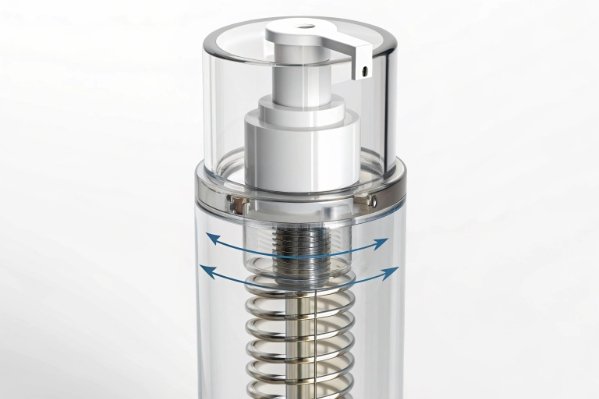
A stuck pump or a rust-colored serum is a consumer’s nightmare, often caused by the invisible chemical war happening inside the dispenser mechanism.
Yes, acids and alkalis can severely corrode pump springs. Since the spring is often submerged in the product, aggressive pH levels or chloride ions attack the metal, leading to rust, pitting, and mechanical failure, which contaminates the product and renders the dispenser useless.
The Hidden Engine of the Dispenser
The pump is the heart of the packaging, and the spring is its muscle. At FuSenglass, we emphasize that while the glass bottle is chemically inert, the dispensing system is a complex machine containing various materials—plastic, rubber, and crucially, metal.
In standard "atmospheric" pumps, the spring is located inside the dosing chamber. This means it is constantly bathed in your product. If that product is a salicylic acid toner, a sea-salt spray, or a high-pH soap, you are essentially conducting a 24/7 corrosion test on that tiny coil of wire.
When the spring corrodes, two things happen. First, the mechanical action fails; the spring loses its tension or breaks due to stress corrosion cracking 1, causing the pump to stick down. Second, and perhaps worse for your brand, metal ions (iron oxides) leach into the bulk liquid. This turns your pristine clear lotion into a brown, metallic-smelling mess.
Anatomy of a Corrosion Failure
| Component | Role | Corrosion Impact | Result |
|---|---|---|---|
| The Spring | Return force | Pitting / Rust / Snap | Pump stays down; Product turns brown. |
| The Ball Valve | Flow control | Surface erosion | Leaking; Loss of prime. |
| The Piston | Pressure generation | Abrasive wear from rust | Gritty feel; stuck mechanism. |
| The Housing | Containment | Swelling (if plastic) | Jamming of the corroded spring. |
Let’s explore the materials and designs that prevent this disaster.
Which pump spring materials (304/316 stainless steel, 17-7PH, Hastelloy, plastic springs) perform best in acidic or alkaline formulas?
Selecting the right alloy is the difference between a functional product and a recall, as standard steels cannot withstand aggressive formulations.
For aggressive formulas, Metal-Free (Plastic) springs or external spring designs are superior. Among metals, 316 Stainless Steel offers better resistance than standard 304, while Hastelloy is reserved for extreme medical-grade applications. Standard 304 Steel often fails in high-salt or low-pH environments.
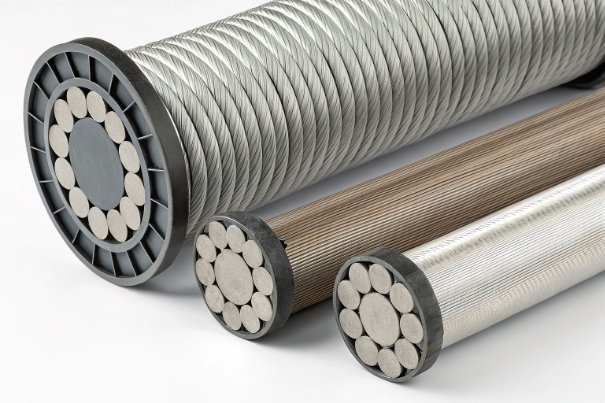
The Hierarchy of Metallurgy
In the packaging industry, cost often dictates material choice, but "cheap" can be expensive in the long run.
SUS 304 (The Standard):
This is the default for 90% of cosmetic pumps. It is resistant to water and mild soaps. However, it has limited resistance to chlorides (salts). If your product contains sea salt 2 or harsh acids, 304 will pit and rust.
SUS 316 / 316L (The Upgrade):
This contains Molybdenum, which drastically improves resistance to chlorides and acids. For premium skincare lines containing AHAs 3 or BHAs, we strongly advise upgrading to 316. It costs more, but it buys peace of mind.
Hastelloy / Titanium (The Overkill):
These are virtually immune to corrosion but are cost-prohibitive for consumer goods. You typically only see Hastelloy 4 components in pharmaceutical dosing pumps.
Plastic / External Springs (The Solution):
The ultimate winner is a design where the spring is not metal, or not in the liquid. Plastic springs (using elastomer technology) eliminate the risk entirely.
Material Performance Matrix
| Material | Cost | Acid Resistance | Salt/Chloride Resistance | Best Application |
|---|---|---|---|---|
| SUS 304 | Low | Moderate | Low | Standard Hand Soap, Lotion. |
| SUS 316 | Medium | High | High | Facial Serums, Acids, Saline. |
| Hastelloy | Very High | Excellent | Excellent | Pharma, Strong Chemicals. |
| Plastic/External | Medium | Immune | Immune | Whitening creams, Peels, Sea Salt sprays. |
What chemical conditions (pH, chlorides, oxidizers, salt content, temperature) most commonly cause pump spring rust, pitting, or stress corrosion?
It is not just about pH; the presence of salts and temperature fluctuations creates a perfect storm for metal degradation.
Chloride ions (found in salt) combined with acidic pH (< 4) are the deadliest triggers for "Pitting Corrosion" in stainless steel. Additionally, oxidizers (like Peroxide) and high storage temperatures accelerate "Stress Corrosion Cracking," causing springs to snap unexpectedly.
The Chemistry of Destruction
At FuSenglass, we have seen pumps fail even with neutral pH products because the ingredients were incompatible with the steel grade.
The Chloride Factor (Pitting):
Stainless steel relies on a thin "passive film" of chromium oxide to protect itself. Chloride ions (from Sodium Chloride, Magnesium Chloride, etc.) are small enough to penetrate this film. They create tiny pits that burrow deep into the wire. Once a pit forms, it becomes an autocatalytic 5 cell—it eats the metal from the inside out. If your product claims "Ocean Minerals" or "Saline," 304 steel is a high risk.
Acid + Stress (Cracking):
Springs are under constant tension (stress). When you add an acidic environment (low pH), you risk Stress Corrosion Cracking (SCC). The metal doesn’t dissolve; it just snaps. This is sudden and catastrophic.
Oxidizers:
Ingredients like Hydrogen Peroxide 6 or certain whitening agents are oxidizers. They can destabilize the protective layer of the steel, leading to general surface rusting (rouge).
Corrosion Trigger Table
| Condition | Mechanism | Visual Symptom | Failure Type |
|---|---|---|---|
| High Salt (Chlorides) | Breakdown of Passive Layer | Tiny black pits | Pitting Corrosion 7 (Rust leakage). |
| Low pH (< 3.0) | Hydrogen Embrittlement | Clean fracture of wire | Stress Cracking (Spring snap). |
| High pH (> 10.0) | Caustic Attack | General surface dulling | General Corrosion (Sludge). |
| High Temp (> 40°C) | Reaction Acceleration | Rapid rusting | Accelerated aging. |
How can you prevent spring corrosion through pump design choices (spring isolation, coating, material upgrades, liner selection)?
The most effective way to stop corrosion is to remove the metal from the equation entirely through smart engineering.
The best prevention is using "External Spring" pump designs where the metal spring stays outside the fluid path. Alternatively, specifying 316L steel or applying passivation treatments can mitigate risks in standard internal-spring pumps.
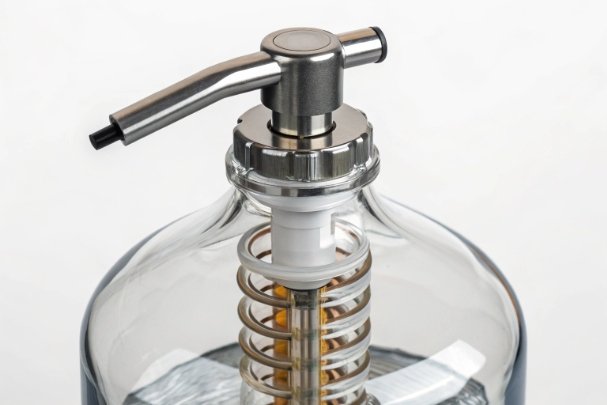
Engineering Out the Problem
We always ask clients: "Why fight chemistry when you can avoid it?"
1. External Spring Technology (The Golden Standard):
In these modern pumps, the spring is located in the upper head or outside the dosing cylinder. The product flows through a separate channel. The spring never touches the liquid. This allows you to use cheaper steel (or carbon steel) for the spring without any risk of corrosion or contamination. It is the ultimate fix for aggressive formulas.
2. Passivation and Electropolishing:
If you must use an internal spring, insist on Passivation. This is an acid bath treatment during manufacturing that removes free iron from the surface and boosts the chromium oxide layer. Electropolishing 8 further smooths the surface, removing microscopic crevices where corrosion initiates.
3. Material Upgrades:
As mentioned, simply moving from 304 to 316 steel 9 is a robust fix for mild to moderate corrosives.
4. Coated Springs:
Some manufacturers offer Teflon-coated springs. While effective in theory, the coating can chip during the repetitive compression of pumping, creating a failure point. We generally prefer External Springs over coated ones.
Design Solution Matrix
| Design Choice | Pros | Cons | Recommended For |
|---|---|---|---|
| External Spring | 100% Corrosion Proof; No contact. | Slightly higher mold complexity/cost. | ALL aggressive/premium products. |
| Internal 316L | Better resistance; Standard dimensions. | Still vulnerable to extreme conditions. | Moderate acids/salts. |
| Passivation | Improves surface protection. | Added process step/cost. | Standard products needing extra safety. |
| Metal-Free Pump | All plastic/elastomer spring. | Highly recyclable; Chemical inertness. | Eco-friendly brands; Acids. |
What compatibility tests and acceptance criteria should buyers require to validate pump spring durability for acidic/alkaline products?
You cannot rely on a supplier’s datasheet; you must validate the pump with your specific bulk formulation.
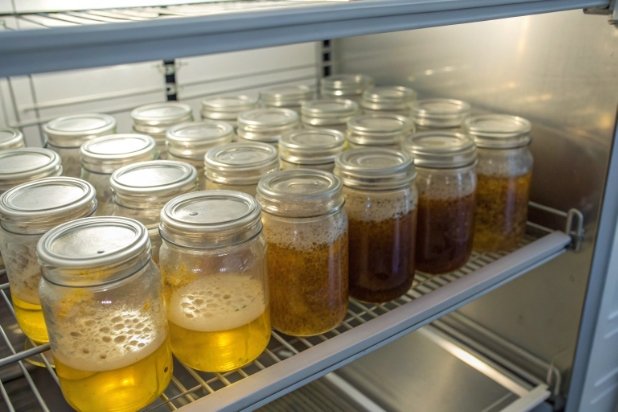
Buyers must mandate a 30-day "Soak Test" with the spring submerged in the bulk product at 45°C. Acceptance criteria should be zero visible rust, no discoloration of the liquid, and less than 10% loss in spring force (tension).
The Validation Protocol
At FuSenglass, we facilitate these tests for our clients. A pump that works with water might fail with toner in 2 weeks.
1. The Immersion (Soak) Test:
Disassemble the pump. Take the spring and submerge it in a glass jar filled with your final bulk product. Place it in an oven at 45°C (accelerated aging).
- Check at 7, 14, 30 days.
- Look for: Red rust precipitating at the bottom, black spots on the wire, or the liquid changing color (e.g., clear turning yellow).
2. The "Pump-Down" Storage Test:
Store filled bottles with the pump primed and depressed (locked down). This keeps the spring under maximum stress while submerged. This is the hardest test for Stress Corrosion Cracking. If the spring snaps, the pump head will not pop up when unlocked.
3. Functional Cycle Test:
After soaking, reassemble and test the actuation. Does it feel gritty? That indicates rust particles in the cylinder. Does it stick? That indicates spring fatigue.
Testing Checklist
| Test | Method | Pass Criteria |
|---|---|---|
| 30-Day Soak | Spring submerged in product @ 45°C. | No Rust, No Pitting, Liquid Clear. |
| Stress Test | Spring compressed in product @ 45°C. | No Fracture (Snapping). |
| Function Check | 50 actuations after aging. | Smooth return; No sticking. |
| Iron Leaching | Chemical analysis 10 of fluid. | Fe content < 1 ppm increase. |
Conclusion
A rusty spring is a brand killer. By choosing External Spring designs or upgrading to 316L steel, you ensure that your dispenser remains as pure and functional as the product inside it.
Footnotes
-
A failure mechanism in metals caused by the combined effect of tensile stress and a corrosive environment. ↩
-
Sodium chloride harvested from seawater, often containing impurities that accelerate corrosion. ↩
-
Water-soluble acids derived from fruits, widely used in anti-aging skincare products. ↩
-
A nickel-molybdenum-chromium superalloy with excellent corrosion resistance in harsh chemical environments. ↩
-
A chemical reaction where a product of the reaction acts as a catalyst for the reaction itself. ↩
-
A chemical compound used as an oxidizer, bleaching agent, and antiseptic. ↩
-
Localized corrosion that leads to the creation of small holes in the metal. ↩
-
An electrochemical process that removes material from a metallic workpiece to reduce surface roughness. ↩
-
An austenitic chromium-nickel stainless steel containing molybdenum, increasing corrosion resistance. ↩
-
Analytical techniques used to detect and quantify trace metals in a sample. ↩






