
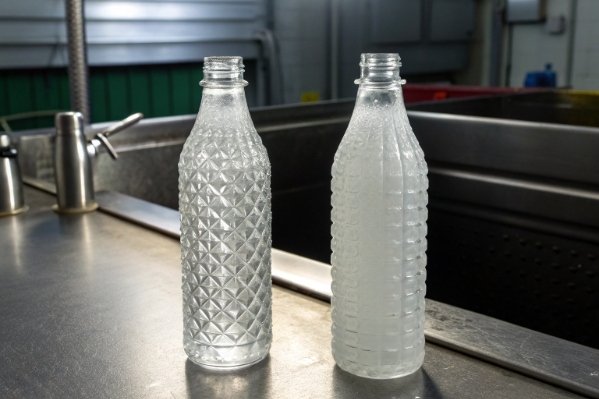
Discovering that your sparkling clear glass inventory has turned cloudy after cleaning is a manufacturing nightmare. While acid washing is a standard hygiene procedure, selecting the wrong chemical can permanently damage the glass matrix.
Yes, acid washing can cause a frosted or hazy surface if Hydrofluoric Acid (HF) or fluoride-based compounds are used. Unlike standard mineral acids, HF chemically dissolves silica, creating a rough, etched texture that scatters light and results in permanent irreversible frosting.
Can Acid Washing Cause a Frosted or Hazy Surface on Glass Bottles?
The Double-Edged Sword of Acid Cleaning
In the glass industry, we often use acid. We use it to polish molds, neutralize alkaline residues, and remove stubborn mineral scales. However, there is a massive misconception that "glass is inert to acid." As an expert witness to many production failures, I have seen entire batches of premium flint bottles ruined—turned into "frosted" ware unintentionally—because a cleaning crew used an off-the-shelf industrial cleaner containing fluorides.
Generally, Type I and Type III glass are highly resistant to standard mineral acids like Hydrochloric (HCl), Sulfuric ($H_2SO_4$), and Nitric ($HNO_3$) acid. You could soak a bottle in these for days with little effect. The "frosting" phenomenon is almost exclusively the result of Silica Attack. This occurs when an acid breaks the silicon-oxygen bonds that form the backbone of the glass. The result is not a deposit on the glass, but the removal of glass itself, leaving a microscopically pitted surface that creates a white haze.
The Mechanism of Haze Formation
When we talk about "haze," we are talking about light scattering. A smooth glass surface allows light to pass through directly (transparency). An etched surface is like a microscopic mountain range. When light hits these peaks and valleys, it scatters in all directions, which our eyes perceive as "white" or "frosted."
This is desirable for decorative "frosted glass" 1 (which we sell as a premium finish), but it is a disaster if you wanted clear glass. The chemical reaction is immediate and permanent. Once the silica is dissolved, you cannot polish it back to clarity without removing a significant amount of material, which weakens the bottle.
Glass-Acid Interaction Overview
| Factor | Standard Cleaning Acid (HCl/HNO3) | Etching Acid (HF/Fluorides) |
|---|---|---|
| Target Material | Mineral deposits, alkali residues. | The Glass Structure ($SiO_2$). |
| Visual Effect | Restores clarity (removes bloom). | Creates opacity/Haze. |
| Surface Texture | Remains smooth. | Becomes rough/pitted. |
| Reversibility | N/A (Cleaning process). | Irreversible Damage. |
| Reaction Time | Slow/Negligible on glass. | Instantaneous. |
Understanding this distinction protects your inventory from accidental destruction.
Why Can Acid Washing Etch Glass and Create a Frosted Look?
The science behind glass etching is specific; it requires a chemical agent capable of destabilizing the robust silica network. You need to understand why most acids clean, but one specific group destroys.
Acid washing etches glass because Hydrofluoric Acid (HF) releases fluoride ions that attack the silicon dioxide ($SiO_2$) network, forming Silicon Tetrafluoride gas ($SiF_4$); this chemical dissolution creates microscopic pits that scatter light, appearing as frost.

The Silica Dissolution Reaction
Glass is essentially a network of Silicon and Oxygen atoms. It is incredibly stable. Standard acids (like vinegar or muriatic acid) simply donate Hydrogen ions 2 ($H^+$). The silica network ignores these.
However, Hydrofluoric Acid (HF) is unique. The Fluorine atom has a voracious appetite for Silicon. The reaction looks like this:
$$SiO_2 + 4HF \rightarrow SiF_4 (gas) + 2H_2O$$
The glass literally turns into gas and water. This reaction doesn’t happen evenly. It attacks surface imperfections first, digging "pits." As millions of these pits form, the surface loses its smoothness.
Why "Cleaners" Cause Damage
The problem arises because HF and its cousin, Ammonium Bifluoride, are excellent at cleaning heavy rust and brightening aluminum. Many "Heavy Duty Industrial Cleaners" sold for general factory maintenance contain these fluorides.
If a maintenance team uses an "Aluminum Wheel Cleaner" 3 or a "Rust Remover" to wash glass bottles, they are unknowingly applying an etching agent. The frosting is not a residue; it is a scar.
Surface Roughness and Light
The "frosted look" is purely optical.
- Smooth Glass: Roughness ($Ra$) < 0.01 microns. Light passes through.
- Etched Glass: Roughness ($Ra$) > 1.0 microns. Light scatters.
The deeper the etch (longer contact time), the whiter and more opaque the bottle becomes.
The Chemistry of Destruction
| Component | Role in Etching | Outcome |
|---|---|---|
| Silicon Dioxide ($SiO_2$) | The Victim (Glass Matrix). | Dissolves. |
| Hydrogen Ion ($H^+$) | The Catalyst. | Weakens the surface. |
| Fluoride Ion ($F^-$) | The Attacker. | Bonds with Si to form $SiF_4$. |
| Reaction Product | Silicon Tetrafluoride 4. | Gas escapes, leaving a void (pit). |
| Result | Surface Pitting. | Haze / Frost. |
If you see frosting, you haven’t just washed the bottle; you’ve chemically altered it.
Which Acids and Process Conditions Are Most Likely to Cause Frosting?
Not all acids are enemies, but mixing high temperatures with the wrong chemical cocktail creates a high-risk environment. You must identify the specific agents and conditions that trigger etching.
Hydrofluoric Acid (HF) and Ammonium Bifluoride cause immediate frosting at any temperature; however, even "safe" acids like Phosphoric Acid can cause mild etching or hazing if used at high concentrations (>85%) and high temperatures (>100°C) for prolonged periods.
The Primary Offender: HF and Fluorides
- Hydrofluoric Acid (HF): The undisputed king of etching. Even at dilute concentrations (1%), it will cloud glass within seconds.
- Ammonium Bifluoride (ABF): Often found in powdered cleaning agents. It is safer to handle than liquid HF but becomes HF when mixed with water. It causes a "soft frost" or satin finish.
The Secondary Risks: Phosphoric and Strong Alkalis
While we are discussing acids, it is worth noting:
- Phosphoric Acid: generally safe and used to remove beer stone 5. However, at extreme temperatures (boiling) and high concentrations, it can attack silica. This is rare in bottle washing but possible in chemical processing.
- "Alkaline" Frosting: Ironically, strong bases (Caustic Soda) attack glass faster than most acids. If you mix up your tanks and soak bottles in hot, concentrated NaOH thinking it’s an acid wash, you will get a "hazy" etch that looks very similar to acid frosting.
Critical Process Variables
- Concentration: HF etches at 1%. Phosphoric requires >85%.
- Temperature: Heat accelerates the reaction. A solution that is safe at 20°C might etch at 80°C.
- Contact Time: Etching is cumulative. A 5-second dip might leave a light haze (looks like dirt), while a 5-minute soak creates a solid white frost.
Acid Risk Profile
| Acid Name | Common Use | Frosting Risk | Conditions for Frosting |
|---|---|---|---|
| Hydrofluoric (HF) | Etching, Aluminum clean | Extreme | Immediate, even cold/dilute. |
| Ammonium Bifluoride | Rust stain removal | High | Immediate upon dissolution. |
| Phosphoric ($H_3PO_4$) | Scale removal | Low | Boiling temp + High Conc. |
| Hydrochloric (HCl) | pH adjustment | None | Safe for glass. |
| Nitric ($HNO_3$) | Passivation 6 | None | Safe for glass. |
| Sulfuric ($H_2SO_4$) | Chrome cleaning | Very Low | Safe unless anhydrous & hot. |
Know your chemicals. If the label says "Fluoride," keep it away from your glass unless you want decoration.
How Can Manufacturers Prevent Unwanted Frosting While Still Removing Stains?
Effective cleaning requires selecting chemicals that target the soil, not the substrate. You can maintain a pristine surface by substituting hazardous fluorides with safer mineral or organic acids.
Manufacturers can prevent frosting by strictly prohibiting fluoride-containing cleaners, using safe alternatives like Nitric or Citric acid for scale removal, and strictly monitoring temperature and dwell time during any acid treatment.
Substitution: The Best Defense
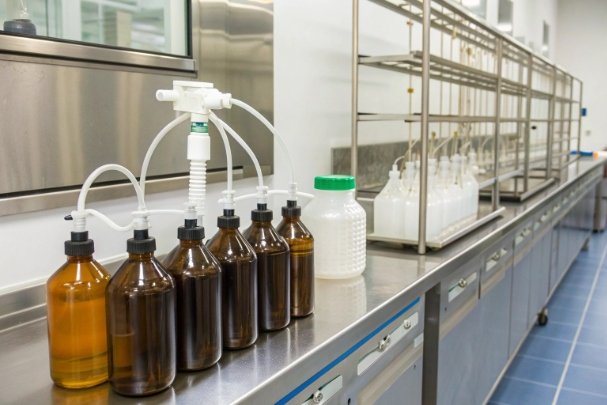
The simplest way to prevent HF etching is to ban HF from the cleaning line.
- For Mineral Scale (Calcium/Lime): Use Dilute Hydrochloric Acid (Muriatic) or Sulfamic Acid. These dissolve the calcium carbonate 7 instantly but cannot touch the silica glass.
- For Rust: Use Oxalic Acid or Citric Acid. These chelate the iron without damaging the glass surface.
- For Organic Residue: Use alkaline cleaners or solvents, not acids.
Process Control Strategies
If you must use aggressive chemicals (perhaps for mold maintenance):
- Dilution Control: Automated dosing ensures you never inadvertently use a concentrate that could damage the surface.
- Temperature Limits: Keep acid baths below 50°C unless necessary.
- Immediate Rinsing: The longer acid sits, the more risk. Implement a high-pressure fresh water rinse immediately after the acid zone.
Protecting the "Heel"
Often, acid residue collects at the bottom (heel) of the bottle if the draining is poor. This can cause a ring of haze at the bottom.
- Solution: Ensure bottle carriers invert the bottles 180 degrees for full drainage before they dry.
Prevention Protocol
| Residue Type | Risky Cleaner (Do Not Use) | Safe Alternative | Why it Works |
|---|---|---|---|
| Hard Water Scale | HF / Strong Phosphoric | Nitric / Citric Acid | Dissolves Calcium, safe on Silica. |
| Rust Stains | ABF (Bifluoride) | Oxalic Acid | Chelates Iron, no etching. |
| Mold / Algae | Chromic Acid | Sodium Hypochlorite | Bleaches mold, no glass attack. |
| Silica Scale | Hydrofluoric Acid | High pH Caustic | Note: Only caustic removes silica scale. |
By using chemistry that is "Glass-Safe," you eliminate the risk of accidental decoration.
What Inspection Methods and Acceptance Specs Should Buyers Use?
Haze can be subtle, appearing only under specific lighting conditions. You need rigorous optical testing to ensure your "clear" bottles haven’t been compromised by aggressive washing.
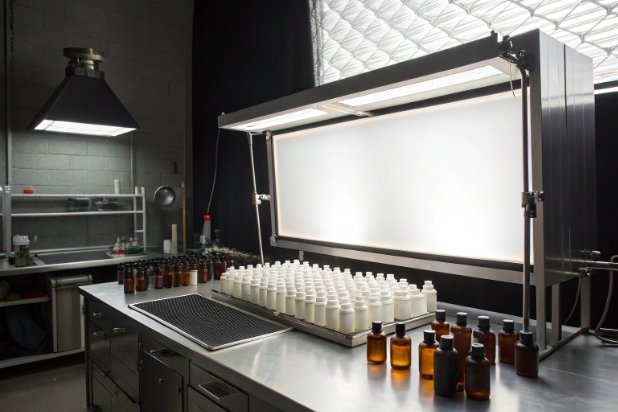
Buyers should inspect for haze using high-intensity backlighting (Tyndall effect), measure opacity using ASTM D1003 Haze Meters, and set strict acceptance limits (e.g., <2% Haze) to ensure optical clarity.
Visual Inspection: The Black Background
The quickest way to detect slight etching is the "Black/White" test.
- Method: Hold the bottle against a matte black background with strong side lighting.
- What to look for: Etching appears as a milky white cast or "fog" that doesn’t wipe off. If it wipes off, it’s residue. If it stays, it’s etching.
- The "Fingerprint" Test: Etched glass captures oils. If you touch the hazy spot and your fingerprint stays visible and dark (wetting the etch), the surface is physically roughened.
Quantitative Measurement: ASTM D1003
For B2B disputes, "it looks cloudy" isn’t enough. You need data.
- Tool: Haze Meter 8 / Spectrophotometer.
- Metric: % Haze. This measures the percentage of light that scatters more than 2.5 degrees from the incident beam.
- Standard: Premium Flint glass should have < 1.0% to 1.5% Haze. Anything above 2-3% is visibly cloudy and should be rejected.
Surface Roughness (Ra)
For pharmaceutical investigations, we measure the surface topography.
- Tool: Stylus Profilometer 9 or Atomic Force Microscopy (AFM).
- Metric: Ra (Average Roughness).
- Limit: Standard glass is incredibly smooth (Ra < 10 nm). If Ra spikes to > 100 nm, etching has occurred.
QC Acceptance Criteria
| Defect Type | Inspection Method | Acceptance Limit | Corrective Action |
|---|---|---|---|
| Visible Haze | Visual (1000 lux) | None Visible at arm’s length. | Reject batch; Check wash chems. |
| Optical Haze | Haze Meter | < 1.5% | Re-calibrate wash concentration. |
| Surface Pitting | Microscopy (50x) | No visible micro-pits. | Stop production; purge HF sources. |
| Residue vs Etch | Acetone Wipe | Must disappear if residue. | If persists, classify as Etch. |
Implementing these specs ensures that you pay for transparent glass, not accidental frosted ware.
Conclusion
Acid washing is a powerful tool for hygiene, but it carries the risk of permanent surface etching if Hydrofluoric Acid or fluorides are introduced. By strictly managing chemical selection and enforcing Haze % specifications, you can ensure your glass remains crystal clear and commercially viable.
Footnotes
-
Glass produced by sandblasting or acid etching, rendering it translucent but not transparent. ↩
-
The nucleus of a hydrogen atom separated from its accompanying electron, critical in acid-base chemistry. ↩
-
Specialized cleaners formulated to remove brake dust and road grime from aluminum wheels. ↩
-
A chemical compound formed when silicon dioxide reacts with hydrofluoric acid. ↩
-
A mineral deposit of calcium oxalate that builds up on brewing equipment. ↩
-
A process to remove free iron from the surface of stainless steel to enhance corrosion resistance. ↩
-
A chemical compound found in rocks and shells, causing water hardness and scale. ↩
-
Standard test method for haze and luminous transmittance of transparent plastics. ↩
-
An instrument used to measure the surface roughness of a material. ↩






