
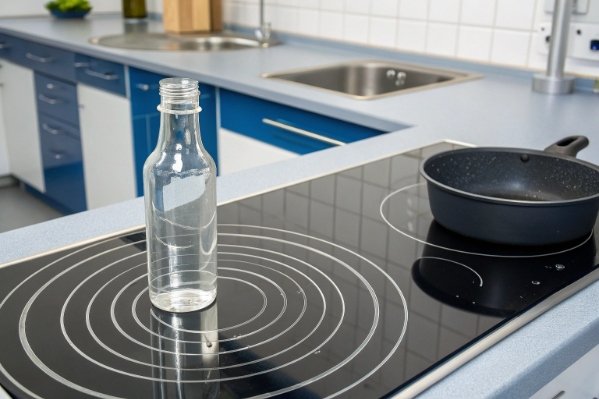
This is a common question in both experimental kitchens and small-scale laboratories, but the answer is rooted firmly in electromagnetism.
No, a glass bottle cannot be heated directly on an induction cooktop. Induction technology relies on magnetic fields to induce electrical currents in ferromagnetic metals. Since glass is a dielectric insulator and non-magnetic, it is completely invisible to the induction field and will remain cold.
The Physics Mismatch
At FuSenglass, we sometimes see clients trying to repurpose glass containers for heating applications they weren’t designed for. Induction is the most dangerous mismatch.
An induction coil 1 creates a fluctuating magnetic field. If you place a cast-iron skillet on it, the field creates "eddy currents" 2 inside the iron. Electrical resistance turns these currents into heat.
Glass, however, has no free electrons to carry this current. The magnetic field passes right through the bottle as if it weren’t there. The only way to heat glass on an induction stove is to place a piece of metal (an interface disk) between the stove and the bottle. But be warned: this transforms the safe, cool induction surface into a high-risk "hot plate" scenario that threatens the structural integrity of the glass.
Why doesn’t induction heat glass directly, and what breakage risks come from indirect hotspot heating?
Since glass is an electrical insulator, it generates no heat from the magnetic field. The danger lies in using a metal adapter plate, which turns the efficient induction surface into a crude conductive heater.
Indirect heating via a metal adapter plate creates severe "Hotspots." Since glass is a poor thermal conductor, the base of the bottle touching the hot metal expands rapidly while the sidewalls remain cool. This extreme thermal gradient generates tensile stress at the heel, leading to catastrophic "thermal shock" breakage.
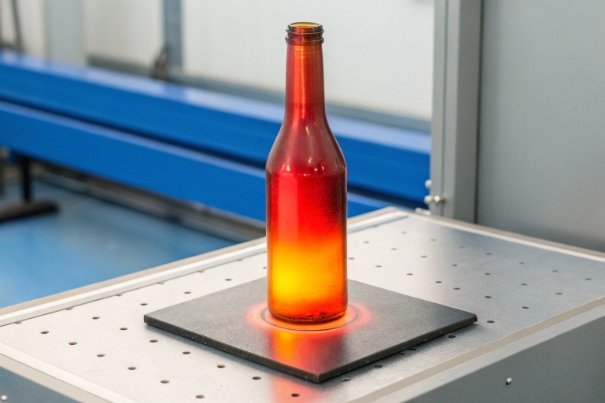
The "Ring of Fire" Effect
When you place a glass bottle on a hot metal plate (heated by induction), you are relying on Conduction.
-
The Problem: Glass conducts heat 100 times slower than aluminum.
-
The Scenario: The metal plate hits 200°C in seconds. The bottom 1mm of the glass bottle heats up instantly and expands. The rest of the bottle (even 10mm up the wall) is still at room temperature.
-
The Break: The expanding base tries to tear away from the rigid, cold walls. The bottle snaps in a perfect circle around the bottom (a "circumferential crack").
This is unlike a water bath, where the water wraps around the bottle and heats it gently and evenly from all sides.
When is an induction adapter plate acceptable, and what temperature limits and ramp-up rules reduce cracking?
Using an adapter plate is only a viable strategy if you are using laboratory-grade materials that can handle the stress.
An induction adapter is acceptable ONLY if the vessel is made of Borosilicate glass (Pyrex). For standard Soda-Lime bottles, this method is highly unsafe unless power is kept below 200W with a very slow ramp-up (5°C/min) to allow heat to dissipate up the walls.
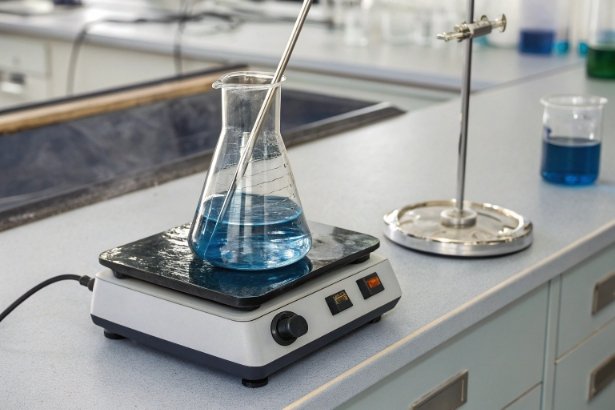
Safe Operating Protocols
If you absolutely must heat a bottle this way (e.g., for a small batch cosmetic melt), follow these strict rules:
1. Material Check:
-
Borosilicate: Safe. It has low expansion ($3.3 \times 10^{-6}$) and can handle the hotspot.
-
Soda-Lime (Standard): Unsafe. High expansion ($9.0 \times 10^{-6}$). Avoid unless temperature is < 50°C.
2. The "Low and Slow" Rule:
Induction cooktops are powerful. "Medium" might pulse 1000W of power.
-
Setting: Use "Keep Warm" or the lowest numerical setting (PWM Low).
-
Buffer: Place a silicone baking mat between the adapter plate and the glass (if temp < 200°C) to slow down the heat transfer 3 slightly.
3. Stirring is Mandatory:
A thick liquid (like wax or syrup) inside the bottle acts as an insulator. The glass gets hot, but the liquid stays cold.
- Action: Constant stirring ensures the liquid pulls heat away from the glass surface, reducing the thermal gradient.
Which bottle base designs (flatness, thickness, punt depth) are most likely to fail on cooktop heating?
The geometry of a standard bottle is designed for stability on a shelf, not heat transfer on a stove.
Bottles with a "Push-Up" (Punt) or recessed base are most likely to fail because they have limited contact area. The "Heel" (outer ring) becomes the only point of contact with the hot plate, creating a concentrated stress zone ("Ring Stress") that snaps the base off. Conversely, thick bases fail due to thermal lag.
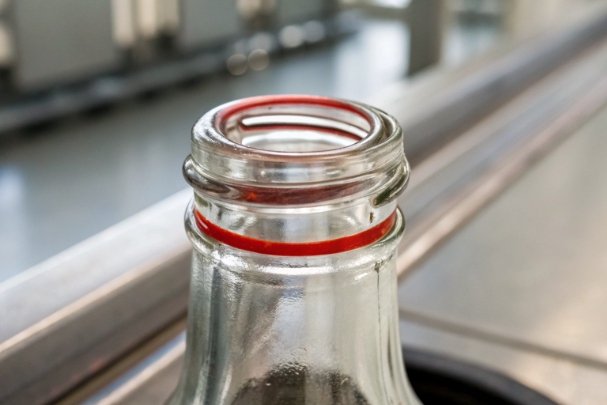
The Geometry of Failure
1. The Punt Problem (Air Gap):
Most bottles have a concave bottom. When placed on a flat plate, only the outer rim touches.
- Result: The rim gets superheated. The center of the base (suspended in air) stays cooler. The expansion difference between the rim and the center shatters the base.
2. Uneven Flatness:
Glass bottles are not machined flat like steel pots. They have mold seams and slight wobbles.
- Result: "Hotspots." The bottle touches the plate at three tiny points. These points get scorching hot ($\Delta T$ spikes), while the rest is cold. Crack initiation starts here.
3. Thick Base (Heavy Bottom):
As discussed in previous posts, a thick base is an insulator.
- Result: The bottom surface expands, the core stays cold. Thick perfume-style bottles will shear horizontally if placed on a heat source.
What safer industrial alternatives meet heating needs without direct induction contact (water bath, steam, hot plate)?
If you need to heat product inside a glass container, you must use a method that surrounds the glass with a uniform temperature medium.
The safest industrial alternatives are "Water Baths" (Bain-Marie) or "Double Boiler" systems, which cap the temperature at 100°C and provide omnidirectional heating. For dry heat, "Hot Air Tunnels" or "Jacketed Kettles" (heating the liquid before filling) are the standard for glass safety.
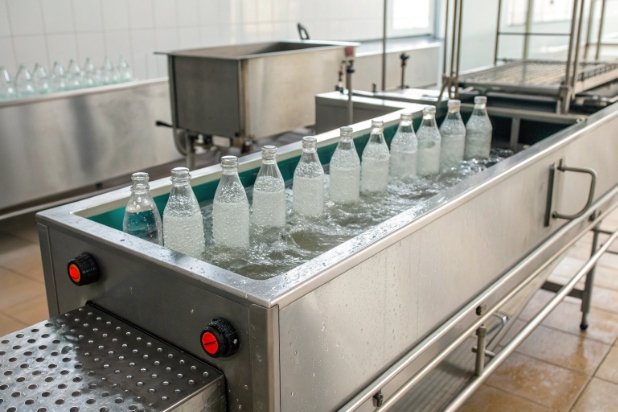
Better Ways to Heat
1. Water Bath (The Gold Standard):
Place the bottle in water. Heat the water.
- Why: Water contacts the wall and the base. Heat transfer is uniform. The temp cannot exceed 100°C (safe for soda-lime). The water acts as a thermal buffer.
2. Pre-Fill Heating:
Don’t heat the bottle. Heat the bulk liquid in a stainless steel kettle, then hot-fill it into a pre-warmed bottle.
- Why: This is how factories do it. It is faster, safer, and more energy-efficient.
3. Bottle Warmers (Air/Steam):
For viscosity reduction (e.g., honey), use a warm air cabinet.
- Why: Air has low thermal conductivity 4, so it heats the glass slowly and gently, preventing shock.
Heating Method Safety Matrix
| Method | Safety Level | Efficiency | Suitability |
|---|---|---|---|
| Direct Induction | Zero | N/A | Impossible (Glass is insulator). |
| Induction + Adapter | Low (Risky) | High | Borosilicate Labware ONLY. |
| Water Bath | High | Medium | All Glass Types. |
| Hot Air Oven | High | Low (Slow) | Bulk Warming / Viscosity. |
| Microwave | Medium | High | Safe IF cap is removed & glass is uniform. |
Conclusion
Induction cooktops are for steel pots, not glass bottles. Attempting to bypass this with adapter plates on standard glass is a recipe for breakage. Stick to water baths or pre-fill heating to keep your product safe and your production floor clean.
Footnotes
-
A coil of wire used to create an electromagnetic field in induction heating systems. ↩
-
Loops of electrical current induced within conductors by a changing magnetic field. ↩
-
The exchange of thermal energy between physical systems. ↩
-
The property of a material to conduct heat; glass has very low conductivity. ↩






