
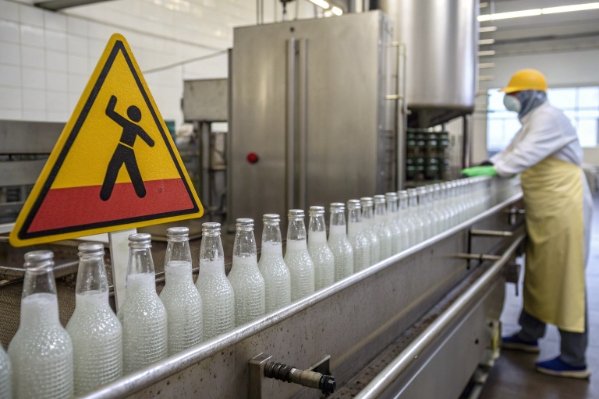
Using the wrong chemical in your washing line can turn crystal-clear inventory into opaque scrap in seconds. Fluoride-based cleaners are chemically designed to destroy glass, not clean it.
Fluoride-containing agents, particularly Hydrofluoric Acid (HF) and Ammonium Bifluoride, pose an extreme risk to glass bottles. They chemically dissolve the silica matrix, causing immediate permanent frosting, loss of structural integrity, and hazardous chemical residues. They should generally be banned from standard glass cleaning protocols.
The Chemistry of Destruction
As the face of FuSenglass, I often have to play the role of a chemistry teacher to save my clients from disastrous decisions. When we talk about cleaning glass, we usually worry about alkaline attack (slow etching) or thermal shock. However, fluoride is in a league of its own. It is the only chemical species that aggressively dissolves the silica ($SiO_2$) network at room temperature and acidic pH.
The reaction is swift and violent on a molecular level. Hydrofluoric acid 1 (HF) reacts with the silicon dioxide in the glass to form Silicon Tetrafluoride ($SiF_4$), a gas, or Hexafluorosilicic acid ($H_2SiF_6$), which is soluble in water. In layman’s terms: the cleaner doesn’t just strip the dirt; it strips the glass itself.
$SiO_2 + 4HF \rightarrow SiF_4 + 2H_2O$
In the glass industry, we actually use fluorides intentionally—to create "acid-etched" or frosted bottles. We charge extra for this finish! But when this happens accidentally during a cleaning cycle, it ruins the optical properties of the glass. A clear vodka bottle meant to sparkle on a backlit shelf will look dull, greasy, or smoky.
Furthermore, the danger isn’t just aesthetic. By dissolving the surface, fluorides strip away the "skin" of the glass, opening up microscopic flaws (Griffith flaws 2). This drastically reduces the bottle’s ability to withstand internal pressure (for carbonated drinks) or vertical load (during capping). Using a fluoride cleaner is effectively sabotaging the strength of your packaging.
Why Would Anyone Use Them?
You might ask, "Fei, if it eats glass, why is it in the plant?" Fluoride-based cleaners are often found in industrial settings for:
- Rust Removal: They are incredibly effective at removing rust stains from machinery or molds.
- Aluminum Brightening: Used often in the trucking or canning industry.
- Mineral Scale Removal: They dissolve silica scale that other acids can’t touch.
The problem arises when a maintenance manager grabs the "Heavy Duty Scale Remover" to clean a batch of recycled glass bottles, not realizing it contains Ammonium Bifluoride.
| Feature | Standard Acid Cleaner (e.g., Phosphoric) | Fluoride-Based Cleaner (e.g., HF/ABF) |
|---|---|---|
| Target | Mineral deposits, calcium, rust. | Silica, tough oxides, aluminum. |
| Glass Reaction | Inert (Glass is safe). | Reacts/Dissolves Glass. |
| Surface Effect | Cleans surface; leaves gloss intact. | Etches surface; creates matte/frost finish. |
| Safety Risk | Moderate (Skin irritation). | Extreme (Bone damage, systemic toxicity). |
| Outcome | Clean Bottle. | Ruined/Frosted Bottle. |
Understanding exactly which chemicals are the culprits is the first step in auditing your cleaning supplies.
Which fluoride chemicals can attack glass bottles, and why?
Not all acids are enemies, but any compound releasing fluoride ions is a direct threat. Identifying these specific ingredients on Safety Data Sheets (SDS) is critical for preventing accidental glass corrosion.
Hydrofluoric Acid (HF), Ammonium Bifluoride (ABF), and Fluorosilicic Acid are the primary aggressors. They release free fluoride ions ($F^-$) in acidic solutions, which specifically target and break the silicon-oxygen bonds that hold glass together, liquefying the surface structure.
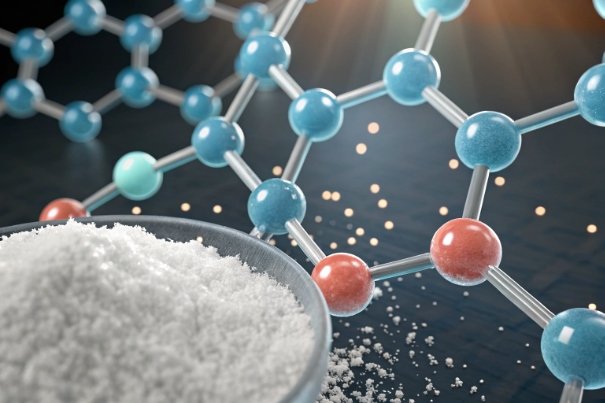
The "Big Three" Glass Eaters
In my experience consulting for filling lines, I have identified three specific compounds that often sneak into cleaning formulations.
- Hydrofluoric Acid (HF): The most direct threat. Even at low concentrations (1-2%), it attacks glass instantly. It is legally restricted in many consumer products but is common in industrial "brick cleaners" or "wheel acids." It is a weak acid by dissociation standards but a strong destroyer of silicates.
- Ammonium Bifluoride (ABF): This is a salt that acts as a precursor. It is safer to handle than liquid HF, so it’s popular in powdered cleaning agents. However, once dissolved in water, it hydrolyzes to form Hydrofluoric Acid. Many users are tricked by the name, thinking it is just "ammonium," but it is a glass-etching agent in disguise.
- Fluorosilicic Acid (Hydrofluorosilicic Acid): Often used in water fluoridation 3 or metal processing. While slightly less aggressive than pure HF, it still promotes silica dissolution, especially if the pH drops.
The Mechanism of Attack
Why glass? Glass is essentially a network of Silicon and Oxygen. Most acids (Sulfuric, Hydrochloric, Nitric) act on the cations (Sodium, Calcium) in the glass but leave the Silica network alone. They might leach out some sodium (causing a rainbow effect over years), but they don’t destroy the structure.
Fluoride is unique because of its electronegativity 4 and small size. The Fluoride ion ($F^-$) has a frighteningly high affinity for Silicon ($Si$). It displaces the Oxygen atoms. This breaks the structural backbone of the bottle. Imagine a brick wall where the mortar suddenly turns into water—that is what fluoride does to the glass surface.
Hidden Sources
These chemicals rarely say "Glass Destroyer" on the label. They are often marketed as:
- "Mag Wheel Cleaner" (for cars).
- "Heavy Duty Rust Stain Remover."
- "HVAC Coil Brightener."
- "Facade Cleaner" (for masonry).
If any of these make their way into your bottle washer, your production run is doomed.
| Chemical Name | Common Alias / Usage | Reactivity with Glass | Warning Sign on Label |
|---|---|---|---|
| Hydrofluoric Acid | HF, Hydrogen Fluoride | Violent / Instant | Fatal if swallowed/skin contact. |
| Ammonium Bifluoride | ABF 5, Ammonium acid fluoride | High (upon dilution) | Corrosive, Toxic. |
| Fluorosilicic Acid | Sand Acid, HFS | High | Corrosive. |
| Sodium Fluoride | NaF (in acidic solution) | Moderate | Toxic. |
So, if these chemicals touch your bottles, what does the damage actually look like?
What typical defects can fluoride cleaners cause on glass bottles?
Damage from fluoride is rarely subtle. It ranges from a loss of premium gloss to catastrophic structural failure, manifesting as permanent haze that no amount of polishing can fix.
Fluoride exposure causes irreversible surface etching, manifesting as uniform frosting or patchy haze. It reduces optical transmission and significantly lowers the glass’s mechanical strength by widening microscopic surface flaws, leading to increased breakage during filling and capping.
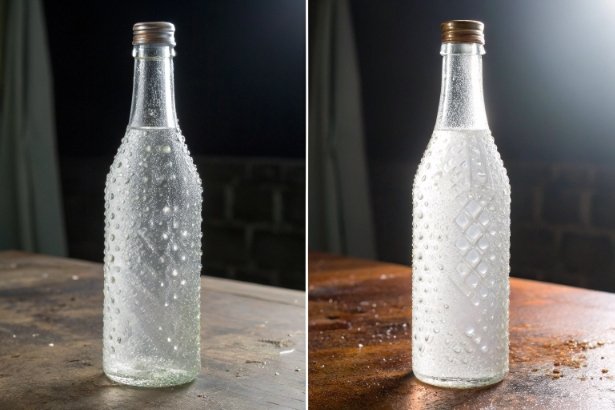
Visual Defects: The "Fog" of Death
The most immediate sign of fluoride attack is a change in light transmission.
- Iridescence (Early Stage): At very low concentrations or short contact times, you might see an "oil slick" rainbow effect. This is the beginning of the silica layer being altered.
- Haze / Frosting (Late Stage): As the attack progresses, the surface becomes microscopically rough. Light scatters. The bottle looks like it was frosted for decoration, but unevenly. It looks "dirty" but cannot be wiped clean.
- Water Spotting: Because the smooth surface is gone, water clings to the rough etched areas, leading to severe drying spots that are physically pitted into the glass.
Structural Integrity: The Silent Killer
This is the aspect that keeps me up at night. A glass bottle’s strength is almost entirely determined by the condition of its surface. A pristine bottle is incredibly strong. A scratched bottle is weak.
Fluoride acts like a "chemical sandpaper." It deepens existing micro-cracks (Griffith flaws).
- Burst Pressure Drop: For carbonated beverages or sparkling wines, the internal pressure can blow the bottle apart if the surface integrity is compromised.
- Thermal Shock Failure: During pasteurization, etched bottles are far more likely to crack when moving from cold to hot zones.
- Finish Damage: The sealing surface (the mouth of the bottle) is critical. If fluoride etches the top rim, the cap gasket may not seal properly, leading to leakage or spoilage (oxidation) of the product.
Inspection Methods
How do you confirm fluoride damage versus just dirty glass?
- The "Wipe Test": Apply a drop of oil or water to the hazy spot. If the haze disappears while wet but reappears instantly upon drying, it is physical etching (surface roughness), not a surface stain.
- Tactile Test: Severe fluoride etching feels rough or "draggy" to the fingernail, unlike smooth glass.
- Microscopy: Under a standard microscope (50x), fluoride damage looks like a lunar landscape with sharp peaks and valleys, whereas alkali damage looks more like gentle waves.
| Defect Type | Appearance | Cause (Fluoride Mechanism) | Impact on Production |
|---|---|---|---|
| Flash Haze | Slight milkiness | Rapid surface silica conversion. | Cosmetic rejection. |
| Deep Etch | Opaque white/frosted | Prolonged contact destroying matrix. | Total scrap; Label adhesion failure. |
| Finish Pitting | Rough sealing surface | Acid pooling on the rim. | Leakers; Cap torque failure. |
| Embrittlement | Invisible micro-cracks | Deepening of surface flaws. | Exploding bottles on line. |
Is there any safe way to use these cleaners? Let’s look at the limits.
What limits help reduce fluoride-cleaner damage during bottle washing?
There is no truly "safe" limit for fluoride on finished glass; avoiding it is the only guarantee. However, understanding the thresholds of damage can help in forensic analysis or emergency stain removal.
To prevent visible etching, fluoride concentration must be kept below 20 ppm, with contact times under 30 seconds. Acidic pH accelerates the attack, while lower temperatures retard it. In practice, zero exposure is the only safe standard for glossy glass.
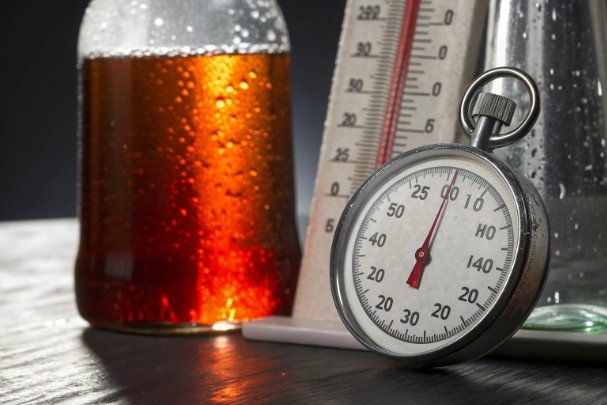
The Zero-Tolerance Policy
At FuSenglass, our official recommendation for cleaning finished glassware is 0% Fluoride. The risk-to-reward ratio is simply too high. However, in scenarios where a specific fluoride-based treatment is used (e.g., to remove polymerized silica scale from a tank where bottles are processed), unintended exposure happens.
Concentration Thresholds
Research and field experience show that the human eye detects haze very quickly.
- > 1% HF: Instant frosting. Visible within seconds.
- 0.1% (1000 ppm): Visible etching within 1 minute.
- < 20 ppm: Generally the threshold where short-term exposure might not be visible to the naked eye, though microscopic damage still occurs.
If your city water contains fluoride (usually ~1 ppm), this is safe. The danger comes from cleaning chemicals where concentrations are thousands of times higher.
The pH Factor
Fluoride activity is heavily pH-dependent. The species that attacks glass is $HF$ (molecular), not $F^-$ (ionic).
- Low pH (< 3): Most dangerous. In acidic solutions, fluoride exists as HF, which penetrates the glass network.
- Neutral/High pH (> 7): Safer. In alkaline solutions, fluoride exists as ions. While alkalis attack glass too (as discussed previously), the specific rapid fluoride attack is suppressed because the HF molecule isn’t formed.
- Caveat: Using Ammonium Bifluoride releases HF even if you don’t add extra acid, creating its own acidic environment locally.
Temperature and Time
- Temperature: Like all reactions, heat catalyzes destruction. Keeping solutions cold (ambient or below 20°C) slows the etching rate. Hot fluoride solutions (>50°C) are essentially glass milling machines.
- Contact Time: If you splash a fluoride cleaner on a bottle, you have seconds to rinse it off. "Soaking" is not an option.
| Parameter | Safe Zone (No Visible Damage) | High Risk Zone (Hazing Likely) | Critical Zone (Structural Loss) |
|---|---|---|---|
| Concentration | < 10 ppm | 50 – 500 ppm | > 0.5% (5000 ppm) |
| pH Level | > pH 7 | pH 4 – 6 | pH < 3 |
| Temperature | < 25°C | 30°C – 50°C | > 60°C |
| Contact Time | Instant Rinse | < 1 Minute | > 2 Minutes |
Since fluoride is so dangerous, what should you be using instead?
What safer alternatives and compliance controls should buyers require?
Protecting your workforce and the environment is just as critical as protecting the glass. Replacing toxic fluorides with safer acids and enforcing strict vendor compliance ensures a sustainable supply chain.
Replace fluoride cleaners with phosphoric or sulfamic acid blends for mineral scale, and alkaline surfactants for organic soils. Buyers must demand Safety Data Sheets (SDS) verifying "Fluoride-Free" status and ensure wastewater systems can handle alternative acid loads.
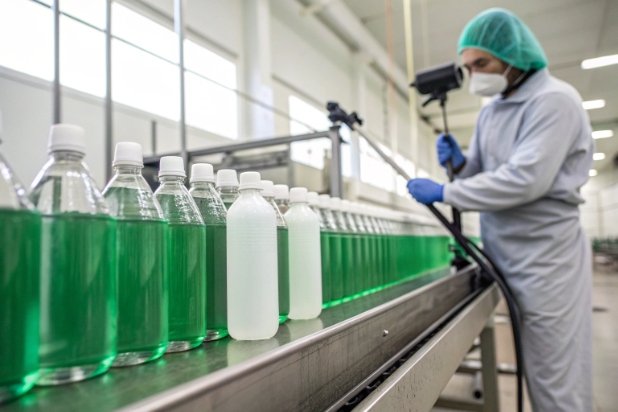
Smart Chemical Substitution
You don’t need fluoride to clean a bottle. For every cleaning task, there is a glass-safe alternative.
- For Mineral/Hard Water Scale: Use Phosphoric Acid or Nitric Acid. These dissolve calcium and magnesium deposits effectively but are chemically inert to the silica glass matrix.
- For Rust: Use Oxalic Acid or Citric Acid (chelated 6). They bind iron specifically without attacking the glass.
- For Organics/Oils: Use Caustic Soda (NaOH) or Potassium Hydroxide (KOH) (with the controls mentioned in my previous blog) or enzymatic cleaners 7.
Regulatory and Safety Compliance
Fluoride is not just a glass killer; it is a people killer. Hydrofluoric acid penetrates the skin and attacks bone calcium, leading to cardiac arrest. It is one of the most feared chemicals in industrial safety.
- Worker Safety: Eliminating fluoride removes the need for calcium gluconate 8 antidote kits and extreme PPE protocols in your washing area.
- Wastewater Limits: Environmental agencies regulate fluoride discharge strictly (often <10-20 ppm). HF-based cleaners put a massive load on your effluent treatment plant, requiring expensive precipitation with lime.
Coating Compatibility
Many FuSenglass bottles come with organic coatings (soft-touch, UV sprays). Fluorides can undercut these coatings, causing peeling.
- Buyer Requirement: When issuing a tender for cleaning chemicals, explicitly state: "Must be silicate-free and fluoride-free."
- Validation: Request a "Glass Compatibility Report" from the chemical supplier. If they haven’t tested it on soda-lime glass, do not put it in your machine.
| Concern | Fluoride Cleaner (HF/ABF) | Safer Alternative (e.g., Phosphoric/Citric) |
|---|---|---|
| Glass Safety | Destructive (Etching) | Safe (Inert) |
| Decoration | Attacks metals/coatings | Generally Safe (Check pH) |
| Human Toxicity | Extreme (Systemic Poison) | Moderate (Corrosive/Irritant) |
| Wastewater | Expensive Treatment (Precipitation 9) | Standard Neutralization |
| Function | Dissolves Silica & Minerals | Dissolves Minerals Only |
Conclusion
The question "Are fluoride cleaners risky?" is an understatement. They are incompatible with the fundamental chemistry of glass packaging. Unless you intend to frost your bottles, fluoride has no place in your cleaning cycle. Stick to phosphoric or citric based acids for scale, and alkaline detergents for grease, and keep your FuSenglass bottles clear, strong, and premium.
Footnotes
-
A highly corrosive acid capable of dissolving glass, used primarily for etching. ↩
-
Microscopic cracks on the surface of materials that can grow under stress, leading to failure. ↩
-
The controlled addition of fluoride to a public water supply to reduce tooth decay. ↩
-
A chemical property that describes the tendency of an atom to attract a shared pair of electrons. ↩
-
An inorganic compound used for etching glass and cleaning metals. ↩
-
A type of bonding of ions and molecules to metal ions, often used to prevent scale in water treatment. ↩
-
Cleaners that use enzymes to break down soils, particularly proteins and fats. ↩
-
A medication used to treat hydrofluoric acid burns and calcium channel blocker overdose. ↩
-
The creation of a solid from a solution, often used to remove contaminants from wastewater. ↩






