
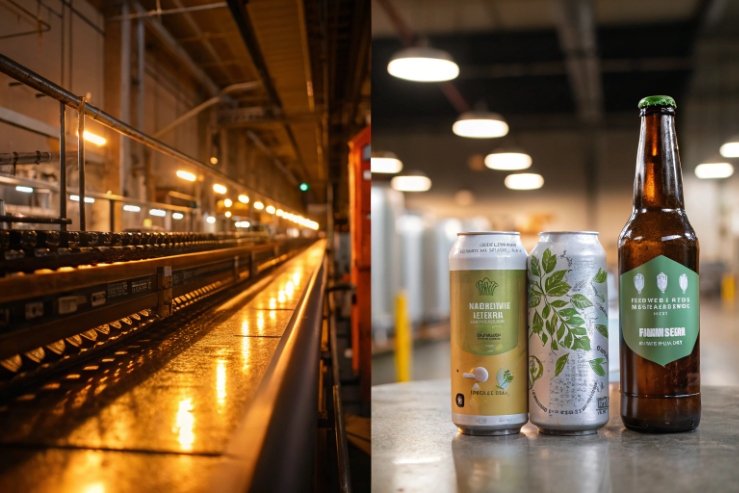
Beer can taste bright at the brewery, then dull at the shelf. That shift usually comes from light, oxygen, and heat, not from the recipe.
In practice, cans preserve flavor more consistently because they block all light and travel with fewer leaks and break risks. Amber glass can match cans when oxygen pickup is controlled and light exposure stays low, but clear and green glass lose more often.
Packaging does not make bad beer good. It only protects what is already there. The right choice depends on how hop-forward the beer is, how long it will travel, and how rough the retail environment is.
Do light and oxygen barriers differ meaningfully in practice?
Light-struck beer is one of the fastest ways to lose a customer. Oxidized beer is slower, but it can ruin the finish and aroma over time.
Yes, the difference is meaningful. Cans give total light protection and strong oxygen control when seams are done well. Glass is an excellent oxygen barrier through the wall, but light exposure and closure quality decide the real shelf result.
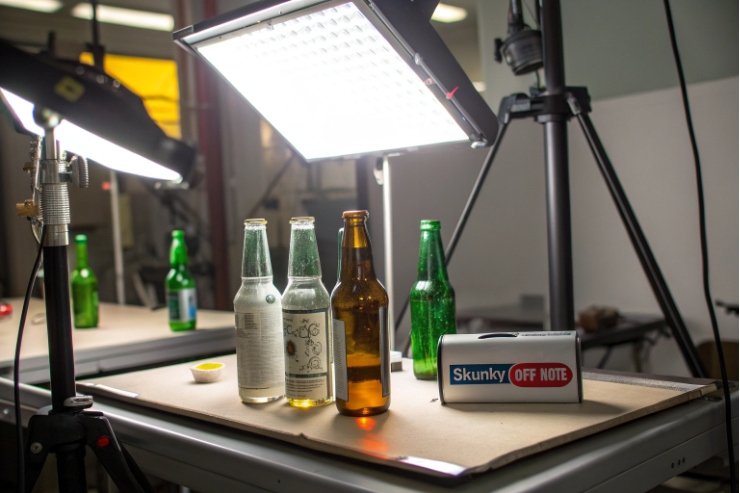
Why light protection usually makes cans win
For beer, light is not a small variable. Light can trigger 3-methyl-2-butene-1-thiol (3-MBT) 1 “skunky” off-notes fast, especially in hop-forward styles. Aluminum blocks light fully. That means a can has the same light protection in every store, on every shelf, and in every delivery van.
Glass depends on color and how the bottle is displayed:
- Amber glass helps a lot, but it is not a full blackout.
- Green and clear glass give far less protection, so the beer can change quickly if it sits under strong lights.
This is why cans often deliver more consistent flavor across mixed retail conditions. A beer in amber glass can be excellent, but it needs a controlled path: cartons, low light, and fast turnover.
Oxygen is not only “permeation”
Glass has near-zero oxygen permeation through the container wall. So the bottle body is not the weak link. The weak link is usually total package oxygen at fill and through the closure system.
For bottles, oxygen risks often come from:
- poor CO₂ purge before filling
- high dissolved oxygen 2 at fill
- crown cap application issues
- tiny finish chips that cause micro-leaks
For cans, oxygen risk often comes from:
- poor purge
- poor double seam 3 quality
- handling damage that distorts seams
- high foam collapse during filling
When the brewery controls purge and seam/crown application, both formats can run very low oxygen pickup. Still, cans remove the light variable completely, so they often win in the real world.
Many breweries also compare package systems by closure and seal oxygen transmission rate (OTR) 4, because the wall is rarely the limiting barrier.
| Topic | Aluminum can | Glass bottle | What matters most |
|---|---|---|---|
| Light barrier | total | depends on glass color | hop sensitivity + retail lighting |
| Oxygen through wall | excellent | excellent | usually not the limiting factor |
| Oxygen at closure/seam | seam-dependent | crown-dependent | line setup and maintenance |
| Consistency across stores | high | medium (amber), low (clear/green) | display and secondary packaging |
Simple guidance by beer style
- IPA, NEIPA, pale ales, aroma-forward lagers: cans usually protect best because light and oxygen both matter.
- Dark stouts, porters: light matters less, but oxygen still matters, so either can work if fill quality is strong.
- Short shelf local drafts-to-go: amber bottles can work well when turnover is fast.
How do liner flavors and “scalping” compare?
Some people say cans taste “metallic” or “different.” Others say bottles taste “cleaner.” Many times, that difference comes from how the beer is consumed, not the container material alone.
Glass is chemically inert, so it has almost no risk of material flavor. Cans rely on a food-safe liner, and modern liners are usually neutral, but they can interact with trace aromas in rare cases. Scalping risk is higher in plastics than in cans, and lowest in glass.
What the liner really does
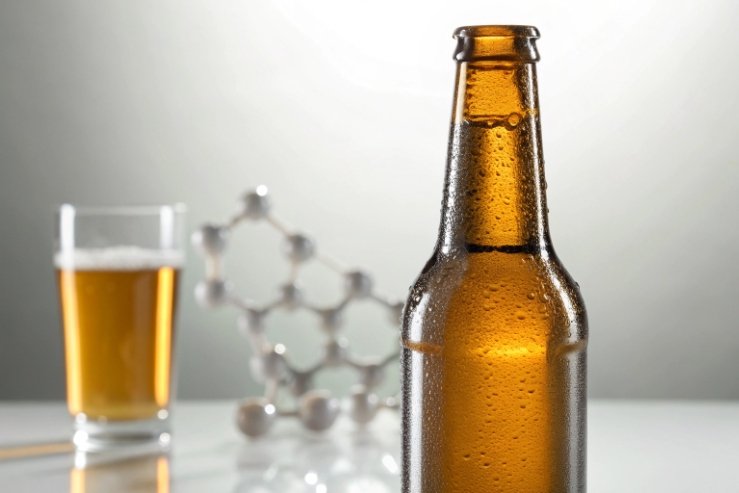
A can is not “beer touching aluminum.” Beer touches the liner. The liner is there to prevent corrosion and flavor change. Modern beverage-can internal linings 5 are engineered to be neutral and safe. Most flavor issues blamed on the liner are actually caused by:
- oxidation (stale paper, honey, dull hop aroma)
- light strike (only in glass, not in cans)
- warm storage (faster staling)
- dirty draft lines (when the beer is compared to a can/bottle)
Still, liners are part of the system, so it is fair to talk about them.
“Scalping” and where it matters
Scalping means packaging absorbs aroma compounds. This is most common in some plastics. Glass does not scalp. Cans have a liner layer, but it is thin and designed to resist absorption. In practice:
- PET can scalp more than glass.
- Cans are usually close to glass for aroma retention when packaged well.
- Glass is the safest if the goal is “zero interaction,” but then light protection must be solved.
When people perceive a “can taste”
Perception can come from:
- drinking from the can opening (less aroma reach to the nose)
- metal contact on lips
- warmer can surfaces from hand heat
- higher CO₂ bite if the beer is sipped quickly
A good test is simple: pour both into the same glass and compare blind. Many “liner taste” claims shrink when the serving method is controlled.
- Choose can suppliers with proven liner specs and compliance documentation.
- Avoid long warm storage, since heat can amplify flavor drift from many causes.
- Control oxygen pickup, because oxidation often gets mislabeled as “can flavor.”
- Run real shelf tests on your own beer, not only generic claims.
| Risk area | Cans | Glass bottles | Best control |
|---|---|---|---|
| Material interaction | low with modern liners | very low | supplier qualification + storage control |
| Aroma scalping | low | none | avoid PET if aroma is the core value |
| Metallic perception | can happen by drinking method | rare | pour into glass for sensory checks |
| Corrosion risk | controlled by liner | not relevant | validate liner compatibility for sour beers |
If the beer is sour, high-acid, or high-salt, liner compatibility checks matter more. In those niche cases, glass can be a simpler “inert” answer, as long as light exposure is controlled.
Does serving temperature and mouthfeel sway perception?
Many consumers say beer tastes better from a bottle. Many others say cans taste fresher. Both can be true, because the brain tastes with the nose and the hand.
Yes, perception shifts a lot. Cans chill faster and block light, so the beer can stay “fresh” longer. Bottles feel premium and can shape aroma release, but serving method and temperature can change flavor more than the container itself.
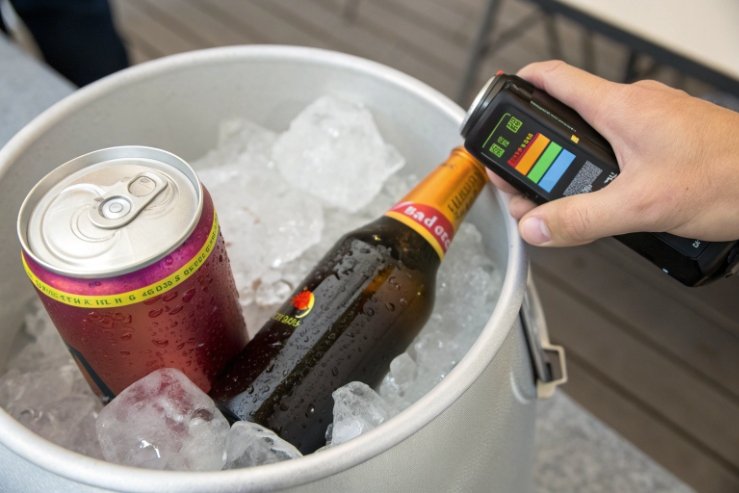
Temperature changes what people notice
Cold beer hides flaws. It also hides delicate hop notes. A beer that is too cold can taste “clean” but muted. A beer that warms slightly can show aroma, but it can also show oxidation and sweetness.
Cans often cool faster because metal transfers heat quickly. That can be an advantage in outdoor use and fast service. Bottles cool slower, but they can hold a stable chill when kept in ice baths, depending on handling.
Mouthfeel and drinking method
How beer enters the mouth changes perception:
- Drinking from a can: less aroma reaches the nose, so bitterness and carbonation can feel sharper.
- Drinking from a bottle: the narrow neck changes flow, and aroma is still limited, but some people like the ritual.
- Pouring into a glass: the aroma opens, foam forms properly, and the beer often tastes more “complete.”
So a fair flavor comparison should use the same pour method. If the customer drinks from the package, then the “format experience” becomes part of the product.
Premium cues and the “heft effect”
Glass has a weight and feel that signals premium to many buyers. The sound of the bottle, the look of the label, and the visibility of the beer can raise willingness to pay. Cans can also feel premium with good design and special finishes, but the cue is different. For many craft brands, bottles still signal tradition. For many hop-forward brands, cans signal freshness.
Practical advice for brand owners
If the beer depends on aroma, it helps to guide consumers toward pouring:
- add “best enjoyed poured into a glass” on pack
- use serving temperature icons
- design for a clean foam release
| Perception factor | Cans | Glass bottles | What to do |
|---|---|---|---|
| Chill speed | faster | slower | match format to use case |
| Aroma release when sipping | lower | low to medium | encourage pouring into a glass |
| Premium feel | modern premium | classic premium | align with brand story |
| “Freshness” expectation | high | mixed | protect against light and heat |
Taste is chemistry, but purchase is psychology. If the brand sells a premium ritual, glass can support that. If the brand sells “fresh hop pop,” cans usually support that better.
Which format travels better for long routes?
Long routes add time, vibration, heat swings, and rough handling. Even perfect packaging can lose flavor if the supply chain is not controlled.
Cans usually travel better for long routes because they are lighter, do not break like glass, and keep light out in every condition. Bottles can travel well in cartons and on stable pallets, but breakage, weight, and light exposure raise total risk over distance.
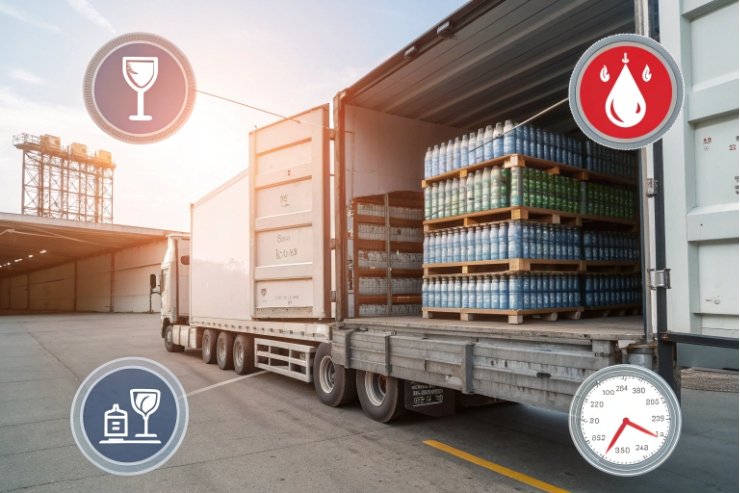
Logistics is a flavor problem
Flavor loss is not only oxygen. Warm transport can speed up staling in an Arrhenius 6 way. For long routes, the most common real-world issues are:
- heat exposure in trucks and warehouses
- slow turnover at retail
- packaging damage and micro-leaks
- light exposure on shelves and in displays
Cans reduce some of these risks:
- they are hard to shatter
- they block all light
- they ship at lower weight per unit
- they pack densely, which can lower freight cost
When bottles can still work on long routes
Bottles can travel well when the system is built for it:
- strong cartons that block light
- dividers to prevent glass-to-glass contact
- stable pallet patterns and wrap
- tight crown cap application control
- cold-chain discipline where needed
For amber bottles in full cartons, light risk can be small. The real cost then becomes freight and breakage risk, not flavor. If the brand price supports that cost, bottles can be a good choice.
Return rates, damage rates, and total cost of ownership
For long routes, the format decision often becomes a business decision:
- Cans lower freight and damage cost.
- Bottles can raise perceived value, but also raise claims and packing needs.
| A simple TCO view helps: | Cost/risk bucket | Cans | Bottles | Notes |
|---|---|---|---|---|
| Freight | lower | higher | weight drives cost | |
| Breakage | low | higher | especially in mixed handling | |
| Light exposure | none | depends on color and cartons | clear/green are risky | |
| Shelf consistency | high | medium | depends on retailer habits | |
| Premium presentation | strong (modern) | strong (classic) | brand-dependent |
Many teams validate shipper performance with ISTA 3A distribution tests 7 to find weak points before scaling volume.
A clear recommendation by route length
- Long routes, warm corridors, uncertain retail lighting: cans are safer for flavor consistency.
- Short routes, fast turnover, controlled display: amber bottles can perform close to cans, and may lift premium cues.
- If the beer is highly hop-forward and shelf life matters: cans usually give the best protection per dollar.
Conclusion
Cans usually preserve beer flavor more consistently because they eliminate light and travel with fewer failures, while amber bottles can match them in controlled supply chains where oxygen pickup and light exposure are tightly managed.
Footnotes
-
Understand the chemistry behind “skunky” light-struck beer off-flavor and why light protection matters. ↩ ↩
-
Learn how dissolved oxygen affects packaged beer staling and why low-DO filling improves shelf flavor. ↩ ↩
-
Overview of double-seam construction and defects that can cause leaks and oxygen pickup in cans. ↩ ↩
-
Definition and measurement basics for oxygen transmission rate when comparing barrier performance across package materials. ↩ ↩
-
How beverage cans use internal linings to prevent corrosion and protect product flavor. ↩ ↩
-
See why reaction rates accelerate with temperature—useful for understanding warm-route beer staling risk. ↩ ↩
-
Overview of ISTA procedures used to simulate drop and vibration hazards in distribution. ↩ ↩






