
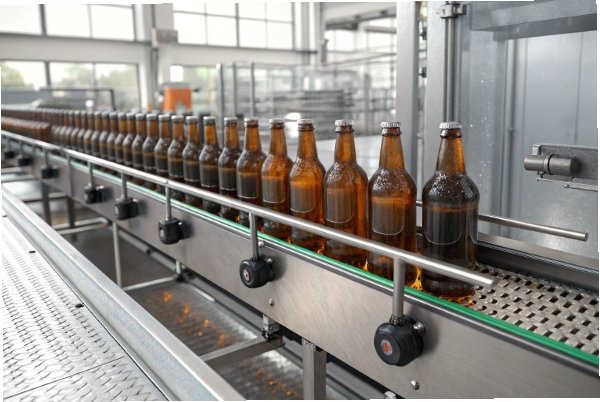
Hot filling protects the product inside the bottle, but the gap between the liquid and the cap remains a breeding ground for spoilage organisms. Ignoring this headspace can ruin an entire production run.
Post-hot-fill inversion is a feasible and cost-effective sterilization method for glass bottles, provided the handling equipment is engineered to manage the weight and fragility of glass. By tilting the bottle, the hot liquid contacts and sterilizes the headspace and closure without the energy costs of a secondary pasteurization tunnel.
The Mechanics of Inversion for Glass
In the world of PET (plastic) bottling, inverting the container to sterilize the cap is standard practice. Plastic is light and durable. For glass, however, the equation changes. As a glass manufacturer, I often see hesitation from my clients about tipping over heavy, hot glass bottles. They worry about impact damage, conveyor wear, and leakage. These are valid concerns, but they are manageable.
The concept is simple physics: you fill the bottle with liquid at 85°C – 92°C. You cap it immediately. The liquid is sterile, but the air trapped under the cap—and the inner surface of the cap itself—is not. If you let it sit upright, condensation forms, creating a cool, moist environment where mold can thrive. By inverting the bottle, you force the hot liquid into the neck, exposing the cap and headspace to lethal temperatures—exactly the principle described in the hot-fill-hold process for acid and acidified foods 1.
At FuSenglass, we have seen this method implemented successfully on lines running up to 30,000 bottles per hour. It removes the need for massive pasteurization tunnels, saving floor space and millions in energy costs. However, glass demands respect. The "twist" mechanism must be gentle, using soft-touch grippers or smooth guide rails to prevent "checking" (cracking) on the bottle sidewalls.
Comparing Sterilization Strategies
| Feature | Inversion / Hold | Tunnel Pasteurization | Retort (Autoclave) |
|---|---|---|---|
| Primary Mechanism | Internal Product Heat | External Hot Water Spray | Steam Pressure Chamber |
| Energy Usage | Low (Uses existing heat) | High (Re-heating required) | Very High |
| Footprint | Small (Conveyor length) | Large (Huge machine) | Large (Batch vessels) |
| Glass Stress | Medium (Handling impact) | Medium (Thermal cycling) | High (Pressure & Heat) |
| Cost | $ | $$$ | $$$$ |
While feasible, inversion is not a "plug and play" solution for every product. It requires specific conditions to work effectively.
Which Products and Shelf-Life Targets Make Hot-Fill Invert/Hold the Best Option?
Choosing the right sterilization method depends entirely on food chemistry. Inversion relies on the product’s own acidity and heat to do the killing; it is not a magic wand for low-acid risks.
Hot-fill inversion is the optimal choice for high-acid products (pH < 4.6) such as fruit juices, teas, isotonic drinks, and acidified sauces intended for ambient shelf stability. It is not suitable for low-acid products or those requiring extended sterilization times, where retort or tunnel pasteurization is mandatory.
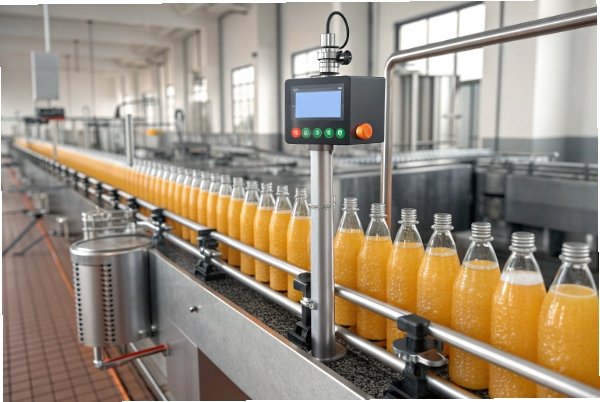
The Acid Barrier
The microbiology here is distinct. Inversion sterilization works because the heat (90°C) combined with acidity (pH < 4.6) effectively controls outgrowth risk—because Clostridium botulinum cannot grow below pH 4.6 2—and suppresses many common spoilage organisms. The hold time is relatively short because the barrier to safety is lower.
For products like milk, cold brew coffee (without acid), or vegetables, 90°C is not enough. These require temperatures above 120°C (Retort), regardless of how you hold the bottle.
Shelf Life Considerations
If your target is a 12 to 18-month shelf life at ambient temperature, invert/hold is perfect for:
- Clear Juices: Apple, Grape, Cranberry.
- Teas: RTD Green or Black tea (acidified).
- Sauces: Ketchup, BBQ sauce, Hot sauce.
For these categories, a pasteurization tunnel is "overkill"—it cooks the product twice, degrading the fresh flavor and darkening the color (Maillard reaction). Inversion preserves the "fresh" sensory profile better because the product begins cooling almost immediately after the hold time, which aligns with typical hot-fill-hold time/temperature guidance 3.
Product Suitability Matrix
| Product Category | pH Level | Recommended Method | Why? |
|---|---|---|---|
| Fruit Juice | < 4.0 | Invert & Hold | Heat + Acid is sufficient; preserves flavor. |
| Pasta Sauce | < 4.2 | Invert & Hold | Viscosity allows coating of headspace. |
| Cold Brew Coffee | > 5.0 | Retort | Low acid requires pressure sterilization. |
| Beer | ~ 4.0 | Tunnel Past. | Cannot hot fill (Carbonation issues). |
What Inversion Angle, Hold Time, and Minimum Contact Temperature Are Needed?
Tilting the bottle is not enough; you must ensure the physics of flow completely coats the danger zone. A partial splash does not sterilize.
To ensure total sterilization, the bottle must be inverted to at least 90 degrees (horizontal) or fully upside down for a minimum of 30 to 45 seconds. The liquid temperature at the cap interface must not drop below 82°C (180°F) during this contact period to achieve the required lethality.
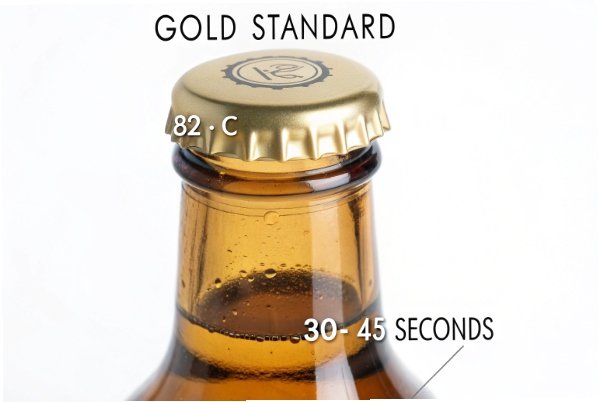
The Geometry of Sterilization
The goal is to eliminate the air pocket (headspace) from the cap area.
- Vertical (Upright): Cap touches air. (Sterilization = 0).
- Tilted (45°): Cap might touch liquid depending on fill level. Risky.
- Horizontal (90°): Liquid covers half the cap. Better, but the air bubble moves to the side.
- Inverted (180°): Liquid completely covers the cap liner. The air bubble moves to the base (the "punt"). This is the gold standard.
At FuSenglass, we recommend a "lay-down" conveyor that gently transitions the glass bottle to its side or a spiral conveyor that inverts it completely; many equipment builders document the same hot filling and bottle inversion approach 4.
Time and Temperature: The Lethality Equation
You are fighting against heat loss. The moment the bottle is capped, the liquid starts cooling. The glass neck absorbs heat. The cap absorbs heat.
If you fill at 90°C:
- Cap Application: Temp drops to 88°C.
- Inversion: Temp at cap interface drops to 85°C.
- Hold Time: Must maintain >82°C for at least 30 seconds.
If the conveyor is too long or the factory is too cold, the liquid at the cap might drop to 75°C. At that temperature, you are just giving the bacteria a warm bath, not killing them.
Critical Process Parameters (CPPs)
| Parameter | Target Range | Critical Limit |
|---|---|---|
| Inversion Angle | 90° – 180° | Must cover >100% of closure surface. |
| Hold Time | 30 – 120 Seconds | Minimum 30s for heat transfer through liner. |
| Fill Temp | 88°C – 95°C | < 85°C fill risks failing the cap temp req. |
| Headspace | 6% – 8% of volume | Too small = pressure blowout; Too large = poor heat transfer. |
How Should Closure Type, Liner Material, and Application Torque Be Set?
Inverting a glass bottle puts the seal under immediate hydrostatic and thermal pressure. If the closure isn’t engineered for this stress, you risk leaks or, worse, cracking the glass finish.
Metal lug caps (Twist-Off) with Plastisol liners are the industry standard for hot-fill inversion. Application torque must be set precisely to compress the softened liner without stripping the threads or cracking the glass finish, often requiring "warm removal torque" testing.
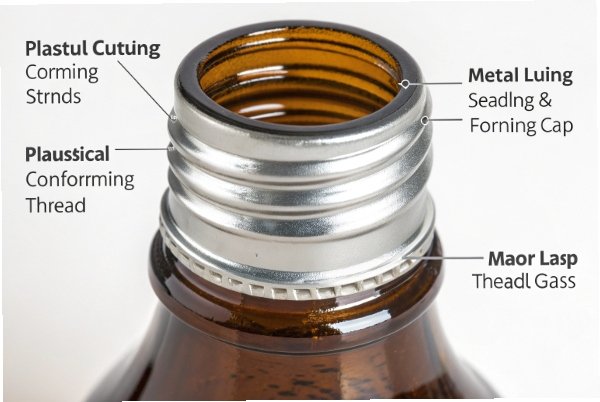
The Plastisol Advantage
For glass, we primarily use metal lug caps. Inside these caps is a ring of Plastisol (PVC-based compound). This material is hard at room temperature but softens when heated—see a practical overview of lug caps and common cap liner types 5.
- Steam Injection: Steam softens the surface of the liner just before capping.
- Hot Fill: The heat from the glass finish softens the liner further.
- Cooling: As the bottle cools, the vacuum pulls the cap down, and the Plastisol hardens, forming a hermetic seal.
During inversion, that liner is soft. If the cap is loose, liquid will bypass the liner. If it is too tight, the metal lugs will dig into the glass threads (the "finish"), causing "checks" or cracks.
Torque Management
Torque is not static; it changes with heat.
- Application Torque: The force applied by the machine.
- Removal Torque (Immediate): Usually lower because the liner is slippery and hot.
- Removal Torque (24h later): Higher, because the vacuum is holding the cap down.
To standardize measurement and troubleshooting, many QA teams follow established closure torque testing methods 6 and use removal-torque targets such as the commonly cited 40–60% relationship to application torque 7.
If you apply too much torque to a hot glass bottle, the metal lug acts like a wedge. Glass is strong in compression but weak in tension. The lug can shear the glass thread off. We call this "stripping the finish."
Preventing Vacuum Loss
Leaks during inversion are often microscopic. Liquid gets between the glass and the liner. When the bottle cools and creates a vacuum, that trapped liquid creates a "bridge" for air to leak back in, breaking the vacuum seal weeks later. This is why the Hold Time should not be excessive—just enough to kill bugs, not enough to force liquid past a softening liner.
Closure Troubleshooting Table
| Defect | Cause | Result during Inversion |
|---|---|---|
| Spinner | Over-torque / Stripped Thread | Cap rotates freely; massive leak. |
| Cocked Cap | Misalignment at capper | Seal is not planar; immediate leak. |
| Cut-Through | Sharp glass finish | Liner is sliced; loss of hermetic seal. |
| Back-Off | Under-torque / Vibration | Cap loosens on conveyor; vacuum failure. |
What Validation Package Is Required Before Scaling Inversion Sterilization?
You cannot just guess that the cap is getting hot enough. You must prove it to food safety authorities (and yourself) through rigorous scientific validation.
Scaling requires a validated process authority letter confirming the lethality of your specific time/temperature matrix. This involves "Temperature Mapping" using internal data loggers to prove the "cold spot" (the cap) reaches sterilization temp, alongside microbiological challenge studies.
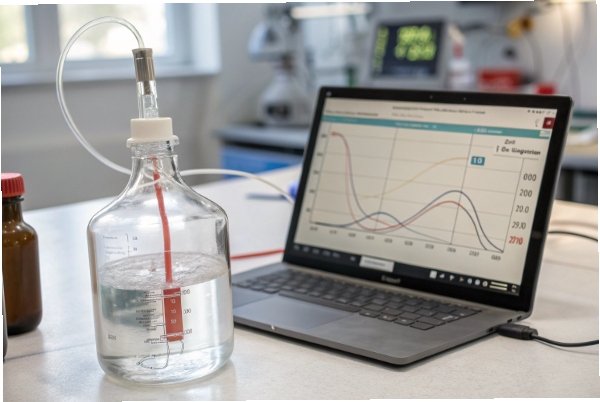
Temperature Mapping (Heat Penetration Studies)
Before you run a single commercial batch, you must perform thermal mapping. We use wireless data loggers (like coin-sized pucks) or wired probes inserted into the bottle.
The probe must be positioned in the "Cold Spot."
- In a tunnel pasteurizer, the cold spot is the center of the bottle.
- In Inversion Sterilization, the cold spot is the inside surface of the cap.
You must prove that even with the fastest line speed and the coldest allowed fill temp, the cap reaches target temperature for the required time—this expectation is typically documented in your scheduled process and supporting studies, consistent with FDA acidified/low-acid canned foods guidance resources 8.
Microbiological Challenge (The "Kill Step")
Sometimes temperature isn’t enough proof. You might need to inoculate bottles with a surrogate organism (a harmless bacteria with similar heat resistance to your target pathogen).
- Spike the cap with bacteria.
- Run the bottle through the hot-fill and inversion process.
- Incubate the bottle.
- If nothing grows, your process is validated.
Process Authority Sign-Off
In the US (FDA) and many other jurisdictions, high-acid shelf-stable foods often rely on a documented scheduled process and a process review by a recognized authority; an operational overview of the process authority review workflow 9 is a useful checklist reference. They will calculate lethality and confirm your limits, which becomes your legal operating window for that product/container combination.
Validation Checklist
| Step | Action | Goal |
|---|---|---|
| 1. Probe Test | Insert thermocouples | Identify worst-case temperature drop at cap. |
| 2. Line Audit | Measure conveyor speed | Ensure hold time is physically guaranteed. |
| 3. Bio-Validation | Inoculate caps | Prove 5-log reduction of spoilage organisms. |
| 4. Documentation | Process Filing (SID) | Legal compliance for export/retail. |
Conclusion
Post-hot-fill inversion is a brilliant, low-energy solution for sterilizing glass packaging, but it demands precision. By matching high-acid products with the correct inversion angle (>90°) and validating the cap temperature (>82°C), you can achieve safe, shelf-stable products without the capital expense of pasteurization tunnels.
Footnotes
-
Defines hot-fill-hold and explains inversion to heat the cap and headspace for commercial sterility. ↩ ↩
-
Confirms pH 4.6 as the growth boundary for C. botulinum, underpinning high-acid process safety logic. ↩ ↩
-
Provides practical hot-fill-hold temperatures and hold-time ranges used for acidified foods. ↩ ↩
-
Shows real-world hot-filling with inversion, including typical temperatures and hold durations. ↩ ↩
-
Explains lug closures and liner choices relevant to hot-fill sealing and vacuum formation. ↩ ↩
-
Summarizes standardized approaches for measuring application and removal torque on closures. ↩ ↩
-
Offers a pragmatic removal-torque guideline used for diagnosing cap application quality. ↩ ↩
-
Central FDA hub for process filing/registration guidance and resources for acidified and low-acid products. ↩ ↩
-
Step-by-step overview of submitting products for process authority review and retaining the review letter. ↩ ↩






