
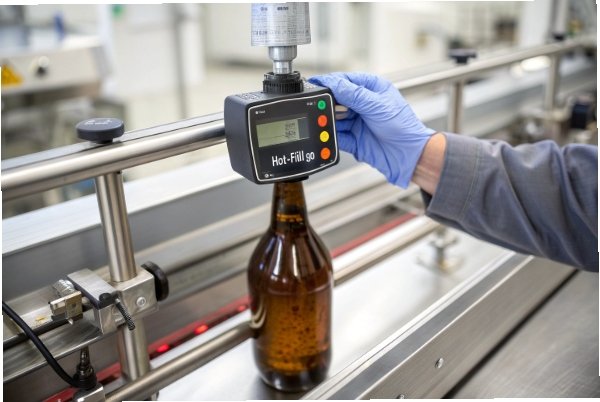
Setting cap torque on a filling line is not a "set it and forget it" operation. It is a dynamic variable that changes drastically the moment heat is introduced. If you use the same torque settings for hot-fill (90°C) as you do for cold water, you will almost certainly face consumer complaints: either loose caps that leak or stuck caps that require a wrench to open.
Yes, application torque must be optimized—and often increased—to compensate for the inevitable "Torque Back-Off" caused by thermal relaxation. A general rule is that hot-filled bottles lose 40% to 60% of their application torque after cooling, requiring a higher initial setting to ensure the final seal remains secure.
The Physics of "Torque Back-Off"
At FuSenglass, we teach our clients the concept of "Thermal Relaxation."
- Application: You apply the application torque 1. The threads are under tension, creating a downward force on the liner.
- Heating: The heat softens the plastic cap and the liner. The materials expand.
- Relaxation: The stress in the threads "thermal relaxation 2" occurs because the material is soft. The liner permanently deforms (takes a set) to the shape of the glass rim.
- Cooling: The cap shrinks. The glass shrinks (much less). The liner stays deformed. The tension is lost.
- Result: The "removal torque 3" (force to open) is significantly lower than the application torque (force to close). This drop is called Back-Off.
How do hot-fill and pasteurization temperatures change liner compression and the real sealing force?
Heat accelerates the physical settling of the closure system. What feels tight at the capper station can feel loose after the cooling tunnel.
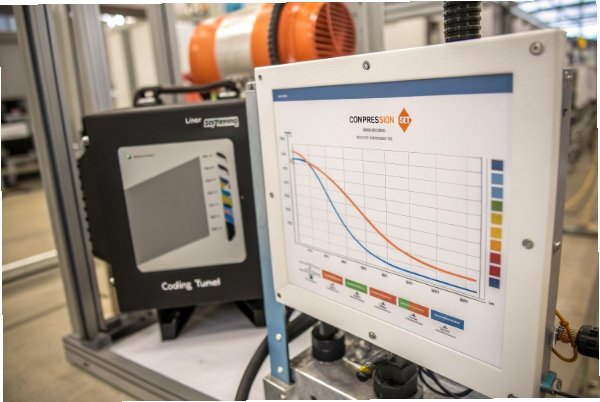
High temperatures soften the liner, causing it to flow away from pressure points (Compression Set). Upon cooling, the liner does not rebound fully, creating a microscopic gap if the initial compression wasn’t sufficient. Simultaneously, the internal vacuum pulls the cap down, which can artificially increase the friction on the threads, masking a failed seal.
The "Hot-Plastic" Effect
- Plastic Caps: Polypropylene (PP) expands 10 times more than glass. During hot-fill, the cap grows larger, effectively loosening its grip on the glass threads. If the liner softens simultaneously, the seal pressure drops to near zero.
- Metal Caps: Steel expands less, but the Plastisol liner softens significantly. The seal relies on the vacuum (doming) to hold the cap down while the liner re-hardens.
The Vacuum Factor
- False Security: Sometimes, a cooled hot-fill bottle feels tight. But this "tightness" is often just the internal vacuum 4 pulling the cap threads hard against the glass threads (thread friction).
- The Test: If you break the vacuum (puncture the center), the cap might spin freely. This indicates the chemical/mechanical seal was actually loose, and only the vacuum was holding it on.
What torque window should be set to prevent leaks without causing finish cracks?
You need a "Goldilocks" zone. Too loose = Leaks. Too tight = Striped threads or cracked glass necks (finish).
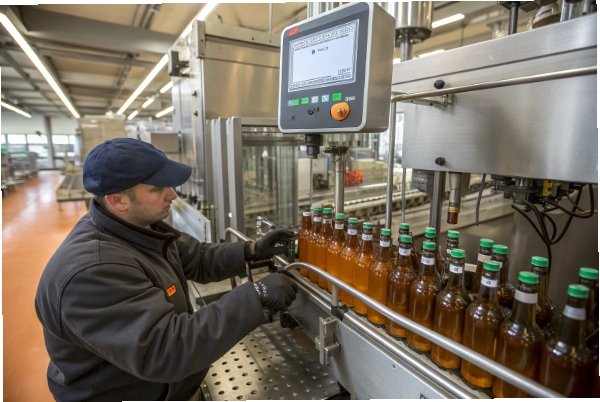
The industry standard target for Application Torque (in inch-pounds) is roughly 50% of the cap diameter (in mm). For hot-fill, aim for the upper end of this range (e.g., 15-18 in-lbs for a 38mm cap) to ensure that the Removal Torque remains above the critical 6 in-lb threshold after cooling.
Rule of Thumb Calculations
| Cap Size (mm) | Target Application Torque (in-lbs) | Minimum Removal Torque (Post-Cool) |
|---|---|---|
| 28mm | 12 – 15 in-lbs | 6 in-lbs |
| 38mm | 15 – 19 in-lbs | 8 in-lbs |
| 43mm (Lug) | Steam Vacuum Applied | Vacuum Security > 5 inHg |
| 53mm | 20 – 25 in-lbs | 10 in-lbs |
| 63mm | 25 – 30 in-lbs | 12 in-lbs |
The Danger of Overtightening
In a panic to stop leaks, operators crank up the torque.
- Stripping: On a hot bottle, the plastic cap is soft. Overtightening strips the threads, ruining the seal instantly.
- Stress Cracking: Glass is strong in compression but weak in tension. Overtightening creates "hoop stress 5" on the glass neck. When combined with thermal shock 6 (hot liquid), the neck can split vertically.
How do different closure and liner materials affect torque retention and back-off?
The material combination dictates the "Back-Off Factor."
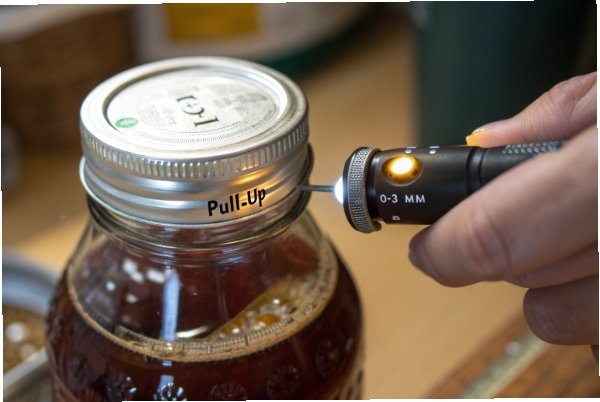
Metal Lug Caps with Plastisol liners rely on steam vacuum, not mechanical torque, so "application torque" is less relevant than "Pull-Up" (lug position). Plastic Screw Caps with EPE liners suffer the worst back-off (up to 60% loss), while Thermoset (Bakelite) or Heavy-Wall PP caps with Silicone liners retain torque best.
1. Metal Lug Caps (Twist-Off)
- Mechanism: Metal lug caps 7 are pushed down and twisted 90 degrees by the capper.
- Heat Effect: The plastisol liners 8 soften to mold to the glass.
- Control: We don’t measure torque; we measure "Pull-Up". This is the distance between the leading edge of the cap lug and the parting line on the glass thread.
- Hot Setting: The lug should stop just past the parting line.
- Cooling: As it cools, the compound hardens and the vacuum pulls it tighter.
2. Plastic Screw Caps (Continuous Thread)
- Material: usually Polypropylene (PP).
- Heat Effect: High expansion.
- Liner:
- Foam (EPE): Terrible for heat. Compression Set 9 is high. 60% Torque Loss.
- Solid Liner (TPE/F217): Better. 40% Torque Loss.
- Linerless (Cone Seal): The plastic cone softens. High risk of backing off unless the cap design has a "locking bead."
What in-line checks and validation tests can confirm torque settings?
You cannot measure Application Torque directly on a running bottle (unless you use a specialized "Torque Bottle" sensor). You can only measure Removal Torque.
Use the "24-Hour Removal Torque" test as the gold standard for validation. On the line, perform "Immediate Removal Torque" checks every 30 minutes and monitor "Pull-Up" positions for lug caps. Additionally, use the "Secure Seal" vacuum test to catch leakers that feel tight but aren’t.
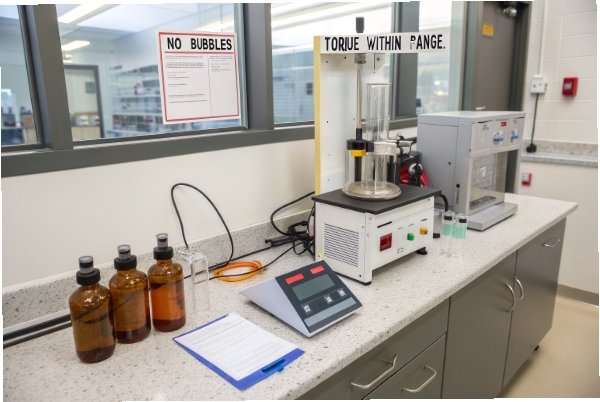
1. The 24-Hour Correlation Study
You need to build a correlation chart for your specific line.
- Step 1: Apply caps at known settings (e.g., 15, 17, 19 in-lbs).
- Step 2: Mark them. Process them (Hot-fill/Cool).
- Step 3: Wait 24 hours.
- Step 4: Perform a removal torque test 10.
- Result: You find that 17 in-lbs Application results in 9 in-lbs Removal (Safe). 15 in-lbs Application results in 4 in-lbs Removal (Unsafe).
- Action: Set Capper to 17 in-lbs.
2. Routine Line Check (Immediate Removal)
- Frequency: Every 30 mins.
- Protocol: Take a hot bottle immediately after the capper. Measure Removal Torque.
- Note: It will be lower than the application setting but higher than the 24-hour result (because the liner hasn’t fully set yet). Establish a control range (e.g., 12-14 in-lbs).
3. Secure Seal (Bubble Test)
- Frequency: Every hour.
- Protocol: Put sealed bottles in a vacuum chamber (water bath).
- Pass: No bubbles. This catches "stripped thread" caps that might give a false torque reading due to friction but have no vertical seal pressure.
| Check Type | What it Measures | When to Perform | Target (Example 38mm) |
|---|---|---|---|
| Application (Static) | Machine Setting | Setup / Changeover | 17 in-lbs |
| Immediate Removal | Capper Consistency | Every 30 mins | 12 – 14 in-lbs |
| 24hr Removal | True Seal Integrity | Daily / New Batch | > 7 in-lbs |
| Pull-Up (Lug Caps) | Lug Engagement | Every 30 mins | 0mm – 3mm past line |
Conclusion
For hot-fill glass bottles, you must expect significant torque loss. Do not adjust torque based on "cold feel." establish a data-driven Application Torque (usually higher than cold-fill) that guarantees a safe Removal Torque (>6 in-lbs) after the bottle has cooled and stabilized for 24 hours.
Footnotes
-
Application torque is the rotational force used to apply a closure to a container to ensure a proper seal. ↩
-
Thermal relaxation is the process where internal stresses in a material dissipate over time under high-temperature exposure. ↩
-
Removal torque is the rotational force required to unscrew and open a closure from a container. ↩
-
Internal vacuum occurs when hot liquid or gas inside a container cools and contracts, lowering internal pressure. ↩
-
Hoop stress is the circumferential tension created in a cylinder or vessel due to internal pressure. ↩
-
Thermal shock occurs when a rapid temperature change causes uneven expansion or contraction, leading to material failure. ↩
-
Metal lug caps are twist-off closures that engage with glass threads using multiple metal tabs or lugs. ↩
-
Plastisol liners are PVC-based gaskets used in metal closures to create hermetic seals in food and beverage containers. ↩
-
Compression set is the permanent deformation of a material after the removal of a constant compressive load. ↩
-
The removal torque test measures the force needed to open a cap to validate sealing performance and safety. ↩






