
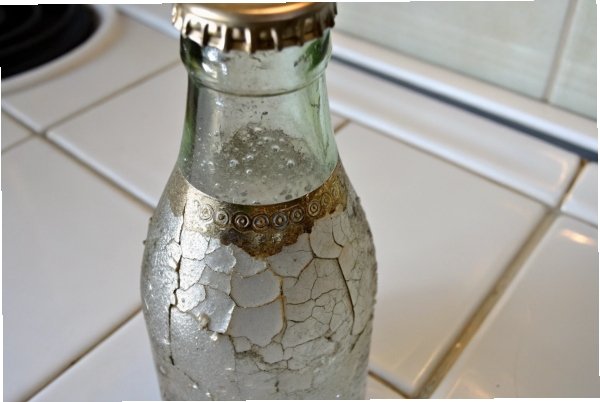
A shiny metallic bottle signifies luxury, but that premium finish is essentially a delicate sandwich of plastic and metal. When exposed to heat, the opposing physical properties of these layers turn the coating into a ticking time bomb of quality defects.
Yes, "electroplated" (vacuum metallized) coatings can easily peel, blister, or crack at high temperatures. Since the metallic finish relies on an organic base coat for adhesion, high heat softens this underlying layer or causes it to expand, breaking the bond with the glass and leading to catastrophic delamination.
The "Electroplating" Illusion: Understanding the Layers
At FuSenglass, I often have to correct a technical misunderstanding with our clients. True electrolytic plating (dipping a conductive object into a charged metal bath) is almost never used on glass bottles because glass is an electrical insulator 1. What the industry calls "Electroplating" or "UV Plating" is actually Physical Vapor Deposition 2 (PVD).
This distinction is critical for understanding heat resistance. The process involves a three-layer "sandwich":
- Base Coat: An organic UV-cured lacquer sprayed onto the glass. Its job is to smooth out the glass surface and provide a sticky layer for the metal.
- Metal Layer: A nanometer-thin layer of Aluminum or Titanium vaporized onto the bottle in a vacuum metallization 3 chamber.
- Top Coat: Another organic UV-cured lacquer (clear or colored) to protect the metal from oxidizing and scratching.
The Thermal Weak Link
The metal layer itself (Aluminum/Titanium) melts at >600°C. The glass melts at >1400°C. So why does the coating fail at 80°C?
The Base Coat is the culprit.
The base coat is a polymer (plastic). When heated, it undergoes two changes:
- Glass Transition 4 (Tg): It softens and becomes rubbery.
- Thermal Expansion 5 (CTE ~100) causes significant movement, while the glass underneath stays rigid (CTE ~9) and the metal layer on top is too thin to hold it back.
This movement shears the bond at the glass interface. The coating effectively "unzippers" from the bottle.
| Layer | Material | Thermal Behavior | Role in Failure |
|---|---|---|---|
| Glass Substrate | Silica | Rigid, Low Expansion | The anchor that refuses to move. |
| Base Coat | UV Acrylate / Epoxy | High Expansion, Softens | The Failure Point. Expands and pushes the metal off. |
| Metal Layer | Aluminum (PVD) | Thin, Brittle | Cracks (Crazing) when base coat stretches. |
| Top Coat | UV Acrylate | Hard, Protective | Traps volatiles; can blister if base coat outgasses. |
What temperature range and heating duration most commonly cause electroplated layers to blister, crack, or delaminate on glass?
Knowing the failure threshold allows you to define safe filling limits. Pushing a standard cosmetic metallization process into a hot-fill beverage line is a recipe for disaster.
Standard UV metallization typically begins to fail at 60°C – 70°C, manifesting as "orange peel" or softening. Delamination and blistering become acute above 85°C (Hot Fill) or during extended humidity exposure (Pasteurization), while autoclave temperatures (121°C) will disintegrate the coating entirely.
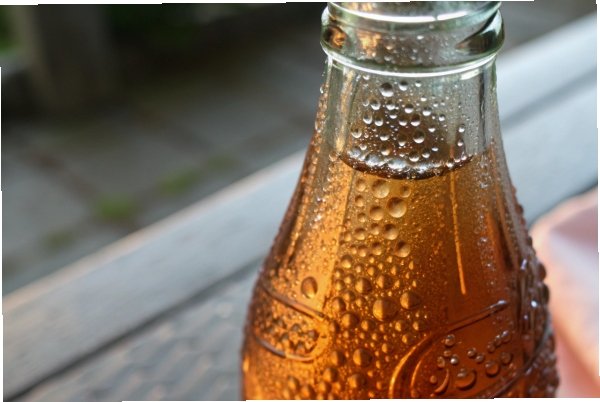
1. The Softening Zone (60°C – 75°C)
This is the Glass Transition Temperature (Tg) for many standard cosmetic base coats.
- Effect: The coating doesn’t fall off, but it gets soft. If the bottles rub against each other on the conveyor, the metallic finish smears or dents.
- Visual: "Orange Peel" texture appears as the underlying lacquer shifts.
- Risk: Cosmetic defect. High rejection rate.
2. The Delamination Zone (80°C – 100°C)
This is the range for Hot Filling 6 (Juice/Tea) or "Candle Jars" (molten wax filling).
- Effect: The base coat expands so much that it shears the adhesion bond with the cold glass.
- Visual: Large flakes peeling off; edges lifting at the heel or neck.
- Risk: "Glitter" in the product. Total functional failure.
3. The Hydrolysis Zone (Wet Heat / Pasteurization)
Temperature is worse when wet. Water at 65°C permeates the Top Coat and Base Coat.
- Effect: Moisture reaches the Glass-Base Coat interface and displaces the chemical bond (Hydrolysis).
- Visual: Micro-blisters (tiny bubbles) or a "milky" haze under the metal.
- Risk: The coating might look okay initially but falls off days later in the customer’s hand.
4. The Autoclave Zone (121°C)
- Effect: Total destruction of the organic matrix.
- Result: The coating burns, yellows, and detaches completely. Never put standard metallized glass in an autoclave.
Which electroplating/decor systems offer the best heat stability for hot-fill, pasteurization, or sterilization?
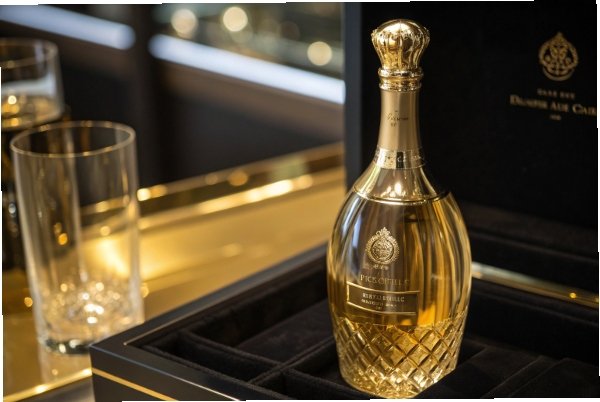
If you need the "gold look" but also need heat resistance, you must abandon standard cosmetic UV processes. You need industrial-grade thermosets or ceramic precious metals 7.
For moderate heat (Hot-Fill), a "Thermoset Water-Based" Spray System (cured at 180°C) offers higher stability than UV. For extreme heat (Autoclave), you must use "Real Gold Lustre" or "Ceramic Metallization," which uses actual precious metals fired into the glass at 600°C.
Option A: The "High-Performance" Organic System (Up to 90°C)
Instead of UV-cured lacquers (which are fast but often have lower thermal resistance), we use Thermoset Epoxies or Polyurethanes.
- Process: Spray Base Coat -> Bake 30 mins @ 180°C -> PVD Metal -> Spray Top Coat -> Bake.
- Why it works: Baking at 180°C drives out all volatiles and creates a much tighter, cross-linked network 8 than UV light can achieve. The Tg is higher (>100°C).
- Pros: Good for Candle Jars and Hot Fill. Cheaper than real gold.
- Cons: Slower production; energy intensive.
How do surface pretreatment, adhesion promoters, and curing conditions reduce peeling risk after high-temperature exposure?
The difference between a coating that peels and one that sticks is often invisible. It lies in the surface energy and the chemical bridges built before the metal ever touches the bottle.
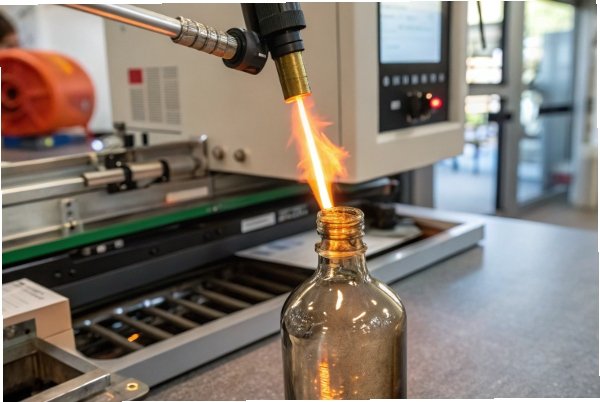
Flame Pyrolysis (Pyrosil) pretreatment is non-negotiable for heat resistance; it creates a silica-rich surface for the base coat to grip. Furthermore, using "Silane Coupling Agents" in the base coat and ensuring "Full Through-Cure" prevents the solvent entrapment that causes blistering.
1. The Glue: Silane Promoters
We add specific Silane Coupling Agents 9 (e.g., Glycidoxypropyltrimethoxysilane) to the base coat.
- Mechanism: These molecules have an epoxy group to react with the coating and a methoxy group to react with the glass. They form a covalent "Chemical Hook."
- Heat Benefit: Chemical hooks don’t melt. They hold the polymer to the glass even when the polymer gets soft.
2. The Cure: Preventing Outgassing
- Problem: If the base coat is 95% cured, it contains 5% unreacted monomers.
- Heat Event: When hot-filled, those monomers turn into gas. The gas is trapped by the metal layer (which is airtight).
- Result: The gas pushes the metal up, forming a blister.
What validation tests and pass/fail criteria should be required from suppliers to prove heat resistance?
Never accept a "golden sample." You need data. The validation protocol must mimic the worst-case scenario of your specific filling process.
Mandate the "Cross-Hatch Tape Test" performed after a "Boiling Water Immersion" (30 mins). Also, perform a "Thermal Cycle" (-20°C to +80°C) followed by visual inspection for crazing (micro-cracking) of the metal layer.
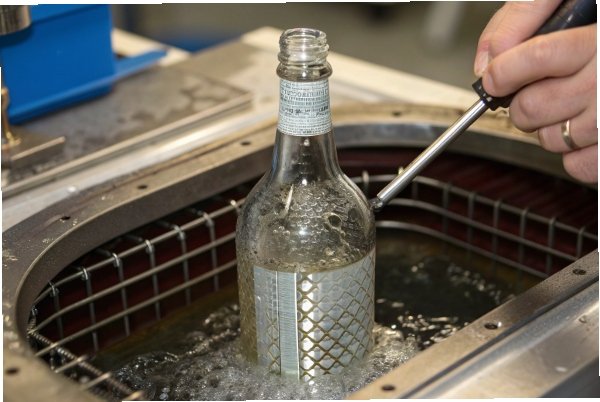
1. The "Boil-and-Rip" Test (Critical)
Standard tape testing at room temperature is useless for heat validation.
- Protocol:
- Submerge bottle in water at 80°C (or boiling) for 30 minutes.
- Remove and cool to room temp.
- Cut a cross-hatch grid (1mm x 1mm).
- Apply 3M 610 or Tesa 4657 tape. Rip.
- Pass Criteria: 0% removal (Classification 5B).
2. Cross-Hatch Tape Test 10 (Top Coat Check)
If the Top Coat fails, the metal oxidizes and disappears.
- Test: 50 Rubs with MEK or Ethanol.
- Pass: No removal of color/gloss.
| Validation Test | Purpose | Condition | Acceptance Criteria |
|---|---|---|---|
| Boil + Tape | Adhesion under Heat/Wet | 30 min @ 80°C | Class 5B (0% Loss) |
| Thermal Cycle | Structural Integrity | -20°C <-> 80°C (3x) | No Crazing / Cracking. |
| Bulk Adhesion | Production Control | Ambient Tape Test | Class 5B. |
| Hardness | Top Coat Cure | Pencil Hardness | > 2H (No Gouging). |
Conclusion
"Electroplated" glass is a triumph of aesthetics over physics. It naturally wants to peel. To make it heat resistant, you must use Thermoset Base Coats, stringent Pyrosil Pretreatment, and validate with the Boil-and-Rip test.
Footnotes
-
Learn how the electrical properties of glass substrates necessitate specialized PVD coating methods. [back] ↩
-
A technical guide to Physical Vapor Deposition technology for applying metallic films to non-conductive surfaces. [back] ↩
-
Detailed overview of the vacuum metallization process for decorative and functional bottle finishes. [back] ↩
-
Understanding the critical glass transition temperature where organic polymers soften and lose structural integrity. [back] ↩
-
Scientific explanation of how thermal expansion impacts the mechanical bond between glass and metallic layers. [back] ↩
-
Best practices for hot filling processes to ensure container durability and coating stability. [back] ↩
-
An exploration of precious metals like gold and platinum used in high-heat ceramic glass firing. [back] ↩
-
How molecular cross-linked networks improve the thermal and chemical resistance of industrial polymer coatings. [back] ↩
-
Technical resource on how silane coupling agents create chemical bridges at the coating-glass interface. [back] ↩
-
The industry standard procedure for evaluating the adhesion strength of thin-film coatings on glass. [back] ↩






