
While Alumina and Boron get all the headlines for heat resistance, the balance between Magnesium Oxide (MgO) and Calcium Oxide (CaO) is the unsung hero of bottle stability. Ignoring this ratio can lead to mysterious production failures even when the "major" ingredients look correct.
Yes, the MgO-to-CaO ratio significantly affects heat resistance. Replacing a portion of CaO with MgO lowers the Coefficient of Thermal Expansion (CTE) and suppresses devitrification (crystal growth), reducing the internal defects that act as starting points for thermal shock failure.
The "Alkaline Earth" Balance
At FuSenglass, we manage the chemistry of our tanks down to the decimal point. Both Calcium (from Limestone 1) and Magnesium (from Dolomite 2) are "stabilizers." Without them, your glass bottle would dissolve in water (like simple sodium silicate).
However, they behave differently under heat. Calcium ions ($Ca^{2+}$) are larger than Magnesium ions ($Mg^{2+}$).
-
CaO (Calcia): The workhorse. It makes glass hard and chemically durable but increases the rate of crystallization (devitrification) if too high.
-
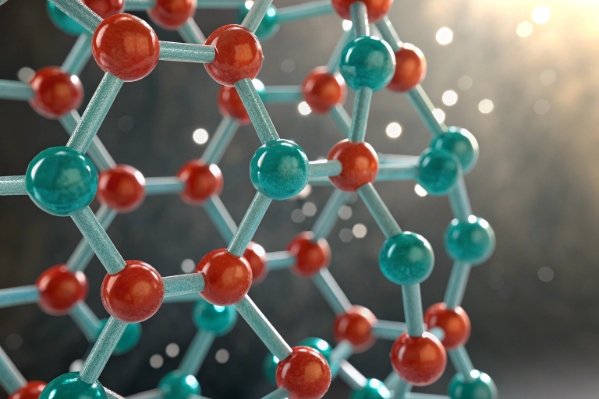
MgO (Magnesia): The refiner. Because the Mg ion is smaller, it has a higher "field strength" 3. It pulls the oxygen atoms closer together, tightening the glass network.
The secret lies in the Mixed Alkaline Earth Effect. When you use both CaO and MgO rather than just CaO alone, the different ion sizes pack more efficiently. This creates a more stable, rigid glass structure that is less prone to expanding under heat and less prone to breaking down.
Understanding this ratio is key to fine-tuning a "standard" soda-lime bottle into one that can handle the rigors of a hot-fill line without the high cost of borosilicate.
How does the MgO-to-CaO balance change thermal expansion and thermal shock resistance in container glass?
Thermal shock occurs when the glass expands too much, too fast. We can dampen this reaction by tightening the atomic structure using Magnesium.
Increasing the MgO proportion (relative to CaO) generally lowers the Coefficient of Thermal Expansion (CTE) and increases the glass’s thermal shock resistance. MgO creates a stronger field strength than CaO, limiting the atomic vibration and expansion that occurs when heat is applied.
The CTE Reduction Mechanism
The Coefficient of Thermal Expansion 4 (CTE) for soda-lime glass is driven by the breaking and stretching of bonds.
-
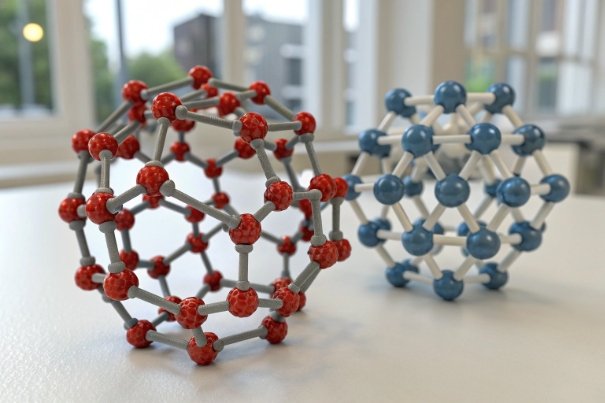
High CaO Glass: The larger Calcium ions create a slightly more "open" network. Under heat, this structure expands readily.
-
High MgO Glass: The smaller, stronger Magnesium ions tighten the network. They act like stiffer springs between the atoms.
In practical terms, shifting from a pure Limestone mix (High CaO) to a Dolomite mix (CaO + MgO) can drop the CTE from ~92 x 10⁻⁷/°C to ~88 x 10⁻⁷/°C. While small, this reduction—combined with the reduction in defects—can increase the thermal shock survival limit (ΔT) by 3°C to 5°C. In a factory running millions of bottles, that safety margin matters.
Viscosity and "Length"
MgO also changes the viscosity curve.
-
High CaO: makes the glass "Short" (it sets very fast). This freezes in stress quickly.
-
High MgO: makes the glass "Long" (it stays workable over a wider temperature range).
This "Length" is critical for Annealing. A "Longer" glass allows more time for internal stresses to relax in the annealing lehr 5 before the bottle hardens completely. Better annealing = Lower residual stress = Higher thermal shock resistance.
What MgO-to-CaO targets help balance hot-fill durability with forming stability and the annealing window?
You cannot simply swap all Calcium for Magnesium. Too much MgO causes the glass to set too slowly (limiting machine speed). You need a specific "Dolomitic Sweet Spot."
The ideal target for high-performance container glass is a total Alkaline Earth content (CaO + MgO) of 10%–12%, with a specific MgO level of 2.0%–4.0% and CaO of 9.0%–11.0%. This roughly 1:3 or 1:4 ratio optimizes the "working range" for forming while securing the thermal benefits.
The "Dolomite" Strategy
Most modern bottle plants use Dolomite ($CaMg(CO_3)_2$) as a raw material because it naturally provides this beneficial ratio.
-
Low MgO (< 0.5%): (Calcite Glass). Common in flat glass (windows) but risky for bottles. The glass devitrifies easily (forming stones) and has higher expansion. Avoid for Hot-Fill.
-
Target MgO (2.5% – 3.5%): (Dolomite Glass). The industry standard for quality bottles. It lowers the "Liquidus Temperature" 6 (the temp where crystals form), making the glass safer to melt and form.
-
High MgO (> 5.0%): Rare in bottles. It makes the glass too "stiff" at melting temperatures and too "runny" at forming temperatures (strange viscosity behavior), causing molding defects.
Impact on Hot-Fill Lines
For a hot-fill line running at 85°C:
-
We target CaO ~10.5% and MgO ~2.5%.
-
This mix provides a lower CTE than pure Calcite glass.
-
It ensures the bottom of the bottle (the thickest part) anneals thoroughly, removing the residual tension that usually causes "bottom drop-out" failures during filling.
| Glass Type | Typical CaO % | Typical MgO % | Ratio (MgO:CaO) | Thermal Performance |
|---|---|---|---|---|
| Limestone (Flat Glass) | ~9.0% | ~4.0% | 0.44 | Moderate |
| Calcite Bottle | ~11.0% | < 0.5% | < 0.05 | Poor (Prone to Stones) |
| Dolomite Bottle (Ideal) | 10.0% – 10.5% | 2.0% – 3.0% | ~ 0.25 | Optimal (Balanced) |
| High Magnesia | < 8.0% | > 4.0% | > 0.5 | Difficult to Melt |
How can an imbalanced MgO/CaO composition increase devitrification risk and create heat-sensitive defects in bottles?
The most dangerous enemy of a hot-filled bottle is not the glass itself, but the imperfections within the glass. An imbalance in stabilizers triggers the growth of microscopic crystals.
An imbalance (specifically too much CaO without enough MgO) raises the "Liquidus Temperature," causing the glass to crystallize (devitrify) into Wollastonite stones. These stones have a different expansion rate than the surrounding glass, acting as massive stress concentrators that explode under thermal shock.
The Curse of Devitrification
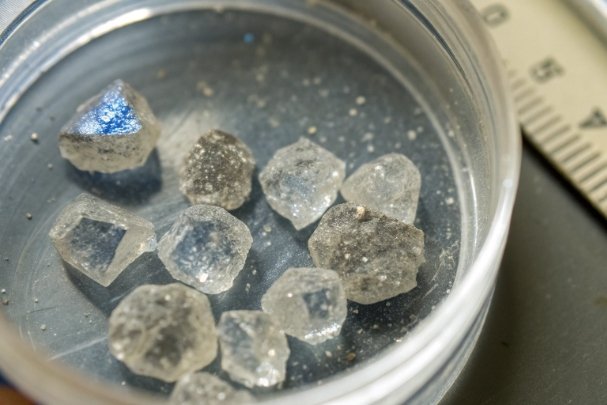
Glass is supposed to be amorphous (random). If it gets "confused" during cooling, it tries to organize into crystals. This is Devitrification.
-
Wollastonite ($CaSiO_3$): The most common crystal in bottle glass. It forms if CaO is too high (>13%) and MgO is too low.
-
The Stone Effect: Imagine a tiny stone embedded in the glass wall.
-
Glass Expansion: 90 x 10⁻⁷/°C.
-
Stone Expansion: 65 x 10⁻⁷/°C.
-
Result: When you pour hot tea into the bottle, the glass pulls away from the stone. The interface tears, and a crack shoots out.
-
MgO as the Anti-Crystal Agent
Adding MgO lowers the Liquidus Temperature. It essentially "confuses" the crystal formation structure, preventing Calcium Silicate 7 crystals from growing.
-
Without MgO: Liquidus might be 1050°C. (Risky – crystals form in the feeder).
-
With MgO: Liquidus drops to 980°C. (Safe – no crystals form).
For our clients, this means a "cleaner" glass. A bottle free of micro-stones is a bottle that survives the filler.
You can’t test the ratio by looking at the bottle. You need chemistry data. Validating the inputs ensures the outputs will survive your line.
Require a Chemical Composition (XRF) Report to verify the MgO content is >2.0%. Additionally, request the "Liquidus Temperature" measurement to assess devitrification risk and the "Softening Point" data to confirm proper viscosity characteristics.

1. XRF Composition Analysis
This is your primary verification tool.
-
Check: Look for the MgO column.
-
Good: 2.0% – 3.5%. (Indicates Dolomite usage = Tougher glass).
-
Bad: < 1.0%. (Indicates pure Limestone = Brittle, stone-prone glass).
-
2. Liquidus Temperature Test (ASTM C829)
This tells you how stable the glass is.
-
The Test: Glass is heated in a gradient furnace to see where crystals start to grow.
-
Target: You want a Liquidus Temperature lower than 1000°C (or significantly lower than the feeder temperature).
-
Meaning: A lower Liquidus means the factory used the right MgO/CaO balance to prevent stones.
3. Density Measurement
Density is a quick proxy for composition stability.
-
Consistency: If the density fluctuates day-to-day (e.g., 2.50 one day, 2.52 the next), it means the MgO/CaO ratio is swinging. This inconsistency leads to "cord" (streaks of different glass), which is a major cause of thermal breakage 9.
-
Requirement: Density should be stable to ±0.002 g/cm³.
| Verification Metric | Source Document | Target Value | Why it matters |
|---|---|---|---|
| MgO Content | XRF Report | 2.0% – 3.5% | Lowers expansion & prevents stones. |
| CaO Content | XRF Report | 10.0% – 11.0% | Main stabilizer; too high = stones. |
| Liquidus Temp | Lab Report | < 1000°C | Ensures crystal-free glass. |
| Homogeneity | Cord Rating (Polariscope 10) | Grade B or better | Inconsistent ratio = Cords = Breakage. |
Conclusion
While often overlooked, the MgO-to-CaO ratio is a fundamental determinant of a bottle’s structural integrity. A healthy dose of Magnesium (2.0%–3.5%) lowers thermal expansion, broadens the annealing window, and most importantly, prevents the formation of deadly micro-stones. Always check the XRF report to ensure your supplier is using a balanced Dolomite recipe.
Footnotes
-
A sedimentary rock composed largely of the minerals calcite and aragonite. ↩
-
An anhydrous carbonate mineral composed of calcium magnesium carbonate. ↩
-
A concept in chemistry describing the electrostatic field strength of an ion. ↩
-
A measure of how much a material expands per degree of temperature change. ↩
-
A specialized oven used in glass manufacturing to anneal and cool bottles under controlled conditions. ↩
-
The temperature above which a material is completely liquid. ↩
-
A chemical compound commonly found in devitrified glass stones. ↩
-
X-ray fluorescence, a non-destructive analytical technique used to determine the elemental composition of materials. ↩
-
Fracture of a material caused by thermal stress due to temperature gradients. ↩
-
An optical instrument used to detect internal stresses and inhomogeneities in glass. ↩






