
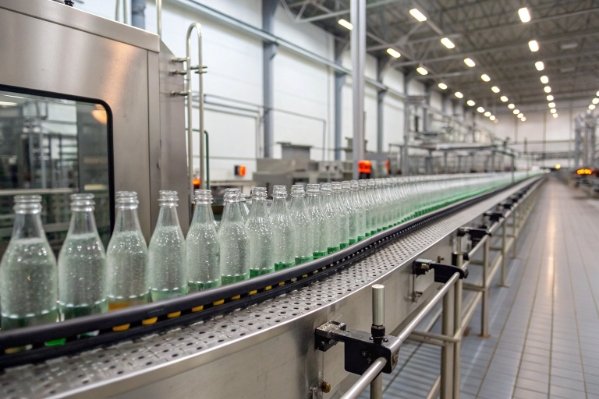
The difference between a successful production run and a floor covered in broken glass often comes down to a simple math equation involving temperature.
Glass bottles should be pre-warmed to a temperature that keeps the difference ($\Delta T$) between the glass and the hot liquid below 42°C. For a standard hot-fill at 90°C, the empty bottle must be pre-heated to at least 50°C (ideally 60°C) to prevent immediate thermal shock fracture.
The "Delta T" Safety Rule
At FuSenglass, we drill one concept into every production manager’s head: Respect the $\Delta T$ (Delta T).
$\Delta T$ is the temperature difference between the glass and the liquid. Standard soda-lime glass has a thermal shock 1 limit of roughly 42°C.
-
If your warehouse is 20°C.
-
And your juice is 90°C.
-
The $\Delta T$ is 70°C.
-
Result: The bottle explodes.
To fix this, you don’t lower the juice temperature (which would risk food safety); you raise the bottle temperature. By heating the bottle to 60°C, the gap drops to 30°C, which is well within the safe zone for standard glass.
What hot-fill product temperature range is commonly used for juices, sauces, and acidic beverages in glass bottles?
The filling temperature is dictated by food safety requirements (pasteurization units) to kill bacteria and ensure shelf stability without preservatives.
Common hot-fill temperatures range from 85°C to 95°C (185°F – 203°F). High-acid juices typically fill at ~88°C, while denser products like tomato sauces and jams may require temperatures up to 92°C-95°C to ensure sterilization of the container surface.
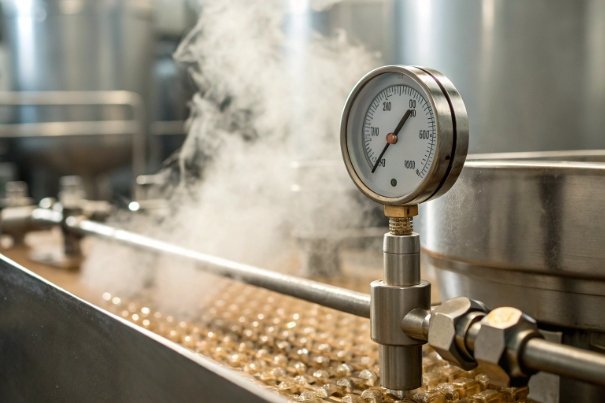
Typical Industry Standards
The "Hot Fill" process relies on the heat of the product to sterilize the inside of the bottle and the cap.
-
Acidic Juices / Teas (pH < 4.6):
-
Target: 85°C – 88°C.
-
Why: Sufficient to kill spoilage organisms (yeast/mold) in acidic environments.
-
-
Tomato Sauces / Salsas:
-
Target: 90°C – 93°C.
-
Why: Higher density requires more heat to ensure the center of the jar reaches sterilization 2 temp; also aids in vacuum formation for the safety button pop.
-
-
Jams / Preserves:
-
Target: 85°C – 90°C.
-
Why: Viscosity handling; ensures the gel sets properly upon cooling.
-
-
Isotonic Drinks:
-
Target: 82°C – 85°C.
-
Why: Lower limit, but requires strict hygiene control.
-
What pre-warming temperature should empty glass bottles reach to reduce thermal shock during filling?
You cannot fill a cold bottle with hot liquid. The pre-warming tunnel is the critical "bridge" that allows the glass to survive the process.
Empty glass bottles should be pre-warmed to within 30°C – 40°C of the filling temperature. For a 90°C fill, the target bottle temperature is 50°C to 60°C. This creates a safety buffer, ensuring the thermal shock remains below the critical 42°C threshold.
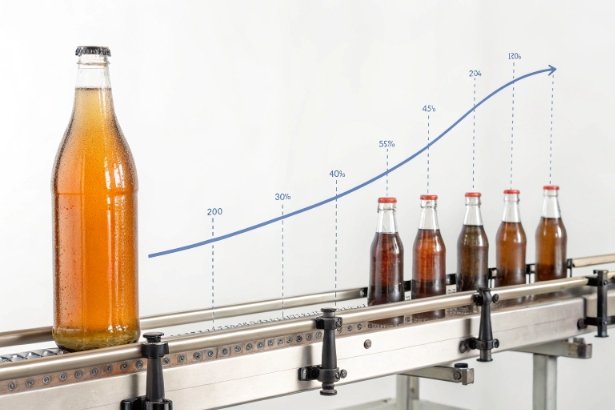
Calculating Your Target Temp
Use this formula to set your pre-heating tunnel:
$$T{bottle} > T{fill} – 40$$
Example Scenario:
-
Fill Temp: 92°C (Hot Sauce).
-
Safety Margin: 40°C.
-
Minimum Bottle Temp: $92 – 40 = 52°C$.
-
Recommended Setpoint: Aim for 60°C to account for cooling as the bottle moves from the tunnel to the filler.
Methods of Warming:
-
Steam Tunnel: Fast and effective, also cleans the bottle.
-
Hot Water Rinse: Common in beverage lines; uses recycled water from the cooling tunnel.
-
Hot Air: Used for products that cannot tolerate moisture (like oils), though slower.
Risk Factor:
If the bottle is too hot (> 70°C), it becomes difficult to handle, and the $\Delta T$ on the outside might become an issue if the ambient air is freezing, though this is rare.
How can the temperature difference between the liquid and the glass be controlled to prevent cracking at the finish and shoulder?
The finish (neck) and shoulder are the most vulnerable points because they are often thinner or structurally complex.
Control the temperature difference by ensuring the pre-heating is uniform—targeting the thicker base and shoulder specifically. Additionally, protect the finish from drafts between the pre-heater and the filler, and ensure the filling nozzle does not drip onto the rim, which causes localized thermal shock.
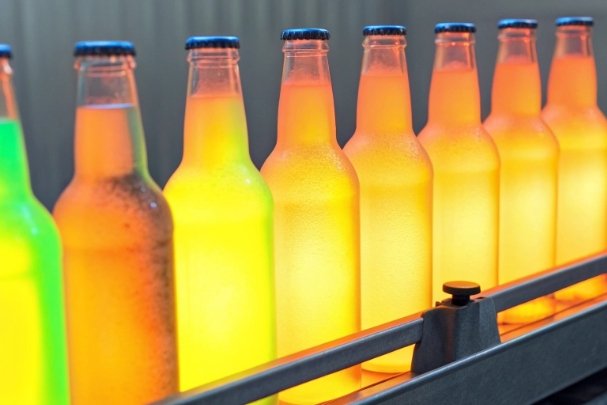
Managing the "Cold Spots"
A bottle coming out of a pre-heater isn’t always the same temperature everywhere.
1. The Shoulder Shielding Effect:
In a dense line, bottles touch. The sides and shoulders might be shielded from the hot water spray or steam.
- Solution: Use "multidirectional" spray nozzles in the warmer to hit the bottle from the bottom and top, ensuring the shoulder (a high-stress zone) is fully heated.
2. The Finish Cooling Rate:
The neck is thin. It loses heat fastest. If the conveyor from the warmer to the filler is long, the body might stay at 50°C, but the neck might drop to 30°C. When the 90°C liquid hits, the neck cracks ("Check" 3).
- Solution: minimize the distance between warmer and filler. If line stops occur, automatically reject the bottles that have been sitting and cooling.
3. Nozzle Alignment:
If the filling nozzle is misaligned, hot liquid might stream down the side of the neck rather than going straight to the bottom. This creates a massive, localized thermal gradient on the glass wall.
- Solution: Ensure laminar flow filling directly into the center.
What cooling profile and hold time after capping help avoid breakage, vacuum loss, and deformation in hot-fill glass bottles?
The process isn’t over once the cap is on. Rapid cooling can cause the same breakage as rapid heating ("Cold Shock").
After capping, hold the bottle for 1-3 minutes (often tilted) to sterilize the headspace. Then, use a "Stepped Cooling" tunnel with zones (e.g., 70°C $\to$ 50°C $\to$ 30°C) to gradually lower the temperature. This prevents cold-shock breakage and manages the vacuum formation to avoid paneling or cap failure.
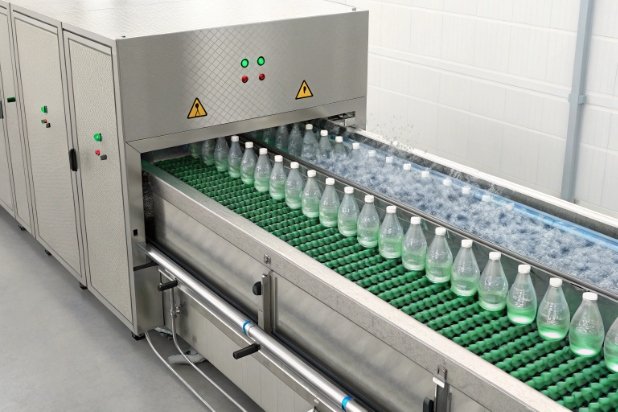
The Cooling Tunnel Strategy
You just filled a bottle at 90°C. You cannot spray it with 20°C tap water. That is a $\Delta T$ of 70°C. It will shatter.
Step 1: The Sterilization Hold (1-3 mins)
Keep the bottle hot. Often, bottles are laid on their side or inverted. This allows the 90°C liquid to kill bacteria on the inside of the cap and the headspace 4.
Step 2: Zone 1 (Tempering – 70°C)
Spray with warm water (~65°C – 70°C). This removes the bulk heat without shocking the glass. It brings the glass surface temp down gently.
Step 3: Zone 2 (Intermediate – 50°C)
Spray with lukewarm water (~45°C – 50°C). The product inside starts to cool.
Step 4: Zone 3 (Final Cool – 30°C)
Spray with ambient/cold water. By now, the glass is cool enough to handle this.
- Vacuum Note: As the product cools from 90°C to 30°C, it shrinks. This creates the vacuum that pops the safety button. If you cool too fast, the vacuum forms instantly, which can sometimes suck in the finish or liner before it sets. Gradual cooling allows the liner to mold to the glass.
Cooling Profile Table
| Zone | Water Temp | Bottle Surface Temp | $\Delta T$ | Risk |
|---|---|---|---|---|
| Filler | (Product 90°C) | 60°C | 30°C | Safe |
| Cool Zone 1 | 65°C | 90°C $\to$ 75°C | 25°C | Safe |
| Cool Zone 2 | 45°C | 75°C $\to$ 55°C | 30°C | Safe |
| Cool Zone 3 | 25°C | 55°C $\to$ 35°C | 30°C | Safe |
Conclusion
Hot filling is a thermodynamic dance. By pre-warming your bottles to >50°C and ensuring a stepped cooling process, you keep the glass within its natural safety limits, ensuring your product is sterile and your floor is dry.
Footnotes
-
Stress caused by rapid temperature changes, potentially causing glass fracture. ↩
-
A process that eliminates or kills all forms of life and other biological agents. ↩
-
A small, often invisible crack in glass caused by thermal or mechanical stress. ↩
-
The unfilled space in a container above the product, crucial for vacuum formation. ↩






