
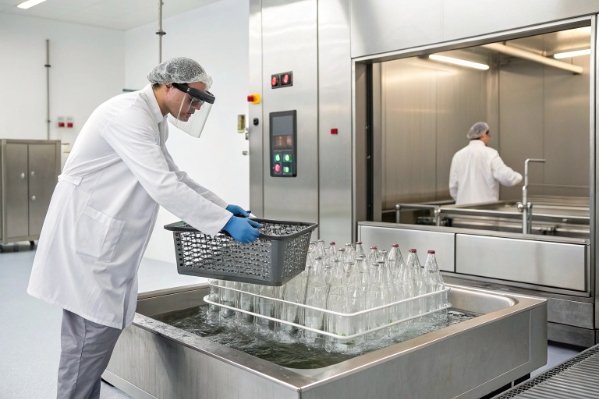
Exploding bottles on a hot-fill line are a production manager’s nightmare, often stemming from a fundamental misunderstanding of the material’s thermal limits.
Yes, heat resistance is directly tied to the glass material’s Coefficient of Thermal Expansion (CTE). While design plays a role, the chemical composition—specifically the presence of Boron Oxide—determines whether a bottle acts as a fragile vessel or a heat-resistant tank under thermal stress.
The Physics of Thermal Stress
At FuSenglass, we often field urgent calls from clients whose bottles are cracking during pasteurization or candle filling. The first question I ask is always: "What glass are you using, and what is the temperature difference?"
Glass is a poor conductor of heat 1. When you pour hot liquid into a cold bottle, the inner surface expands instantly while the outer surface remains cool and contracted. This creates a war of forces: tension on the outside, compression on the inside. Since glass is weak in tension, if this stress exceeds the material’s strength, it rips apart.
The "Heat Resistance" of a bottle isn’t just about how hot it can get before melting (which is over 1000°C for all glass). It’s about Thermal Shock Resistance—the ability to withstand a sudden change in temperature ($\Delta T$). This is entirely dependent on how much the glass expands when heated. A material that expands significantly (like standard soda-lime) generates massive internal stress. A material that barely expands (like borosilicate) generates very little stress, making it inherently heat-resistant.
Glass Material Thermal Hierarchy
| Property | Standard Soda-Lime (Type III) | Borosilicate (Type I) |
|---|---|---|
| Primary Use | Beverage, Food, Cosmetic | Labware, Bakeware, Pharma |
| Expansion (CTE) | High (~9.0 $\times 10^{-6}/K$) | Low (~3.3 $\times 10^{-6}/K$) |
| Thermal Shock Limit | Low ($\Delta T \approx 42°C$) | High ($\Delta T \approx 120°C$) |
| Cost | Low | High (3-4x cost) |
| Brittleness | Standard | Standard (but less stress-prone) |
How do soda-lime glass and borosilicate glass differ in thermal shock resistance and maximum service temperature for bottles?
Choosing the wrong glass type for a hot-fill process is a recipe for catastrophic line failure and dangerous breakage.
Borosilicate glass offers superior thermal shock resistance ($\Delta T$ > 120°C) compared to Soda-Lime glass ($\Delta T$ ~ 40°C) due to its lower expansion rate. While both can withstand gradual heating up to 400°C, Soda-Lime glass will shatter if cooled or heated rapidly, making Borosilicate essential for extreme temperature fluctuations.
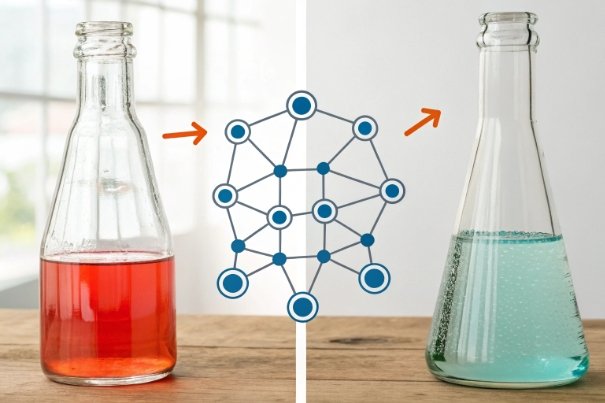
The Battle of the Materials
In the container industry, 90% of bottles are Soda-Lime Glass. It is excellent for ambient products. However, its limitation is the "Delta T" ($\Delta T$).
-
Soda-Lime Limits: If you take a soda-lime bottle from a 20°C warehouse and fill it with 85°C jam, the $\Delta T$ is 65°C. This exceeds the safe limit (~42°C). The bottle is highly likely to crack unless it is pre-heated.
-
Borosilicate Supremacy: Borosilicate glass 2 (often known by brand names like Pyrex) replaces alkali ions with Boron Oxide 3. This creates a tighter atomic network that simply doesn’t move much when heated. You can take a borosilicate bottle from a freezer and pour boiling water into it ($\Delta T$ 100°C), and it will survive.
Maximum Service Temperature:
Ideally, both glasses can sit in an oven at 200°C without melting. The issue isn’t the high temperature; it’s the cooling down. Soda-lime glass requires very slow cooling (annealing 4) to prevent breakage. Borosilicate can be cooled much faster. This is why laboratory beakers are always Borosilicate, while wine bottles are Soda-Lime.
Thermal Performance Data
| Metric | Soda-Lime Glass (Type III) | Borosilicate Glass (Type I) | Practical Implication |
|---|---|---|---|
| CTE (Expansion) | $9.0 \times 10^{-6} K^{-1}$ | $3.3 \times 10^{-6} K^{-1}$ | Soda-lime expands 3x more, creating 3x more stress. |
| Shock Resistance ($\Delta T$) | ~ 42°C (Safe Limit) | ~ 120°C (Safe Limit) | Soda-lime needs pre-heating for hot fills (>60°C). |
| Max Working Temp | ~ 450°C (Short term) | ~ 500°C (Short term) | Both handle high heat if change is gradual. |
| Strain Point | ~ 510°C | ~ 515°C | Similar annealing profiles needed. |
How do glass composition and CTE (coefficient of thermal expansion) determine whether bottles crack during hot filling or sudden cooling?
The secret to preventing cracks lies in the atomic recipe; ingredients that restrict molecular movement prevent the tension that tears glass apart.
The Coefficient of Thermal Expansion (CTE) is the definitive predictor of thermal failure. High-alkali compositions (Soda-Lime) have high CTEs, leading to rapid expansion and fatal tensile stress during temperature spikes. Adding Boron Oxide lowers the CTE, minimizing expansion and virtually eliminating the risk of thermal cracking.
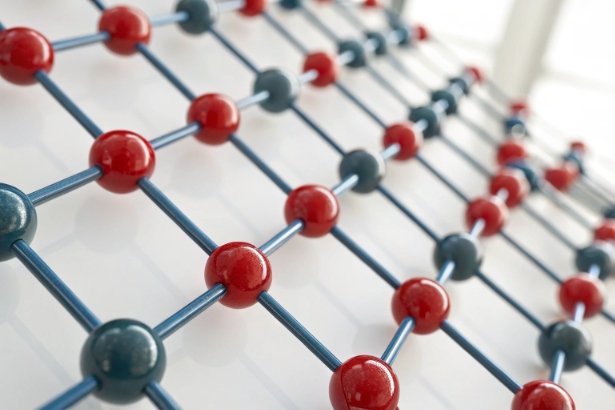
The Chemistry of Expansion
Why does glass crack? It’s a mechanical failure caused by differential expansion.
Imagine the glass wall as a series of layers.
-
Hot Filling: Hot liquid touches the inner layer. The inner layer gets hot and tries to expand. The outer layer is still cold and rigid. The inner layer pushes against the outer layer, putting the outer surface into Tension.
-
Sudden Cooling: A hot bottle enters a cold water bath. The outer layer cools and contracts instantly. The inner layer is still hot and expanded. The outer layer "squeezes" the inner layer, but glass doesn’t squeeze well—it snaps.
The Role of Composition:
-
Sodium ($Na_2O$) & Calcium ($CaO$): These are "fluxes" used in Soda-Lime glass to lower the melting point (saving energy). However, these atoms are "loose" in the silica network. When heated, they vibrate wildly, causing the glass to expand significantly. High Soda = High CTE = High Breakage Risk.
-
Boron ($B_2O_3$): Boron creates strong covalent bonds with Silica 5. It acts as a network stabilizer. It restricts the vibration of the network. Even when heated, the structure holds its shape. Low expansion means low stress.
At FuSenglass, when a client needs a bottle for candle pouring (hot wax) or sterilization (autoclave), we check the CTE. If it’s $9.0$, we warn them about the $\Delta T$. If it’s $3.3$, we give the green light.
Composition Effects on Thermal Properties
| Oxide Component | Effect on Structure | Effect on CTE | Resulting Heat Resistance |
|---|---|---|---|
| Silica ($SiO_2$) | The Backbone | Low | High (Quartz is best). |
| Sodium ($Na_2O$) | The Loosener | Increases Drastically | Lowers resistance significantly. |
| Calcium ($CaO$) | The Stabilizer | Increases | Moderate impact. |
| Boron ($B_2O_3$) | The Cross-Linker | Decreases Drastically | Increases significantly. |
Besides material, how do wall thickness, bottle design, and annealing quality affect heat resistance in glass bottles?
A well-designed soda-lime bottle can outperform a poorly designed borosilicate one; geometry and stress relief are just as critical as the raw material.
Even with standard glass, uniform wall thickness and proper annealing are critical for heat resistance. Uneven walls create "thermal gradients" where thick sections cool slower than thin ones, generating stress. Sharp corners act as stress concentrators, and poor annealing leaves "locked-in" tension that makes the bottle a ticking time bomb.
Engineering for Heat
I often correct a common myth: "Thicker glass is stronger against heat."
False. Thicker glass is actually worse for thermal shock.
Why? Because glass is an insulator. If the wall is very thick, it takes longer for heat to travel from the inside to the outside. This creates a massive temperature difference (gradient 6) within the wall itself. A thin, uniform wall (like a laboratory beaker) allows heat to transfer quickly, equalizing the temperature and reducing stress.
1. Wall Uniformity:
The enemy is variation. If a bottle has a "heavy bottom" (thick base) and thin sidewalls, the base will stay hot while the walls cool. The interface between the thick and thin sections becomes a stress zone where cracks originate. We aim for a "Glass Weight to Volume" ratio that ensures even distribution.
2. Geometry and Shape:
-
Round is Best: A cylinder expands evenly in all directions.
-
Square is Risky: Corners are stress concentrators. When a square bottle expands, stress focuses on the corners. If you are hot-filling, avoid sharp square designs; use rounded corners (large radii).
3. Annealing (The Hidden Factor):
Every glass bottle is born with internal stress from the molding process. It must pass through an "Annealing Lehr 7" (a cooling tunnel) to relieve this stress. If the annealing is rushed, the bottle retains "residual stress." A bottle with residual stress might look fine, but it has already used up 50% of its strength capability. When you add thermal shock on top of that, it fails immediately.
Design Optimization Table
| Feature | Poor Design for Heat | Optimized Design for Heat | Physics Reason |
|---|---|---|---|
| Wall Thickness | Very Thick / Variable | Thin & Uniform | Reduces thermal gradient across the wall. |
| Shape | Square / Sharp Corners | Cylindrical / Rounded | Distributes expansion stress evenly. |
| Bottom Profile | Heavy/Thick Base | Push-up (Punt) | Reduces glass mass at the base center. |
| Annealing | Fast Cooling (Grade 3-4) | Precision Cool (Grade 1-2) | Removes pre-existing tension load. |
What heat-resistance tests (thermal shock ΔT, hot-fill simulation, annealing stress checks) should buyers specify for heat-safe glass bottles?
You cannot rely on luck for thermal safety; you must specify rigorous testing protocols to validate the bottle’s thermal endurance limits.
Buyers must specify the ASTM C149 Thermal Shock Test to determine the safe temperature differential ($\Delta T$). Additionally, polarized light inspection (Polariscope) is mandatory to verify annealing quality, and a Hot-Fill Simulation should be performed with the actual production line parameters.
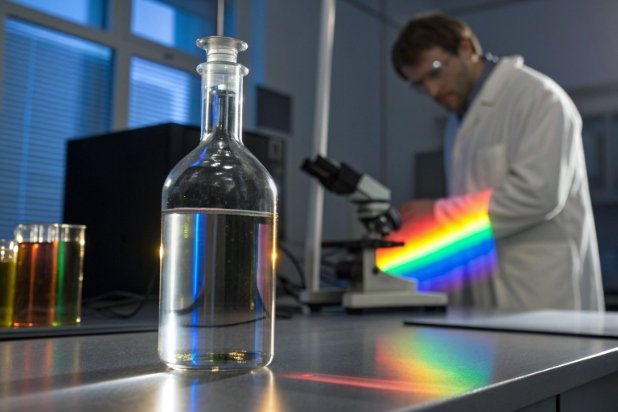
The Validation Toolkit
If you plan to hot-fill (e.g., jam at 85°C, candles at 70°C, or pasteurization), you must demand these tests in your Quality Agreement.
1. Thermal Shock Test (ASTM C149):
This is the gold standard.
-
Procedure: We heat a basket of bottles in a water bath to a specific temperature (e.g., 65°C). We then instantly transfer them into a cold water bath (e.g., 23°C). The difference is the $\Delta T$ (42°C).
-
Criteria: For Soda-Lime glass, we typically require a pass rate of 100% at $\Delta T = 42^\circ C$. If you need higher, you must specify it, and we might need to modify the process or material.
2. Annealing (Residual Stress) Check:
We use a Polariscope. This device shines polarized light through the glass. Stress appears as a rainbow pattern (birefringence 8).
-
Limit: For hot-fill ware, the Temper Number should be Grade 2 or lower. Grade 3 or 4 means the bottle has high internal tension and will likely crack when heated.
3. Real-World Simulation:
Lab tests are great, but the line is reality. We recommend a pilot run. Fill 100 bottles at your target temperature. Cap them. Let them cool. Inspect for "delayed breakage" (cracks that appear 24 hours later).
Testing Protocol Matrix
| Test Name | Standard | Purpose | Acceptance Criteria |
|---|---|---|---|
| Thermal Shock | ASTM C149 10 / ISO 7459 | Determine resistance to sudden temp change. | No breakage @ $\Delta T = 42^\circ C$. |
| Polariscope | ASTM C148 | Measure residual internal stress. | < Grade 2 (Real Temper). |
| Hot Fill Sim | Custom | Validate filling line capability. | 0% Breakage during cooling. |
| Wall Thickness | Ultrasonic Gauge | Ensure no "thin spots" or "thick bases". | Min/Max ratio < 2:1. |
Conclusion
Heat resistance is not magic; it is physics. By choosing the right material (Borosilicate vs. Soda-Lime) and respecting the limits of thermal expansion through proper testing, you can ensure your hot product stays safely inside the bottle.
Footnotes
-
Explains how heat transfer rates affect internal stress in glass materials. ↩
-
A glass type with low thermal expansion, ideal for high-heat applications. ↩
-
A key chemical compound that reduces thermal expansion in glass networks. ↩
-
A controlled cooling process used to remove internal residual stresses. ↩
-
The primary chemical compound forming the backbone of the glass structure. ↩
-
The physical quantity describing the direction and rate of temperature change. ↩
-
A specialized temperature-controlled kiln used for annealing glass bottles. ↩
-
An optical property allowing the visualization of stress patterns in glass. ↩
-
Standard test method for polariscopic examination of glass containers. ↩
-
Standard test method for thermal shock resistance of glass containers. ↩






