
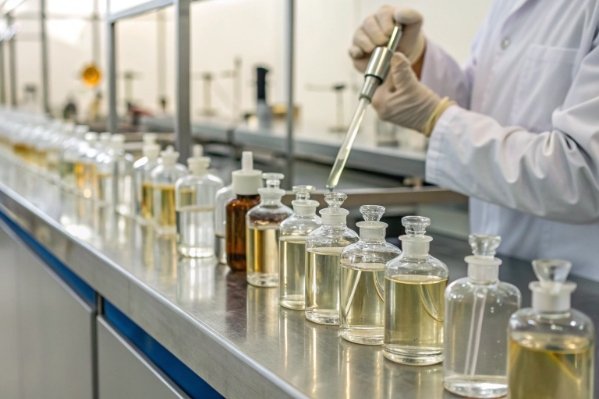
Perfume stability is a delicate chemistry. When a fragrance turns cloudy or changes scent after months on the shelf, the culprit is often a silent reaction between the juice’s acidity and the bottle’s surface.
Fragrance acid value indicates the concentration of free fatty acids. While glass is chemically resistant to most acids, high acid values accelerate the leaching of alkali ions (sodium) from soda-lime glass. This ion exchange causes pH shifts, precipitate formation (haze), and potential destabilization of the perfume structure.
The Invisible Chemistry of Scent and Silica
As the face of FuSenglass, I work with perfumers who treat their formulas like liquid gold. They obsess over top notes and base notes, but often overlook the vessel that holds them. A common misconception is that because glass is "inert," it plays no role in the chemical life of the perfume. This is false, especially for natural or high-acid fragrances.
Glass is indeed the most stable packaging material available—far superior to plastic or aluminum for reactive compounds. However, standard soda-lime glass 1 (which makes up 90% of the perfume bottle market) is not chemically neutral. It is inherently alkaline due to the sodium oxide ($Na_2O$) used to lower the melting temperature of the sand.
When you introduce a fragrance with a measurable Acid Value, you create a battery. The hydrogen ions ($H^+$) in the acidic fragrance want to trade places with the alkali ions ($Na^+$) in the glass surface. This process is called Ion Exchange 2.
Why This Matters for B2B Buyers
If you are bottling a synthetic, neutral-pH fragrance, this interaction is negligible. But the industry is shifting towards natural ingredients, essential oils, and organic solvents. These naturally possess higher acid values.
- The Risk: The acid pulls sodium out of the glass. The sodium raises the pH of your fragrance.
- The Consequence: Your carefully balanced "Acidic" floral note might become "Soapy" or flat as the pH rises. Furthermore, the sodium can react with other components to form insoluble salts—those dreaded "flakes" or "haze" that ruin the look of a premium clear bottle.
We must look at Acid Value not just as a number on a CoA (Certificate of Analysis), but as a predictor of packaging behavior.
What is “acid value” in fragrance oils, and why do buyers care?
Acid value is the chemical fingerprint of potential aggression. It tells us how much "free" acid is available to react with the packaging, serving as a critical indicator of stability and compatibility.
Acid value represents the mass of potassium hydroxide (mg KOH) required to neutralize the free fatty acids in 1 gram of oil. For packaging buyers, a rising acid value signals potential oxidation (aging) of the oil or a naturally aggressive formula that may interact with glass modifiers and destabilize the liquid’s pH.
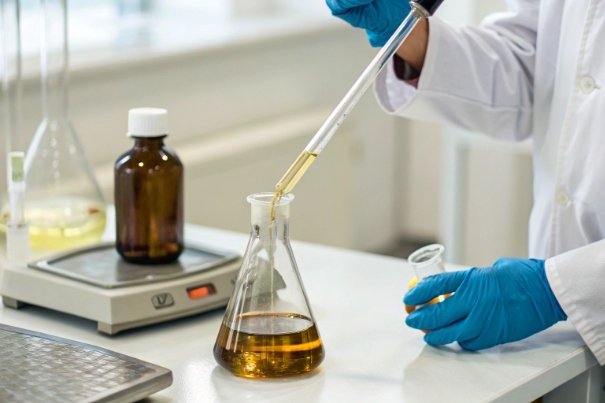
Defining the Metric
In technical terms, Acid Value 3 (AV) quantifies the amount of free carboxylic acid groups present. In fresh synthetic fragrances, this number is usually low. In natural oils (like citrus or aged patchouli), it can be quite high.
- Low AV (< 1.0): Typical for stable, synthetic esters and musks.
- Medium AV (1.0 – 5.0): Common in fragrances with natural absolutes.
- High AV (> 5.0): Found in certain essential oils, aged materials, or specific "sour" accords.
The Buyer’s Perspective
Why should a procurement manager at a perfume house care about this chemistry?
- Prediction of Shelf Life: Acid value often increases over time as esters hydrolyze or aldehydes oxidize. If you start with a high AV, you have less runway before the product spoils.
- Interaction Potential: The higher the free acid content, the more "driving force" there is for the liquid to extract elements from the container. It acts as a solvent for specific metal oxides.
- Cap and Pump Failure: As we discussed with essential oils, acids attack plastics and metals. A high AV fragrance is much more likely to corrode the aluminum spring in a spray pump or soften the inner liner of a cap.
| Fragrance Type | Typical Acid Value (mg KOH/g) | Packaging Risk Level |
|---|---|---|
| Synthetic Floral | 0.1 – 1.0 | Low (Safe in standard glass). |
| Natural Citrus | 1.0 – 3.0 | Medium (Watch for terpenes). |
| Aged Patchouli/Vetiver | 5.0 – 10.0+ | High (Leaching risk). |
| High Vanillin Content | Variable | Medium (Discoloration risk). |
Understanding the baseline is step one. Step two is defining the danger zone.
At what acid value range could fragrances increase risks like haze or staining?
Glass is tough, but it has a breaking point. When acidity crosses a certain threshold, the kinetic exchange of ions creates visible defects that can result in product recall.
Risks of surface haze and alkali leaching significantly increase when the Acid Value exceeds 3.0 to 5.0 mg KOH/g. At this level, the concentration of hydrogen ions drives rapid ion exchange with the glass surface, leading to "blooming" (salt deposits) and potential discoloration of the juice.
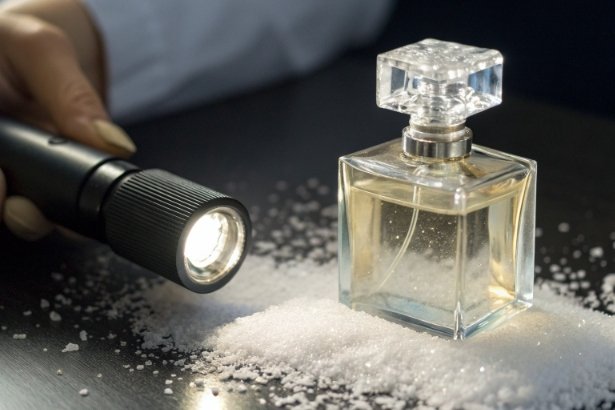
The "Blooming" Phenomenon
Have you ever seen a vintage perfume bottle that looks slightly foggy inside, even though it’s clean? That is Glass Bloom (or weathering 4).
When a high-acid fragrance sits in a soda-lime bottle:
- The Acid ($H^+$) penetrates the surface silica gel 5 layer.
- It kicks out the Sodium ($Na^+$).
- The Sodium reacts with the acid anions (like citrates or acetates) or atmospheric $CO_2$.
- This forms tiny crystals of Sodium salts on the glass wall.
To the consumer, this looks like dust or mold inside the glass. It destroys the "crystal clear" aesthetic of luxury perfumery.
Ion Leaching and Discoloration
The leaching of sodium does more than just haze the glass; it alters the liquid.
- pH Shift: The release of alkali (sodium) creates a local pH spike at the glass wall. Many fragrance dyes and natural colorants are pH-sensitive (think of how litmus paper works). A beautiful pale pink juice can turn orange or gray because the glass changed the local pH.
- Trace Metal Extraction: If the glass is not high quality (i.e., not "Super Flint"), the acid might extract trace iron or manganese impurities. Iron turns liquids yellow/brown. If your "Ice Blue" cologne turns "Swamp Green" after 6 months, check the Acid Value and the glass quality.
The Role of Water
It is important to note that water is the catalyst. A 100% oil-based perfume (attar) with high AV is less aggressive to glass than an Eau de Toilette (alcohol + water) with high AV. The water provides the medium for the ions to move.
| Acid Value Range | Expected Glass Interaction | Visual Defect |
|---|---|---|
| 0 – 2 mg KOH/g | Negligible. | None. |
| 2 – 5 mg KOH/g | Slow Ion Exchange. | Potential slight pH shift over 1-2 years. |
| > 5 mg KOH/g | Rapid Leaching. | Haze / Bloom / Sediment formation. |
| Specific Acids | (e.g., Citric, Acetic) | Aggressive attack on decorations (if external). |
So, if your perfumer hands you a high-acid formula, what glass do you choose?
How do glass type and surface treatments perform with higher-acid fragrances?
Not all "clear" glass is the same. The chemical composition and surface treatment of the bottle determine whether it will act as a neutral vessel or a reactive participant.
De-alkalized (Type II) glass offers the best resistance to high-acid fragrances by removing surface sodium. "Super Flint" provides superior clarity but often shares the chemical vulnerability of standard soda-lime unless specifically treated. Internal coatings (siliconization) can create an inert barrier, preventing ion exchange entirely.
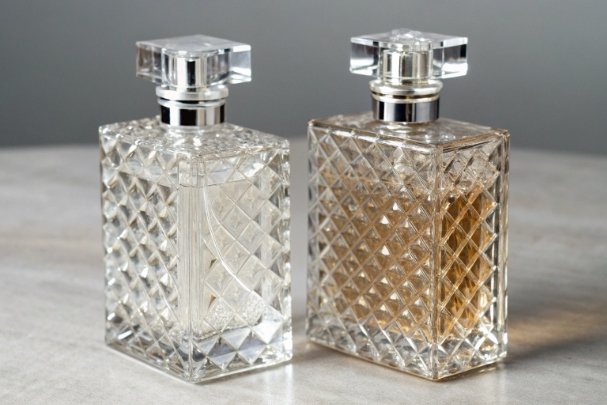
Standard vs. Super Flint
At FuSenglass, we produce both.
- Standard Flint (Soda-Lime): High clarity, economical. Contains ~13-15% Sodium Oxide. Vulnerable to high-acid leaching.
- Super Flint (Extra Clear): Made with higher purity sand and lower iron content for that "crystal" look. However, chemically, it is still soda-lime glass. Unless specified, "Super Flint" does not mean "Acid Resistant." It just means "prettier." Do not confuse optical purity with chemical durability.
The Solution: Surface Treatment (Type II Glass)
For aggressive fragrances, we recommend an Internal Surface Treatment. This is typically done by injecting ammonium sulfate or sulfur dioxide into the bottle immediately after forming, while it is still hot.
- The Process: The sulfur reacts with the surface sodium, forming sodium sulfate "bloom" which is then washed away.
- The Result: A surface layer depleted of sodium and rich in silica. This effectively turns the inside of the bottle into Borosilicate-like (Type I) glass, preventing the acid from finding any sodium to leach out.
- Cost: It adds a small marginal cost but saves the brand from recalls.
Decorations and External Attack
High acid values are also dangerous for the outside of the bottle if the user spills.
- Electroplating (Metallization): Acids eat metal. If a perfume with AV > 5 drips onto a gold-plated shoulder, it will leave a black spot (corrosion) or dissolve the plating entirely.
- Acid-Resistant Lacquers: If you are painting the bottle, ensure the lacquer is cross-linked (epoxy/PU). Simple acrylic sprays 6 will soften and become tacky if exposed to acidic oils.
| Glass Option | Chemical Resistance | Clarity | Best Use Case |
|---|---|---|---|
| Standard Soda-Lime | Low (Leaches Alkali) | Good | Low AV, Mass Market scents. |
| Super Flint | Low (Leaches Alkali) | Excellent | Luxury, Low-Medium AV scents. |
| Treated (Type II) | High (Depleted Sodium) | Good/Excellent | High AV, Natural/Niche fragrances. |
| Borosilicate (Type I) | Extreme | Moderate | Lab use (Too expensive for perfume). |
You think you have the right glass? Prove it before you fill 100,000 bottles.
What compatibility tests should brands request to validate performance?
Guesswork in packaging leads to disaster. Standardized lab tests simulate years of aging in weeks, revealing invisible chemical interactions before they reach the consumer.
Brands must request Hydrolytic Resistance testing (USP <660> / ISO 4802) to measure alkali release. Additionally, "compatibility oven testing" (50°C for 3 months) with the specific fragrance is mandatory to monitor pH drift, precipitation, and discoloration.
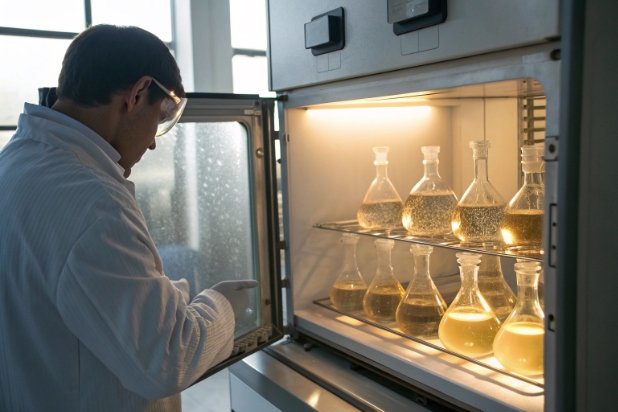
The Hydrolytic Resistance Test
This is the industry standard for determining if your glass is Type I, II, or III.
- The Method: The bottle is filled with ultra-pure water and autoclaved (heated under pressure). The water is then analyzed to see how much alkali ($Na_2O$) leached out.
- The Target: For high-acid perfumes, you want a result that approaches Type II limits. If the alkali release is high, your acidic perfume will react with it.
The "Oven Test" (Accelerated Aging)
You cannot ship a new perfume without this.
- Setup: Fill the final glass bottle with the final fragrance. Place it in an oven at 45°C or 50°C.
- Duration: 4, 8, and 12 weeks. (12 weeks at 45°C $\approx$ 1 year at room temp).
- What to Measure:
- Visual: Is there a "ring" at the liquid level? Is there sediment at the bottom? (Shine a strong light).
- Olfactory: Does it smell "off" or soapy compared to a control sample stored in the fridge?
- pH Check: Has the pH drifted? A shift of > 0.5 indicates glass interaction.
Migration Testing (For Colored/Decorated Glass)
If you are using inner-sprayed bottles or colored glass:
- Heavy Metals: Ensure the acid in the perfume isn’t extracting lead, cadmium, or other metals from the colorants.
- Color Fastness: Check if the fragrance itself changes color. Acids can act as bleaching agents or mordants 7 for certain dyes.
| Test Name | Purpose | Critical Metric | Failure Indicator |
|---|---|---|---|
| USP <660> / ISO 4802 | Classify glass inertness. | Alkali release (ml of 0.01N HCl). | High titration value = Leaching risk. |
| Compatibility (Oven) | Simulate shelf life. | Visual & Olfactory stability. | Haze, Precipitate, Scent Change. |
| Light Fastness | Check UV interaction. | Color stability. | Juice fading or darkening. |
| Cap/Pump Dip Test | Check component integrity. | Swelling/Corrosion. | Plastic swelling, metal pitting. |
Conclusion
Fragrance Acid Value is a small number with big implications. While it won’t eat a hole through your bottle, a high acid value triggers an invisible war with the sodium in standard glass, leading to haze, pH instability, and scent degradation. By choosing FuSenglass’s Treated Type II glass or validating compatibility through rigorous testing, you ensure that the scent the customer sprays is exactly the masterpiece you created.
Footnotes
-
The most common type of glass used for windowpanes and glass containers due to its transparency and workability. ↩
-
A reversible chemical reaction where an ion from solution is exchanged for a similarly charged ion attached to an immobile solid particle. ↩
-
A measure of the amount of potassium hydroxide (KOH) in milligrams needed to neutralize the acids in one gram of oil. ↩
-
The deterioration of glass due to exposure to atmospheric conditions, often resulting in surface haze. ↩
-
A porous form of silicon dioxide made from sodium silicate, used as a desiccant or protective layer. ↩
-
A type of coating made from acrylic resins, known for its clarity and UV resistance. ↩
-
A substance, typically an inorganic oxide, that combines with a dye or stain and thereby fixes it in a material. ↩






