
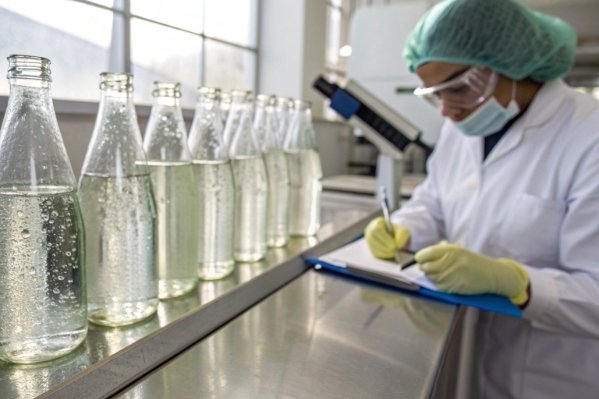
Misunderstanding chemical compatibility in bottle sterilization leads to costly production failures. While glass is inert, industrial bleach solutions contain hidden aggressors that jeopardize packaging integrity.
Sodium hypochlorite (NaOCl) itself is an oxidizer that does not digest glass, but commercial bleach solutions are highly alkaline (pH > 11), containing caustic stabilizers. Prolonged exposure to this high alkalinity can etch glass surfaces, causing haze, while the oxidative power destroys labels, metal closures, and organic coatings.
The Dual Threat: Oxidation and Alkalinity
As the lead at FuSenglass, I frequently advise clients who assume "glass is chemically inert" means it is indestructible. While soda-lime glass is arguably the most stable packaging material available—far superior to PET or aluminum in chemical resistance—it has an "Achilles’ heel": strong alkalis.
When we discuss Sodium Hypochlorite 1 (common bleach), we must distinguish between the active ingredient and the carrier solution. The active oxidizing agent ($OCl^-$) is fantastic for killing bacteria, viruses, and molds. It does not react with the silica network of the glass. However, sodium hypochlorite is unstable in neutral or acidic solutions; it rapidly degrades into chlorine gas. To prevent this, manufacturers add Sodium Hydroxide 2 (NaOH) to stabilize the solution, raising the pH often above 11 or 12.
It is this stabilizer that poses the threat to the glass matrix. Just like in KOH cleaning, the hydroxyl ions ($OH^-$) can attack the siloxane bonds ($Si-O-Si$), leading to surface hydrolysis. For the glass bottle itself, this results in potential etching or "weathering." But the story gets worse for the entire package. The oxidative nature of bleach is ruthless against non-glass components. I have seen production lines where the glass survived fine, but the polymer gaskets in the caps disintegrated, or the paper labels bleached white, rendering the product unsellable.
B2B Implications for Bottlers
For our clients in the beverage and pharmaceutical sectors, this distinction is vital. If you are using industrial bleach to sanitize recycled bottles, you are effectively exposing them to a caustic wash. If you do not control the pH and temperature, you are accelerating the aging of the glass. Furthermore, if any residue remains, the strong oxidative potential can alter the flavor profile of sensitive liquids like wine, spirits, or natural syrups.
The Component Breakdown
When assessing risk, we look at the bottle as a system: the glass body, the decoration, and the closure. Bleach attacks these differently. The glass suffers from alkaline attack (etching), while the decoration and closure suffer from oxidative attack (bleaching, rusting, embrittlement).
| Component | Primary Chemical Threat | Mechanism of Failure |
|---|---|---|
| Soda-Lime Glass | Alkalinity (High pH) | Silica network hydrolysis (Etching/Haze). |
| Plastic Caps (PP/PE) | Oxidation | Polymer chain degradation (Cracking/Brittleness). |
| Metal Closures | Corrosion/Oxidation | Pitting, rust formation, liner failure. |
| Paper Labels | Bleaching | Loss of ink color, fiber disintegration. |
Understanding this duality is the first step in designing a safe sanitization protocol. Now, let’s distinguish between the damage to the glass versus the damage to the rest of the package.
Does sodium hypochlorite chemically attack soda-lime glass, or does it mainly affect labels and closures?
Focusing solely on the glass risks missing the catastrophic failure points of the total package. Bleach destroys ancillary components far faster than it etches the bottle.
While sodium hypochlorite solutions can etch glass over time due to high pH, the immediate and catastrophic damage is usually to labels, coatings, and closures. Oxidation rapidly fades inks, degrades rubber liners, and corrodes metal caps long before visible glass damage occurs.
Glass: The Slow Victim
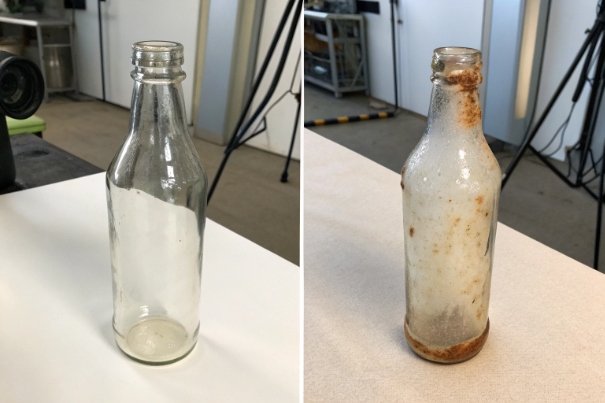
In my 20+ years at FuSenglass, I rarely see glass bottles fail structurally solely due to bleach exposure in a standard cleaning cycle. The reaction rate of silica hydrolysis at moderate temperatures with bleach is slow. You would likely need to soak a bottle in undiluted industrial bleach for days or weeks to see significant structural thinning.
However, "significant" is relative. For optical clarity, even minor surface modification matters. Repeated exposure in a returnable bottle fleet (where bottles are washed 20+ times) can lead to a cumulative "scuffing" ring or a dull appearance. This is chemically induced wear. The sodium ions in the glass exchange with ions in the solution, and the alkaline environment strips the hydrated silica layer.
Closures and Liners: The Fast Victims
The real carnage happens with closures. Metal twist-off caps or ROPP caps are highly susceptible. Sodium hypochlorite is a corrosive salt solution. It promotes rapid oxidation of steel and aluminum. Even if the cap has a protective liner, bleach can wick under the seal, causing rust that stains the bottle finish (the "lip" of the bottle).
Rubber and plastic gaskets are also vulnerable. Oxidation causes cross-linking 3 or chain scission in polymers. A flexible rubber seal might turn hard and brittle after bleach exposure, leading to leaking bottles during transport. We always advise clients to remove caps before any bleach sanitization step.
Labels and Secondary Packaging
If you wash bottles with labels on (common in recycling), bleach is a double-edged sword. It helps dissolve the label adhesive (due to the caustic), but it turns the paper pulp into mush and bleaches the ink. This creates a high biological oxygen demand 4 (BOD) in your wastewater treatment. More importantly, if you have ACL (Applied Ceramic Labels) or screen printing, the oxidizer can attack specific pigments. I have seen vibrant red logos turn a dull pink or disappear entirely because the pigment was organic and susceptible to oxidation.
| Material | Reaction Speed | Visible Effect |
|---|---|---|
| Soda-Lime Glass | Slow (Weeks/Years) | Mild hazing, iridescence (rainbow effect). |
| Aluminum | Rapid (Minutes) | Pitting, white corrosion powder. |
| Steel/Tinplate | Rapid (Minutes) | Red rust, structural failure. |
| Natural Rubber | Medium (Hours) | Cracking, loss of elasticity. |
| Organic Inks | Fast (Minutes) | Color fading, bleaching. |
So, while the glass survives, the product presentation often dies. But under what specific conditions does the glass itself start to suffer?
Under what conditions can NaOCl increase haze or surface etching?
Ignoring temperature and concentration limits turns a sanitizing rinse into a corrosive bath. Specific thresholds exist where glass degradation accelerates exponentially.
Glass etching and haze formation escalate when NaOCl concentration exceeds 10-15%, temperatures rise above 60°C, and pH spikes above 12. Under these conditions, the alkaline stabilizer aggressively dissolves the silica surface, creating permanent cloudiness.
The Danger Zone: pH and Temperature
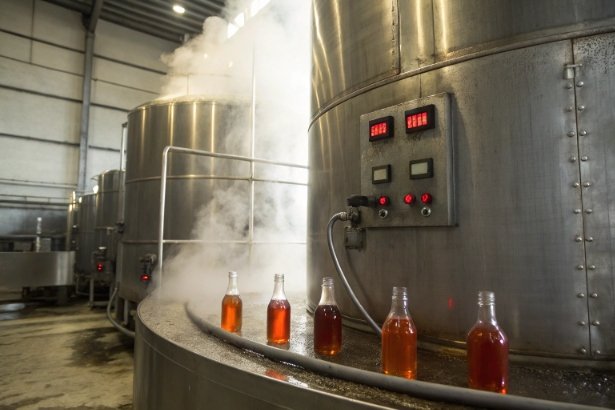
The mechanism of glass corrosion by bleach is almost entirely driven by the pH and Temperature.
At FuSenglass, we test our bottles against standard alkali resistance (ISO 695). Sodium hypochlorite solutions used in households (3-6%) are generally safe for short contact. However, industrial "shock" treatments (10-15%) are essentially strong caustic soda solutions with added chlorine.
When the pH exceeds 12, the attack on the silica network becomes logarithmic. If you combine this with heat—say, 60°C or higher—you are creating a perfect environment for etching. The heat provides the kinetic energy 5 for the hydroxyl ions to break the silicon-oxygen bonds, and the high pH ensures an abundance of these ions.
Haze vs. Salt Deposits
It is crucial to distinguish between chemical etching (permanent damage) and salt hazing (removable residue). Sodium hypochlorite leaves behind sodium chloride (table salt) and sodium carbonate as it dries. If a bottle is not rinsed properly, it will look hazy. You can wipe salt off; you cannot wipe off etching.
However, there is a phenomenon called "alkali crusting." If a bleach solution dries on the glass surface, the concentration of alkali rises dramatically as the water evaporates. This locally concentrated drop can eat a small pit into the glass. This is why you must never let bleach dry on a glass surface without rinsing.
Stress-Related Defects
Glass bottles have internal tension, even after annealing. While bleach doesn’t cause stress, it exploits it. If a bottle has microscopic surface flaws (Griffith flaws) from handling, the alkaline solution will attack the tip of the crack preferentially (stress corrosion cracking 6). This deepens the micro-cracks, significantly lowering the burst pressure of the bottle. A bottle that could withstand 15 bars of pressure might fail at 10 bars after aggressive chemical weathering.
| Parameter | Safe Zone (Sanitization) | Danger Zone (Etching Risk) |
|---|---|---|
| Concentration | 50 – 200 ppm (Active Cl) | > 5% (Active Cl) |
| Temperature | Ambient (20°C – 30°C) | > 60°C |
| pH | 10 – 11 | > 12.5 |
| Contact Time | 1 – 5 Minutes | > 30 Minutes |
Moving beyond plain glass, the risk profile changes dramatically when we look at the value-added decorations that define your brand.
How does sodium hypochlorite impact decorated glass bottles?
Luxury finishes are fragile ecosystems. Bleach acts as a chemical stripper for many premium decorations, turning gold to black and causing UV coatings to peel.
Sodium hypochlorite is devastating to metallic decorations like electroplating and gold stamping, causing rapid oxidation and blackening. It can also embrittle UV coatings and discolor organic screen printing. Suppliers must validate compatibility using immersion tests simulating lifecycle exposure.
The Death of Metallics
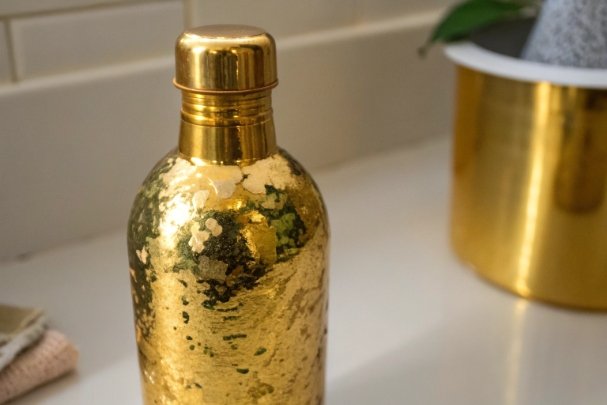
At FuSenglass, we pride ourselves on our gold and silver hot stamping capabilities. These are thin layers of vacuum-metallized aluminum or real gold foil. Sodium hypochlorite is an oxidizer. When it touches these metals, it doesn’t just clean them; it corrodes them.
- Gold Stamping: The chlorine attacks the edges of the foil where the metal is exposed. This leads to "edge creep," where the gold turns black or dark brown.
- Electroplating: An entire bottle plated in silver or gold will suffer from pitting 7. The surface loses its mirror-like reflection and looks tarnished. This reaction is irreversible.
Impact on UV Coatings and Inks
UV coatings (sprays) are plastics. While generally resistant to water, they are sensitive to strong oxidizers. Prolonged exposure to bleach can cause "chalking," where the surface of the coating degrades and becomes powdery.
For screen printing, the impact depends on the ink system:
- Ceramic Inks: Highly resistant. These are fired into the glass. Bleach generally won’t hurt them.
- Organic/UV Inks: Vulnerable. The oxidizer can attack the chromophores (color molecules), leading to fading. Specifically, metallic inks (simulated gold) used in screen printing will turn green or gray as the copper/bronze pigments oxidize.
Validation Protocols
How do you know if your design will survive? You must perform specific validation tests before mass production. We recommend the "72-Hour Soak Test" for extreme scenarios, but for wash compatibility, a "50-Cycle Simulation" is better.
Dip the decorated bottle in the target bleach solution for the intended contact time, rinse, and dry. Repeat this 50 times. If the gold peels or the color shifts (measured by Delta E 8), the decoration is not compatible with your washing process.
| Decoration | Compatibility with NaOCl | Failure Mode |
|---|---|---|
| Ceramic Decal | Excellent | None (Very stable). |
| Organic Screen Print | Moderate | Fading, color shift (especially reds/blues). |
| Hot Stamping (Foil) | Poor | Edge blackening, foil detachment. |
| Electroplating | Very Poor | Pitting, tarnish, complete oxidation. |
| Soft Touch Paint | Poor | Surface tackiness, peeling. |
If you must use NaOCl, how do you ensure it is completely gone before the product enters the bottle?
What rinsing and QC tests should buyers specify after NaOCl cleaning?
Residual chlorine is a sensory contaminant and a safety hazard. Rigorous neutralization and sensitive testing are non-negotiable to protect product purity.
Mandate a thiosulfate neutralization step followed by freshwater rinsing. Quality control must include testing final rinse water for pH (neutral), residual chlorine (<0.1 ppm), and sensory odor checks to prevent product tainting.
The Necessary Neutralization
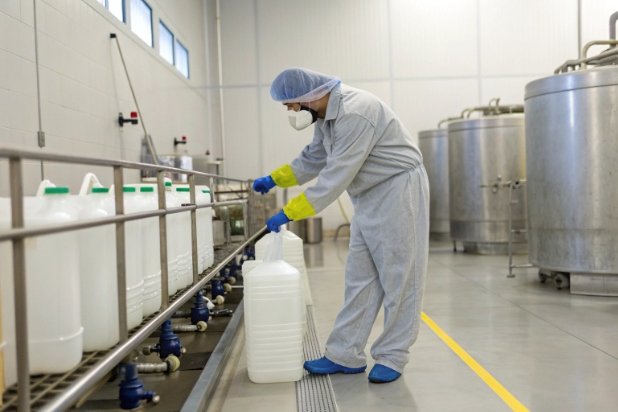
Rinsing with water alone is often insufficient to remove the last traces of "bleach smell," especially in micropores or complex bottle shapes. You need a chemical reducing agent to neutralize the oxidizer immediately.
- Sodium Thiosulfate: The industry standard. It reacts with chlorine to form harmless salts.
- Sodium Metabisulfite: Another effective option, often used in wineries.
A typical protocol is:
- NaOCl Wash.
- Fresh Water Rinse.
- Neutralizing Rinse (0.5% Sodium Thiosulfate).
- Final Rinse (DI/RO Water).
The "Taint" Risk
For our winery and distillery clients, the fear of TCA 9 (cork taint) is huge. While NaOCl doesn’t cause TCA, the presence of free chlorine can react with phenols in corks or wood to create trichloroanisole (TCA) or similar chlorophenols, which smell like damp cardboard. This is why many wineries have banned bleach entirely. If you use it, the limit for residual chlorine must be zero.
QC Testing Protocols
You cannot rely on guessing. The validation steps must be part of the Release Certificate.
- Residual Chlorine Strips: Fast and cheap. Dip in the final rinse water. It should show 0 ppm.
- ORP Meters (Oxidation-Reduction Potential): A more accurate digital reading. Clean water has a specific ORP; if the rinse water reads significantly higher (more positive), oxidizers are present.
- Sensory Check: The most sensitive instrument is the human nose. A trained panel smells a capped, empty bottle that has been washed. Any "pool smell" is a rejection.
- pH Check: As with KOH, the final rinse should be neutral (pH 7.0). If it is alkaline, you haven’t rinsed the stabilizers off.
| QC Test | Target Value | Critical Failure Limit |
|---|---|---|
| Residual Chlorine | 0.0 ppm | > 0.1 ppm |
| Final Rinse pH | 6.5 – 7.5 | > 8.0 |
| Odor Test | Neutral / Odorless | Detectable Chlorine Smell |
| Conductivity | < 20 µS/cm | > 50 µS/cm |
Conclusion
Sodium Hypochlorite is a powerful tool for sanitation, but it is not benign. While soda-lime glass bottles are generally resistant to the oxidizer itself, the alkaline stabilizers can cause etching under harsh conditions, and the oxidative power is lethal to premium decorations and closures. At FuSenglass, we recommend avoiding bleach for decorated ware and strictly controlling pH and temperature for plain glass, always following up with verified neutralization to protect your product’s integrity.
Footnotes
-
A chemical compound commonly used as a bleaching agent and disinfectant. ↩
-
A strong base also known as lye and caustic soda, used in many industries. ↩
-
A bond that links one polymer chain to another, affecting physical properties. ↩
-
A measure of the amount of dissolved oxygen needed by organisms to break down organic material. ↩
-
The energy that an object possesses due to its motion. ↩
-
Cracking induced by the combined influence of tensile stress and a corrosive environment. ↩
-
Localized corrosion that leads to the creation of small holes in the metal. ↩
-
A metric for understanding how the human eye perceives color difference. ↩
-
2,4,6-Trichloroanisole, a chemical compound responsible for cork taint in wines. ↩






