
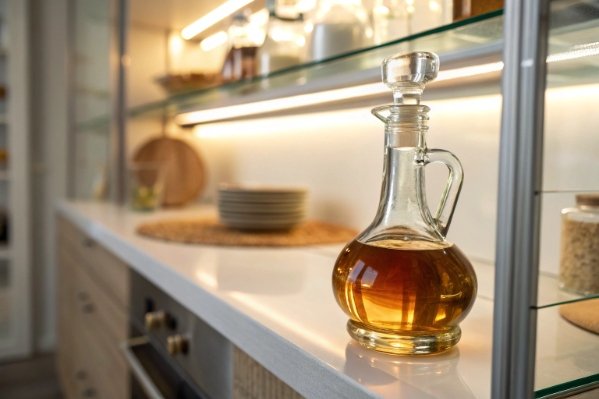
Vinegar and acetic acid-based condiments are pantry staples, yet improper packaging can lead to subtle contamination and regulatory failures. You must understand the chemical interaction between acid and container to ensure safety.
While glass is structurally immune to acetic acid corrosion, long-term storage risks include the leaching of heavy metals (lead/cadmium) from low-quality glass or decorations and the corrosion of metal closures due to acidic vapors.
Are There Risks Associated With Storing Acetic Acid-Based Products in Glass Bottles Long-Term?
The Gold Standard for Acidity
In the world of packaging, acetic acid 1 (vinegar) is a "stress test" chemical. It is volatile, penetrating, and corrosive to metals. However, for glass, it is a surprisingly benign tenant. As the face of FuSenglass, I often recommend glass exclusively for high-acidity products like apple cider vinegar, balsamic, and hot sauces because glass is practically the only material that can hold them for years without flavor scalping or plasticizer migration.
The "risk" in long-term storage is rarely about the bottle dissolving or breaking. Acetic acid, even in concentrated forms (glacial), does not attack the silica network of the glass. The risk profile shifts from Structural Integrity to Chemical Purity. The concern is not that the vinegar will eat through the bottle, but that the vinegar will extract trace impurities from the bottle or its closure system.
The Mechanism of Interaction
Acetic acid is a weak organic acid. Its primary interaction with glass is Ion Exchange.
Over months or years of storage, hydrogen ions ($H^+$) from the vinegar slowly trade places with sodium ions ($Na^+$) on the inner surface of the glass. This releases minute amounts of sodium into the vinegar. This is harmless to health and undetectable in taste. The danger arises only if the glass manufacturing process was uncontrolled, allowing toxic elements like Lead to be present in the matrix, waiting to be exchanged.
Packaging Material Comparison for Acetic Acid
| Material | Chemical Resistance to Acetic Acid | Long-Term Risk | Shelf Life Impact |
|---|---|---|---|
| Glass (Type III) | Excellent | Leaching (if impure). | Indefinite. |
| PET Plastic | Good | Oxygen Permeation. | Oxidation of product (Darkening). |
| HDPE Plastic | Good | Flavor Scalping. | "Plastic" taste transfer. |
| Metal (Aluminum) | Poor | Severe Corrosion. | Can failure / Hydrogen swell. |
| Metal (Stainless) | Good (316 Grade) | Expensive. | N/A (Bulk storage only). |
While the glass is safe, the system (bottle + cap + environment) requires careful engineering.
How Can Acetic Acid Affect the Durability and Integrity of Glass Bottles?
While the glass itself remains robust, the acidic environment can wreak havoc on the surrounding packaging ecosystem. You must consider the volatile nature of acetic acid vapors.
Acetic acid vapors can permeate cap liners and corrode metal closures, leading to seal failure; however, the glass bottle itself suffers no physical degradation or loss of structural integrity even after decades of storage.
The Vapor Threat to Closures
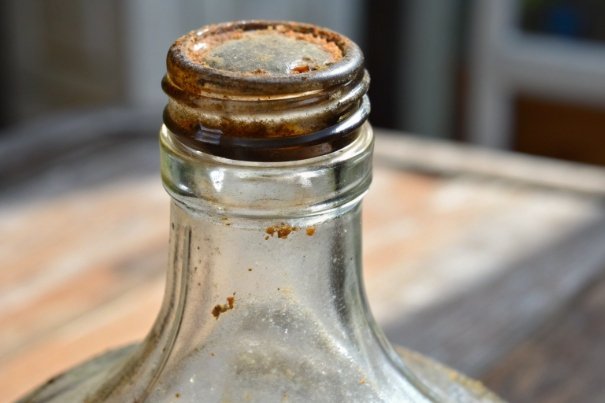
The Achilles’ heel of vinegar packaging is the Closure.
Acetic acid is volatile. In a sealed bottle, the headspace is filled with acidic vapors. These vapors attack the underside of the cap.
- Tinplate/Steel Caps: If the liner (wadding) is not a perfect barrier, the acid attacks the metal. This results in rust 2 formation on the threads, which can fall into the product when opened.
- Aluminum Caps: Highly susceptible to pitting corrosion 3 from acetic acid.
- The Fix: We recommend using Plastic (PE/PP) caps or metal caps with specialized PVDC or EPE liners designed to block acid vapor.
Seal Integrity and "Breathing"
While glass is impermeable, if the acid degrades the liner material over 2-3 years, the seal can fail.
- Evaporation: Water evaporates, concentrating the acetic acid and potentially causing "mother of vinegar" 4 (biofilm) to form if the seal allows oxygen ingress.
- Leaking: A degraded liner loses elasticity, leading to leaks during transport.
Physical Durability of the Glass
Does the glass get weaker? No.
Unlike alkalis, which etch and thin the glass wall, acetic acid forms a silica-rich "skin" on the surface. This layer is actually chemically harder and more inert than the original surface. A 50-year-old bottle of vinegar is just as strong as the day it was made.
Integrity Risk Assessment
| Component | Acetic Acid Impact | Consequence | Prevention |
|---|---|---|---|
| Glass Wall | Negligible / Passivation. | None. | None needed. |
| Metal Cap | High Corrosion. | Rust / Seal Failure. | Use Plastic or Acid-Resistant Liners. |
| Label (Paper) | Discoloration (if leaked). | Aesthetic ruin. | Varnish coating. |
| Liner (Standard) | Swelling / Embrittlement. | Leaking. | Use Saran/PVDC liners. |
Focus your quality control on the cap, not the bottle.
What Are the Potential Risks of Acetic Acid Reacting With Glass?
The distinction between "etching" and "leaching" is critical. You need to know that while your bottle won’t turn cloudy, it could potentially become a source of heavy metal contamination.
Acetic acid does not cause etching or corrosion of the glass surface; the primary risk is the leaching of lead, cadmium, or arsenic from the glass matrix or external decorations via ion exchange.
Etching vs. Leaching
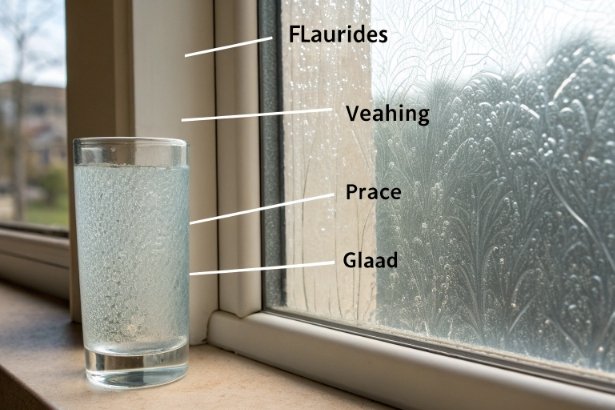
I often have to correct the misconception that vinegar "etches" glass.
- Etching: Physical removal of silica, leaving a rough, frosted surface. Cause: Hydrofluoric Acid or strong Alkalis. Acetic Acid does NOT do this.
- Leaching: Extraction of specific ions from the matrix while leaving the structure intact. Acetic Acid DOES do this.
The Heavy Metal Issue
This is the central food safety concern.
- Lead (Pb): If the manufacturing facility uses cullet 5 (recycled glass) contaminated with lead crystal or electronic glass, the lead sits in the glass network. Acetic acid is the exact solvent used by regulators (FDA/ISO) to test for lead release. Long-term storage acts like a 2-year-long lab test.
- Cadmium (Cd): Found in bright red/yellow exterior paints. If vinegar drips down the side, it can extract cadmium from the decoration.
Cosmetic "Blooming"
In very rare cases with high-humidity storage, acetic acid vapors can accelerate "Weathering" 6 (blooming) on the outside of the bottle if the storage conditions are poor, but this is usually a moisture issue, not a direct acid reaction.
Reaction Reality Check
| Reaction Type | Does it occur with Acetic Acid? | Severity | Consequence |
|---|---|---|---|
| Silica Dissolution | No | None | Glass stays clear. |
| Surface Pitting | No | None | Surface stays smooth. |
| Sodium Extraction | Yes | Low | Harmless pH shift. |
| Lead Leaching | Yes | Critical | Toxic contamination (if Lead present). |
| Calcium Extraction | Yes | Low | Possible "flaking" in extreme cases. |
If you have quality glass, the reaction risk is effectively zero.
How Does the Type of Glass and Surface Treatment Impact Resistance?
Choosing the right glass color and quality tier dictates the leaching profile. You must select a substrate that minimizes ion availability.
Type I Borosilicate glass offers the highest inertness with virtually zero leaching; Type III Flint is standard and safe if lead-free, while Amber and Green glass contain metal oxides (Iron/Chrome) that are stable but require strict quality control.
Glass Composition Hierarchy
- Type I (Borosilicate): The ultimate vessel. Used for lab reagents. Leaching is non-existent. Overkill for table vinegar, but essential for high-value balsamic reductions if purity is paramount.
- Type II (Treated Soda-Lime): Standard glass treated with sulfur. This removes surface sodium. It is excellent for vinegar as it minimizes the "Ion Exchange" potential.
- Type III (Standard Soda-Lime): The industry standard. Safe, provided the raw materials are pure.
Colorants and Leaching
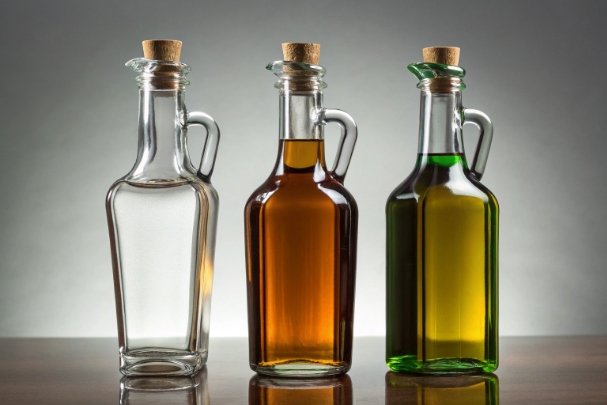
- Flint (Clear): Fewest additives. Safest bet for pure white vinegar.
- Amber (Brown): Contains Iron Oxide and Sulfur. Excellent UV protection (prevents vinegar oxidation/darkening). Iron leaching is theoretically possible but practically negligible.
- Green: Contains Chromium Oxide. Hexavalent Chrome ($Cr^{6+}$) is toxic; Trivalent ($Cr^{3+}$) is not. In glass, it is $Cr^{3+}$. Acetic acid does not extract significant chromium from modern glass.
Surface Treatments
- Hot End Coating (HEC): Tin Oxide. Bonds to the glass. Extremely resistant to acetic acid.
- Cold End Coating (CEC): Polyethylene wax. helps bottles slide on the line. Acetic acid generally ignores it, but it might wash off over time in a dishwasher.
- Internal Coatings (Sulfur): As discussed, sulfur treatment removes surface alkali. This makes the bottle more stable in acidic conditions because there is less sodium to exchange with the hydrogen.
Selection Guide
| Glass Type | Acetic Acid Resistance | Leaching Profile | Recommendation |
|---|---|---|---|
| Flint (Type III) | Excellent | Sodium/Calcium | Standard for White Vinegar. |
| Amber (Type III) | Excellent | Trace Iron | Best for Apple Cider / Balsamic (UV Protection). |
| Green (Type III) | Excellent | Trace Chrome | Acceptable (Olive Oil/Vinegar sets). |
| Borosilicate | Superior | None | Lab / Ultra-Premium. |
| Recycled (Uncontrolled) | Variable | High Risk (Pb) | Avoid for acidic storage. |
Amber glass is usually the winner: UV protection plus acid resistance.
What Testing Methods Should Be Used to Ensure Glass Safety?
You must validate your packaging with data, not assumptions. Standardized migration tests are designed specifically to mimic the stress of acetic acid storage.
The primary test is ISO 7086 (ASTM C738), which measures lead and cadmium release into 4% acetic acid over 24 hours; long-term stability is confirmed by conducting accelerated aging tests at elevated temperatures to simulate extended shelf life.

The Standard: ISO 7086 / ASTM C738
This test is non-negotiable.
- Simulant: 4% Acetic Acid (mimics vinegar).
- Condition: 24 hours @ $22^{\circ}C$.
- Analysis: ICP-MS 7 detection of Lead (Pb) and Cadmium (Cd).
- Limit: Must be below FDA/EU limits (typically < 0.5 ppm for Pb).
Accelerated Aging (Shelf Life Simulation)
To predict what happens after 2 years:
- Method: Store filled bottles at $40^{\circ}C$ or $50^{\circ}C$.
- Rule: 1 month at $50^{\circ}C$ roughly equals 6-12 months at room temp.
- Check: Measure dissolved Silica, Sodium, and trace metals at intervals (1 month, 3 months). Also, inspect the Cap Liner for degradation.
Cap Integrity Testing
Don’t forget the closure.
- Inversion Test: Store bottles upside down to ensure the acid is in constant contact with the liner. Check for leaks or corrosion.
Buyer’s Testing Protocol
| Test | Objective | Methodology | Frequency |
|---|---|---|---|
| ISO 7086 | Heavy Metal Leaching | 4% Acetic Acid / 24hr | Every Batch / Annual. |
| Cap Corrosion | Liner/Shell Integrity | Inverted Storage @ 40°C | New Product Launch. |
| Extractable Metals | Trace Metal Purity | ICP-MS Scan (Full spectrum) | Premium Products. |
| Vacuum Retention | Seal Quality | Vacuum Gauge 8 check | Production Line (Spot). |
If your glass passes ISO 7086, it is chemically safe for vinegar.
Conclusion
Storing acetic acid in glass is the industry standard for a reason: it is safe, stable, and inert. By selecting Type III Amber or Flint glass, ensuring Lead-Free compliance (ISO 7086 9), and pairing it with an acid-resistant closure, you ensure your product remains pure for years.
Footnotes
-
A weak organic acid giving vinegar its sour taste and pungent smell. ↩
-
Iron oxide formed by the reaction of iron and oxygen in the presence of water or air moisture. ↩
-
Localized corrosion that leads to the creation of small holes in the metal surface. ↩
-
A biofilm composed of cellulose and acetic acid bacteria that develops on fermenting alcoholic liquids. ↩
-
Recycled glass that is crushed and ready to be remelted. ↩
-
Deterioration of the glass surface caused by environmental factors, often appearing as a haze. ↩
-
A type of mass spectrometry highly sensitive and capable of detecting metals at very low concentrations. ↩
-
An instrument used to measure pressure in a vacuum. ↩
-
Standard test method for lead and cadmium release from hollow ware in contact with food. ↩






