
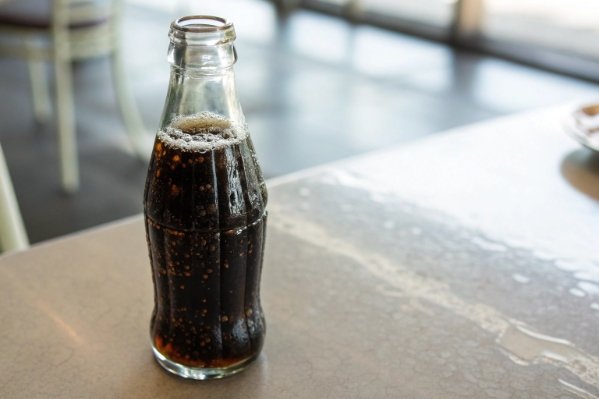
High-acid beverages can aggressively interact with inferior packaging materials, causing contamination and flavor spoilage. Understanding chemical resistance is vital for preserving product purity.
Generally, the acidity of standard beverages does not structurally damage glass bottles, as glass is highly resistant to acid corrosion; however, high acidity can trigger the leaching of trace heavy metals from low-quality glass or external decorations.
Does the Acidity of Beverages Affect Glass Bottles?
The Acid-Proof Nature of Glass
In the beverage industry, acidity is the norm. From the phosphoric acid 1 in colas (pH 2.5) to the citric acid in orange juice (pH 3.5), liquids are chemically aggressive. As a manufacturer at FuSenglass, I often reassure clients that glass is the gold standard for these products precisely because of its Acid Resistance.
Unlike metals (which corrode) or plastics (which can absorb flavors), silica-based glass is chemically stable against almost all acids, with the exception of Hydrofluoric Acid. When an acidic liquid contacts glass, a process called Ion Exchange occurs. Hydrogen ions ($H^+$) from the acid swap places with Sodium ions ($Na^+$) on the glass surface. Crucially, this reaction creates a silica-rich "gel layer" on the surface that acts as a protective shield, preventing further attack. This means that for 99% of beverages, the bottle will outlast the drink itself without degrading.
The Exception: Heavy Metal Leaching
However, "resistant" does not mean "inert." While the bottle won’t dissolve, the ion exchange process can pull other elements out of the glass matrix. If the glass is made from poor-quality cullet 2 containing Lead or Cadmium, or if the exterior paint is not acid-resistant, the acid can extract these toxins. This is why "Acid Resistance" in our industry is synonymous with "Safety Testing."
Beverage pH vs. Glass Stability
| Beverage Type | Typical pH | Acid Type | Glass Stability (Type III) |
|---|---|---|---|
| Cola / Soda | 2.5 – 3.0 | Phosphoric | Excellent (Self-passivating). |
| Lemon Juice | 2.0 – 2.5 | Citric | Excellent. |
| Wine | 3.0 – 4.0 | Tartaric / Malic | Excellent (Indefinite storage). |
| Beer | 4.0 – 4.5 | Various | Excellent. |
| Milk (Low Acid) | 6.5 – 6.7 | Lactic | Excellent. |
| Cleaners (High pH) | 11.0+ | N/A | Poor (Risk of etching). |
While the glass structure holds, we must look closer at the microscopic interactions.
How Can High-Acid Beverages Impact the Integrity and Safety of Glass Bottles?
While the bottle won’t leak, acidic contents can effectively "mine" the glass surface for impurities. You must understand the specific chemical migration risks associated with long-term acidic storage.
High-acid beverages impact safety primarily by facilitating the migration of lead, cadmium, and other heavy metals from the glass surface or decorative enamels into the liquid via ion exchange, although structural integrity remains unaffected.
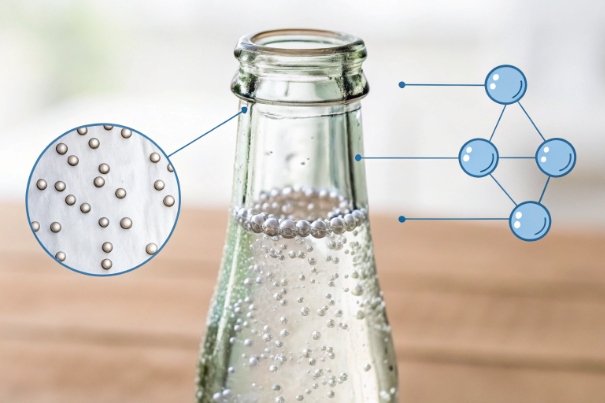
The Mechanism of Extraction
The impact is chemical, not physical. In a high-acid environment, the abundance of Hydrogen ions 3 ($H^+$) creates a "driving force." These small, agile ions penetrate the glass network and displace larger, loosely bound ions.
- The Good: They displace Sodium ($Na^+$). This is harmless and actually strengthens the surface chemical resistance over time (De-alkalization).
- The Bad: If Lead ($Pb^{2+}$) or Cadmium ($Cd^{2+}$) are present in the glass matrix (usually from contamination in recycled cullet), the acid displaces them too. They migrate into the beverage.
The Risk from Decorations (ACL)
The biggest safety threat comes from the Applied Ceramic Label (ACL)—the paint on the outside of the bottle.
If you have a screen-printed label near the rim (the "Lip and Rim" area), and acidic beverage drips onto it, or the consumer drinks from it, the acid can leach lead from the paint. Old-school ceramic paints 4 often used lead fluxes to lower melting temperatures. Modern organic inks eliminate this, but many cheap imports still use heavy metals.
Integrity Issues? Unlikely.
Structural failure due to acidity is virtually unheard of in food packaging. You would need boiling concentrated acid to eat through a bottle. The "impact" is strictly regulatory and toxicological, not mechanical.
Acid Impact Summary
| Feature | Impact of High Acidity | Consequence |
|---|---|---|
| Structural Strength | Negligible. | Bottle remains strong. |
| Surface Chemistry | Ion Exchange 5 ($H^+ \leftrightarrow Na^+$). | Sodium leaches (harmless); Surface becomes Silica-rich. |
| Heavy Metals | Extraction. | Potential Lead/Cadmium migration (Safety Risk). |
| Appearance | Minimal. | Glass remains clear; no etching. |
| Flavor | None. | Glass is tasteless; no plasticizer leaching. |
The bottle survives the acid, but we must ensure the consumer survives the bottle.
What Are the Potential Risks of Beverage Acidity on Glass?
Ignoring the subtle interactions between acid and glass can lead to regulatory non-compliance. You need to identify whether your packaging poses a risk of discoloration or contamination.
The primary risks are the leaching of heavy metals (regulatory violation) and the corrosion of external ceramic decorations; unlike alkalis, acids rarely cause visible etching or haze unless Hydrofluoric acid is accidentally introduced.
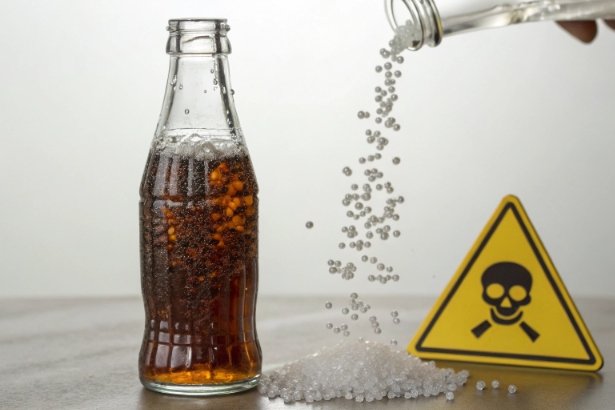
Leaching: The Invisible Hazard
As mentioned, the extraction of Lead and Cadmium is the Number One risk.
- Regulatory Limits: The FDA limit for lead leaching in large hollowware is 0.5 mcg/ml. A highly acidic juice stored for 12 months in a low-quality leaded glass container could theoretically breach this limit.
- Source: This is usually a cullet control issue at the factory.
Color Instability (Indirect Risk)
Glass itself doesn’t change color in acid. However, if the glass has Low Hydrolytic Resistance (releases a lot of alkali/sodium), it can change the pH of the beverage.
- Scenario: You bottle a delicate berry juice (pH 3.5). The cheap soda-lime glass releases sodium, raising the pH to 4.5.
- The Result: The anthocyanin 6 pigments in the juice degrade. The juice turns from bright red to brown. The acid didn’t hurt the glass; the glass hurt the acid balance.
Decoration Corrosion
Acidic beverages can damage the branding on the bottle.
- Spilling: If acidic soda spills on a non-acid-resistant gold foil or metallic paint during filling, it can tarnish or peel the decoration before it even reaches the shelf.
- Washing: Acidic washes used to clean the bottles can fade ceramic labels if they aren’t formulated for acid resistance.
Risk Stratification
| Risk Category | Probability | Severity | Mitigation |
|---|---|---|---|
| Glass Etching | Very Low | High (Aesthetic) | None needed (Glass is stable). |
| Lead Leaching | Low (if regulated) | Critical (Safety) | Use Lead-Free Cullet/Paint. |
| Alkali Release | Moderate | Moderate (Quality) | Sulfur Treatment (Type II). |
| Label Fading | Moderate | Low (Aesthetic) | Acid-resistant Inks. |
| Taste Taint | Very Low | High (Brand) | Quality rinsing. |
Your biggest enemy isn’t the glass dissolving; it’s the glass changing your product’s chemistry.
How Do Different Glass Types and Coatings Perform Under Acidic Conditions?
Not all glass is created equal; colored glass contains metal oxides that behave differently than clear flint. You must select the right substrate and coating for your specific formulation.
Type I Borosilicate and Type II Treated Soda-Lime offer superior inertness for acidic pharmaceuticals; Type III Flint is standard for beverages, while Amber and Green glass contain iron/chrome oxides that are stable but require strict cullet management.
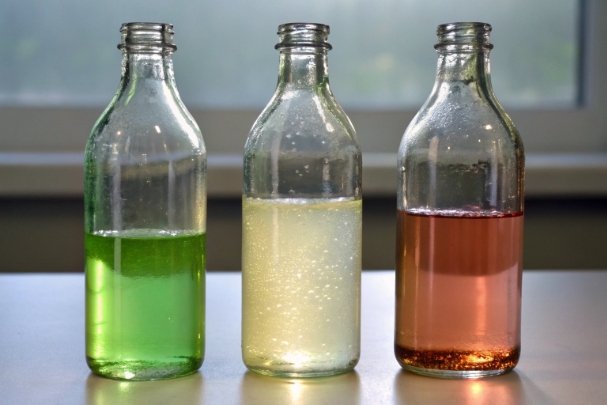
Flint (Clear) Glass
- Composition: Basic Soda-Lime-Silica.
- Acid Performance: Excellent. Since it lacks colorant oxides, the only leachate is typically Sodium and Calcium, which are harmless.
- Use Case: Water, Vodka, Gin, most Juices.
Amber and Green Glass
- Composition: Contains Iron Oxide, Sulfur, and Chromium Oxide (for green).
- Acid Performance: Generally Excellent. However, in extreme acid conditions (lab testing), trace amounts of Iron 7 or Chromium can migrate. In food contexts, this is negligible and far below any toxicity limit.
- Use Case: Beer, Wine (UV protection is the priority).
Surface Coatings
- Hot End Coating (Tin Oxide): Applied at the "Hot End." It is extremely acid resistant. It bonds fused to the glass.
- Cold End Coating (Polyethylene): Applied at the "Cold End" for scratch resistance. It is an organic wax. Strong acids won’t dissolve it, but it’s not a chemical barrier.
- Internal Coatings (Sulfur): As discussed, sulfur treatment removes surface alkali. This makes the bottle more stable in acidic conditions because there is less sodium to exchange with the hydrogen.
Material Performance Matrix
| Glass / Coating | Acid Resistance | Leaching Potential | Best Application |
|---|---|---|---|
| Type I (Borosilicate) | Superior | Negligible. | Pharma / Lab reagents. |
| Type II (Sulfured) | Very High | Very Low Sodium. | IV Fluids / Prem. Spirits. |
| Type III Flint | High | Low (Na/Ca only). | Soda / Juice / Food. |
| Type III Amber/Green | High | Low (Trace Fe/Cr). | Beer / Wine. |
| Organic Spray | Moderate | Variable (Check resin). | Cosmetic decoration. |
| Metallic Paint | Low | High (Oxidation risk). | Avoid direct acid contact. |
For 90% of beverages, standard Type III glass is perfect. For the other 10% (medical/sensitive), upgrade to Type II.
What Testing Methods Ensure That Glass Bottles Are Safe for High-Acid Beverages?
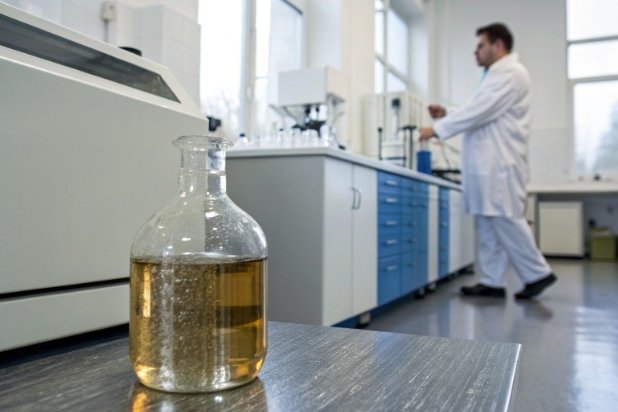
You cannot rely on theoretical resistance; specific migration protocols simulate the shelf life of acidic products. You must demand verified lab reports.
Safety is ensured through ASTM C738 / ISO 7086 migration tests using 4% Acetic Acid to detect heavy metals, and ISO 4802 hydrolytic resistance testing to verify surface alkalinity control.
The Gold Standard: ISO 7086 (Acetic Acid Leach)
This is the test mandated by the FDA and EU.
- The Simulant: 4% Acetic Acid. This mimics the acidity of vinegar or aggressive fruit juice.
- Condition: 24 hours at $22^{\circ}C$ (Room Temp). For hot-fill applications, we test at elevated temperatures ($60^{\circ}C$).
- The Analysis: The acid is analyzed using ICP-MS 8 (Inductively Coupled Plasma Mass Spectrometry).
- The Limit: For large bottles (>1.1L), Lead must be < 0.5 mg/L. For small bottles, < 2.0 mg/L.
Hydrolytic Resistance (ISO 4802)
While this uses water, it predicts how "leaky" the glass is.
- Relevance: If a bottle releases a lot of alkali in water, it will likely exchange a lot of ions in acid. High hydrolytic resistance generally correlates with low overall migration.
The "Lip and Rim" Test (ASTM C927)
Crucial for bottles that act as drinking vessels (like single-serve juice).
- Method: The top 20mm of the bottle (including threads and decoration) is inverted into the acid.
- Focus: This detects Lead/Cadmium leaching specifically from the external decoration that touches the mouth.
Recommended Testing Protocol
| Test Method | Purpose | Simulant | Standard Limit (Example) |
|---|---|---|---|
| ISO 7086 / ASTM C738 | Heavy Metal Migration (Internal) | 4% Acetic Acid 9 | Pb < 0.5 ppm |
| ASTM C927 | Lip/Rim Safety | 4% Acetic Acid | Pb < 50 ppm (Total) |
| DIN 12116 | Acid Resistance (Class) | 6N HCl 10 (Boiling) | Weight Loss (mg/dm²) |
| Internal pH Check | Buffer Capacity | Distilled Water | $\Delta$pH < 0.5 after autoclaving |
Demand these reports. If a supplier cannot provide a recent ISO 7086 report, do not put acidic beverages in their bottles.
Conclusion
Acidity is a challenge that glass handles better than any other packaging material. While Type III glass is inherently resistant to beverage acids, manufacturers must vigilantly test for Heavy Metal Migration (ISO 7086) to ensure that the chemical stability of the container translates into total consumer safety.
Footnotes
-
A weak inorganic acid commonly used in carbonated soft drinks to provide a tangy taste. ↩
-
Crushed or broken glass, often recycled, used as a key ingredient in glass manufacturing. ↩
-
The nucleus of a hydrogen atom, acting as the primary agent in acid-based chemical reactions. ↩
-
Paints containing glass frit and inorganic pigments, fused to the bottle surface at high temperatures. ↩
-
A reversible chemical reaction where an ion from a solution is exchanged for a similarly charged ion attached to an immobile solid particle. ↩
-
Water-soluble vacuolar pigments that may appear red, purple, or blue depending on the pH. ↩
-
A chemical element that can be a contaminant in glass, causing color shifts or safety concerns at high levels. ↩
-
A type of mass spectrometry capable of detecting metals and several non-metals at very low concentrations. ↩
-
The standard food simulant used in regulatory testing to mimic the leaching properties of acidic foods. ↩
-
A strong, corrosive acid used in laboratory testing to determine the acid resistance class of glass. ↩






