Hidden contaminants in packaging can trigger recalls and shatter consumer trust in an instant. Understanding the chemical stability of your glass is the only way to guarantee product safety.
Yes, the acid and alkali resistance of a glass bottle is the primary defense against heavy metal leaching; when the glass surface corrodes due to poor resistance, the silica matrix breaks down, releasing trapped impurities like Lead, Cadmium, and Chromium into the contents.
Does Acid and Alkali Resistance Affect Heavy Metal Leaching from Glass Bottles?
The Fortress and the Vault
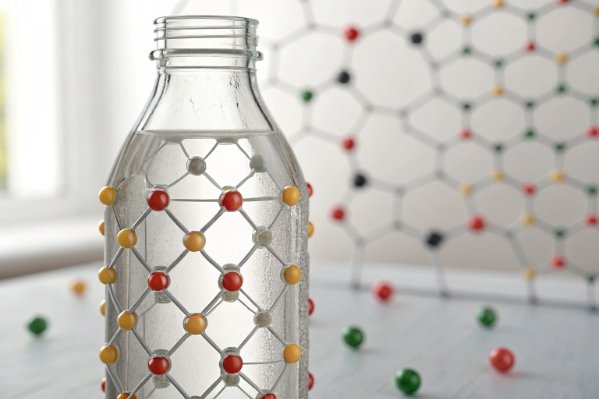
In the glass industry, we often describe the silica network as a "vault." Inside this vault, alongside the main structural elements, lie trace impurities. Some are unintentional travelers from raw materials, while others are deliberately added to achieve specific colors or clarity. These include heavy metals like Lead (Pb), Cadmium (Cd), Chromium (Cr), and Arsenic (As).
As the General Manager at FuSenglass, I explain to clients that Chemical Resistance is the lock on that vault. If your bottle has high hydrolytic and chemical resistance (like Type I Borosilicate 1 or treated Type II), the vault remains sealed. The metals stay trapped within the molecular structure of the glass, harmless and immobile.
However, if the bottle has low resistance (common in cheap, soft soda-lime glass) and is exposed to aggressive acidic or alkaline liquids, the "lock" breaks. Acids can exchange ions with the surface, pulling specific metals out. Alkalis are even more destructive; they dissolve the silica network itself. As the walls of the vault dissolve, every contaminant trapped inside is released into your beverage or cosmetic cream. This is why "Resistance" is not just about the bottle looking good; it is strictly about Toxicological Safety.
The Mechanism of Release
The leaching process is not random. It is driven by the chemical affinity between the liquid (solvent) and the glass components.
- Acidic Leaching: In acidic conditions (fruit juices, wines, vinegar), Hydrogen ions ($H^+$) attack the glass surface. They specifically target alkali ions (Sodium, Potassium) and can displace heavy metals like Lead, dragging them out into the liquid.
- Alkaline Attack: In alkaline conditions (cleaning products, some mineral waters), the Hydroxyl ions ($OH^-$) break the Silicon-Oxygen bonds ($Si-O-Si$). This destroys the glass lattice. When the lattice crumbles, any heavy metal atoms embedded in that section are dumped into the product.
Relationship Overview
| Feature | High Chemical Resistance | Low Chemical Resistance |
|---|---|---|
| Glass Structure | Tight, stable network. | Loose, porous network. |
| Metal Mobility | Locked in matrix. | Easily displaced. |
| Response to Acid | Minimal ion exchange. | Rapid leaching of Pb/Cd. |
| Response to Alkali | Minimal dissolution. | Network breakdown (Total Release). |
| Safety Result | Compliant (Prop 65/REACH). | Potential Toxicity Violation. |
Therefore, specifying high-resistance glass is the most effective preventative measure against heavy metal contamination.
Which Heavy Metals Are Most Relevant, and Where Do They Come From?
You cannot filter out contaminants if you do not know their source. You must identify which heavy metals are lurking in your raw materials and additives.
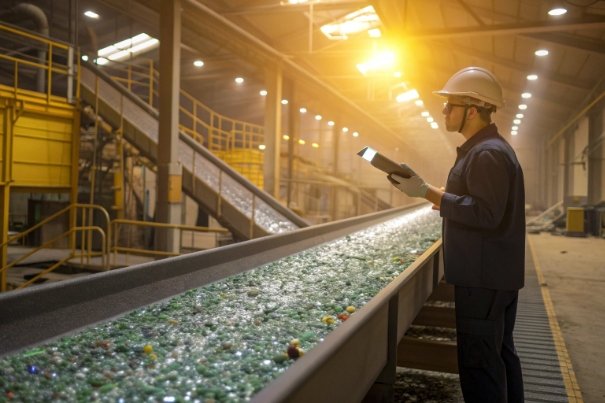
The most critical heavy metals are Lead (Pb) and Cadmium (Cd) from decorative enamels and cullet, Chromium (Cr) from green colorants, and Arsenic/Antimony (As/Sb) historically used as fining agents to remove bubbles.
The "Big Two": Lead and Cadmium
These are the most regulated elements globally (California Prop 65 2, FDA, REACH).
- Lead (Pb): Historically, lead was added to glass ("Crystal") to make it sparkle and ring. Today, in standard packaging, it mostly enters via Cullet (recycled glass). If a factory uses recycled glass that contains old lead crystal or leaded TV screens, that lead ends up in your bottle. Furthermore, Lead-based Enamels (ACL) are used for bright exterior decoration. If these paints are not acid-resistant, lead leaches from the outside lip area (the "Lip and Rim" test).
- Cadmium (Cd): This is almost exclusively a pigment issue. Cadmium creates brilliant reds, oranges, and yellows. Like lead, it is found in the decorative paints fired onto the bottle.
The Clarifiers: Arsenic and Antimony
To make glass clear and bubble-free, we use "fining agents" 3.
- Arsenic (As) & Antimony (Sb): In the past, Arsenic Trioxide was the standard fining agent. While largely phased out in food glass for safer alternatives (Sulfates), it can still be found in some lower-quality productions or specific specialized glass types. Antimony is often used as a decolorizer to neutralize iron tints. Both are toxic metalloids that leach easily under acidic conditions.
The Colorants: Chromium and Cobalt
- Chromium (Cr): This is what makes wine and beer bottles green. Hexavalent Chromium ($Cr^{6+}$) is the toxic form, though in glass, it is usually reduced to the safer trivalent form ($Cr^{3+}$). However, regulatory limits typically look for Total Chromium.
- Cobalt (Co): Used to create "Cobalt Blue" bottles. While generally stable, it is a heavy metal that must be monitored.
Metal Source Matrix
| Heavy Metal | Primary Source in Glass | Purpose | Risk Level |
|---|---|---|---|
| Lead (Pb) | Recycled Cullet; Ext. Decoration. | Brilliance; Paint Flux. | Critical |
| Cadmium (Cd) | Decorative Enamels (ACL). | Red/Yellow Pigments. | Critical |
| Arsenic (As) | Fining Agents (Old tech). | Bubble removal. | High |
| Chromium (Cr) | Iron Chromite; Furnace refractory. | UV protection (Green). | Moderate |
| Antimony (Sb) | Decolorizers. | Color neutralization. | Moderate |
Knowing these sources allows us to audit the supply chain—for example, by demanding "Lead-Free" certificates for all decorative paints.
Under What Conditions Do Acids or Alkalis Increase Leaching Risk?
A bottle that is safe for water might be toxic for vinegar. You need to map the chemical aggressiveness of your product against the vulnerabilities of the container.
Leaching risk spikes significantly when pH drops below 4.0 (acid extraction of metals) or rises above 9.0 (alkaline dissolution), and is exponentially accelerated by high temperatures and prolonged contact time.
The Acidity Factor (pH < 4.0)
This is the standard test condition for a reason. Acids are excellent at extracting metals.
- Mechanism: In a high-acid environment (like lemon juice or vinegar), the concentration of Hydrogen ions is massive. These small ions penetrate the glass surface and kick out larger metal ions (like Lead) into the solution.
- Specific Risk: Lead and Cadmium are particularly susceptible to acid leaching. This is why ceramic mugs and decorated glass pitchers have strict warnings for acidic juices.
The Alkalinity Factor (pH > 9.0)
While acids pick the lock, alkalis blow up the door.
- Mechanism: As discussed, alkalis dissolve silica. If you store a harsh industrial cleaner or a high-pH cosmetic cream in a colored glass bottle, the dissolution of the glass matrix releases everything. This includes the Chromium making the glass green or the Cobalt making it blue.
- The danger: Total glass dissolution leads to much higher concentrations of contaminants than simple surface leaching.
Temperature: The Kinetic Driver
Heat makes everything move faster.
- The Rule: Leaching rates typically double for every $10^{\circ}C$ rise.
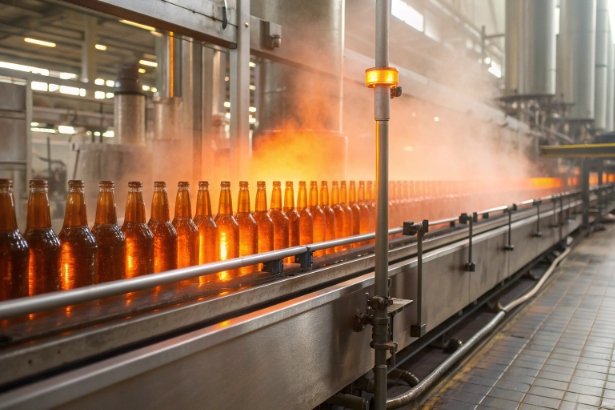
- Scenario: A hot-fill 4 juice process ($85^{\circ}C$) extracts more metal in 5 minutes than cold storage does in 5 months. Pasteurization and retort (sterilization) processes are high-risk periods for heavy metal migration.
Alcohol and Solvents
While pure ethanol doesn’t aggressively attack glass like acids do, it changes the solubility profile.
- Spirits: High-proof alcohol is a solvent. It can be particularly effective at extracting organic compounds from coatings, but for heavy metals, it acts more as a carrier. However, some studies suggest that the complex mix of congeners (flavor compounds) and alcohol in aged spirits can facilitate the leaching of Lead from crystal decanters over years.
Risk Factor Assessment
| Condition | Risk Multiplier | Mechanism | Target Metals |
|---|---|---|---|
| High Acidity (pH < 3) | Very High | Ion Exchange | Lead (Pb), Cadmium (Cd). |
| High Alkalinity (pH > 10) | Extreme | Matrix Dissolution | Silica, Chromium, All metals. |
| Heat (> 60°C) | High | Kinetic Acceleration | All constituents. |
| Time (> 1 Year) | Moderate | Diffusion | Slow release of deep ions. |
| UV Light | Low | Photochemistry | Minimal direct impact on leaching. |
If your product is hot, acidic, and stored for a long time, you are in the highest risk category for metal migration.
How Is Heavy Metal Leaching Tested and Reported?
You cannot taste lead, and you cannot see cadmium. The only way to ensure compliance is through rigorous, standardized laboratory analysis using plasma spectrometry.
Heavy metal leaching is verified via migration tests (ASTM C738 / ISO 7086) where the bottle is filled with 4% Acetic Acid for 24 hours, and the resulting solution is analyzed using ICP-MS to detect metals at parts-per-billion (ppb) levels.

The Standard Migration Test (The "Acid Soak")
Globally, the gold standard is the 4% Acetic Acid test. This simulates the leaching power of vinegar or acidic fruit juice.
- Preparation: The bottle is cleaned and filled to its nominal volume with 4% Acetic Acid.
- Conditioning: It is allowed to sit for 24 hours at room temperature ($22^{\circ}C$). For "Hot Fill" simulations, it might be heated to $60^{\circ}C$ for 2 hours and then held.
- Lip and Rim Test: For drinking glasses, the rim (top 20mm) is dipped or wiped to check for metals that would touch the lips.
The Detection: ICP-MS
We no longer rely on simple colorimetric tests. We use Inductively Coupled Plasma Mass Spectrometry (ICP-MS) or Optical Emission Spectrometry (ICP-OES).
- Sensitivity: These machines can detect metals at levels as low as 0.1 ppb (parts per billion).
- Reporting: The lab report will list the concentration of each metal found in the acid solution.
- Limits: The FDA and ISO have specific limits. For example, for large hollowware, the limit for Lead might be 0.5 mg/L (ppm), but for small hollowware, it is stricter.
Batch COA (Certificate of Analysis)
For every production run of food-contact glass, you should demand a COA.
- What to look for: A section titled "Heavy Metal Leaching" or "California Prop 65 Compliance."
- Verification: It should explicitly state "Pass/Fail" against specific standards (e.g., FDA 7117.06 or ISO 7086 5).
Total Content vs. Leachable Content
It is vital to distinguish between these two tests:
- Total Content (XRF): How much lead is in the glass? (e.g., 100 ppm). This measures the glass composition.
- Leachable Content (Migration): How much lead comes out? (e.g., < 0.01 ppm).
- Regulation: Most food safety regulations care about Leachable. Environmental regulations (packaging waste) care about Total.
Testing Protocol Summary
| Test Method | Target / Simulant | Detects | Typical Limit (FDA/ISO) |
|---|---|---|---|
| ASTM C738 / ISO 7086 | 4% Acetic Acid (24hr) | Leachable Pb, Cd | Pb < 0.5 ppm; Cd < 0.25 ppm. |
| ASTM C927 (Lip/Rim) | 4% Acetic Acid (Rim) | Ext. Decoration Leaching | Pb < 50 ppm (Total extraction). |
| EPA 3052 (Digestion) | Total Dissolution | Total Metal Content | Sum of Pb+Cd+Hg+Cr6 < 100 ppm. |
| NIOSH 9100 | Surface Wipes | Surface contamination | Non-detectable. |
Never assume a bottle is compliant. Test the migration.
What Glass Composition and Process Controls Reduce Heavy Metal Leaching?
Safety starts in the furnace. By controlling the raw materials and eliminating toxic additives from the start, we can produce glass that is inherently safe and chemically resistant.
To minimize leaching, manufacturers must use high-purity, lead-free cullet, replace arsenic fining agents with sulfates, maintain a silica-rich composition for high acid resistance, and ensure all decorative enamels are certified lead/cadmium-free.
The "Lead-Free" Formula
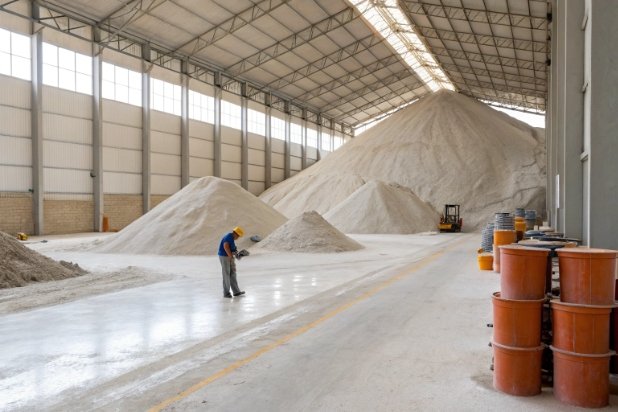
The most effective control is strictly managing the Cullet (Recycled Glass).
- The Risk: Post-consumer glass is a mix. One lead crystal 6 vase thrown into a recycling bin can contaminate tons of packaging glass.
- The Control: At FuSenglass, we use strict optical sorting and XRF scanning 7 on incoming cullet to reject high-lead fragments. We also prioritize "In-House Cullet" (our own factory scraps) over external sources for sensitive pharmaceutical batches.
Refining Agents: Out with the Old
We have moved away from Arsenic.
- Modern Fining: We use Sodium Sulfate ($Na_2SO_4$) and Carbon. This achieves the same bubble-removing effect without introducing toxic metalloids. If a client insists on "Ultra-Clear Flint" (which historically used Arsenic/Selenium), we now use Cerium or Erbium, which are safer rare earths.
Surface Treatment and Composition
Increasing the Chemical Resistance of the glass itself is a secondary barrier.
- Composition: By maintaining a proper balance of Alumina ($Al_2O_3$) and Calcium, we ensure the glass meets Type II or high-grade Type III hydrolytic standards. A stronger glass network holds onto its impurities tighter.
- Surface De-alkalization: Treating the surface with ammonium sulfate (as discussed in previous blogs) depletes the surface of ions. If there is less alkali on the surface to exchange with the acid, there is less opportunity for metal release.
Safe Decoration: Organic Inks
The biggest shift in the industry is moving from Ceramic Enamels (ACL) to Organic Inks (UV or Heat Cured).
- Ceramic: Often requires Lead/Cadmium fluxes to lower the melting point so it fuses to the glass.
- Organic: Is essentially a high-tech epoxy print. It contains Zero Heavy Metals. It provides the same vibrant colors without the toxic leaching risk on the exterior of the bottle.
Manufacturer Control Checklist
| Control Point | Strategy | Benefit |
|---|---|---|
| Cullet Management | XRF Screening; Limited External % | Reduces background Lead/Chrome levels. |
| Fining Agents | Switch As/Sb to Sulfates | Eliminates Arsenic leaching risk. |
| Melting | Oxidizing Atmosphere | Keeps Chrome in safer $Cr^{3+}$ state. |
| Decoration | Switch to Organic/UV Inks | Eliminates Pb/Cd on bottle surface. |
| QC | Batch Migration Testing | Confirms process control effectiveness. |
The safest heavy metal is the one that was never put into the furnace in the first place.
Conclusion
Heavy metal leaching is a direct consequence of the battle between chemical aggression and glass resistance. By ensuring your bottles have high acid/alkali resistance, sourcing from manufacturers who use clean, lead-free raw materials, and verifying safety with ICP-MS migration testing, you can confidently protect your customers from hidden toxins.
Footnotes
-
A type of glass with silica and boron trioxide as the main glass-forming constituents, known for low thermal expansion. ↩
-
A California law requiring businesses to notify Californians about significant amounts of chemicals that cause cancer or birth defects. ↩
-
Substances added to molten glass to remove air bubbles and improve quality. ↩
-
A packaging process where the product is heated to sterilize the container and cap. ↩
-
Standard test method for lead and cadmium release from hollow ware. ↩
-
Glass that contains lead oxide, increasing its refractive index and density. ↩
-
X-ray fluorescence, a non-destructive analytical technique used to determine the elemental composition of materials. ↩