
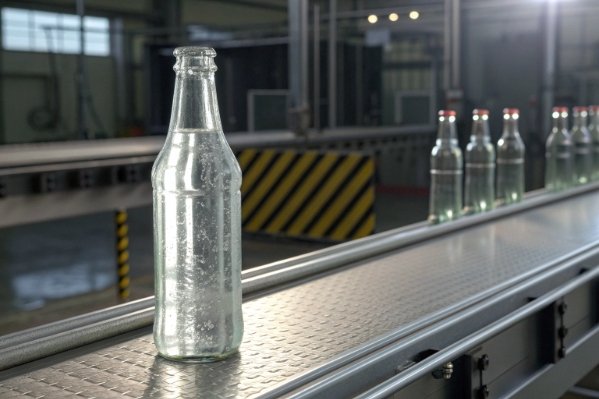
Invisible chemical residues can silently transform a premium beverage into a safety hazard or a sensory disaster. Ignoring the final rinse quality risks consumer health and brand liability.
Acid and alkali residues pose significant food safety risks by altering product pH, causing off-flavors (soapy or metallic tastes), triggering chemical spoilage like saponification in oils, and in high concentrations, potentially causing gastric irritation or chemical burns to consumers.
What Risks Do Acid and Alkali Residues Pose to Food Safety in Glass Bottles?
The Invisible Contaminant
As a manufacturer, I often tell my clients that a "clean" bottle isn’t just one that looks empty; it’s one that is chemically neutral. We spend massive amounts of energy using Sodium Hydroxide (Caustic Soda) and various acids to strip dirt and sterilize recycled or new glass. But if these powerful agents are not completely removed, they become contaminants themselves.
The risks generally fall into three categories: Sensory, Stability, and Safety.
From a sensory perspective, the human tongue is incredibly sensitive. We can detect alkalinity (bitterness/soapiness) at very low levels. If a customer opens a premium olive oil and tastes soap, that brand is dead.
From a stability standpoint, residues can act as catalysts 1. A trace of alkali can cause a stable emulsion to separate or a clear spirit to develop a sediment months after bottling.
From a safety perspective, while residual levels in a rinsed bottle are rarely lethal, chronic ingestion of high-pH residues can cause gastric distress, and acute exposure (from a machine failure) can cause burns.
The pH Impact on Product Integrity
Most food products have a specific pH that acts as a natural preservative.
- High Acid Foods (pH < 4.6): Juices, tomato sauce, pickles.
- Low Acid Foods (pH > 4.6): Milk, vegetables, meats.
If an alkaline residue remains in the bottle, it shifts the product’s pH upwards. In high-acid foods, this "buffering" effect can push the pH into a zone where Clostridium botulinum (Botulism 2) can grow, or more commonly, where spoilage bacteria thrive. Conversely, acid residues in milk products can cause immediate curdling.
Overview of Residue Risks
| Residue Type | Sensory Impact | Visual Impact | Health/Safety Risk |
|---|---|---|---|
| Alkali (NaOH) | Soapy, Bitter, "Slippery". | Haze, Precipitates. | Mucous membrane irritation; pH shift permitting bacterial growth. |
| Acid (HCl/Citric) | Sour, Metallic, Astringent. | Curdling (Dairy), Separation. | Tooth enamel erosion (chronic); Gastric upset. |
| Surfactants | Chemical/Perfume taste. | Foaming upon filling. | Gut lining irritation; Regulatory non-compliance. |
| Mineral Salts | Chalky texture. | White spots/Scale. | Low health risk; High "purity" perception risk. |
The bottle must be a neutral vessel. Any chemical activity from the package itself is a defect.
How Can Residual Acid or Alkali Affect the Taste, Appearance, or Safety of Food Products?
A product’s flavor profile is a delicate chemical balance that reactive residues can easily destroy. You must understand how these invisible contaminants manifest in the final consumer experience.
Residual alkali typically imparts a soapy or bitter taste and can cause cloudiness in clear liquids, while acid residues often lead to metallic off-flavors, curdling in dairy products, and potential sediment formation in beverages.
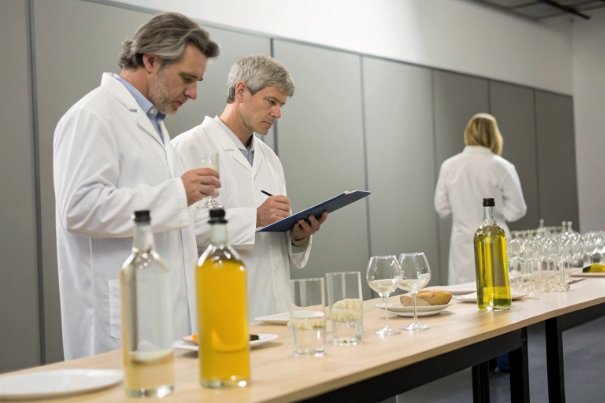
The Taste of Failure: Sensory Alterations
The most immediate impact of poor rinsing is flavor taint.
- The "Soapy" Olive Oil: Alkaline residues react with fatty acids. If you bottle olive oil in a container with caustic residue, the consumer literally tastes soap. This is saponification 3 happening right on their tongue.
- The "Flat" Soda: Carbonated beverages rely on acidity (Carbonic/Phosphoric acid) for their "bite." Alkaline residue neutralizes some of this acid, resulting in a flat, insipid taste.
- The "Metallic" Water: Acid residues, especially from mineral acids used to descale washers, can give neutral water a sharp, metallic tang that consumers often mistake for dissolved piping metals.
Visual Defects: The Cloud of Uncertainty
Appearance is the first promise of quality. Residues break this promise.
- Precipitation: Many beverages contain dissolved minerals. If the pH shifts due to alkali residue, these minerals can come out of solution. I have seen clear spirits turn milky white (flocking) because the calcium in the water reacted with residual caustic soda to form Calcium Carbonate 4.
- Haze: In wine bottling, "tartrate instability" is a major concern. Acid residues can trigger premature crystallization of tartrates, looking like broken glass at the bottom of the bottle.
The Safety Threshold
While "trace" amounts might only ruin the taste, "gross" contamination is a medical hazard.
In high-speed lines (60,000 bottles/hour), a blocked rinse nozzle might mean a bottle goes through the caustic bath but misses the rinse. That bottle could contain 2% NaOH solution. If filled and sold, this causes Caustic Esophagitis—severe burning of the throat and stomach. This is why empty bottle inspection 5 (EBI) systems looking for residual liquid are mandatory critical control points (HACCP).
Impact by Product Category
| Product Category | Sensitivity to Alkali | Sensitivity to Acid | Typical Defect |
|---|---|---|---|
| Bottled Water | High | High | Taste taint (Soapy/Sour); pH regulatory failure. |
| Dairy / Cream | Moderate | Extreme | Immediate protein coagulation (Curdling). |
| Edible Oils | Extreme | Low | Saponification (Soap formation); Rancidity. |
| Carbonated Drinks | Low | Low | Flattening of flavor; Loss of carbonation stability. |
| Spirits (Vodka) | High | Moderate | Flocking (White sediment); Flavor taint. |
| Wine | Moderate | Moderate | Color shift (pH change); Tartrate crystals. |
The bottle is the final ingredient. If it’s dirty, the recipe is ruined.
What Are the Potential Chemical Reactions Between Alkaline/Acid Residues and Food Contents?
The interaction between a cleaning agent and food is not passive mixing; it is often a rapid chemical reaction. You need to anticipate how these agents attack specific food components like fats, proteins, and pigments.
Alkaline residues react with fats to form soap (saponification) and degrade proteins (denaturation), while acid residues can invert sugars, coagulate dairy proteins, and destabilize natural emulsions in sauces and dressings.
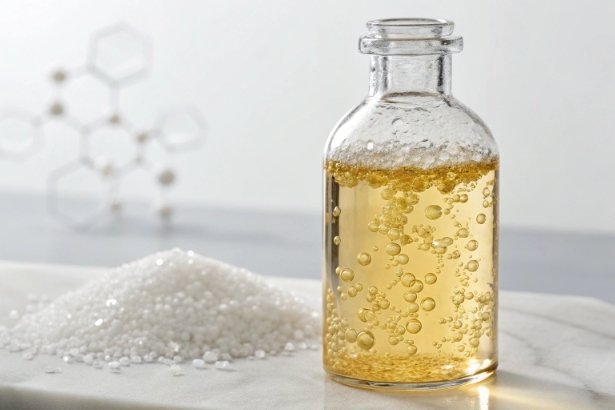
Saponification: Turning Oil into Soap
This is the most common reaction we see in the gourmet food industry.
$$Fat (Triglyceride) + Alkali (NaOH) \rightarrow Glycerol + Soap (Fatty Acid Salt)$$
If a high-end avocado oil is filled into a bottle with pH 10 residue, this reaction starts at the interface of the glass and oil. The consumer pours the oil, and the first taste is chemically bitter soap. This reaction is irreversible.
Neutralization and Salt Formation
In the beverage industry, juices are acidic (Citric, Malic acid).
$$Acid (Juice) + Base (Residue) \rightarrow Salt + Water$$
If you have significant alkali carryover, you are effectively salting the juice. While the sodium levels might be low, the type of salt formed can affect mouthfeel and stability. Furthermore, raising the pH of a juice like Cranberry (pH 2.5) can degrade the stability of its red pigment (Anthocyanin 6), causing it to turn brown or blue-grey.
Protein Denaturation and Coagulation
Dairy and protein drinks are extremely sensitive to pH shocks.
- Acid Shock: Milk proteins (Casein) precipitate at pH 4.6. If a bottle has strong acid residue, the milk hits the glass and instantly clots. This looks like bacterial spoilage to the consumer.
- Alkali Shock: High alkalinity hydrolyzes 7 proteins, breaking them down into peptides which often have bitter, astringent flavor profiles. It can also cause "browning" via the Maillard reaction if reducing sugars are present.
Alcohol and Ester Hydrolysis
Fine spirits (Whisky, Cognac) derive their complex flavors from Esters.
Alkali is a catalyst for Ester Hydrolysis. It breaks the ester apart back into its constituent acid and alcohol.
- The Result: That expensive 12-year-old scotch loses its floral/fruity notes and just tastes harsh and ethanol-heavy. The residue literally disassembles the flavor profile.
Reaction Matrix
| Food Component | Reactant (Residue) | Chemical Reaction | Consequence |
|---|---|---|---|
| Fats / Oils | Alkali (NaOH) | Saponification | Soapy taste; Emulsion breakdown. |
| Proteins (Casein) | Acid ($H^+$) | Coagulation | Curdling; Clumping; Texture ruin. |
| Anthocyanins | Alkali ($OH^-$) | pH Shift | Color change (Red $\rightarrow$ Blue/Brown). |
| Esters (Flavor) | Alkali ($OH^-$) | Hydrolysis | Loss of fruity/floral notes. |
| Vitamin C | Alkali ($OH^-$) | Oxidation | Rapid loss of nutritional value. |
Chemistry doesn’t stop when the filling head lifts. It continues inside the sealed bottle.
How Can Manufacturers Ensure That All Acid and Alkali Residues Are Thoroughly Removed?
Rinsing is an engineered process, not just a splash of water. You must design your washing cycle to guarantee dilution and drainage using physics and automation.
Manufacturers ensure removal by implementing multi-stage rinsing zones (hot-warm-cold), optimizing bottle inversion for drainage, maintaining rinse nozzle pressure, and verifying the final rinse water quality against strict conductivity standards.
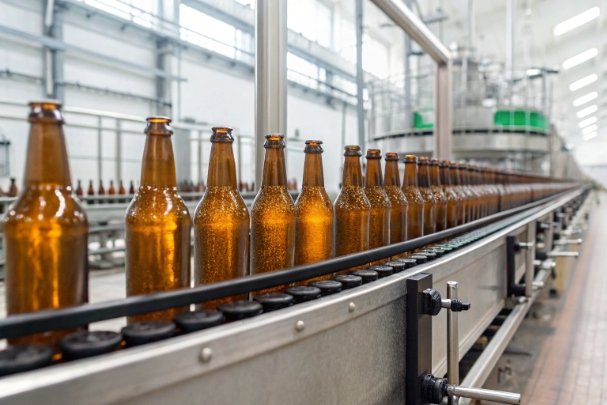
The Power of Multi-Stage Rinsing
One rinse is never enough. At FuSenglass, we advocate for the "Cascade Principle."
- Zone 1: Displacement. We use recovered warm water to bulk-displace the caustic puddle inside the bottle.
- Zone 2: Dilution. Fresh or neutralized water is sprayed to dilute the remaining film.
- Zone 3: Polishing. Deionized (DI) or soft water provides the final clean.
By separating these zones, we ensure that the water getting cleaner as the bottle moves forward prevents re-contamination.
Inversion and Drainage
Gravity is your best friend or worst enemy.
- The Design: The bottle carrier (pocket) must invert the bottle a full 180 degrees.
- The Problem: If the bottle has a deep "punt" (indentation at the bottom) or a complex shape, liquid can pool on the outside or get trapped in the shoulder.
- The Fix: Air Knives 8. High-velocity sterile air is blown into and onto the bottle immediately after the final rinse to mechanically force droplets out.
Spray Nozzle Maintenance
A clogged nozzle is a loaded gun.
- The Issue: Limescale or label pulp can block a spray jet. The bottle travels through the rinse zone but receives no water.
- The Solution: Self-cleaning rotating spray bars and automated pressure monitoring. If the pressure drops (clog) or spikes (blocked line), the machine should alarm.
Water Quality Management
You cannot rinse clean with dirty water.
If your final rinse water has high alkalinity (naturally), you aren’t removing the residue; you’re replacing it.
- Specification: Final rinse water must be potable, typically filtered, and often treated (softened/RO) to ensure it acts as a "hungry" solvent to pull residues off the glass.
Removal Strategy Checklist
| Process Step | Critical Parameter | Purpose |
|---|---|---|
| Pre-Rinse | Volume > Bottle Volume | Bulk removal of chemical pool. |
| Final Rinse | Pressure 2-3 Bar | Mechanical scouring of the surface. |
| Draining | Time > 5 Seconds | Allow gravity to empty the heel. |
| Air Blow | Oil-free Air | Force droplets out; Prevent drying spots. |
| Carrier Maintenance | Alignment | Ensure jet hits the center of the neck. |
Reliability comes from redundancy. Three rinse sprays are better than one giant splash.
What Testing Methods Can Be Used to Detect and Prevent Contamination?
Blind trust in the machine is not a strategy. You must implement redundant testing layers—from inline sensors to laboratory swabs—to certify every batch is safe.
Effective detection methods include inline conductivity monitoring of rinse water, periodic pH checks using phenolphthalein or digital meters, and random laboratory swab tests to verify surface neutrality before filling.
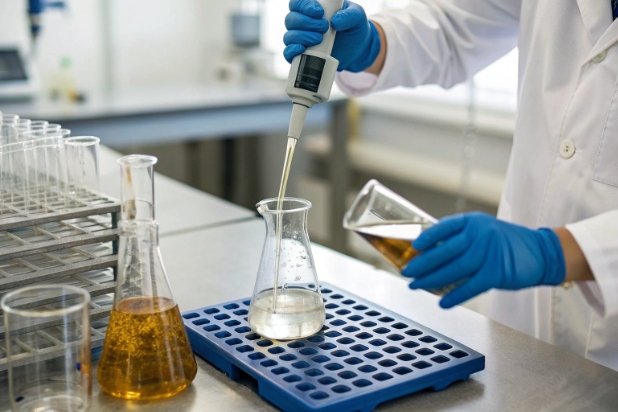
Inline Conductivity Monitoring (The Watchdog)
This is the first line of defense.
- How it works: An electrical sensor measures the conductivity of the water draining out of the bottles in the final rinse zone.
- The Logic: Pure water doesn’t conduct electricity well. Caustic soda (NaOH) conducts very well. A spike in conductivity 9 means alkali is present.
- The Action: The system automatically triggers a valve to dump the dirty water or stop the line if the setpoint is exceeded.
pH Spot Testing (The Operator Check)
Operators should perform manual checks every hour.
- Phenolphthalein: The classic "Pink Test." Add a few drops to a rinsed bottle. If it stays clear, it’s clean. If it turns pink, it’s alkaline (> pH 8.2).
- Universal Indicator: Better for detecting acid residue (turns red) vs alkali (turns purple).
- Digital pH Meter: More accurate. Rinse the bottle with 50ml distilled water, shake, and measure the water. It should match the source water pH (e.g., 7.0).
Empty Bottle Inspection (EBI) Systems
Modern bottling lines use cameras and High-Frequency (HF) residual liquid detection.
- Residual Liquid Detection: This sensor sits inside the EBI machine. It detects fluid at the bottom of the bottle. While it detects water, it is critical for catching bottles that weren’t drained properly, which often implies they contain chemical solution.
Surface Swabbing (The Deep Dive)
For high-risk products (Pharma/Baby Food), we swab the glass surface.
- Method: Use a swab moistened with pH-neutral water to wipe the interior. The swab is then tested.
- Why: This detects residue that has dried onto the glass and isn’t coming off with a simple rinse test.
Testing Protocol for Food Safety
| Test Method | Target Residue | Sensitivity | Frequency |
|---|---|---|---|
| Phenolphthalein | Alkali (NaOH) | Moderate (Visual) | Hourly / Batch Start. |
| Conductivity | Dissolved Ions | High (Digital) | Continuous (Inline). |
| pH Meter | Acid & Alkali | Very High | Daily Lab Audit. |
| Res. Liquid (EBI) | Any Liquid | Low (Volume based) | 100% of Production. |
| Titration | Concentration | Exact ppm | Weekly Calibration. |
If you can’t measure it, you can’t control it.
Conclusion
The safety of your food product relies on the neutrality of its container. Acid and alkali residues are not just cleaning byproducts; they are chemical contaminants that risk health and brand reputation. By employing multi-stage rinsing, understanding chemical interactions, and enforcing rigorous QC testing, you ensure that the only thing your customer tastes is your product.
Footnotes
-
A substance that increases the rate of a chemical reaction without itself undergoing any permanent chemical change. ↩
-
A rare but serious illness caused by a toxin that attacks the body’s nerves, often associated with improper canning. ↩
-
The process by which fats react with alkalis to form soap and glycerol. ↩
-
A chemical compound found in rocks and shells, often causing scale or sediment in water-based products. ↩
-
Automated systems used to inspect glass bottles for defects and foreign objects before filling. ↩
-
Water-soluble vacuolar pigments that may appear red, purple, or blue depending on the pH. ↩
-
A chemical reaction in which water is used to break down the bonds of a particular substance. ↩
-
Devices that use a high-velocity stream of air to blow liquid or debris off products. ↩
-
A measure of water’s ability to pass electrical flow, directly related to the concentration of dissolved ions. ↩






