
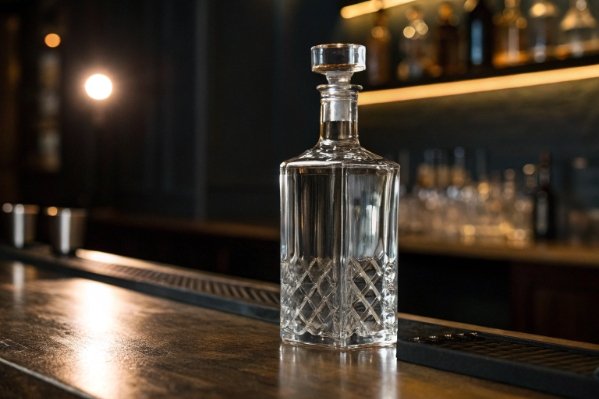
Premium spirits and cosmetics demand glass that is crystal clear, but does this "High-White" aesthetic come at the cost of chemical stability? We need to understand if removing impurities for clarity affects the bottle’s ability to resist corrosion.
High-White Flint glass is chemically identical to standard Soda-Lime glass (Type III) regarding its basic silicate network, offering excellent resistance to acidic foods but remaining vulnerable to strong alkaline attack. While its low iron content maximizes transparency, it does not inherently improve chemical durability, meaning it requires the same care in caustic washing processes to prevent surface hazing.
The Chemistry Behind the Crystal Clear Look
At FuSenglass, "High-White Flint" 1 (or "Super Flint") is our most requested material for premium vodka, gin, and perfume brands. Clients often assume that because it looks like crystal, it behaves like a different material entirely. The reality is more nuanced.
High-White Flint is essentially a highly refined Soda-Lime glass 2. To achieve that stunning, colorless clarity, we do two main things:
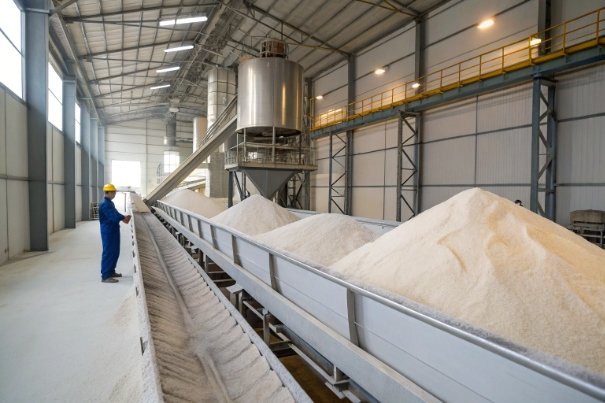
- Reduce Iron: We use sand with extremely low iron content 3 (<0.02%). Iron is what gives standard glass its greenish tint.
- Add Decolorizers: We introduce trace amounts of Selenium 4, Cobalt, or Erbium. These elements neutralize any remaining yellow-green hues, creating a neutral, "water-white" appearance.
The critical question for packaging engineers is: Does this purification change the chemical resistance?
Generally, the answer is no. The silica-soda-lime backbone remains the same. Therefore, the bottle will hold up against acidic juices and alcohols just as well as a standard green bottle. However, because the glass is so clear, even microscopic surface corrosion (etching) becomes visible much faster. A slight haze that would be invisible on an amber bottle looks like a defect on a high-white bottle.
High-White vs. Standard Flint: A Comparison
| Feature | High-White Flint | Standard Flint | Impact on Resistance |
|---|---|---|---|
| Iron Content (Fe₂O₃) | Very Low (< 0.02%) | Moderate (~0.05%) | Negligible impact on acid/alkali resistance. |
| Decolorizers | Selenium / Cobalt / Erbium | Minimal | None. |
| Glass Type | Soda-Lime (Type III) | Soda-Lime (Type III) | Identical hydrolytic class. |
| Wall Thickness | Usually Thicker (Heavy Bottom) | Standard | Thicker glass lasts longer structurally, but surface etches the same. |
| Cost | Premium | Standard | Higher cost makes spoilage/corrosion more financially painful. |
To go deeper, we must debunk the myth that clarity equals purity, and purity equals durability.
What is “high-white flint” glass in packaging, and does clarity correlate with chemical durability?
Many buyers conflate optical purity with structural integrity. While high-white glass utilizes purer raw materials, its chemical bond strength against corrosion is dictated by the stabilizer ratio, not its transparency.
Clarity is achieved by minimizing iron oxide and adding physical decolorizers, neither of which significantly alters the silicate network’s resistance to ion exchange. Therefore, clarity does not correlate with chemical durability; a high-white bottle has the same susceptibility to leaching and etching as a standard flint bottle of the same soda-lime formulation.
The "Purity" Misconception
In my 20 years at FuSenglass, I have had clients ask if High-White glass is "Type I" (Borosilicate) 5 because it looks so clear. I have to correct them: Clarity is optical; Durability is chemical.
Standard "High-White" is still Type III Soda-Lime glass. Its formulation is roughly:
- Silica (SiO₂): ~72%
- Soda Ash (Na₂O): ~14%
- Lime/Magnesia (CaO/MgO): ~11%
- Alumina (Al₂O₃): ~1.5-2%
The Iron Factor:
Iron (Fe₂O₃) is an impurity, but interestingly, it acts partly as a network intermediate. In theory, removing iron could slightly weaken the network, but the amounts we are talking about (going from 0.05% to 0.015%) are so small that the change in chemical resistance is statistically insignificant.
The Real Driver of Durability:
As discussed in our previous technical blogs, durability comes from Alumina 6 ($Al_2O_3$) and Calcium ($CaO$). If a manufacturer tries to make High-White glass cheaper by reducing Alumina (which is hard to melt) and increasing Soda Ash, the durability will drop. It will look clear, but it will bloom (haze) in the warehouse.
So, when you buy High-White, you are paying for aesthetic selection of raw materials, not a stronger chemical bond.
Optical vs. Chemical Properties
| Property | Determined By | Relation to High-White |
|---|---|---|
| Color/Clarity | Iron content & Decolorizers. | Key Differentiator. (High clarity). |
| Acid Resistance | Silica & Alumina content. | Same as standard glass. |
| Alkali Resistance | Silica & Modifier (Na/Ca) balance. | Same as standard glass. |
| Hardness | Network density. | Same as standard glass. |
| Visual Defects | Production quality control. | Better. (Stricter QC for premium lines). |
So, if the chemistry is standard, how does it handle your specific products? Let’s look at the most common application: acidic foods and beverages.
How does typical flint soda-lime composition behave in acidic products like juice, vinegar, and sauces?
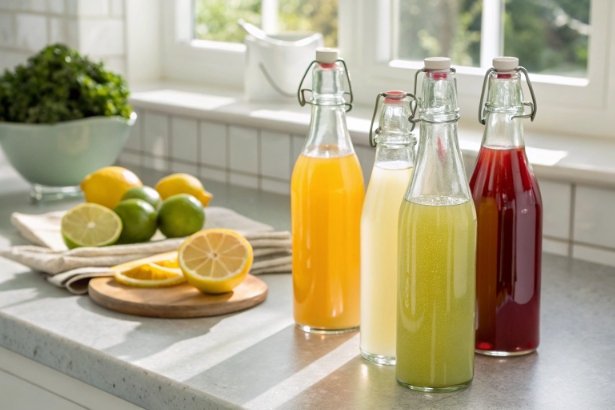
From premium vinaigrettes to craft sodas, high-white bottles are the preferred choice for showcasing product color. Fortunately, the chemistry of soda-lime glass is naturally suited for this acidic environment.
Soda-lime glass exhibits excellent resistance to acidic products because the silica network is largely insoluble in acid. While a minor ion-exchange reaction (H+ replacing Na+) occurs at the surface, it is self-limiting and rarely affects the taste or safety of food products like vinegar or fruit juice, making high-white flint a safe and stable choice.
Performance in Acidic Environments
When you package lemon juice (pH 2), vinegar (pH 3), or carbonated soda (pH 3-4) in a FuSenglass high-white bottle, you are relying on the "Acid Resistance" 7 of the material.
The Mechanism:
Acids attack glass via Ion Exchange. The hydrogen ions ($H^+$) in the juice try to swap places with the sodium ions ($Na^+$) in the glass surface.
- Once the surface sodium is depleted, a silica-rich layer ("gel layer") forms on the glass surface.
- This layer acts as a barrier. It slows down any further attack.
- Unlike metal, which can corrode continuously, glass protects itself.
Why High-White is Safe:
Because high-white glass is standard soda-lime, it typically meets DIN 12116 Class S1 or S2 (Excellent to Very Good acid resistance).
- Taste: The amount of sodium leaching is so microscopic that it is undetectable to the human palate.
- Appearance: Because the acid attack is uniform and minimal, the bottle retains its sparkling clarity.
The Exception – "Crystal" Lead Glass:
Warning: Some "Crystal" decanters contain Lead Oxide ($PbO$) to make them heavy and sparkly. Lead is susceptible to leaching in acidic spirits (like brandy) over long periods.
- FuSenglass Assurance: Our High-White Flint is Lead-Free. We achieve the "heavy" feel through thicker glass molds, not heavy metal additives. This ensures total safety for acidic consumables.
Acid Compatibility Matrix
| Product | pH Level | Interaction Risk | High-White Suitability |
|---|---|---|---|
| Spirits (Vodka/Gin) | Neutral-Mild Acid | Very Low | Perfect. (Showcases clarity). |
| Vinegar / Vinaigrette | High Acid (pH 2-3) | Low (Ion Exchange) | Excellent. No degradation. |
| Fruit Juice | Acidic (pH 3-4) | Low | Excellent. |
| Pickled Foods | Acidic + Saline | Low | Excellent. |
| Strong Mineral Acids | Extreme Acid (pH <1) | Moderate | Not recommended for industrial acid storage. |
The bottle survives the product, but will it survive the cleaning process? This is where the premium look is most at risk.
Where can high-white flint glass be vulnerable (alkaline wash/CIP, dishwasher detergents), and how can you reduce risks?
The Achilles’ heel of any soda-lime glass, including high-white flint, is strong alkalinity. The problem is not that the bottle breaks, but that it loses the one thing you paid extra for: its beauty.
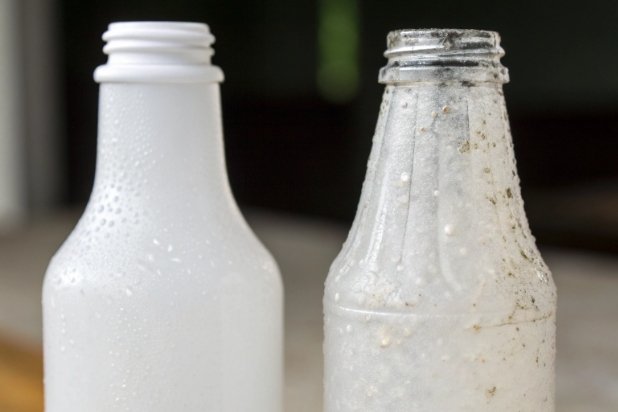
High-white flint is vulnerable to "alkaline attack" from caustic soda (CIP) and aggressive dishwasher detergents (pH > 10). The hydroxyl ions dissolve the silica network, causing surface etching. On high-clarity glass, even minor etching manifests as a visible "haze" or "rainbow effect" that destroys the premium aesthetic.
The Vulnerability of Perfection
If a standard green wine bottle gets a little etched in the washer, nobody notices. The dark color hides the surface defects.
But with High-White Flint, clarity is unforgiving.
The Threat: Alkaline Hydrolysis
Industrial bottle washers (for returnable glass) and even home dishwashers use high-pH detergents (often containing Sodium Hydroxide or Carbonates).
- Mechanism: The $OH^-$ ions break the Silicon-Oxygen bonds ($Si-O-Si$).
- Result: The glass surface literally dissolves. It doesn’t dissolve evenly; it pits and roughens.
- Visual Defect: Light scatters off the rough surface. The bottle looks "foggy," "scuffed," or has an iridescent "oil-slick" appearance.
Reducing the Risk:
For our clients using High-White bottles for returnable programs or reusable cosmetic jars, we advise strict washing protocols:
- Temperature Control: Keep wash temperature below 70°C. Every 10°C increase doubles the corrosion rate.
- Concentration: Limit Caustic Soda 8 (NaOH) concentration to < 2.5%.
- Additives: Use detergents with "glass protection" additives (inhibitors like Zinc or Aluminates) that reduce silica dissolution.
- Single-Use Design: If the aesthetic is paramount (e.g., a $100 perfume), the bottle is typically designed for single use, avoiding the harsh industrial wash cycle entirely.
Washing Parameters vs. Risk
| Parameter | Safe Zone | Danger Zone | Effect on High-White |
|---|---|---|---|
| Detergent pH | < 10 | > 12 | Etching. Silica network dissolves. |
| Temperature | < 60°C | > 80°C | Rapid Haze. Corrosion rate spikes. |
| Contact Time | < 10 mins | > 30 mins | Pitting. Prolonged exposure eats surface. |
| Abrasives | None | Scouring pads | Scratches. High-white shows scratches easily. |
You need to certify that your premium bottles are safe. Here is what to ask for.
What test reports should B2B buyers request to confirm acid/alkali resistance for high-white flint bottles?
Don’t let the "premium" label distract you from the technical data. You must verify that the high-white glass meets standard hydrolytic safety limits and is free from leachable heavy metals often associated with crystal glass.
Request ISO 719 (Hydrolytic Resistance) to confirm the glass material class, and DIN 12116 for acid resistance data. Crucially for high-white glass, demand a Heavy Metal Leaching test (ISO 7086 / ASTM C927) to prove that no lead or cadmium—sometimes used in "crystal" production—is present or migrating into the product.
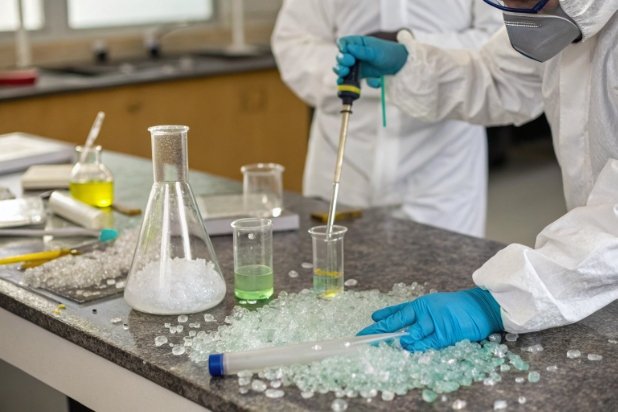
The Verification Toolkit
When sourcing High-White Flint from China, you need to separate "Marketing Speak" from "Lab Data." Here are the essential tests FuSenglass provides:
1. Hydrolytic Resistance (ISO 719 / USP <660>):
- Purpose: Ensures the glass itself isn’t water-soluble (i.e., it’s not "fake" glass or sodium silicate).
- Target: HGB 3 (Hydrolytic Class 3). This is the standard for Soda-Lime. If a supplier claims HGB 1, they are selling you Borosilicate (which is much more expensive) or lying.
2. Heavy Metal Migration (ISO 7086 / ASTM C927):
- Purpose: This is specific to the "High-White/Crystal" sector. Because traditional "Lead Crystal" 9 exists, you must prove your High-White Flint is Lead-Free.
- Target: Lead (Pb) < 0.1 mg/L; Cadmium (Cd) < 0.01 mg/L. (Essentially non-detectable).
- Why: This certificate is mandatory for exporting food/beverage packaging to the USA (FDA) 10 and Europe.
3. Alkali Resistance (ISO 695):
- Purpose: Only necessary if you plan to use caustic washing (returnable bottles).
- Target: Class A2 or better.
4. Light Transmission (Spectrophotometry):
- Purpose: To quantify "High-White."
- Target: Transmission > 90% in the visible spectrum; Iron content < 0.02% verified by chemical analysis.
Procurement Checklist
| Test Name | Standard | What to Look For | Why it Matters |
|---|---|---|---|
| Hydrolytic Resistance | ISO 719 / USP 660 | Class III (HGB 3) | Confirms durable Soda-Lime glass. |
| Acid Resistance | DIN 12116 | Class S1 / S2 | Ensures safety with vinegar/juice. |
| Heavy Metals | ISO 7086 | Lead-Free | Compliance with food safety laws. |
| Composition | XRF Analysis | Fe₂O₃ < 0.02% | Verifies "High-White" purity. |
| Alkali Resistance | ISO 695 | Class A1/A2 | Predicts wash-line durability. |
Conclusion
High-White Flint glass is the intersection of art and engineering. It offers the visual purity of crystal with the chemical reliability of standard soda-lime. While it is robust against acidic foods, its pristine surface requires protection from harsh alkaline detergents to maintain its brilliance. By understanding these limits and testing for them, you can ensure your product looks as premium on the customer’s shelf as it did on the design board.
Footnotes
-
Defines the premium, high-clarity glass category used in luxury packaging. ↩
-
The standard chemical composition for mass-produced glass bottles. ↩
-
How ferric oxide impurities affect glass color and light transmission. ↩
-
Chemical additives used to neutralize color and enhance transparency. ↩
-
A heat-resistant glass type distinct from standard soda-lime formulations. ↩
-
The oxide responsible for structural stability and chemical durability. ↩
-
The material’s ability to withstand corrosive effects of acidic liquids. ↩
-
A strong alkaline cleaning agent that can etch glass surfaces. ↩
-
Glass containing lead oxide, distinct from lead-free high-white flint. ↩
-
Regulatory body setting safety standards for food contact packaging. ↩






