
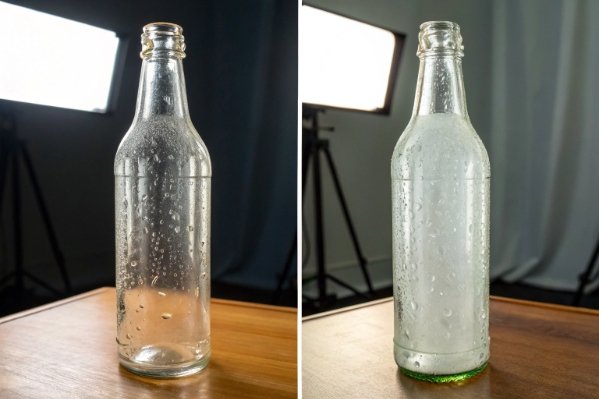
Alkaline cleaners feel harmless, but they can turn a clear bottle into a hazy, rough surface that looks “old” fast.
Alkali corrosion happens because high-pH water pulls key ions out of glass and then breaks the silica network, causing leaching, micro-pits, and permanent etching.
A clear picture of what alkali corrosion really is
Glass looks solid, but the surface behaves like a very thin chemical “skin.” In real use, alkaline solutions first disturb that skin, then slowly eat into it. Two processes matter most:
-
Leaching (ion exchange): Alkali ions inside the glass (mainly Na⁺ and K⁺) swap with H⁺/H₃O⁺ from water. The surface becomes depleted in alkali, and a hydrated layer forms. This step can happen even in mild water, but it speeds up with heat and repeated wet/dry cycles.
-
Surface etching (network dissolution): At higher pH, OH⁻ attacks the Si–O–Si bonds in the glass network. When enough bonds break, silicate species dissolve into solution, and the surface becomes rough. Roughness scatters light, so the glass looks cloudy or “frosted.”
In practice, brands often see alkali damage in three scenarios: (1) industrial washing or CIP 1, (2) consumer dishwashing, and (3) concentrated cleaners sitting on the bottle (especially warm, long contact, or poor rinsing). It is rarely one single event. It is usually time × temperature × pH × chemistry.
What you can see vs what is happening
| What you see on the bottle | Likely surface event | Common trigger |
|---|---|---|
| Light haze that comes and goes | Mineral film or early leaching layer | Hard water + detergent residue |
| Permanent cloudy “etched” look | Silica network dissolution and micro-pitting | High-pH detergent + heat |
| Rainbow / interference patterns | Thin altered layer changing optics | Repeated wash cycles |
| Rough feel, dull gloss | Surface erosion (etch) | Long caustic exposure |
| White powdery residue | Deposited silicates/carbonates from detergent | Poor rinse, high alkalinity |
Why alkalinity is the real accelerator
Alkaline chemistry does two jobs at once: it removes soils well, and it makes glass less stable. Once pH rises above a certain point, the balance shifts from “slow surface change” to “measurable dissolution.” That is why the same bottle can look perfect in neutral hand-wash use, but fail fast in hot caustic wash lines or aggressive dishwashers.
So the goal is not “avoid all alkali.” The goal is to control exposure and choose glass and surface options that tolerate the real cleaning chemistry.
Keep reading, because the details decide whether corrosion is a rare complaint or a steady return problem.
What is the chemical mechanism behind alkaline attack on glass (leaching and surface etching)?
Alkali damage feels mysterious because the bottle looks unchanged… until it suddenly does not.
Alkaline attack is a two-step reaction: first ions leach out by exchange with water, then OH⁻ breaks Si–O–Si bonds and dissolves the network, leaving pits and haze.
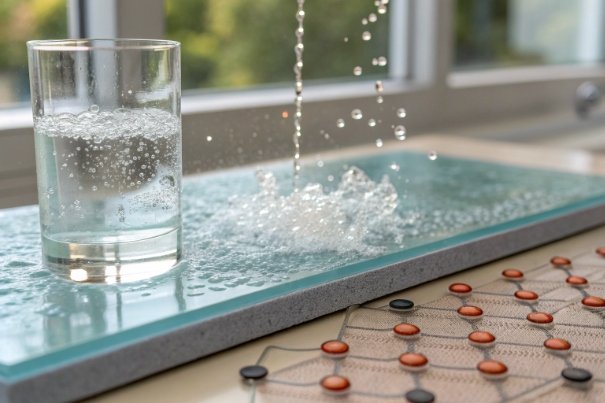
Step 1: Leaching (ion exchange) creates a weakened surface layer
Most packaging glass contains network modifiers like Na₂O and K₂O. These oxides make glass easier to melt and form, but they also introduce mobile alkali ions. When glass meets water:
-
H⁺/H₃O⁺ from water enters the surface.
-
Na⁺/K⁺ move out into the liquid.
-
The outer layer becomes alkali-depleted and hydrated.
This leached layer can be thin, but it changes the local chemistry. The solution becomes more alkaline near the surface because released alkali raises pH. That local pH rise sets up the next step.
Practical note: leaching alone does not always cause visible haze. It can be “silent,” but it can still matter for sensitive fills (taste, pH drift, ionic contamination 2) and for later corrosion because the surface is now chemically different.
Step 2: Network dissolution (etching) roughens the glass permanently
When pH is high enough, OH⁻ becomes an aggressive attacker of silicate bonds:
-
OH⁻ attacks Si–O–Si linkages.
-
Bonds hydrolyze and break.
-
Silicate species move into solution.
-
The surface becomes micro-pitted and rough.
That roughness is the point of no return. A mineral film can be removed. Etching cannot. Even if the bottle is clean, the surface now scatters light and looks cloudy.
Why heat, time, and drying cycles make it worse
-
Heat increases reaction rates and diffusion.
-
Long contact time allows deeper alteration and more dissolution.
-
Drying concentrates residues. A thin alkaline film left behind can become much more aggressive as water evaporates.
A simple way to think about it
| Mechanism | Main driver | What it releases | Visible result |
|---|---|---|---|
| Leaching / ion exchange | Water contact, moderate pH, heat | Na⁺, K⁺ (and some Ca²⁺) | Often invisible early |
| Etching / network dissolution | High pH + heat + time | Silicate species + more ions | Permanent haze, pits |
| Deposition (secondary effect) | High alkalinity + poor rinse | Silicates/carbonates | Film or streaks |
A brand can reduce complaints quickly by focusing on the conditions that push the surface from leaching into etching: high pH, high temperature, long dwell, and residues that do not rinse.
Which alkaline products or cleaners are most likely to damage glass bottles (high-pH detergents, CIP, ammonia-based formulas)?
Most cleaners are “alkaline,” but only some create the perfect storm for glass etching.
Highest risk comes from hot caustic systems and strong alkaline detergents that stay on glass too long, especially with builders like silicates and carbonates plus heat.
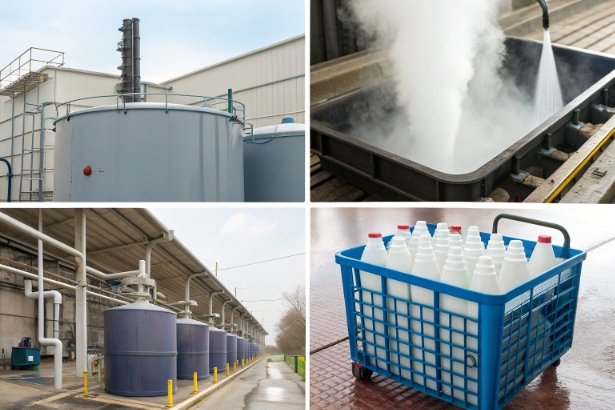
The high-risk categories in real operations
1) Caustic CIP and bottle washing (NaOH-based)
Industrial CIP and returnable-bottle washing often use sodium hydroxide 3 because it is effective and low cost. The risk comes from the combination of:
-
Very high pH
-
Elevated temperature
-
Recirculation and long total exposure time
Even a well-managed CIP can be harsh on soda-lime glass if parameters drift upward or rinsing is weak.
2) Automatic dishwashing detergents (consumer + foodservice)
Dishwasher detergents can reach high alkalinity in use, and the cycle adds heat and repeated exposure. The common pattern is:
-
Glass looks fine at first.
-
After many cycles, it develops haze or a dull surface.
-
Customers call it “film,” but it is actually etching.
Formulas that include alkaline builders (carbonates, silicates) and strong chelators 4 can increase glass attack if the wash is hot and the dose is high.
3) Concentrated alkaline cleaners left to soak
The biggest hidden risk is not the wash. It is the soak:
-
Staff pre-soak bottles in a strong cleaner.
-
Cleaner sits for hours.
-
Rinse is rushed.
This produces long contact time, and etching can appear fast.
4) Ammonia-based formulas
Ammonia solutions are alkaline, but they are not automatically the worst for glass. The risk depends on:
-
pH level (some are mild, some are strong)
-
contact time
-
temperature
-
additives (especially if the formula also contains strong alkaline builders)
In many cases, ammonia cleaners are more likely to affect coatings, labels, or inks than to deeply etch glass. Still, repeated warm use or soaking can contribute to surface change.
A practical risk table for brand teams
| Product / process | Typical risk level | Why it can damage glass | Common failure mode |
|---|---|---|---|
| Hot caustic wash / CIP (NaOH) | Very High | High pH + heat + time | Permanent etching, dull surface |
| Returnable bottle caustic washer | Very High | Many cycles + strong chemistry | Haze that worsens over time |
| Automatic dishwasher detergent | High | Alkalinity + builders + repeated cycles | Cloudy / frosted look |
| Strong alkaline degreaser soak | High | Long dwell time | Patchy etch, “watermark” areas |
| Household ammonia cleaner | Medium | Depends on strength and use pattern | Mild haze after repeated misuse |
| Mild hand dish soap (near neutral) | Low | Low alkalinity and short contact | Usually none |
My field rule for fast triage
If the cleaning step includes pH above ~11, temperature above ~60°C, or contact longer than ~20–30 minutes, treat it as a serious corrosion risk for standard soda-lime bottles. That does not mean it will fail, but it means process control and glass choice matter.
How does glass composition (Na2O/K2O, CaO/MgO, Al2O3, B2O3) affect alkali resistance?
Two bottles can look identical, yet one survives harsh washing and the other turns cloudy. Composition is the difference.
Alkali resistance improves when the glass network is harder to break: less Na₂O/K₂O, balanced CaO/MgO, and more network-forming oxides like Al₂O₃ (and in some designs B₂O₃).
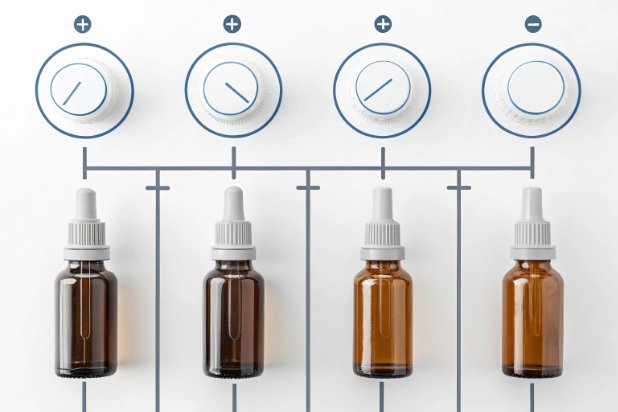
Start with the role of each oxide
Na₂O / K₂O (alkali oxides): good for melting, bad for durability
These oxides act as network modifiers 5. They lower melting temperature and help forming. But they also:
-
Increase the amount of mobile ions that can leach
-
Make the network more open
-
Increase vulnerability in water and alkali
So higher Na₂O/K₂O often means faster leaching and an easier path toward etching under high pH.
CaO / MgO (alkaline earth oxides): stabilizers with trade-offs
CaO and MgO can tighten the network compared to pure alkali modifiers. They often improve durability up to a point. But:
-
Too much can affect melt behavior and forming
-
The exact balance matters because it changes the network structure and how easy it is for water to penetrate
In many soda-lime recipes, CaO is a key stabilizer. MgO can also contribute to stability and working range.
Al₂O₃ (alumina): a strong durability booster
Al₂O₃ tends to increase chemical durability because it:
-
Strengthens the network
-
Reduces ion mobility
-
Makes the glass less easy to hydrolyze
This is one reason many “more durable” soda-lime variants include controlled alumina levels.
B₂O₃ (boron oxide): helpful in borosilicate design, but context matters
B₂O₃ is used to form borosilicate glasses 6 with excellent thermal shock resistance and strong chemical durability in many conditions. For containers, borosilicate (Type I in pharma language) is known for high hydrolytic resistance. But composition details still matter, because boron environments can vary with modifiers and alumina.
Composition choices as a brand decision, not just a technical detail
For beverages and most foods, standard soda-lime is perfect when use conditions are mild. Trouble starts when the bottle must survive:
-
returnable systems,
-
aggressive industrial washing,
-
or consumer dishwashers at scale.
That is where higher durability recipes or borosilicate options can reduce risk.
A practical composition map (what changes do)
| Composition lever | What usually happens | Why it matters for alkali attack |
|---|---|---|
| Increase Na₂O/K₂O | Durability drops | More leachable alkali; faster surface alteration |
| Optimize CaO/MgO | Durability improves (to a point) | Stabilizes network; reduces water penetration |
| Increase Al₂O₃ | Durability improves | Stronger network; slower hydrolysis and leaching |
| Use borosilicate design (B₂O₃ + balanced modifiers) | Often much better resistance | Lower alkali mobility and strong network behavior |
| Reduce defects / improve annealing | Corrosion looks less severe | Fewer weak spots where attack starts |
One detail that gets ignored: surface condition
Even with a good recipe, a damaged surface corrodes faster. Abrasion, scuffs, and micro-scratches create high-energy sites where attack starts. That is why corrosion and abrasion often show up together in real complaints.
How can brands prevent alkali corrosion in real use (glass selection, coatings, process control, and resistance testing)?
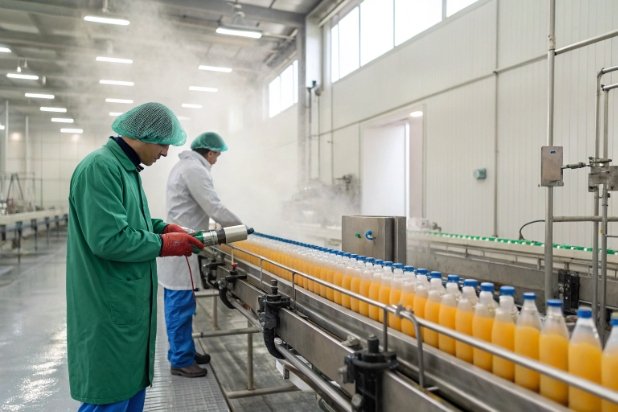
Brands cannot control every customer’s dishwasher habits, but they can control the product’s tolerance and the factory’s exposure.
Prevention works when glass choice matches cleaning reality, surfaces are protected, wash parameters are controlled, and resistance is tested with the same pH, heat, and time found in real life.
1) Glass selection: match the bottle to the cleaning environment
If the product will face hot alkaline washing, the safest path is to select a glass with higher chemical durability. Options include:
-
More durable soda-lime variants (often with tighter alkali control and alumina support)
-
Borosilicate when the use case justifies it (premium, pharma, lab, or extreme reuse)
For many brands, the smart compromise is not “switch everything.” It is to define which SKUs truly face harsh cleaning and upgrade those.
2) Coatings: know what they can and cannot do
Coatings are often discussed for scratch resistance, but they also help reduce surface damage that accelerates corrosion.
-
External protective coatings can reduce abrasion, which reduces corrosion initiation sites.
-
Barrier coatings (where applicable) can reduce chemical contact and slow attack. The best choice depends on decoration, filling line, and end use.
A key mindset: coatings are not magic. If a bottle sits in hot caustic for too long, most coatings will not save it. But coatings can buy margin in normal wash exposure.
3) Process control: control the four multipliers (pH, time, temperature, residue)
In real plants, corrosion problems often begin with drift:
-
caustic gets stronger over time,
-
temperature runs higher “for better cleaning,”
-
dwell time increases due to line changes,
-
rinse quality drops because of water pressure or nozzle issues.
Simple controls can prevent big failures:
-
Set hard limits for concentration, temperature, and cycle time
-
Verify rinse conductivity or similar indicators
-
Avoid long alkaline soaks of finished goods
-
Keep water quality stable (hardness and alkalinity change how detergents behave)
4) Resistance testing: test what actually happens, not only what is easy
For a brand, the most useful testing is comparative and realistic:
-
Alkali resistance test methods that measure weight loss or surface change (ISO 695 7)
-
Hydrolytic resistance tests that track alkali extraction
-
Simulated dishwasher or CIP cycles with real detergent and temperature
Testing should be designed like a failure investigation:
-
Run worst-case parameters.
-
Compare candidate glass types.
-
Check both appearance (haze, gloss) and chemistry (ion release).
A prevention checklist that works in meetings
| Prevention lever | What it controls | Quick implementation signal |
|---|---|---|
| Upgrade to higher durability glass | Lowers leaching and etch rate | Fewer haze complaints after washing |
| Reduce alkali strength or dwell | Reduces chemical driving force | Stable wash concentration logs |
| Improve rinsing | Removes alkaline films | Lower rinse conductivity / fewer residues |
| Add surface protection (coating) | Reduces scratch-driven corrosion | Less scuffing + slower haze growth |
| Validate with alkali + heat test | Confirms real-world tolerance | Clear pass/fail criteria by SKU |
The brand message also matters
If a product is not designed for dishwashers or caustic reuse, clear care guidance prevents false expectations. Many complaints are “design vs use mismatch,” not manufacturing defects.
In my daily work with bottle buyers, the fastest wins come from two moves: (1) aligning wash chemistry with glass limits, and (2) using a durability test that mirrors the actual wash cycle. That combination reduces surprises and keeps packaging looking premium in the customer’s hands.
Conclusion
Alkali corrosion is controllable: choose durable glass, reduce harsh exposure, protect the surface, and test with real pH, heat, and time.
Footnotes
-
Clean-In-Place systems used in manufacturing to clean pipes and vessels without disassembly. ↩
-
The presence of unwanted ions on a surface, often from cleaning residues or material leaching. ↩
-
A strong alkaline compound commonly used in industrial cleaning and degreasing agents. ↩
-
Chemical compounds that bind metal ions, often used in detergents to soften water. ↩
-
Oxides added to glass to disrupt the silica network, lowering melting points and altering properties. ↩
-
A type of glass with high thermal and chemical resistance due to the addition of boron oxide. ↩
-
International standard test method for determining the alkali resistance of glass. ↩






