
Broken bottles in transit or leaked caps destroy brand reputation and profit margins. Is the alcohol itself weakening your glass, or is it the physics of liquid expansion you’re ignoring?
The alcohol content does not alter the glass’s Coefficient of Thermal Expansion (CTE), which remains a fixed material property. However, ethanol expands significantly more than water when heated, increasing internal pressure and thermal stress, which requires specific bottle designs and headspace calculations.
Dive Deeper: The Battle Between Liquid and Solid
At FuSenglass, we often correct the misconception that alcohol "softens" or "changes" glass. Glass is an inert, inorganic solid. Whether you fill it with water, whiskey, or acid, the glass structure—and its rate of expansion—remains chemically unchanged.
The real engineering challenge lies in the mismatch of expansion rates.
When a pallet of gin or wine sits in a shipping container crossing the equator, temperatures can easily reach 50°C (122°F). The glass bottle expands minutely (almost imperceptibly). The liquid alcohol inside, however, is volatile and expansive. It wants to grow in volume significantly.
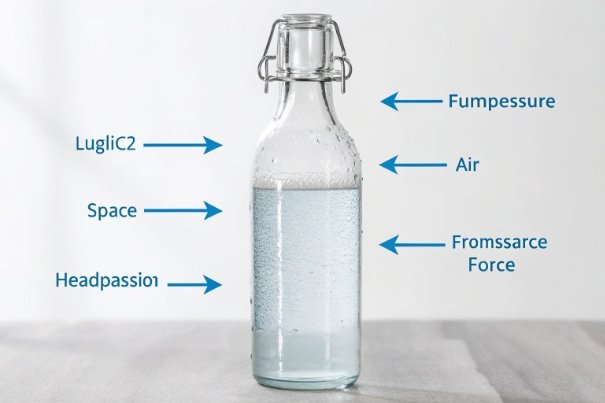
Since the glass is rigid and expands very little, the expanding liquid runs out of room. It compresses the air in the headspace 1 (the gap between liquid and cap). If the headspace is too small, the liquid hits the cap and the pressure spikes instantly (hydraulic lock). This internal pressure pushes outward on the glass walls. While the glass didn’t "change," it is now under immense tensile stress caused by the thermal expansion of the contents.
Comparative Expansion Physics
| Material | Coefficient of Thermal Expansion (CTE) | Behavior under Heat (20°C -> 50°C) |
|---|---|---|
| Soda-Lime Glass | $\sim 9.0 \times 10^{-6} / K$ | Expands minimally. Rigid container. |
| Water | $\sim 207 \times 10^{-6} / K$ | Expands moderately. |
| Ethanol (Alcohol) | $\sim 750 \times 10^{-6} / K$ | Expands drastically (3.5x more than water). |
| Air (Headspace) | Compressible | Absorbs the expansion—until it runs out. |
Now, let’s explore how to manage these thermal dynamics across different alcohol categories and processes.
Does ethanol content change a glass bottle’s CTE, or mainly affect thermal stress through filling and storage temperatures?
Engineers often confuse the container’s properties with the contents’ behavior. This distinction is vital for calculating safe fill levels.
Ethanol has no effect on the glass’s Coefficient of Thermal Expansion (CTE). Instead, high ethanol content dramatically increases "Thermal Volume Expansion" of the liquid, creating internal hydraulic pressure that stresses the bottle from the inside out during temperature spikes.
The Volume Expansion Multiplier
The higher the ABV (Alcohol by Volume), the more the liquid will expand for every degree of temperature rise. A 40% ABV vodka expands much more than a 5% ABV beer, and pure ethanol expands even more.
-
The Glass: Remains static. Its job is to hold the shape.
-
The Stress: As the alcohol expands, it consumes the headspace (vacuity). Once the headspace is gone, the liquid becomes incompressible. The internal pressure can jump from 0 psi to >300 psi with just a few degrees of further heating. Glass is strong in compression but weak in tension. This internal pressure pulls the glass wall apart (Hoop Stress 2).
The "Piston" Effect
Think of the alcohol as a piston and the bottle as the cylinder. Heat drives the piston.
-
Cold Fill (20°C): Level is normal. Pressure is neutral.
-
Transport Heat (50°C): Liquid expands by 2-3%.
-
Failure Mode: If the bottle was designed with only 1% headspace, the liquid has nowhere to go. It forces the cork out (leaking), pushes the cap off, or shatters the bottle at the shoulder or heel.
Expansion Rates by Alcohol Type
| Product | Approx. ABV | Expansion Factor vs Water | Headspace Requirement |
|---|---|---|---|
| Water/Juice | 0% | 1.0x | Standard (approx 5-6%) |
| Beer | 5% | 1.1x | Standard + Pressure rating |
| Wine | 12-14% | 1.2x | Moderate (Vacuum cork helps) |
| Spirits (Vodka/Whiskey) | 40%+ | 3.0x – 4.0x | Critical (Requires larger vacuity) |
Are spirits, wine, and RTD alcoholic drinks treated differently in hot-fill or pasteurization, and how does that impact thermal shock risk?
A gin bottle and a hard seltzer bottle live very different lives on the production line. One faces pressure; the other faces shock.
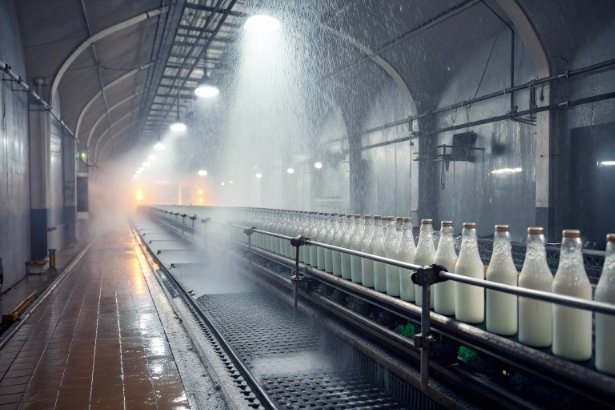
Spirits are typically ambient-filled, posing low thermal shock risk but high pressure risk during transport. RTDs and wines often undergo tunnel pasteurization, subjecting the glass to rapid heating and cooling cycles that demand higher thermal shock resistance ($\Delta T$).
1. Spirits (High ABV, Ambient Fill)
-
Process: Filled at room temperature (20°C). No hot fill, no pasteurization (alcohol kills bacteria).
-
Thermal Shock Risk: Low. The glass rarely sees sudden temperature changes during production.
-
Main Threat: Static Thermal Expansion. As discussed, the risk is the bottle sitting in a hot truck. The glass needs high Pressure Resistance, not necessarily high Thermal Shock Resistance.
-
Bottle Spec: Standard annealed glass 3 is usually fine, provided the design allows for sufficient headspace (vacuity).
2. RTDs / Hard Seltzers / Beer (Low ABV, Pasteurized)
-
Process: Filled cold (to keep CO2), then sent through a Tunnel Pasteurizer.
-
The Cycle:
-
Cold Bottle (4°C).
-
Hot Spray (60°C) -> Shock 1 (Heating).
-
Hold at 60°C.
-
Cold Spray (20°C) -> Shock 2 (Cooling).
-
-
Thermal Shock Risk: High. The glass undergoes a full expansion/contraction cycle while under internal pressure from carbonation.
-
Bottle Spec: Requires "Toughened" glass or strict ASTM C147 compliance. If the glass is weak, the bottom will fall out during the cooling phase.
3. Wine (Medium ABV, Hot Fill or Ambient)
-
Process: Usually ambient, but some sweet wines or glühweins are hot-filled (60-70°C).
-
Thermal Shock Risk: Moderate.
-
Bottle Spec: Standard wine bottles (Bordeaux/Burgundy) are often lightweight. Hot-filling them requires careful pre-heating to avoid cracking the neck.
Process vs. Glass Requirement Table
| Beverage Category | Typical Process | Thermal Stress Type | Critical Glass Spec |
|---|---|---|---|
| Spirits (40%) | Ambient Fill | Internal Pressure (Storage) | High Vacuity / Even Wall Thickness |
| RTD / Beer | Pasteurization | Thermal Shock ($\Delta T$) | Rated for $\Delta T$ 42°C+ & Pressure |
| Hot-Fill Mixers | Hot Fill 4 (85°C) | Thermal Shock ($\Delta T$) | Pre-heating required / Heavy Base |
| Sparkling Wine | Cold Fill | Pressure (CO2) | Heavyweight / Pressure Rated (10 bar) |
Can alcohol-based products accelerate failure of coatings, printing, or labels during heat-cool cycles even if glass expansion stays the same?
Thermal expansion isn’t just about the glass breaking; it’s about the decoration failing. Alcohol is a solvent, and heat makes it aggressive.
Yes. Hot ethanol vapors are potent solvents that can degrade organic coatings, adhesives, and UV inks. Combined with the expansion of the glass substrate, this chemical-thermal attack can cause delamination, softening, or discoloration of external decorations.
The Chemical-Thermal Attack
When an alcohol bottle heats up (in a pasteurizer or a hot truck), two things happen:
-
Vapor Pressure: Alcohol turns to vapor. If the bottle leaks microscopically or if the product spills on the outside during filling, hot ethanol sits on the surface.
-
Solvent Action: Ethanol is a universal solvent. Many organic inks, spray coatings (frosting), and label glues are soluble in alcohol. Heat accelerates this reaction.
Comparison: Ceramic vs. Organic
-
ACL (Applied Ceramic Labeling): These are glass frits fired at 600°C. They are fused to the bottle. Alcohol and heat have zero effect on them.
-
Organic Screen Printing / Spray: These are cured at 180°C. High-proof alcohol, combined with the heat of a pasteurizer (60°C), can soften these inks. If bottles rub together on the conveyor while hot and wet with alcohol, the decoration smears or scratches off.
-
Paper Labels: Heat softens the adhesive. Alcohol dissolves the adhesive. The result is "flagging" labels.
Design Considerations for Alcohol Brands
If you are producing a high-proof spirit or a pasteurized RTD, you must be careful with "soft touch" coatings or organic decals 5.
Decoration Durability Matrix
| Decoration Type | Resistance to Hot Alcohol | Risk Level | Best Use Case |
|---|---|---|---|
| Ceramic Firing (ACL) | Excellent | None | Premium Vodka / Gin |
| Organic Spray (Color) | Moderate to Poor | High (Scratches wet) | Wines / Ambient Spirits |
| Paper Label (Wet Glue) | Low | High (Peeling) | Standard Beer/Wine |
| PSL (Sticker) | Moderate | Medium (Adhesive slide) | RTDs / Spirits |
| Acid Etching | Excellent | None | Super Premium |
What tests should alcohol brands require to validate heat performance (thermal shock/cycling, stress inspection, and decoration resistance)?
Don’t wait for a consumer to report a shattered bottle. You must simulate the life cycle of the alcohol bottle in the lab.
Brands must mandate Internal Pressure Testing to verify burst strength against expansion, Thermal Shock testing for pasteurized products, and specific "Product Resistance" tests where the decoration is exposed to hot alcohol vapors.
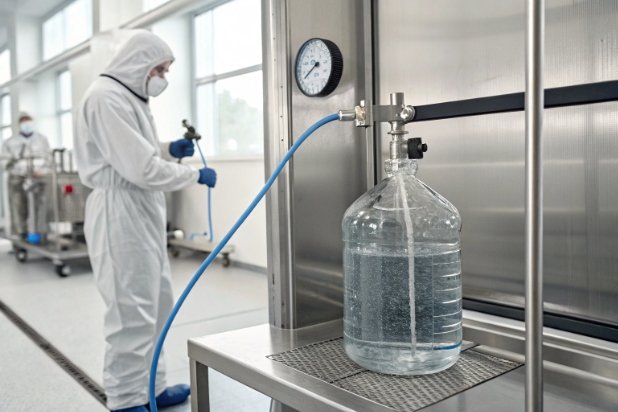
1. Internal Pressure Test (ASTM C147 / ISO 7458)
Even for non-carbonated spirits, this is vital to prove the bottle can handle the "piston effect" of thermal expansion.
-
Method: Pressurize the bottle with water to destruction or a set limit.
-
Target: Spirits bottles should withstand at least 150-200 psi (approx 10-14 bar) to account for headspace compression during hot shipping.
2. Thermal Shock Test (ASTM C147)
Critical for RTDs, Beers, or any pasteurized product.
-
Method: Heat bottle to 60°C, plunge into 20°C water.
-
Target: No breakage. This confirms the bottle will survive the pasteurization tunnel.
3. Alcohol Rub/Soak Test (Decoration)
-
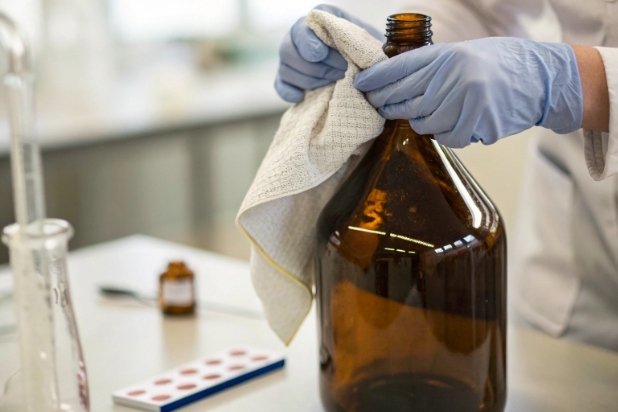
Method: Soak a cloth in the actual product (e.g., 40% Vodka). Rub the printed area or coating 50-100 times with pressure.
-
Advanced: "Shed Test" – Soak the decorated bottle in the alcohol product at 40°C for 24 hours. Check for ink softening or color bleed.
4. Fill Level & Vacuity Verification
-
Method: Measure the actual overflow capacity vs. the fill point.
-
Calculation: Ensure that at 50°C, the expanded volume of the specific alcohol % does not exceed 98% of the total bottle volume. Leave a safety margin.
Recommended QC Protocol for Alcohol Brands
| Test | Objective | Product Type | Passing Criteria |
|---|---|---|---|
| Internal Pressure | Burst Resistance | Spirits / RTD | > 12 Bar (approx) (ISO 7458 6) |
| Thermal Shock | Pasteurization Safety | RTD / Beer | $\Delta T$ 42°C (min) |
| Alcohol Rub | Decoration Integrity | Painted/Printed | 50 double rubs (no loss) |
| Headspace Calc | Prevent Hydraulic Lock | High ABV Spirits | Min 4-6% vacuity |
| Vertical Load | Corking/Capping Strength | All | > 400 lbs load |
Conclusion
Alcohol does not weaken glass chemistry, but it challenges glass physics. The high thermal expansion rate of ethanol turns temperature changes into pressure spikes. For FuSenglass clients, success lies in calculating the correct headspace, choosing the right decoration for chemical resistance, and validating the bottle’s ability to withstand the internal "piston" of expanding spirits. By treating the liquid and the bottle as a unified thermal system, you prevent breakage and preserve your brand’s integrity.
Footnotes
-
The empty space between the liquid and the cap, critical for allowing thermal expansion. ↩
-
The circumferential force exerted on the bottle wall by internal pressure. ↩
-
Glass that has been slowly cooled to remove internal stress, making it safer for transport. ↩
-
A filling method where hot liquid sterilizes the bottle, creating thermal expansion stress. ↩
-
Decorative labels applied using inks that may be sensitive to solvents like alcohol. ↩
-
International standard for testing the internal pressure resistance of glass containers. ↩






