
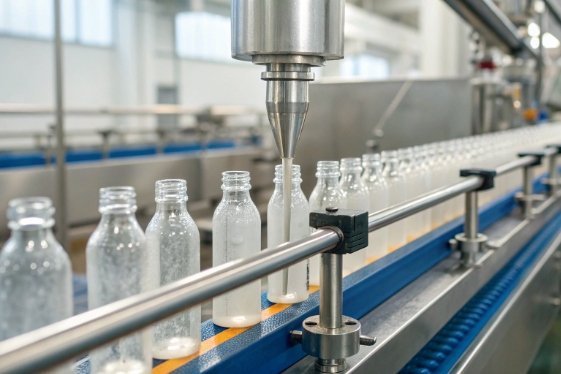
Shattered glass on the filling line and compromised seals are often the result of ignoring the thermodynamic limits of packaging. Are you risking your production efficiency and safety by mismatching your product temperature with your glass specifications?
The ideal filling temperature is determined by the glass type (Soda-Lime vs. Borosilicate), the container’s thermal shock resistance ($\Delta T$), and the closure system. You must ensure the temperature difference between the glass and the liquid never exceeds the bottle’s certified $\Delta T$ limit.
Dive Deeper: The Thermodynamics of Filling
At FuSenglass, we often remind our clients that a glass bottle is not just a container; it is a thermal vessel that expands and contracts. Choosing the right filling temperature is a balancing act between Product Safety (killing bacteria/flow rate) and Package Integrity (preventing breakage/vacuum failure).
For many B2B buyers, the filling temperature is dictated by the product’s chemistry. Jams and sauces need to be hot-filled 1 (>85°C) to ensure sterility and proper viscosity for flow. Carbonated beverages must be cold-filled (<4°C) to keep CO2 dissolved. Spirits are often filled at ambient temperatures.
The danger arises when the requirements of the product clash with the physical limitations of the glass. Glass is a poor conductor of heat. When hot liquid touches the inner wall, that surface expands immediately. The outer wall, still cool, resists this expansion. This creates tensile stress on the outer surface. If this stress exceeds the glass’s tensile strength 2, catastrophic failure occurs.
Therefore, "choosing" the filling temperature is often about "managing" the environment around the filling temperature. If your product must be 90°C, you cannot simply pour it into a 20°C bottle. You must adjust the bottle’s temperature to close the gap.
Common Filling Temperature Ranges
| Product Type | Typical Fill Temp | Primary Constraint | Glass Requirement |
|---|---|---|---|
| CSD / Beer | 2°C – 4°C | CO2 Retention | Pressure Resistance |
| Spirits / Wine | 18°C – 25°C | Volumetric Accuracy | Standard Annealed |
| Juice / Tea (Hot Fill) | 85°C – 92°C | Sterility | High Thermal Shock ($\Delta T$) |
| Jams / Sauces | 90°C – 95°C | Viscosity / Sterility | Wide Mouth / Heavy Base |
| Pharma / Retort | 121°C (Process) | Sterilization | Retort Spec / Borosilicate |
Now, let’s break down the specific variables you must calculate to ensure your filling process is safe, efficient, and profitable.
What factors determine the safest filling temperature (glass type, wall thickness, bottle shape, and closures)?
Ignoring the interplay between bottle geometry and material properties invites disaster. Why does a round jar survive a thermal spike that shatters a square bottle?
Key factors include the glass composition (Soda-lime limits), wall thickness uniformity (preventing hotspots), and bottle geometry. Angular shapes concentrate stress, lowering the safe temperature, while uniform round shapes distribute thermal load more effectively.
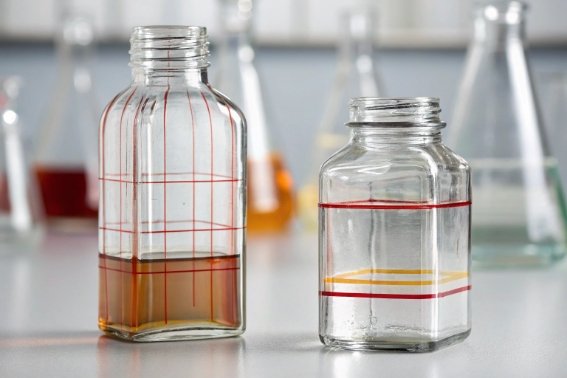
1. Glass Composition: The Material Baseline
The raw material dictates the baseline performance.
-
Soda-Lime Glass (Standard): Used for 95% of food/beverage bottles. It has a high coefficient of expansion 3. It is vulnerable to thermal shock but affordable.
-
Borosilicate Glass: Contains boron trioxide. Very low expansion. Can handle extreme temperature changes (like laboratory beakers). Used for premium pharma or high-stress kitchenware, but 3-4x the cost.
2. Geometry: The Shape of Stress
Thermal stress hates corners.
-
Round Bottles: The hoop stress is distributed evenly. These are the strongest shapes for hot-filling.
-
Square/Rectangular Bottles: The corners act as "Stress Concentrators 4." When the bottle expands from heat, the forces focus on the radius of the corner. A square bottle might fail at 60°C where a round one survives 90°C.
-
Paneling: Flat panels on bottles can suck inward (paneling) when hot liquid cools and creates a vacuum. Designing "vacuum relief" curves or stiffening ribs is essential for hot-fill.
3. Wall Thickness: The Uniformity Factor
Thicker is not always better.
-
Evenness is King: A bottle with a thin side (1mm) and a thick side (4mm) will cool at different rates. This creates permanent stress.
-
Thick Bottoms: Heavy "push-up" bases (common in spirits) retain heat longer. In a hot-fill scenario, if the bottom stays hot while the walls cool, the bottom can snap off.
4. Closures and Liners
The cap must handle the heat too.
-
Plastisol Liners: Used for vacuum lug caps (jam jars). They soften with heat to form a seal. If filled too cold, they won’t seal; too hot, and they might melt or degrade.
-
Headspace: You must leave empty space (headspace) at the top. Hot liquid expands. If you fill to the brim at 90°C and cap it, the liquid will contract as it cools, creating a massive vacuum that can implode the bottle or make the cap impossible to remove.
Factor Influence Table
| Factor | High Resistance (Safe for High Temp) | Low Resistance (Risk at High Temp) |
|---|---|---|
| Shape | Cylinder / Sphere | Square / Flat Flask |
| Bottom | Uniform Thickness | Heavy/Thick Slug Bottom |
| Glass Type | Borosilicate 5 | Flint Soda-Lime |
| Closure | Metal Lug (Vacuum) | Cork / Snap-cap |
What temperature difference between the product and the glass bottle is most likely to cause thermal shock cracking?
Pouring hot liquid into cold glass is the number one cause of line breakage. What is the breaking point for standard packaging?
Thermal shock typically occurs when the temperature difference ($\Delta T$) exceeds 42°C for untreated soda-lime glass. To prevent cracking, the differential between the incoming liquid and the glass wall must remain below this threshold, often requiring pre-heating tunnels.
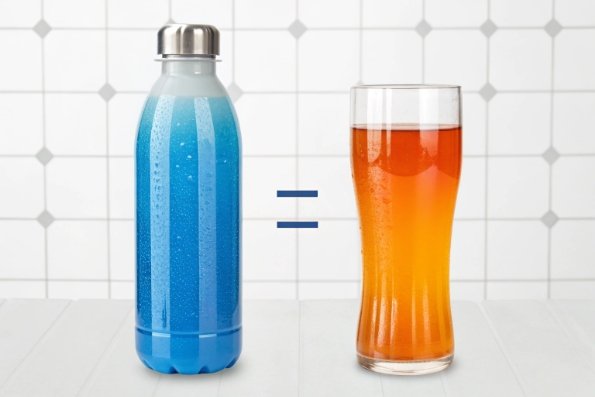
The Golden Rule: $\Delta T = 42°C$
For standard, annealed soda-lime glass containers (which includes most wine, spirit, and food jars), the industry standard safe limit for sudden temperature change is 42 degrees Celsius.
This means:
-
If your bottle is at room temperature (20°C): The maximum safe liquid temperature is 62°C. (20 + 42 = 62).
-
If you need to fill at 90°C: You cannot use a room temperature bottle. You must pre-heat the bottle.
Managing the Gap
If your product requires a 90°C fill (for pasteurization/flow), and your warehouse is 20°C, your $\Delta T$ is 70°C. This guarantees breakage.
The Solution: Pre-Heating
You must run the empty bottles through a steam tunnel or hot water rinse before the filler.
-
Target Bottle Temp: 60°C.
-
Fill Temp: 90°C.
-
New $\Delta T$: 30°C. (Safe).
The Reverse Shock (Cooling)
The danger isn’t over after filling. Once filled at 90°C, the bottle is hot. You likely need to cool it down to label and pack it.
-
The Danger: Spraying 10°C cold water on a 90°C bottle.
-
$\Delta T$: 80°C. This is actually more dangerous than heating, because glass is weaker in tension (outer surface contracting).
-
The Solution: Stepped Cooling.
-
Zone 1 Shower: 70°C water.
-
Zone 2 Shower: 50°C water.
-
Zone 3 Shower: 30°C water.
-
Thermal Shock Risk Zones
| Condition | Bottle Temp | Liquid Temp | $\Delta T$ | Outcome |
|---|---|---|---|---|
| Cold Winter Warehouse | 5°C | 85°C (Hot Fill) | 80°C | 100% Breakage |
| Ambient Summer | 30°C | 85°C (Hot Fill) | 55°C | High Risk |
| Pre-Heated Bottle | 60°C | 90°C (Hot Fill) | 30°C | Safe |
| Pasteurization Tunnel | 20°C -> 60°C (Gradual) | N/A | <10°C/min | Safe |
How do hot-fill, pasteurization, and retort processes change the ideal filling temperature and bottle specification?
Each preservation method applies unique thermal stress profiles. Does your current bottle specification match your processing equipment?
Hot-filling requires pre-heated glass to handle 85°C+ temps; pasteurization demands gradual heating curves to avoid shock; and retort requires heavy-duty glass capable of withstanding high internal pressure and temperature simultaneously.
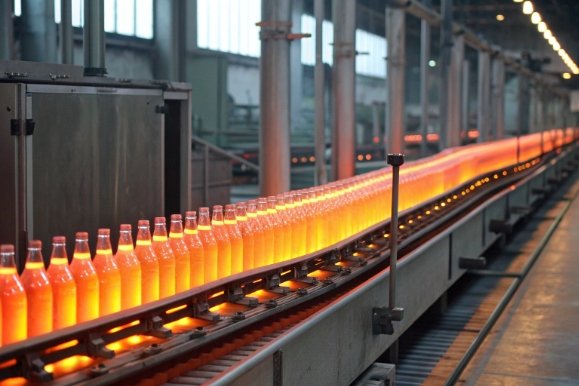
1. Hot-Fill Processing
-
Process: Product is heated to 90-95°C, filled, capped, then inverted to sterilize the cap.
-
Glass Impact: The primary stress is the initial thermal shock (Filling) and the vacuum 6 created upon cooling.
-
Spec: Bottles often need a slightly heavier weight to prevent "paneling" (collapsing inward) under vacuum.
-
Temp Strategy: Focus on bottle pre-heating and precise headspace control (usually 6-10% volume) to allow for expansion/contraction.
2. Tunnel Pasteurization
-
Process: Product is filled cold or warm, sealed, and then travels through a long tunnel with water sprays that gradually heat the product to ~65°C (Beer) or higher, then cool it down.
-
Glass Impact: The stress is lower because the temperature change is gradual. However, internal pressure builds up as the product heats inside the sealed bottle.
-
Spec: Standard glass usually works, but it must be rated for internal pressure (especially for carbonated drinks).
-
Temp Strategy: Fill temperature is less critical for shock, but critical for "PU" (Pasteurization Units 7) calculation.
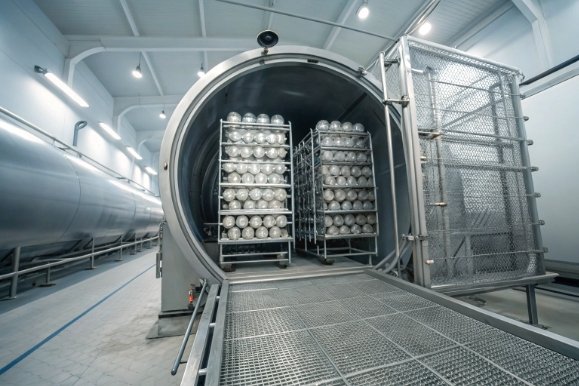
3. Retort (Autoclave)
-
Process: Sealed jars are placed in a pressure cooker chamber at 121°C (250°F) for 20-60 minutes.
-
Glass Impact: Extreme Conditions. The glass faces high external steam pressure and high internal product expansion.
-
Spec: Requires "Retort Quality" glass. This implies rigorous annealing 8 standards, optimized even wall distribution, and specific bottom profiles to handle pressure.
-
Temp Strategy: Fill temperature helps reduce the workload of the retort, but the glass must be practically flawless.
Process Comparison
| Process | Max Temp | Pressure | Key Glass Requirement | Ideal Fill Temp |
|---|---|---|---|---|
| Hot Fill | 95°C | Vacuum (-) | Thermal Shock Resistance 9 | > 85°C (Pre-heat glass) |
| Pasteurization | 65°C – 75°C | Moderate (+) | Internal Pressure Resistance | Ambient / Cold |
| Retort | 121°C | High (+) | Retort Grade (High Strength) | Warm (reduce shock) |
What validation tests should B2B buyers require before mass filling (thermal shock, leak/torque, and stress checks)?
Skipping validation is a gamble that usually ends in recalls. What data do you need to approve a production run?
Buyers must verify Thermal Shock Resistance (ASTM C147), Vacuum/Pressure strength (for cooling contraction), and Closure Torque retention at high heat. Simulated line testing is essential to confirm the specific glass-liquid interaction.
1. ASTM C147: Thermal Shock Testing
This is the non-negotiable test.
-
Method: A statistical sample of bottles is heated in a water bath and then plunged into cold water.
-
Requirement: For standard ware, they must survive a $\Delta T$ of 42°C. For "toughened" or specified hot-fill ware, you might demand a $\Delta T$ of 50°C or 60°C.
-
Buyer Action: Request the QC report for every batch.
2. Hot-End Simulation (Line Trial)
Lab tests are static; lines are dynamic.
-
Method: Run a small batch (e.g., 500 bottles) through the actual filling, capping, and cooling line.
-
Check:
-
Breakage Rate: Acceptable is <0.1%.
-
Removal Torque: Does the cap loosen when the glass threads expand? (Common issue with plastic caps on hot glass).
-
Vacuum Level: After 24 hours of cooling, is the vacuum button depressed? Is the vacuum too high (impossible to open)?
-
3. Internal Pressure & Vertical Load
-
Why: Hot filling softens the glass slightly (microscopically) and lowers the lubricity of the coating. The bottle must withstand the "top load" of the capper machine.
-
Test: ASTM C148 10 (Polariscope) to ensure no residual stress is present that would weaken the bottle under top-load pressure.
Validation Checklist
| Test Name | Standard | Passing Criteria | Relevance |
|---|---|---|---|
| Thermal Shock | ASTM C147 | Survive $\Delta T$ 42°C (Soda Lime) | Prevents Fill Breakage |
| Annealing | ASTM C148 | Temper Grade 2 or less | Prevents Spontaneous Breakage |
| Secure Seal | Vacuum Test | Maintain > 15 inHg vacuum | Ensures Food Safety |
| Headspace | Volume Check | Min 6% volume at fill temp | Prevents Hydraulic Lock |
Conclusion
Choosing the filling temperature is not an arbitrary decision; it is an engineering constraint defined by the physics of your glass. By respecting the 42°C $\Delta T$ rule, utilizing pre-heating tunnels, and validating your packaging against your specific process (Hot-fill vs. Retort), you can ensure that your premium product stays inside the bottle, not on the factory floor.
Footnotes
-
A filling method where hot liquid sterilizes the container, creating high thermal expansion stress. ↩
-
The maximum stress a material can withstand while being stretched or pulled before breaking. ↩
-
A material property that quantifies how much a substance expands when heated. ↩
-
A localized area where stress accumulates, increasing the risk of structural failure. ↩
-
A type of glass with very low thermal expansion, used for high-heat applications. ↩
-
A pressure lower than atmospheric pressure, created when hot liquid cools inside a sealed bottle. ↩
-
A unit of measurement used to quantify the total heat exposure during pasteurization. ↩
-
The process of cooling glass slowly to relieve internal stress and prevent breakage. ↩
-
The ability of a material to withstand sudden temperature changes without failing. ↩
-
Standard test method for examining glass containers for residual stress using a polariscope. ↩






