
A bottle can pass your drop test and still crack on the line. Heat changes size. Size changes stress. Stress breaks glass when timing is bad.
Yes. Adding B2O3 can change a bottle’s coefficient of thermal expansion (CTE). It often helps lower CTE in borosilicate-style recipes, but the final CTE depends on the whole formula, not B2O3 alone.
Why can boron oxide shift CTE in both directions?
CTE is a “stress amplifier” in real bottle life
CTE tells how much a material expands per degree of temperature change. In a glass bottle, expansion is not only a number on a sheet. It turns into stress when the temperature is not even. A hot-fill line heats the inside first. A cold rinse cools the outside first. The glass wall becomes a tug-of-war between hot zones and cold zones.
In daily production, the bottle does not fail because the average temperature is high. The bottle fails because different parts of the bottle see different temperatures at the same time. Lower CTE usually means lower thermal stress 1 for the same temperature gap. That is why borosilicate lab bottles survive moves from hot plate to room air better than normal soda-lime bottles.
What B2O3 is doing inside the glass network
B2O3 is not a simple “add more, get less expansion” ingredient. It plays two roles:
-
It can act like a network former 2 (it can help build the glass network).
-
It can also behave in ways that depend on how much alkali is present, and how boron units change form as the glass cools.
In many practical borosilicate recipes, B2O3 lets the batch use less alkali. Alkali oxides (like Na2O and K2O) tend to increase expansion because they break up the silica network. When B2O3 lets you cut alkali, the network stays tighter, and CTE can drop.
Why “more B2O3” does not always mean “lower CTE”
A bottle recipe is a balance. If B2O3 replaces SiO2 without reducing modifiers, CTE may not drop much. In some glass systems, CTE can even rise when B2O3 replaces SiO2. The structure shifts and the bond mix changes, so the expansion response changes too. This is why experienced glass engineers talk about “the whole oxide budget,” not a single oxide.
Here is the practical way I explain it to buyers: B2O3 is a tool that can help lower CTE, but it only works the way you want when the rest of the formula supports it.
| Recipe move | What changes in the network | Likely CTE direction |
|---|---|---|
| Add B2O3 and reduce Na2O/K2O | Fewer network breaks, tighter structure | Down |
| Add B2O3 but keep modifiers high | Network still has many breaks | Flat to slightly down |
| Replace SiO2 with B2O3 in some systems | Different structural units dominate | Can go up or down |
| Add B2O3 with enough Al2O3 stabilization | Better durability, controlled structure | Often down, more stable |
A buyer should not ask only “How much B2O3 is inside?” A buyer should ask “What is the measured CTE for this exact melt, in my temperature range?”
If you keep reading, the next sections turn this into purchasing rules you can use on bulk orders.
How does B2O3 content influence a glass bottle’s coefficient of thermal expansion (CTE)?
A spec sheet can say “low expansion,” but the line can still see cracks. That happens when people focus on one oxide, and skip the real CTE test data.
B2O3 can reduce CTE when it helps lower alkali content and strengthens the glass network. If B2O3 only replaces SiO2, the CTE change can be small or even move the wrong way, so measured results matter.
Lever 1: B2O3 as a “permission slip” to cut alkali
Most bottle buyers do not think about melting. Glass plants care a lot about melting. Alkali helps melt silica at lower furnace energy. B2O3 also helps melting, so it can replace some of that alkali role. When the recipe cuts alkali, the glass network has fewer weak points. Lower alkali usually brings lower expansion.
So the key question is not “Did you add B2O3?” The key question is “Did B2O3 allow a meaningful reduction in Na2O/K2O while keeping forming stable?”
Lever 2: Boron coordination changes during cooling
Boron units can shift between different coordination states 3 as the glass cools. This shift can make the structure more rigid in certain borosilicate systems. That rigidity often shows up as a lower CTE and better thermal shock behavior. But again, the shift depends on the full chemistry. The same B2O3 level can behave differently in different alkali balances.
What this means in bottle purchasing language
For procurement, the safe move is to ask for a measured CTE range and the exact test window. A supplier can quote “3.3” or “9.0” only if the recipe family matches those classic families. If the glass is “modified soda-lime with a little B2O3,” the CTE might still look like soda-lime in practice.
| Glass family goal | Typical formulation strategy | CTE impact you should expect |
|---|---|---|
| True low-expansion borosilicate behavior | Meaningful B2O3 + reduced alkali + stabilization | Large drop vs soda-lime |
| Improved soda-lime thermal stability | Minor B2O3 or Al2O3 tweaks + process control | Small drop, often modest |
| “Heat resistant bottle” marketing claim | Label without test window | Unreliable until tested |
At FuSenglass, the fastest way we prevent a mismatch is simple: we align the customer’s process temperatures with the lab’s measurement window before the mold order moves forward.
What B2O3 level is typical for borosilicate vs. soda-lime bottles, and when should you choose each?
A buyer can overpay for borosilicate when soda-lime is enough. A buyer can also under-spec soda-lime and pay later in line downtime and returns.
Borosilicate bottles usually use a high B2O3 level (often around the low-teens by weight), while soda-lime container glass typically uses little to no B2O3. Choose borosilicate for extreme thermal shock or high sterilization demands, and choose soda-lime for cost-effective hot-fill and mainstream beverages.
Typical B2O3 ranges in practice
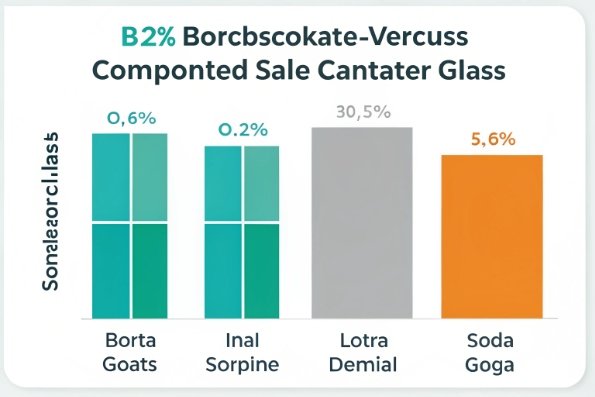
In classic borosilicate 3.3-style glass, B2O3 is a major glass former. Many published references and manufacturer materials place it in the low-teens by weight. Soda-lime container glass, on the other hand, is built around SiO2 with Na2O and CaO as the main modifiers. It usually does not rely on B2O3 as a major component.
A buyer should treat any “soda-lime with 2% B2O3” claim as a different category. That glass may be a modified soda-lime, not true borosilicate.
Forming and cost realities that affect bottle choice
Borosilicate melts and forms at higher temperatures. That tends to raise energy cost. It can also reduce the number of plants that can run it on standard container lines. That is why borosilicate bottles are common in labware and pharma, but less common in high-volume beverage packaging.
Soda-lime is the workhorse. It runs fast. It runs cheap. It has a wide supplier base. It supports massive bottle output.
A decision checklist that works on real projects
This checklist avoids “material religion.” It focuses on what the filling line needs.
| Requirement | Soda-lime bottle fit | Borosilicate bottle fit |
|---|---|---|
| Lowest packaging cost at scale | Strong | Weak |
| Hot-fill around 80–95°C with controlled cooling | Often strong (with good anneal/design) | Strong |
| Tunnel pasteurization with moderate temperature ramps | Often strong (with right bottle spec) | Strong |
| Retort / sterilization above 120°C with severe gradients | Risky unless special design/process | Often better |
| Aggressive chemical contact or very low extractables needs | Medium | Strong |
| Supply chain flexibility and many vendors | Strong | Medium |
One small story from a sauce customer explains this well. The brand wanted “borosilicate” after a few cracked bottles in hot-fill trials. The root cause was not CTE. The root cause was a fast cooling step that created a sharp temperature gap at the shoulder. A bottle redesign and a slower rinse solved it at soda-lime cost. Borosilicate was not required.
Will B2O3-driven low CTE improve thermal shock resistance for hot-fill, pasteurization, or sterilization?
Cracks often look random. They are not random. They show up at the same weak points when heat steps repeat.
Lower CTE usually improves thermal shock resistance because the glass builds less stress for the same temperature difference. It helps most in harsh steps like rapid cooling or sterilization, but bottle design, annealing quality, and temperature ramp rate still decide success.
The simple stress link that explains most failures
Thermal stress in glass scales with elastic stiffness, CTE, and temperature difference. A simple way to say it is: if CTE drops, stress drops for the same ΔT. So borosilicate-style low CTE is a real advantage.
But thermal shock is not only chemistry. The bottle’s wall thickness, shape, surface flaws, and residual stress from forming all matter. A low-CTE bottle with poor annealing 4 can still fail.
Hot-fill: low CTE helps, but many soda-lime bottles pass
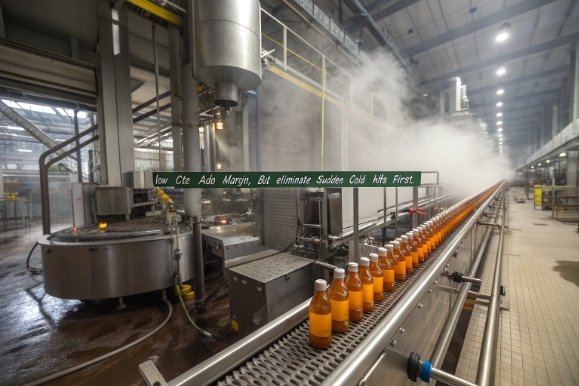
Hot-fill 5 often runs around 80–95°C, sometimes higher for sauces. Many soda-lime bottles work well when the line avoids sudden cold water hits and when the bottle design avoids thick-to-thin jumps. If a process uses a strong cold rinse right after fill, CTE becomes more critical.
Pasteurization: ramps matter more than peak temperature
Tunnel pasteurization can hold bottles at elevated temperatures, then cool them. If the ramp is gentle, soda-lime can do fine. If the ramp is sharp, cracks show up, often at the shoulder or heel. Low CTE helps, but process control often fixes more than a material switch.
Sterilization / retort: low CTE becomes a bigger lever
Sterilization can run above 120°C. The temperature gap between inside and outside can get large, and the cycle can repeat. In these cases, borosilicate-style glass often gives more margin. Many references also link borosilicate “neutral glass” to sterilization use cases. Still, closures, headspace pressure, and bottle geometry can create extra stress, so the project needs full system testing.
| Process | Typical risk driver | How low CTE helps | Extra controls that still matter |
|---|---|---|---|
| Hot-fill | Cold rinse, uneven wall temp | Reduces stress during fast cooling | Slow cooling, bottle design, good anneal |
| Pasteurization | Cooling phase gradients | Adds margin | Ramp rate control, consistent wall thickness |
| Sterilization/retort | High ΔT, pressure + heat cycles | Big margin gain | Retort profile, closure system, bottle strength |
When a customer asks “Should we switch to borosilicate?”, the best answer is “Only after we map the line’s real temperature jumps and the bottle’s weak zones.” The right fix is sometimes chemistry, but it is often process.
How can you verify thermal expansion specs (CTE testing, reports, and standards) before placing bulk orders?
Many bulk orders fail for a simple reason: the buyer trusts a number without asking how it was measured.
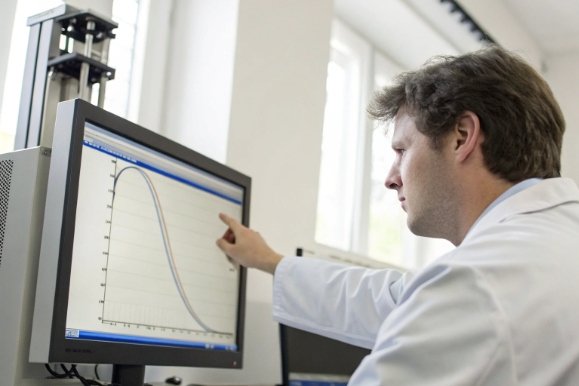
Verify CTE by requesting standard-method test reports (like push-rod dilatometer results), confirming the temperature range, and matching the sample to the production melt. Add third-party testing for the first bulk order or any recipe change.
Ask for the right test method and the right temperature window
CTE is not one fixed value. It changes with the temperature interval used in the calculation. So a report must state the test window, like 20°C to 300°C, or 20°C to 100°C. A bottle used in hot-fill might care most about 20°C to 100°C, not 20°C to 300°C.
A proper report should name a recognized method. Many labs use a push-rod dilatometer 6 method. International and ASTM methods exist for this. The method name matters because it sets expectations for accuracy, specimen prep, and calculation.
Make sure the sample represents production, not a lab coupon
Some suppliers test a small lab melt, then run production on a different furnace condition. This creates a silent risk. A buyer should tie the CTE report to:
- Furnace or batch ID
- Production date range
- Glass color (colorants can shift properties a bit)
- Forming and annealing conditions, if the test uses a bottle section
When we support bulk buyers, we treat “CTE report without batch traceability” as incomplete.
Add acceptance rules to the purchase order
A buyer can protect a project with clear acceptance rules. These rules reduce arguments later.
| What to verify | What to request | What “good” looks like |
|---|---|---|
| Test standard | ISO or ASTM method named | Clear method name and revision |
| Temperature range | Stated interval | Matches your process window |
| Sample identity | Batch/furnace link | Traceable to your order |
| Number of specimens | At least 2–3 | Repeatability shown |
| Reported units | 10⁻⁶/K or ppm/K | No unit confusion |
| Lab credibility | Internal QC + optional 3rd party | Calibrated equipment listed |
Practical “red flags” before you place a mold order
- The supplier lists a CTE number but refuses the raw test curve.
- The report has no temperature interval.
- The report does not match the standard glass family claim (for example, “borosilicate” but CTE looks like soda-lime).
- The supplier cannot show consistency across batches.
In real purchasing, the cheapest mistake is a paid test. The expensive mistake is a container of bottles that cannot survive your first week of production.
Conclusion
B2O3 can lower CTE and boost thermal shock margin, but only in the right glass system. For bulk orders, measured CTE and traceable reports protect the line better than labels.
Footnotes
-
Internal mechanical tension caused by uneven temperature distribution. ↩
-
Oxides like silica and boron oxide that create the primary glass structure. ↩
-
The atomic bonding arrangement of boron, which shifts with temperature. ↩
-
Controlled cooling process to relieve residual stress in glass manufacturing. ↩
-
Process of filling containers with heated product to ensure sterility. ↩
-
Instrument used to measure material expansion with high precision. ↩






