
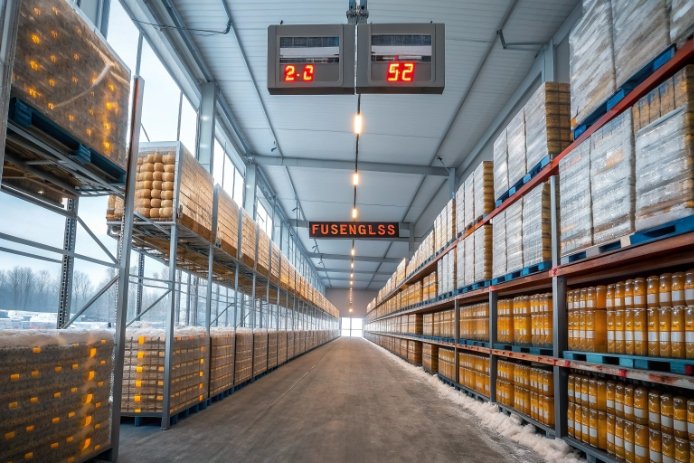
When warehouse temperature swings feel “normal,” glass packaging can still pay the price. Cracks, leaks, and coating defects often start quietly in storage, then explode on the filling line.
Yes. Warehouse temperature conditions should consider thermal expansion because repeated warm–cold cycles can grow microcracks, reduce coating durability, and weaken closure seal force. The risk rises when bottles move quickly between cold storage and warm processes.
Warehouse temperature is a packaging control, not a comfort setting
Thermal expansion is small, but stress concentration is not
Glass does not “stretch” a lot with temperature. The neck diameter and body dimensions usually change by microns in common warehouse swings. Still, the damage risk is driven by temperature gradients and stress concentration, not by the average temperature. A pallet that warms on one side and stays cool on the other can create uneven strain. The heel and shoulder zones are the classic weak points, because they have curvature and thickness transitions. Thermal expansion 1 is small, but the stress it generates is significant.
Empty bottles behave differently than filled products
Empty bottles are usually safe over a wide temperature range if the change is slow. The real risk shows up when cold bottles are moved into warm air quickly, or when warm bottles see fast drafts or cold floors. That is when surface tension spikes can open microcracks at scuffs.
Filled bottles add extra variables:
-
product pressure or vacuum changes during warming and cooling
-
caps and liners that soften at heat and relax under compression
-
coatings and labels that see mismatch stress plus condensation
What “risky” means in daily operations
I treat risk as a simple mix of four things:
1) How fast the temperature changes
2) How uneven the temperature is across the pallet
3) How damaged the bottle surface is (scuffs, chips, scratches)
4) How sensitive the closure and decoration are
| Warehouse condition | What changes first | What usually fails first | Typical symptom |
|---|---|---|---|
| Slow seasonal drift | glass and carton together | almost nothing | stable performance |
| Fast warm-up after cold storage | surface temperature jumps | microcracks at heel/shoulder | delayed breaks |
| Hot hold (sun, roof heat) | liners and coatings soften | torque loss, coating defects | sticky necks, flaking |
| Condensation cycles | labels and coatings absorb water | adhesion loss, blisters | label lift, haze |
The goal is not to keep one perfect temperature all year. The goal is to avoid fast swings, uneven exposure, and condensation, and to give bottles time to acclimate before filling and packing.
If this mindset is used, warehouse temperature becomes a predictable quality lever, not a surprise root cause.
Now I will break it down by the four decisions that matter most in real plants and global logistics.
What warehouse temperature range is typically safe for empty glass bottles, and when do swings become risky?
Empty bottles can look “indestructible,” but fast temperature change can turn a small scuff into a crack starter.
For empty glass bottles, a stable moderate range is usually safe. Risk rises when bottles see rapid swings, uneven heating across pallets, or cold-to-warm moves that create condensation and strong surface gradients.
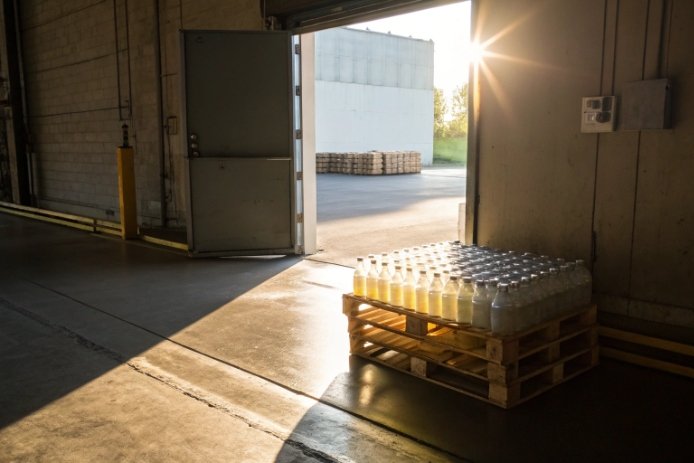
A practical “safe” storage band for empty bottles
In most factories, empty bottles store well in a moderate band like 10–35°C with slow changes. The glass itself can tolerate wider ranges, but cartons, dividers, and cold-end coatings 2 often set the practical limit. If bottles are stored very cold, then moved into warm humid air, condensation can form and create both handling slip and label/coating issues downstream.
I treat rate of change as more important than the number. A slow move from 15°C to 30°C is usually fine. A fast move from near-freezing to a warm filling hall is where cracks start showing.
When swings become risky
Risk increases when:
-
the pallet edge is heated by sun or a roof hot spot while the core stays cool
-
bottles sit on a cold concrete floor, then are moved to a warm area
-
doors open frequently and create cold drafts on warm pallets
-
bottles are moved directly from a cold warehouse to a hot rinse, hot-fill, or hot labeling step
A simple threshold mindset that works on the floor
Instead of chasing one “perfect” setpoint, I use these operating triggers:
-
avoid fast swings above about 15–20°C over a short time window
-
avoid cold storage that creates condensation when moved into warm air
-
ensure a soak/acclimation time before filling when bottles were stored cold
| Storage or move scenario | Risk level | Why | Best control |
|---|---|---|---|
| 15–30°C stable storage | low | slow changes, low gradients | basic FIFO + clean handling |
| cold pallet moved to warm humid area | medium to high | condensation + surface gradients | acclimation time + humidity control |
| sun-heated container side in yard | high | uneven heating across pallet | shade cover + stow away from walls |
| cold floor contact for bottom layer | medium | base becomes cold anchor | pallets off floor + insulation sheet |
Empty bottles rarely “fail in the warehouse.” They fail later because the warehouse created the first microcrack. That is why storage rules must be tied to line behavior, not only warehouse comfort.
How can repeated warm–cold cycles in storage worsen microcracks, scuffing, and coating durability on glass bottles?
A single cycle might not break glass. Repeated cycles can grow damage until the next small bump finishes the job.
Repeated warm–cold cycles can worsen microcracks by repeatedly opening surface flaws under tensile stress. The same cycling can increase scuff damage and weaken coatings by mismatch strain and condensation, leading to flaking, haze, and label edge lift.

Microcrack growth is a “zipper” effect
A microcrack lives at the surface, often at the heel scuff band or shoulder rub zone. When the surface is put in tension, the crack opens at the tip. Even a tiny extension matters because the next cycle stresses a longer and sharper crack. Over weeks of storage cycling, the crack can reach a size where normal depalletizing impacts cause sudden breakage.
The worst pattern is uneven cycling:
-
pallet edges heat and cool faster than the center
-
one side of the pallet faces a door draft
-
bottom layers sit on colder surfaces
Cycling makes scuffing more dangerous
Scuffing is often the start point. Carton rub, divider movement, and bottle-to-bottle contact create small scratches. Temperature cycling does not create the scratch, but it makes the scratch behave like a crack starter. If the warehouse also has vibration (forklift traffic) the rubbing increases.
Coatings and decorations suffer from mismatch and moisture
Paint, frosting effects, and electroplated stacks are layered systems. Layers move differently with temperature. Cycling creates stress at edges and at sharp features. Condensation adds moisture that can lift edges, create blisters, or haze frosting finishes. Many “coating failures” trace back to condensation events and repeated warm holds.
| Damage type | What cycling does | Early warning sign | Best prevention move |
|---|---|---|---|
| heel/shoulder microcracks | crack tip grows each cycle | late breaks in packing | reduce scuffs + reduce cycling |
| scuff band abrasion | increases rubbing and dust | dull scuff ring | dividers + tighter carton fit |
| paint/UV coating cracks | mismatch strain + brittle film | hairline cracks near edges | flexible basecoat + cure control |
| frosting haze | condensation deposits and microdamage | patchy haze | humidity control + dry storage |
| electroplating flake | interface stress + moisture | edge lift and blisters | strong activation + cycling qualification |
The best warehouse is the one that avoids repeated cycling and keeps pallets stable. The best packaging is the one that prevents rubbing even when cycling happens.
How do temperature changes in warehouses affect caps/liners, torque retention, and leak risk for filled products?
Filled product adds pressure, vacuum, and material creep. These effects can turn a good seal into a weak seal during long storage.
Temperature changes affect seals mainly by softening liners and allowing compression set, which reduces sealing force and torque retention. Differential expansion between glass, plastic caps, and liners can also reduce thread retention, increasing cap back-off and micro-leak risk during long transit and storage.
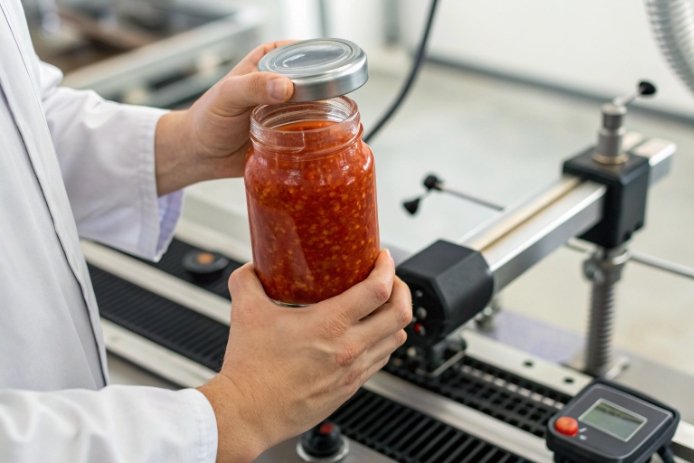
Why torque at packing is not the same as torque at arrival
Torque is a proxy for clamp load 3. At warm storage:
-
liners soften
-
the liner creeps under load
-
clamp load drops
-
back-off torque drops
When the load cools:
-
vacuum can form (especially if packed warm or hot-filled)
-
vacuum pulls on the seal and reveals micro-channels
-
if the liner did not recover, the seal is weaker
So a correct capping torque can still lead to leaks because the liner “relaxes” over time at elevated temperature.
Which liner families are most sensitive
The material label alone is not enough, but the behavior pattern is consistent:
-
basic PE/PP liners can creep more at warm holds
-
resilient compounds (like many TPE designs) often keep better recovery
-
foam can conform well but must be checked for compression set 4 and seal force after cycling
For long warm storage, low compression set behavior becomes a key spec.
Why plastic closures often need more validation
Plastic caps often expand more than glass and can creep. That can reduce thread retention 5 after warm holds. Under vibration, a small loss in friction can allow slight back-off. A small back-off can reduce liner compression further. This is how “invisible leaks” start.
| Condition in warehouse | What happens to seal system | Leak risk | Best monitoring method |
|---|---|---|---|
| warm hold for days | liner creeps, clamp load drops | medium to high | removal torque trend + leak checks |
| cold-to-warm swing | condensation + friction change | medium | dye ingress + vacuum decay |
| repeated cycling | fatigue-like relaxation | high for weak liners | thermal cycling + torque audit |
| high pressure products | pressure loads seal | high | pressure decay + burst/leak screening |
For filled products, warehouse temperature control should be treated as part of the package specification. It is not only a warehouse policy. It is a sealing performance control.
Temperature risk drops fast when storage and QC are disciplined. The key is to build routines that catch drift before shipments leave.
The best practices are FIFO with route-aware zoning, acclimation time before filling, scuff-focused inspection, and thermal cycling validation that includes torque retention and leak testing. These controls prevent microcrack growth, coating surprises, and closure back-off after storage.
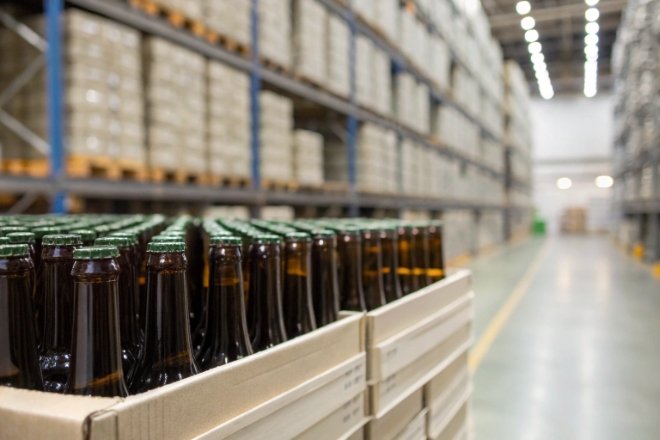
Storage controls that pay back quickly
-
FIFO and lot zoning: older pallets should not sit through more cycles than needed. If seasonal swings are strong, zone pallets away from doors and walls.
-
Acclimation time: when bottles come from cold storage, give a controlled soak time in the filling environment. This reduces condensation and reduces fast surface gradients.
-
Keep pallets off cold floors: base thermal gradients and carton moisture damage both increase when pallets sit directly on cold concrete.
-
Protect against uneven heating: sun-facing wall exposure and roof hot spots create “hot skin” pallets. Simple shading or stowage rules help a lot.
QC checks that catch temperature-driven risk
-
Visual inspection focused on the heel and shoulder: look for fine checks and scuff bands, not only obvious breaks.
-
Torque audits for filled products: measure application torque 6 and removal/back-off torque after warm hold and after cool-down.
-
Leak tests after conditioning: test not only at room temperature, but after a controlled warm hold and after a cool-down step.
-
Decoration checks after humidity exposure: especially for painted, frosted, or plated bottles.
Thermal cycling tests as a release gate
I like a simple, repeatable validation plan:
1) condition samples through a warm hold that matches worst warehouse exposure
2) cool to a lower condition that can occur at night or at a cold dock
3) repeat cycles if the route is long
Then measure:
-
torque retention over time points
-
vacuum or pressure decay 7 leak results
-
coating and label condition
-
crack checks at heel and shoulder
| Practice | Owner | Frequency | Acceptance signal |
|---|---|---|---|
| FIFO + zone away from doors/walls | warehouse | daily | no long-dwell pallets in hot/cold spots |
| acclimation before filling | production | each shift | no condensation on bottles at depalletize |
| heel/shoulder scuff audit | QA | per lot | scuff rate below limit |
| torque retention audit (0h/24h) | QA/production | daily or per batch | back-off torque above minimum |
| warm/cold leak test | QA | per shipment lot | decay within limits, no dye ingress |
| thermal cycling qualification | engineering | new SKU, new liner, new route | no cracks, no leaks, no coating lift |
These practices work because they reduce both the “cause” (fast cycling and scuffing) and the “weak link” (liner relaxation and uneven exposure). The result is fewer surprises after storage and fewer customer returns.
Conclusion
Yes. Thermal expansion and cycling should shape warehouse temperature rules. Stable conditions, acclimation 8, scuff control, and torque/leak validation after conditioning keep bottles reliable from storage to filling to shipment.
Footnotes
-
The tendency of matter to change its shape, area, volume, and density in response to a change in temperature. ↩ ↩
-
A protective layer applied to glass containers to prevent scratching and improve handling during production and transport. ↩ ↩
-
The force exerted by a fastener or closure that holds two parts together, essential for maintaining a seal. ↩ ↩
-
The permanent deformation of a material (like a liner) after being compressed for a period of time. ↩ ↩
-
The ability of a closure to maintain its grip on the container finish over time and under stress. ↩ ↩
-
The rotational force applied to a closure during the sealing process to ensure a secure package. ↩ ↩
-
A testing method used to detect leaks by measuring the drop in pressure within a sealed container. ↩ ↩
-
The process of allowing materials to gradually adjust to a new temperature environment to prevent shock. ↩ ↩






