
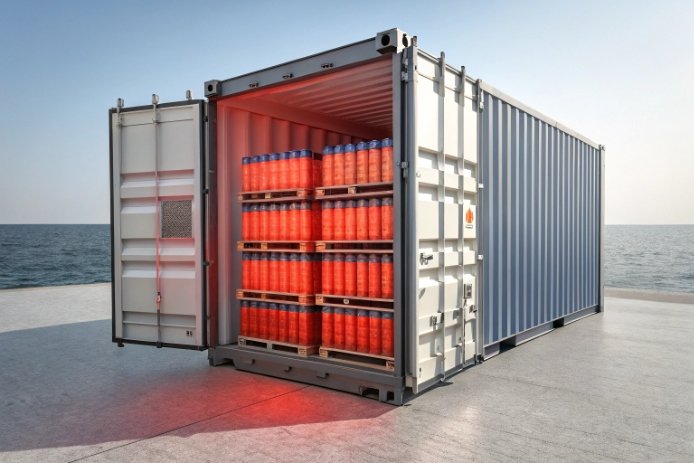
Your bottles can leave the factory perfect, then arrive with cracks, leaks, or ugly decoration damage. Ocean containers often create the hidden stress that starts it.
Sea freight temperature cycling can stress glass bottles, grow hidden microcracks, reduce closure sealing force, and damage coatings or labels. The highest risk comes from repeated day–night swings, uneven sun heating, and condensation events inside the container.
The container climate is a “stress multiplier” for glass packaging systems
A container does not heat evenly
A sea freight container 1 is a steel box. Steel responds fast to sun and wind. One wall can be hot while the opposite wall is much cooler. That creates uneven heating across a pallet. Bottles near the container walls see stronger swings than bottles near the center. This is why damage often clusters at pallet corners and outer rows.
Thermal cycling works like a slow crack-growth machine
Glass does not like tension. A bottle can survive one cycle and still be weakened. The real problem is repetition: warm day, cool night, warm day again. Each cycle can open and close a tiny surface flaw. Over time that flaw can grow into a microcrack. If the bottle also experiences vibration and scuffing, the crack grows faster.
Condensation turns temperature swings into decoration and carton problems
When warm air inside the container cools at night, moisture can condense on walls and the container ceiling. That “container rain” can drip onto cartons and labels, and can sit on coated surfaces. Condensation is a known risk pattern in marine transport because outside weather changes along a voyage can drive repeated dew point events.
The closure is usually the weakest link
Even when the glass survives, liners can soften during warm holds and take compression set 2. Plastic caps can creep. After cooling, the seal can have less sealing force than it had at capping. That can lead to micro-leaks, vacuum loss, or torque loss during long transit and storage.
| What changes in a container | What it does to glass bottles | Where failures show first | What it looks like at arrival |
|---|---|---|---|
| Day–night cycling | repeated tensile stress at flaws | heel, shoulder, thread roots | late breakage, fine checks |
| Uneven sun heating | one-side stress and bending | shoulder band, heel band | one-side cracks, scuff-driven cracks |
| Condensation events | wet cartons and labels | label area, coated surfaces | label lift, haze, blistering |
| Long warm holds | liner creep and torque loss | neck finish | sticky necks, low removal torque |
If container climate is treated as part of the packaging design input, the reject and claims curve becomes predictable instead of seasonal.
Next, the four points that matter most in real export work: what cycles happen, why microcracks grow, how closures drift, and what loading/testing controls reduce risk.
What temperature cycles can occur inside a sea freight container, and which seasons/routes make them worse?
A container can look calm on paper, then behave like an oven by day and a fridge at night. That swing quietly weakens bottles over weeks.
Inside a sea freight container, day–night cycles, sun-exposed wall heating, and route climate changes can create repeated temperature ramps. Summer, low-latitude routes, and sun-exposed staging at ports make these cycles more severe.
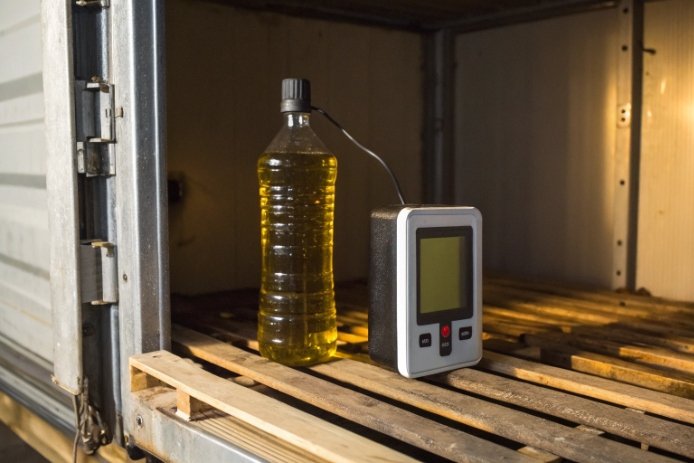
Typical cycles you should expect
Most glass bottle damage is linked to “cycling,” not one extreme moment. A typical container can experience:
-
Diurnal cycling (day–night): repeated warming and cooling every 24 hours.
-
Hot wall / cool core gradients: bottles near container walls heat faster than bottles in the pallet center.
-
Port dwell spikes: containers can sit in direct sun during staging, then cool quickly at night.
-
Route climate shifts: a voyage can pass through very different climates and humidity zones, which increases condensation probability.
How hot can a dry container get?
Exact values depend on sun, color, ventilation, and stowage position. Still, measured field work in wine logistics reports that when outside temperatures reach about 40°C, the inside of an uninsulated container can rise to around 60°C.
For qualification planning, many shipping “hot ship” test practices use temperatures up to 60°C as a harsh transit simulation, and cold ship practices can go as low as −40°C.
Seasons and routes that raise risk
-
Summer exports from hot regions (Middle East, North Africa, parts of India, Northern Australia) increase peak temperatures.
-
Routes with long port dwell in sun raise the risk even if the sea leg is mild.
-
Routes that cross latitudes (for example Far East to Europe) increase humidity/temperature changes, which increases condensation probability 3.
| Risk factor | Why it makes cycling worse | Common lane examples | What to watch on claims |
|---|---|---|---|
| Summer loading | higher peak heat and longer hot holds | July–September exports | torque loss, label edge lift |
| Low-latitude sailing | high sun load on container walls | tropics crossings | coating haze, blistering |
| Long port dwell | strong sun + no airflow | transshipment hubs | corner pallet damage |
| Winter cold snaps | fast cool-down and condensation | northern ports | container rain, carton damage |
For planning, it helps to treat container exposure as a repeated ramp profile. That is how stress and microcracks build over time.
How can container heat and night cooling increase microcrack growth, scuffing, or sudden breakage in glass bottles?
A bottle can survive packing, then break during depalletizing weeks later. That is often microcrack growth plus handling, not a mystery defect.
Heat and night cooling can grow microcracks because repeated expansion and contraction creates surface tensile stress at tiny flaws. Uneven heating and cooling also increases scuff damage impact by turning small scratches into crack starters, which can lead to sudden breakage later.
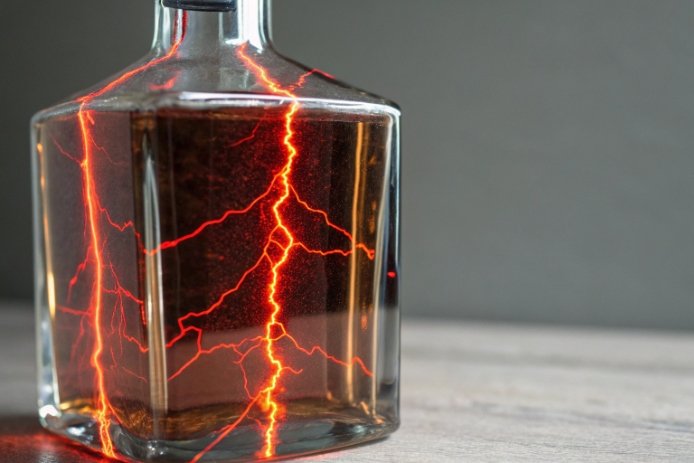
Thermal cycling opens and extends surface flaws
Most microcracks start from:
-
heel scuffs and base corner scratches
-
shoulder scuffs from carton rub
-
thread root damage from handling or closures
Heat expands the glass. Cooling contracts it. If one zone changes faster than another, tensile stress 4 appears at the surface. That stress opens the crack tip and can extend it a small amount each cycle. After many cycles, the crack can reach a size where normal vibration or a small impact triggers a full fracture.
Uneven heating makes the outer pallet rows the danger zone
A sea container often heats from the walls inward. That creates a “hot skin” and “cool core.” The outer rows see stronger ramps. This is why breakage and checks often cluster:
-
on the sun-facing side of the container
-
on pallet corners
-
on the bottom layer near cold floor contact
When the container cools at night, moisture can condense and drip (“container rain”). This can weaken cartons and dividers, reduce friction control, and increase bottle-to-bottle contact. It is a known mechanism in dry containers when temperature drops push air to its dew point 5.
| Container condition | Mechanical outcome | Glass risk outcome | Most common crack origin |
|---|---|---|---|
| Hot day + cool night | repeated stress cycles | microcrack growth | heel, shoulder |
| Sun on one side | one-side bending stress | one-side checks | shoulder band |
| Condensation drip | wet cartons lose strength | scuffing and impact | heel scuff line |
| Vibration over weeks | rubbing and abrasion | crack starter creation | heel and shoulder contact points |
The practical lesson is simple: container temperature swings do not just “stress the glass.” They also change the packaging environment, which increases scuffing and makes small flaws grow.
How do temperature swings affect closures, liners, and seal integrity during long transit and storage?
Many export leaks are not caused by a bad cap. They are caused by a seal that relaxed after days of warm storage inside a container.
Temperature swings reduce seal integrity because liners soften and creep during warm holds, which reduces sealing force after cooling. Plastic caps can expand and creep more than glass, lowering torque retention and increasing cap back-off risk under vibration during long transit.
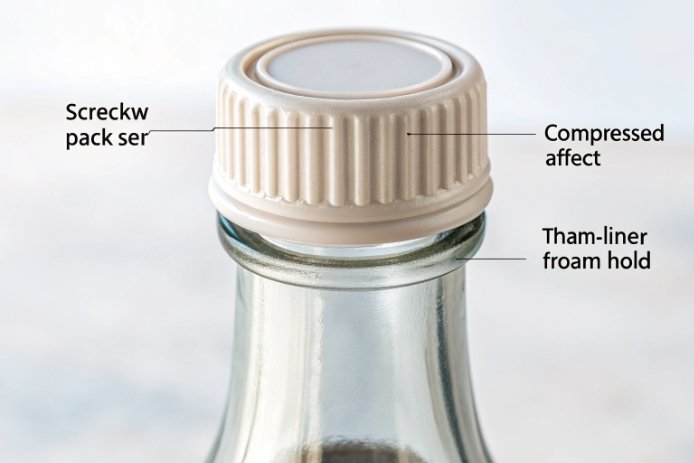
Warm holds cause liner compression set
When a container warms, the liner is the first component to “give.” Many liners behave like viscoelastic 6 springs:
-
heat lowers stiffness
-
time under compression increases creep
-
recovery after cooling is incomplete
This means a cap can be applied at correct torque, yet the liner can relax during the warm period. After that, the sealing force is lower even if the cap still looks tight.
Cooling and vacuum can reveal micro-leaks
When the load cools, internal pressure can drop and vacuum can form (especially for hot-filled products or warm-packed systems). Vacuum pulls on the seal. If the liner has relaxed and the finish has small waviness or ovality, a micro-channel can open. That can cause:
-
slow seepage
-
loss of vacuum (food risk)
-
aroma loss (cosmetic)
-
sticky necks
Vibration makes cap back-off more likely after torque loss
Once sealing force drops, thread friction can drop too. Then transport vibration can rotate the cap a small amount. That small back-off can reduce liner compression further. This is why removal torque at destination can be much lower than at packing.
| Component | What heat does | What that means in shipping | What to measure on arrival |
|---|---|---|---|
| Liner/gasket | softens + creeps | sealing force drops | back-off torque trend |
| Plastic cap | expands + creeps | retention drops | cap witness marks |
| Glass finish | small expansion | seating shifts slightly | finish ovality checks |
| Seal system | force relaxes over time | micro-leaks appear later | vacuum/pressure decay |
If export routes include long warm holds, liner selection should be treated as a thermal-cycling decision, not just a chemical compatibility decision.
What packaging and loading practices reduce container temperature risks (pallet wrap, dividers, desiccants, ventilation, and ISTA testing)?
If container exposure cannot be controlled, packaging and validation must do the job. The goal is to reduce gradients, reduce scuffing, and control moisture.
Container temperature risk drops when pallets are built to prevent rubbing, dividers stop glass-to-glass contact, moisture control reduces condensation, and shipments are qualified with thermal profile testing such as ISTA temperature validation and conditioning standards.
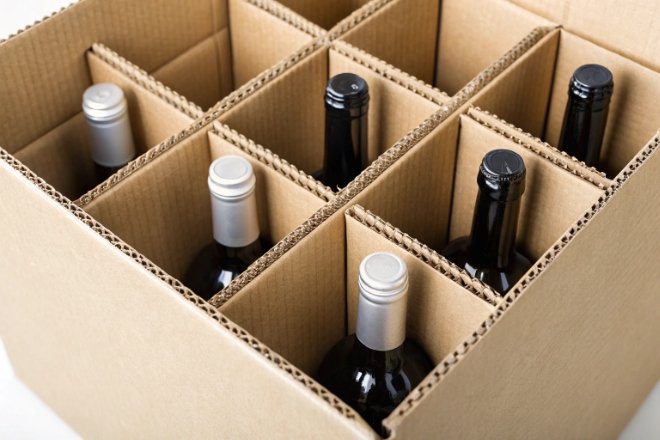
Pallet build and wrap strategy
-
Keep cartons aligned. Avoid overhang. Corners are the hottest and most exposed zone.
-
Use corner boards to stiffen the unit load and reduce “breathing” under vibration.
-
Use stretch wrap patterns that prevent layer shift but do not crush cartons.
-
If bottles ship with dividers or trays, ensure they lock bottles and do not allow shoulder rub.
Dividers and cushioning to prevent scuff-driven cracks
Thermal cycling makes scuffs more dangerous. So divider quality is a direct thermal-risk control:
-
partitions should prevent bottle-to-bottle contact
-
internal fit should reduce rattle
-
bottom protection should reduce heel scuffs from carton floor abrasion
Moisture and condensation control
Condensation is strongly linked to day–night cycling and route weather changes. Desiccants 7 are widely used to reduce “container rain” effects on cartons and labels.
Desiccants work best when paired with good sealing of cartons and controlled loading humidity.
Loading and ventilation choices
-
Avoid loading the most sensitive SKUs against container walls when possible.
-
Plan for sun exposure at ports. Shaded staging reduces peak heat.
-
Ventilation practices depend on route, humidity, and cargo sensitivity. The key is to avoid trapped heat and repeated condensation cycles.
Pre-shipment validation testing
A strong export program does not guess. It qualifies with profiles:
-
ISTA 7D 8 is commonly referenced for temperature profile testing, including hot and cold shipping/receiving sub-profiles and multi-day profiles.
-
ISO 2233 9 gives guidance for conditioning filled transport packages and unit loads for testing.
A practical test stack for glass bottles in export packs:
-
thermal cycling profile 10 matching your route risk
-
vibration test with the same pallet build
-
post-test checks: microcrack inspection at heel/shoulder, torque retention, and leak testing (vacuum/pressure decay)
| Control | What it reduces | Best use case | Proof method |
|---|---|---|---|
| Strong pallet wrap + corner boards | rubbing and layer shift | long sea + inland trucking | post-vibe scuff rate |
| Dividers/partitions | glass-to-glass scuffs | premium bottles, thin walls | heel scuff audit |
| Desiccants | condensation damage | humid routes, winter swings | carton moisture checks |
| Stowage away from walls | uneven heating | high-sun routes | logger temperature spread |
| ISTA temperature validation | unknown route exposure | new lanes and new packs | pass/fail after profile |
When packaging, loading, and testing are aligned, container temperature becomes a managed variable instead of a surprise.
Conclusion
Ocean containers can cycle hot and cold, driving microcracks, torque loss, and decoration failures. Good pallet design, scuff control, moisture management, and ISTA-style validation testing reduce export risk.
Footnotes
-
Structure and standard dimensions of the steel units used in global intermodal logistics. ↩ ↩
-
The permanent deformation of rubber sealing materials that prevents full recovery after being compressed. ↩ ↩
-
Understanding the risks of moisture damage and container sweat during ocean transport. ↩ ↩
-
The physical force that pulls material surfaces apart, causing microcracks to open and grow. ↩ ↩
-
The temperature at which air becomes saturated with water vapor, leading to condensation. ↩ ↩
-
Material behavior exhibiting both viscous and elastic characteristics when deformed by heat and pressure. ↩ ↩
-
Hygroscopic substances placed in containers to absorb excess moisture and prevent rain damage. ↩ ↩
-
Standard test procedure for evaluating the effects of external temperature exposure on transport packaging. ↩ ↩
-
International standard specifying conditioning atmospheres and methods for transport packaging tests. ↩ ↩
-
Testing method that subjects products to alternating temperature extremes to identify weakness. ↩ ↩






