
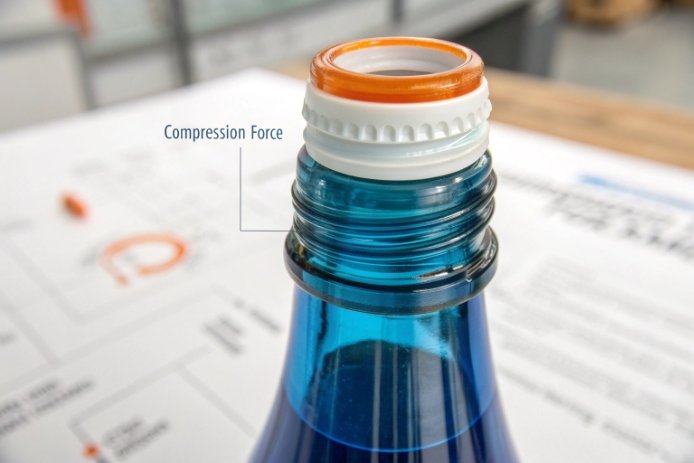
A seal can pass on the filler and still leak in the customer’s fridge two weeks later. That is why “seal performance” is not one number. It is torque retention, liner compression stability, and long-term micro-leak resistance.
Yes. Glass composition changes sealing performance indirectly by shifting CTE, finish hardness/smoothness, and surface chemistry, which affect how liners compress, how torque relaxes, and how stable the finish stays under heat and humidity.
Sealing is a system: finish geometry + glass physics + liner chemistry
A closure seals because the liner can deform and fill micro-gaps on the finish land, then stay compressed without losing contact pressure. That depends on:
-
Finish geometry (land width, bead profile, thread quality, ovality)
-
Glass surface condition (smoothness, micro-checks, devit specks)
-
Thermal behavior (CTE and temperature cycling)
-
Time-dependent relaxation (glass stress history, liner creep, torque loss)
-
Surface chemistry (alkalinity, residues, interactions with elastomers)
Composition does not usually change the finish dimensions directly, but it changes the process sensitivity that creates finish variation and the surface condition that decides whether the liner can “wet” and conform.
The two big failure modes tied to composition
1) Thermal cycling mismatch
If the glass expands and contracts differently than the closure stack (cap + liner), contact pressure changes with temperature. Repeated cycles can cause torque loss, micro-leaks, or cap back-off.
2) Finish surface instability
If the finish has devitrification specks, micro-checks, cord bands, or alkaline residues, the liner cannot make a uniform seal. The bottle may pass immediate leak testing but fail later after creep and humidity exposure.
| Sealing KPI | What composition influences | How it shows up | Best plant check |
|---|---|---|---|
| Torque retention | CTE, stress state, finish smoothness | Torque drops after cycling | Torque vs time + thermal cycling |
| Liner compression set | Temperature profile, surface roughness | Slow leaks after storage | Compression set + leak test |
| Finish integrity | Hardness, devit risk | Cap cuts liner, micro-channels | Finish inspection + profilometry 1 |
| Odor transfer risk | Surface alkalinity/residues | Off-notes, liner smell | Extract pH + sensory pack test |
When a customer says “leaks are random,” the root cause is usually finish variation plus thermal cycling, not a single bad cap.
The sections below answer each of your points in a way that helps batch, forming, and closure teams align on what to control.
How do CTE and softening-point shifts (SiO₂–Na₂O–CaO–MgO–Al₂O₃ ratios) affect torque retention and cap liner compression?
Seals fail in the field because the bottle and closure do not “move together” when temperature changes. CTE is the most important composition-driven variable in that movement.
Higher CTE increases contact-pressure swing during temperature changes, which can accelerate torque loss and liner relaxation. Raising the viscosity curve (higher SiO₂ and Al₂O₃, controlled alkali) improves finish shape stability and reduces warm creep, which supports more consistent compression on the sealing land.
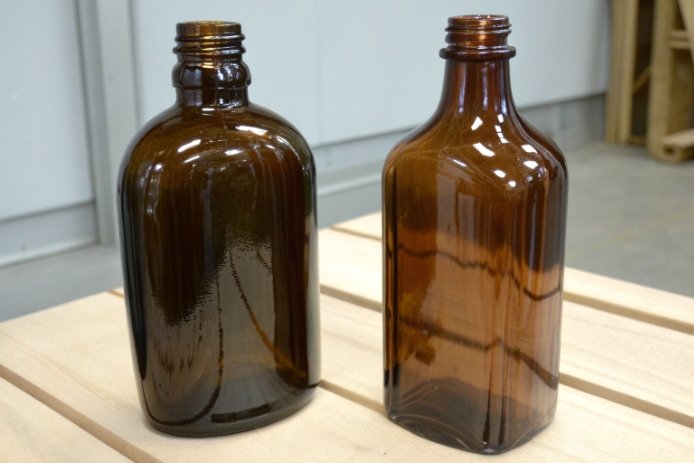
CTE: the pressure swing amplifier
When temperature rises, glass expands. Caps and liners expand too, but at different rates. If the glass CTE 2 is high, the finish diameter changes more per °C. That changes liner compression:
-
In a warm environment, compression can increase, then relax the liner faster (creep).
-
In a cold environment, compression can drop, and micro-leaks can appear.
So a lower and more stable CTE usually improves seal reliability across distribution temperatures. Composition moves that often reduce or stabilize CTE include:
-
Slightly higher SiO₂
-
Controlled higher Al₂O₃
-
Controlled total alkali (avoid “high alkali” drift)
-
Balanced CaO/MgO
Softening/viscosity behavior: finish quality and micro-creep
Sealing lands must be smooth and dimensionally stable. If the glass viscosity curve 3 is low (more flux, less network stiffness), the finish can be more sensitive to hot-end temperature drift and can show:
-
Slight rounding of sealing surfaces
-
More waviness and thread variation
-
Higher risk of micro-deformation during hot handling
That does not mean the finish “melts.” It means the forming window is narrower and the finish quality becomes more variable.
A composition that raises viscosity points slightly (often through SiO₂ and Al₂O₃ support) tends to produce more stable finish surfaces when the process is tuned. This improves liner contact uniformity and lowers the risk of micro-channels.
Practical ratio logic
| Ratio direction | Seal benefit | Why it helps | Watch-outs |
|---|---|---|---|
| (SiO₂ + Al₂O₃) / alkali ↑ | Better torque retention stability | Lower CTE drift + more stable finish | Higher melt energy, refining demand |
| Total alkali ↓ (moderate) | Lower thermal swing | Lower CTE and ion mobility | Harder melting if too low |
| MgO/CaO balanced | Fewer finish defects | Lower devit and better homogeneity | Devit risk if MgO pushed too far |
The key is not chasing a single “best CTE.” The key is keeping CTE tight lot-to-lot and matching the lehr 4 and finish cooling to that glass family. That consistency produces consistent torque retention.
Does higher Na₂O/K₂O increase surface alkalinity and gasket interaction, raising risk of seal creep or odor transfer?
This is a real question because liners and cap systems are sensitive to surface films and chemistry, especially after heat cycles.
Higher alkali content can increase surface alkalinity risk under humidity and hot-fill, which can interact with liner materials and residues, and it can increase odor-transfer risk when volatile compounds adsorb to alkaline films or when liners pick up “chemical” notes.
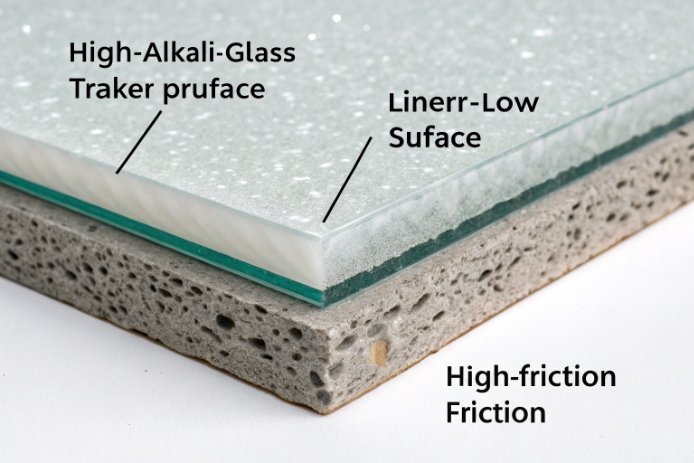
How alkalinity affects sealing
The sealing land is a contact interface. If the glass surface carries an alkaline film or salts, it can change:
-
The friction during capping (torque-to-compression relationship)
-
The long-term chemical environment at the interface
-
The way liners age in humidity
For some liner systems, high-pH exposure can change surface tack, swelling, or extractables. That can show as seal creep (loss of contact pressure) or odor carryover, especially in sensitive cosmetics and low-odor beverages.
This is rarely “glass dissolving into product.” It is usually:
-
A thin surface film created by alkali exchange in humidity
-
Residues from wash water or hot-end/cold-end handling that become more alkaline on high-alkali glass
When this risk is highest
-
Bottles stored in high humidity before filling
-
Hot-fill and pasteurization processes (faster surface exchange)
-
Long storage with temperature cycling
-
Fragrance or flavor-sensitive contents
How to control it without breaking production
-
Keep total alkali stable, not drifting.
-
Maintain a durability baseline with Al₂O₃ (and stable SiO₂).
-
Improve rinse/dry to remove salts and reduce films.
-
Validate liner compatibility using humidity aging + sensory checks.
| Risk driver | What increases it | Mitigation that works |
|---|---|---|
| Surface alkalinity drift | Higher Na₂O/K₂O, humid storage | Al₂O₃ baseline + storage RH control |
| Seal creep in humidity | Alkaline films + soft liner | Cleaner surface + liner selection |
| Odor transfer | Residues + liner extractables | Sensory pack test + low-odor liner spec |
So yes, higher Na₂O/K₂O can raise risks, but the practical fix is usually a controlled surface and stability program, not a big recipe swing that harms meltability.
Can boosting Al₂O₃/B₂O₃ or adding ZnO/ZrO₂ improve finish hardness and smoothness for better seal integrity?
Finish hardness and smoothness matter because liners seal by conforming to micro-topography. A harder, smoother finish tends to cut liner damage and reduce leak channels.
A controlled increase in Al₂O₃ often improves surface durability and can support a smoother, more stable finish when forming is controlled. B₂O₃ and ZnO can tune viscosity behavior and durability, while ZrO₂ can improve chemical stability—but these additions must be kept stable to avoid devitrification, stones, and optical defects on the finish.
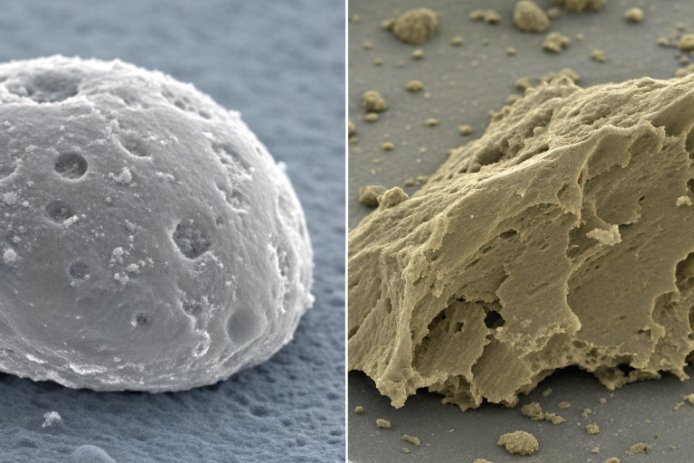
Al₂O₃: the most practical durability lever
Aluminium oxide 5 (Al₂O₃) in a controlled range often:
-
Improves chemical durability (less surface change in humidity)
-
Raises viscosity points slightly (more stable shaping)
-
Reduces alkali mobility (less alkaline film formation)
For sealing, the best benefit is not “hardness” in the Mohs scale 6 sense. It is surface stability: the finish stays consistent over storage and washing, so the liner sees the same surface each time.
B₂O₃: can help curve behavior, but watch process compatibility
B₂O₃ can widen working behavior in some systems and can help reduce thermal stress sensitivity. For finishes, that can reduce defects from temperature drift. But B₂O₃ can change redox response and volatility, so it needs a full furnace control plan.
ZnO: a tuning lever with potential benefits
Zinc oxide 7 (ZnO) can improve durability and can adjust viscosity behavior. If used, it should be small and controlled, because it can also change crystallization tendencies and needs validation for devit and cord rates.
ZrO₂: best viewed as a “purity and stability” issue
Zirconium dioxide 8 (ZrO₂) can improve durability. But in container production, ZrO₂ often enters through cullet contamination or refractories rather than as a deliberate addition. Particles and stones are the real danger. A ZrO₂ inclusion on a sealing land is a high-risk defect because it creates a rigid protrusion that can cut liners or create micro-channels.
| Additive move | Potential seal benefit | Main risk | Best guardrail |
|---|---|---|---|
| Al₂O₃ ↑ (controlled) | Stable finish chemistry and shape | Higher energy, possible liquidus rise | Liquidus margin + stone rate |
| Small B₂O₃ | Less “touchy” finish forming | Volatility, redox sensitivity | Redox and deposition control |
| Small ZnO | Durability and curve tuning | Devit window change | Devit monitoring + trials |
| ZrO₂ as impurity control | Fewer hard inclusions | Stones if particles present | Cullet and refractory control |
In real projects, the biggest finish smoothness gain often comes from process: mold condition, gob temperature uniformity, and lehr stress control. Chemistry helps by making the process more forgiving, but chemistry cannot fix dirty molds or unstable gob temperatures.
Do colorants and redox chemistry (Fe²⁺/Fe³⁺, Se–S) influence mouth corrosion, devit on the finish, and long-term seal reliability?
Color and redox rarely “corrode the mouth” directly, but they can change deposit behavior and devit tendency, which can create finish defects that harm seals.
Redox and colorants influence seal reliability mainly through furnace stability: redox drift can change sulfate behavior and deposits, and it can change devitrification risk in cooler finish zones, which can produce micro-rough sealing lands and long-term leak risk.
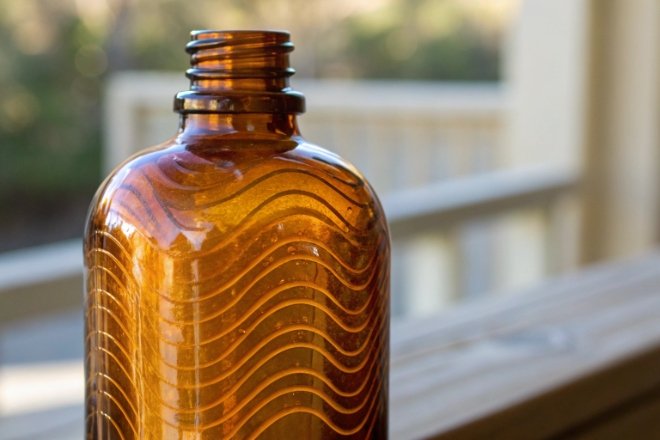
Redox drift creates surface variability
-
Sulfate fining behavior changes, which can change residue deposition.
-
Glass homogeneity changes, which can increase cords.
-
Gob heat behavior can shift by color family (absorption changes), which changes finish quality.
A small residue film on the sealing land can change friction and torque transfer. It can also create odor issues at the interface in sensitive products.
Se–S systems: strong dependence on stable redox
Amber systems that rely on Se–S chemistry are sensitive to furnace redox. Instability can lead to:
-
Color drift
-
More deposits
-
More variation in refining
Those changes can affect finish smoothness and can increase the chance of micro-defects that later become leak paths.
Devitrification on the finish: a silent seal killer
If devit risk rises, tiny crystals can form in cooler zones or in slow-cooling features. On a sealing land, even tiny crystals matter. They create hard points that:
-
Prevent uniform liner contact
-
Create micro-channels
-
Cut or emboss softer liners
Composition and redox both influence devitrification 10 risk. A stable CaO/MgO balance and a safe liquidus margin are essential.
| Redox/color condition | Seal risk mode | What to monitor | Typical control |
|---|---|---|---|
| Stable redox | Low | Torque retention trend | Keep redox KPI stable |
| Reducing drift | Deposits + fining drift | Residue checks, seed count | Fuel/air control, cullet organics control |
| Se–S instability | Finish variability | Color drift + defect map | Redox window enforcement |
| Higher devit tendency | Micro-rough land | Crystal/stone count | Liquidus margin and forehearth stability |
Long-term seal reliability improves most when the plant keeps redox steady and keeps finish surfaces clean and uniform. Colorants are not the enemy. Instability is.
Conclusion
Composition affects sealing through CTE, viscosity-point stability, surface alkalinity, and devit/defect risk. Stable alkali control, Al₂O₃ durability support, balanced CaO/MgO, and steady redox help torque retention and liner sealing stay reliable over time.
Footnotes
-
Profilometry measures surface roughness, critical for sealing integrity. ↩
-
Thermal expansion measures dimensional change with temperature. ↩
-
Glass viscosity determines forming behavior and finish quality. ↩
-
Annealing lehr relieves stress to prevent finish deformation. ↩
-
Aluminium oxide enhances chemical durability and surface stability. ↩
-
Mohs scale ranks mineral hardness, relevant for abrasion resistance. ↩
-
Zinc oxide can modify glass properties like durability and viscosity. ↩
-
Zirconium dioxide improves chemical resistance but can cause stone defects. ↩
-
Redox balance affects glass color, fining, and surface chemistry. ↩
-
Devitrification forms crystals that disrupt finish smoothness and sealing. ↩






