
Coatings that peel after curing waste time and damage brand image. The cause is often hidden in surface chemistry, not the paint booth.
Yes, composition can reduce spray-coating adhesion because it changes surface alkalinity, leachable ions, and defect formation, which can block wetting and primer bonding if pretreatment is not matched.
The real link between glass chemistry and paint adhesion
Spray-coating adhesion on glass depends on three things that must work together: wetting, chemical coupling, and mechanical integrity. Wetting means the coating spreads and does not bead. Coupling means a primer or resin forms stable bonds to the glass surface, often through silanol 1 (Si–OH) groups and silane chemistry. Mechanical integrity means the surface is clean, defect-free, and not weak from micro-cracks or crystalline specks.
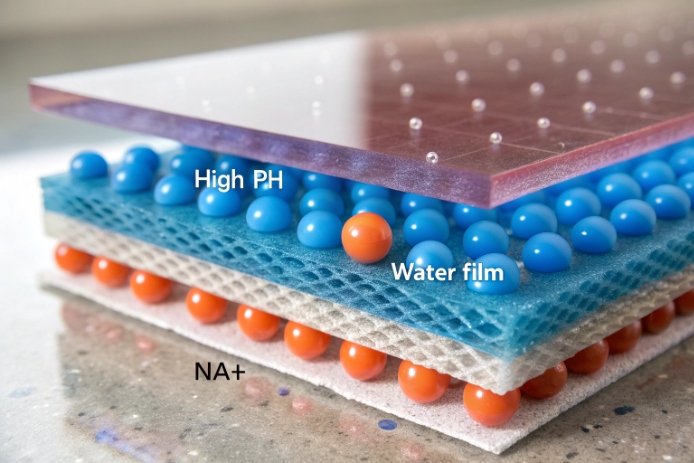
Composition matters because it changes how the surface behaves when it meets moisture, heat, and cleaning chemicals. Soda-lime container glass is not “inert.” Alkali ions (mostly Na⁺, sometimes K⁺ and Li⁺) can migrate to the surface and leach into thin water films. That can raise local pH and leave alkaline salts. High pH can block silane hydrolysis/condensation or create brittle interphases that fail in cross-hatch tests. In contrast, Al₂O₃ and some stabilizers improve chemical durability and slow ion exchange, which usually helps adhesion stability across storage and shipping.
Melt-related defects also connect back to chemistry. If the glass is close to devitrification, small crystals or stones can appear. Those spots behave like “non-glass” islands with different wetting and thermal expansion 2. Cords can create micro-zones with different modifier content. That can create local surface tension differences during coating and curing, which shows up as craters, fisheyes, or edge peel.
The last piece is process reality. Many adhesion failures blamed on composition are actually caused by cold-end lubricants, dust, label glue, and moisture. Still, composition can make the surface more sensitive to those contaminants. The most stable coating lines treat composition control, cullet control, and surface treatment as one linked system.
| Root driver | How composition can contribute | What coating sees | Best first check |
|---|---|---|---|
| Surface alkalinity | Higher alkali mobility, lower durability | Poor wetting, brittle primer layer | Water contact angle + pH of rinse |
| Surface residues | Sulfate/chloride carryover, alkali salts | Craters, fisheyes, pinholes | Ion contamination (conductivity) |
| Surface heterogeneity | Cords, stones, devit micro-crystals | Local peel, edge lift, orange peel | Visual + polarized stress + defect map |
| Stress + CTE mismatch | High CTE or trapped stress zones | Checks after cure, delayed peel | Polariscopic stress + thermal cycle |
If adhesion varies batch to batch, the best approach is to diagnose the surface first, then trace the cause back to composition, cullet, and furnace redox. The next sections give a practical way to do that.
A coating line should not guess. It should measure surface energy, control cleaning, and lock oxide and redox windows that keep the glass surface predictable.
Which compositional factors—alkali content, Al₂O₃ %, and Fe²⁺/Fe³⁺ redox—raise surface alkalinity and hinder paint bonding?
Adhesion can look perfect in the lab, then fail after a week in a humid warehouse. That happens when the surface turns alkaline and the primer bond weakens.
Higher leachable alkali raises surface pH and salt risk, while Al₂O₃ generally improves durability and reduces ion leaching; redox affects surface reactions and deposit behavior, so unstable Fe²⁺/Fe³⁺ balance can increase batch-to-batch adhesion drift.
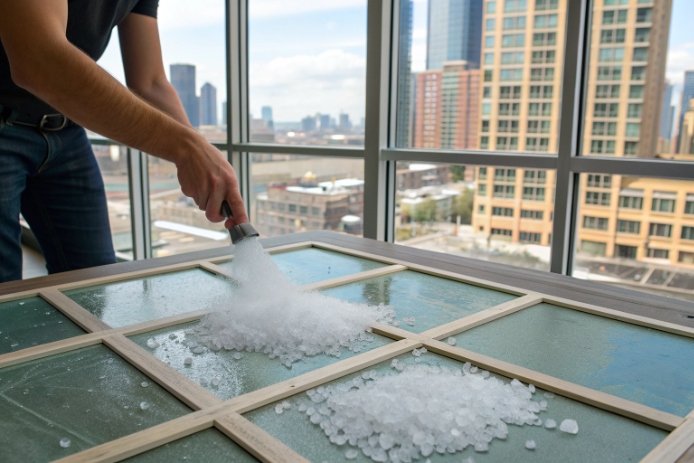
Surface alkalinity usually comes from alkali migration and ion exchange. In humid air, a thin water layer forms on glass. Na⁺ can exchange with H⁺, and the surface becomes alkaline. That alkaline film can do three harmful things for spray coatings. First, it can reduce wetting for some resin systems, especially if surfactant balance is not designed for high-pH surfaces. Second, it can disrupt silane coupling. Many silanes need controlled hydrolysis and condensation. A surface that is too alkaline can create fast, uneven reactions that form weak, chalky layers instead of a dense coupling network. Third, it can create salts that remain after drying. Those salts act like a “release layer” under paint.
Alkali content is the most direct composition lever. More total alkali often improves melting and forming, but it tends to increase ion mobility and can raise surface alkalinity under moisture exposure. K₂O can behave similarly, and it can also shift thermal expansion, which can stress coatings during cure and cool-down. Li₂O is powerful at low levels, but it can change melt behavior and should be treated as a special tuning tool, not a casual fix.
Al₂O₃ often helps adhesion stability because it improves chemical durability and reduces alkali leaching. A controlled Al₂O₃ level also tends to make surface behavior more stable over time, which matters for bottles that sit in storage before coating. The main risk is not adhesion. The risk is melting cost and devitrification margin. So Al₂O₃ should sit in a controlled window that the furnace can hold.
Fe²⁺/Fe³⁺ redox is a more indirect factor. Iron redox 3 changes absorption, heat transfer, and fining behavior. That can change surface conditions and deposit tendencies at the hot end. If redox swings cause more sulfate carryover or more vapor deposition, the surface chemistry seen by the coating line changes even if the base oxide percent did not move. So redox control is a hidden stability lever for adhesion.
| Factor | Tends to raise surface alkalinity? | Adhesion risk pattern | Practical control |
|---|---|---|---|
| Total alkali (Na₂O+K₂O) high | Yes | Wetting drift, poor primer bond after humidity | Keep alkali window tight, validate with aging test |
| Higher Al₂O₃ (≥1–2%) | Usually no (often lowers) | More stable adhesion across time | Confirm liquidus margin, keep cords low |
| Redox swings (Fe²⁺/Fe³⁺ drift) | Indirect | Batch-to-batch adhesion variation | Track redox KPI + surface ion residues |
A stable coating program treats alkali and Al₂O₃ as durability levers, then treats redox as a “surface repeatability” lever. That combination reduces surprises after curing and after warehouse aging.
Do sulfate/chloride residues, devitrification, or cords from the melt cause craters, fisheyes, or peel after curing?
A coating defect that looks like a paint problem often starts as a surface contamination problem. Craters and fisheyes usually mean the coating could not wet one spot. Peel often means a weak boundary layer existed before the coating landed.
Yes, sulfate/chloride residues and melt defects can trigger craters, fisheyes, and peel because they create low-wetting islands, gas release points, or mechanically weak spots that fail during cure shrinkage and thermal cycling.
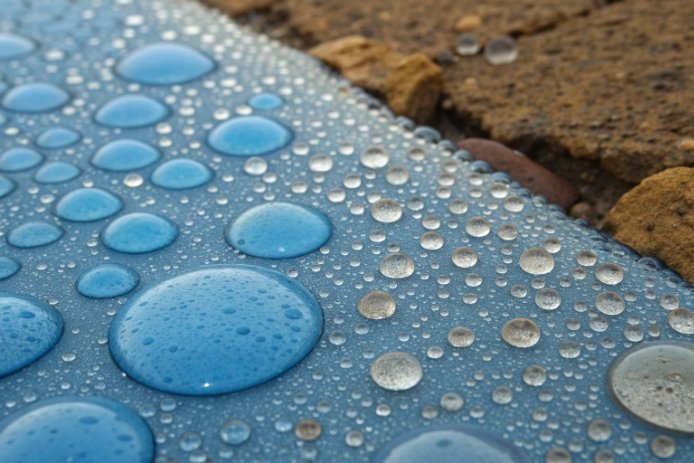
Sulfate and chloride residues are common suspects when defects look like “repellency.” In container production, sulfate fining 4 and certain batch salts can create volatile species. Under some furnace conditions, vapors can condense on cooler surfaces downstream. If those residues land on bottle surfaces, they can form thin ionic films. These films change surface tension and can act as nucleation points for craters. They also raise surface conductivity and can increase moisture pickup. During curing, trapped residues can outgas or create weak zones, which shows up as local delamination during cross-hatch tape pulls.
Chlorides are less common as intentional fining tools in modern container practice, but chloride contamination can arrive through raw materials, recycled streams, or plant handling. Even small chloride films can disturb wetting because they change the surface’s interaction with water and solvents. The visible sign is often fisheyes that repeat in the same bottle zones, like shoulders or near the finish, where cooling and deposition patterns are consistent.
Devitrification and cords are another class of “hidden” causes. Devit crystals 5 and stones create micro-regions with different chemistry and different surface energy. A coating may wet the glass matrix but not wet the crystalline speck. During cure, shrinkage stress concentrates at that boundary, and peel starts there. Cords can act similarly but in a softer way. A cord is a zone with slightly different composition and viscosity history. It can carry different alkali levels or different trapped volatiles. That can create a line of tiny wetting changes. Under a glossy spray coat, that becomes a visible defect band or a peel line after thermal cycles.
The most practical diagnostic is to separate three cases:
1) Random craters across the surface: often airborne contamination or silicone oils in the line.
2) Repeating craters in fixed zones: often deposition patterns or handling lubricants.
3) Peel that follows cords or stones: often melt quality or devit margin.
| Suspected cause | Typical defect | Where it shows | Fast check |
|---|---|---|---|
| Sulfate/chloride residue | Craters, fisheyes | Shoulder/finish zones | Conductivity of rinse + ion strip test |
| Devitrification/stones | Local peel, pinholes | Base, heel, thick zones | Visual + microscopy of defect spot |
| Cords | Peel lines, gloss variation | Sidewall bands | Polarized inspection + cut section |
| Outgassing during cure | Blisters, pinholes | Thick paint areas | Cure profile + solvent flash time |
If residues are the cause, cleaning and drying steps can fix most of it. If devit or cords are the cause, the fix is upstream: liquidus margin, mixing, temperature uniformity, and cullet contamination control. A coating booth cannot fully compensate for a glass surface that is chemically and mechanically uneven.
How do cullet quality and trace TiO₂/ZrO₂ influence silane primer coupling with UV/PU/epoxy coatings?
When adhesion is unstable across lots, cullet quality often sits at the center. Cullet changes more than cost. It changes contamination, redox, and surface chemistry.
Clean, consistent cullet improves stability, while contaminated cullet can add salts, organics, and inclusions that break silane coupling; trace TiO₂/ZrO₂ can change surface hydroxyl behavior and durability, which can shift primer response and long-term adhesion for UV/PU/epoxy systems.
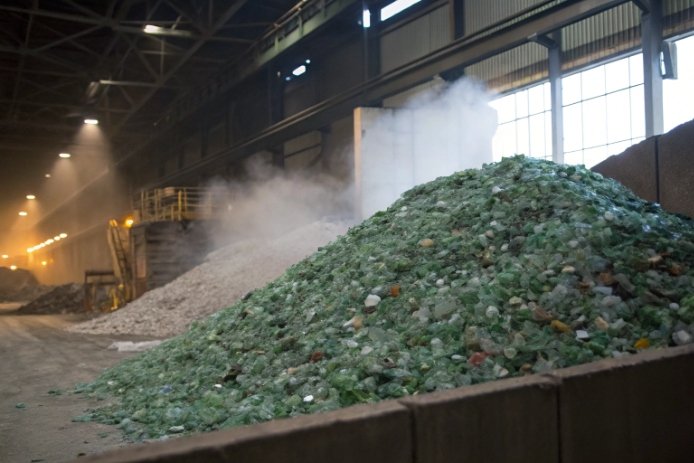
Silane primers work by bonding to the glass surface and to the coating resin. The glass side needs accessible hydroxyl groups and a clean, reactive surface. Cullet 6 quality can help or harm that in several ways. Good cullet reduces melting energy and can stabilize pull rate. It can also reduce batch gas release from carbonates. That can reduce bubble load and improve surface quality. In coating terms, that often means fewer pinholes and fewer weak spots.
Bad cullet brings problems that look like “coating mystery.” Organic residues from labels, inks, or food waste can change redox and create volatilization or carbon pickup. That can increase surface deposits. Ceramic contamination can create stones that become adhesion failure starters. Mixed-color cullet can push colorants and redox in unexpected directions, which changes absorption and heat history, and then changes surface condition at the lehr exit.
Trace TiO₂ and ZrO₂ are often introduced through raw materials, recycled streams, or deliberate recipe tuning. These oxides can improve durability and can change how the surface hydrates. In many practical cases, small amounts do not ruin adhesion by themselves. The risk appears when trace levels drift across batches, or when they combine with high alkali leaching. TiO₂ can also interact with UV exposure. Under strong UV, some TiO₂ forms can act as photocatalysts, which can degrade organic coatings over time if the formulation is not designed for it. ZrO₂ is more often linked with durability and can help stabilize the network, which can reduce ion leaching and help long-term adhesion.
For UV coatings, surface energy and oxygen inhibition at cure matter a lot. For PU and epoxy, primer chemistry and cure shrink stress matter more. All three benefit from stable silane coupling, which depends on consistent surface chemistry.
| Variable | How it affects silane coupling | Risk to UV/PU/epoxy | Control method |
|---|---|---|---|
| Cullet organics | Redox drift, deposits, weak boundary films | Fisheyes, peel after humidity | Cullet washing, supplier spec, loss-on-ignition checks |
| Cullet ceramics/metals | Stones, inclusions, stress concentrators | Local delam and chipping | Magnetic/optical sorting, stone count KPI |
| Trace TiO₂ drift | Surface reactivity + UV aging behavior | UV chalking, adhesion fade | Track raw material sources, accelerated UV test |
| Trace ZrO₂ drift | Durability and surface hydration | Long-term stability shifts | Keep recipe window, monitor leaching KPI |
The coating line wins when cullet is treated as a controlled raw material, not just recycled feed. For stable cross-hatch adhesion, cullet specs should include contamination limits, moisture limits, and color mix limits, and those specs should link directly to coating QA results.
Which pretreatments and process controls—hot-end SnO₂/SO₂, flame/corona, and target surface energy—stabilize cross-hatch adhesion across batches?
When adhesion is inconsistent, the fastest improvement usually comes from surface preparation and process control. A stable surface can forgive small composition drift. A dirty surface fails even with perfect chemistry.
Hot-end and cold-end treatments must be aligned with the coating plan: remove or manage lubricants, activate the surface with flame/corona/plasma, verify surface energy targets, and control curing and cleanliness so cross-hatch adhesion stays stable across batches.
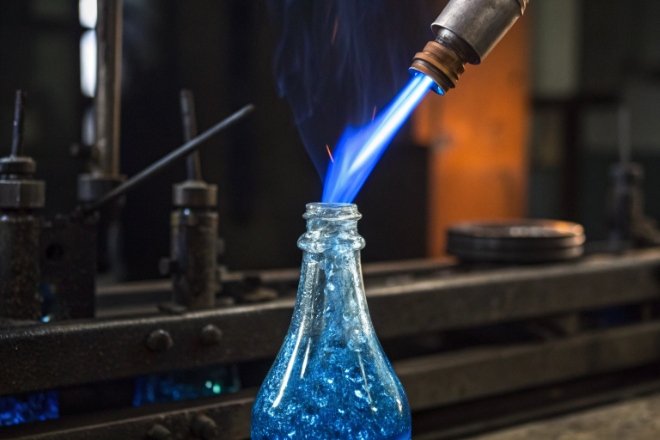
Hot-end coatings like SnO₂ (often applied by CVD-type approaches) can improve scratch resistance and handling. They can also change the surface that the paint system meets. Some coating systems bond well to hot-end treated surfaces, especially with the correct primer. Others need activation or a specific silane package. Cold-end coatings (like polyethylene or wax-based lubricants) protect bottles in conveying, but they often reduce paint wetting and adhesion unless fully removed or chemically compatible. Many peel failures are simply cold-end residue problems.
A robust pretreatment chain often includes:
-
Washing/degreasing to remove cold-end coatings, dust, and salts
-
DI rinse to reduce ionic residue
-
Drying to avoid water spots and salt rings
-
Surface activation (flame, corona, or plasma) to raise surface energy and increase polar groups
-
Primer control (silane or hybrid primer) matched to the resin chemistry
-
Cure control with correct flash time and temperature ramp to prevent solvent pop and shrink stress
Surface energy is a practical KPI that connects chemistry to coating behavior. If wetting is poor, fisheyes and craters rise. Many spray systems behave best when surface energy is high enough for uniform wetting. A simple plant tool is contact angle testing or dyne solutions. The exact target depends on the coating, but the key is consistency across batches and across bottle zones.
Flame treatment oxidizes organics and increases polar functionality. Corona treatment 7 and plasma can do similar activation with different equipment and uniformity. The choice depends on line speed, bottle shape, and safety constraints. For heavy coatings, activation is often the difference between “passes once” and “fails after humidity.”
Hot-end SnO₂ and SO₂-related treatments should be considered as part of a total surface system. They can improve handling, but they can also trap deposits if furnace vapor carryover is high. That is why furnace redox and sulfate control still matter even for coating plants.
| Control point | What it stabilizes | What to measure | Typical pass criteria |
|---|---|---|---|
| Washer performance | Removes lubricants and salts | Water break test, conductivity | No water break, low conductivity trend |
| Activation (flame/corona) | Raises surface energy and polar groups | Contact angle, dyne level | Stable target level by product family |
| Primer application | Couples glass to resin | Coating weight, tack-free time | Consistent film and flash time |
| Cure schedule | Prevents stress-driven peel | Oven profile, MEK rub | Consistent cure, no solvent pop |
| Cross-hatch adhesion | Confirms robustness | ASTM D3359 8 style test | Stable rating across lots and zones |
To stabilize cross-hatch adhesion across batches, the coating plan should define a “surface readiness window.” That includes maximum allowed time between washing and coating, humidity limits, and a minimum surface energy target. Then composition control supports that plan by keeping alkali leaching and deposit tendency stable.
When both sides work together, adhesion stops being a gamble. It becomes repeatable production.
Conclusion
Composition can reduce adhesion by raising alkalinity and surface variability, but stable cullet, redox control, and strong pretreatment with verified surface energy make cross-hatch adhesion repeatable.
Footnotes
-
Silanol groups are essential for bonding organic materials to glass. ↩
-
Thermal expansion mismatch can cause stress and coating failure. ↩
-
Redox affects the chemical state of elements on the glass surface. ↩
-
Fining agents remove bubbles but can leave surface residues. ↩
-
Devitrification leads to crystalline defects that disrupt coatings. ↩
-
Cullet quality directly impacts glass homogeneity and surface purity. ↩
-
Corona treatment modifies surface energy to improve wettability and adhesion. ↩
-
Cross-cut test is a standard method to assess paint adhesion. ↩






